
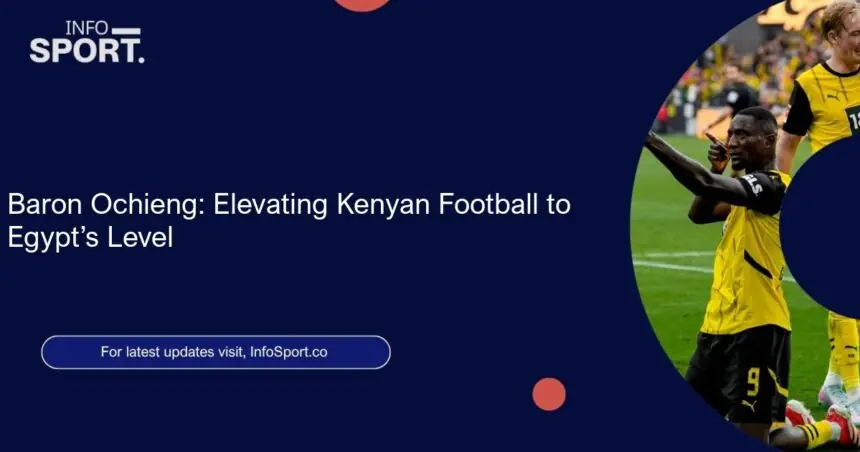
Harambee Stars Defender Baron Ochieng on How Kenyan Football Can Reach Egypt’s Heights
InfoSport: Discover how Harambee Stars defender Baron Ochieng believes Kenyan football can elevate to Egypt’s level through strategic investment and organization.
Harambee Stars defender Baron Ochieng, who recently joined Egyptian giants Zamalek from Sofapaka, is making waves in the football community. In a candid discussion, he emphasizes that for Kenyan football to compete with African powerhouses like Egypt, strategic investments in infrastructure and development are crucial.
The Crucial Need for Investment
Ochieng identifies investment as the primary differentiator between Kenyan and Egyptian football. “Egypt is a step ahead of us, but it’s not because we lack talent,” he stated. He believes that if Kenyan players are being recruited by Egyptian clubs, it is a testament to the quality present in Kenya. However, he points out that the investment, organization, and structured support that Egyptian football enjoys are missing in Kenya.
By creating a robust system to foster local talent, similar to Egyptian models, Kenya could unlock its potential. Clubs must invest not only in players but also in training facilities and youth academies.
Professionalism in Game Preparation
Ochieng’s time with the U20 national team has provided him with valuable insights into the operational differences. He recalls the electrifying atmosphere of Egypt’s Cairo Derby, where preparation goes beyond the pitch. “The organisation and preparation are on another level. It’s about pride, history, and excellence,” he remarks.
More Read

Such a cultural and organizational commitment to the sport greatly enhances the player experience and performance. Kenyan football could benefit enormously from adopting similar practices, specifically as the country gears up to co-host the 2027 Africa Cup of Nations alongside Uganda and Tanzania.
A Vision for the Future
“I dream of playing for Kenya at AFCON 2027. That would mean everything,” Ochieng adds. His recent national team call-up, following earlier setbacks, reinforces his dedication toward improvement. He remains focused, insisting that disappointment only fuels his ambition.
To realize this dream, the emphasis must be on actionable strategies for investment in Kenyan football structures. This could involve government support, partnerships with private sectors, and leveraging local and international sponsorships.

In summary, for Kenyan football to rise to Egypt’s heights, it’s imperative to invest in infrastructure, enhance organizational support, and cultivate local talent. The journey may be long, but as Ochieng illustrates, with commitment and strategy, the potential for success is limitless.