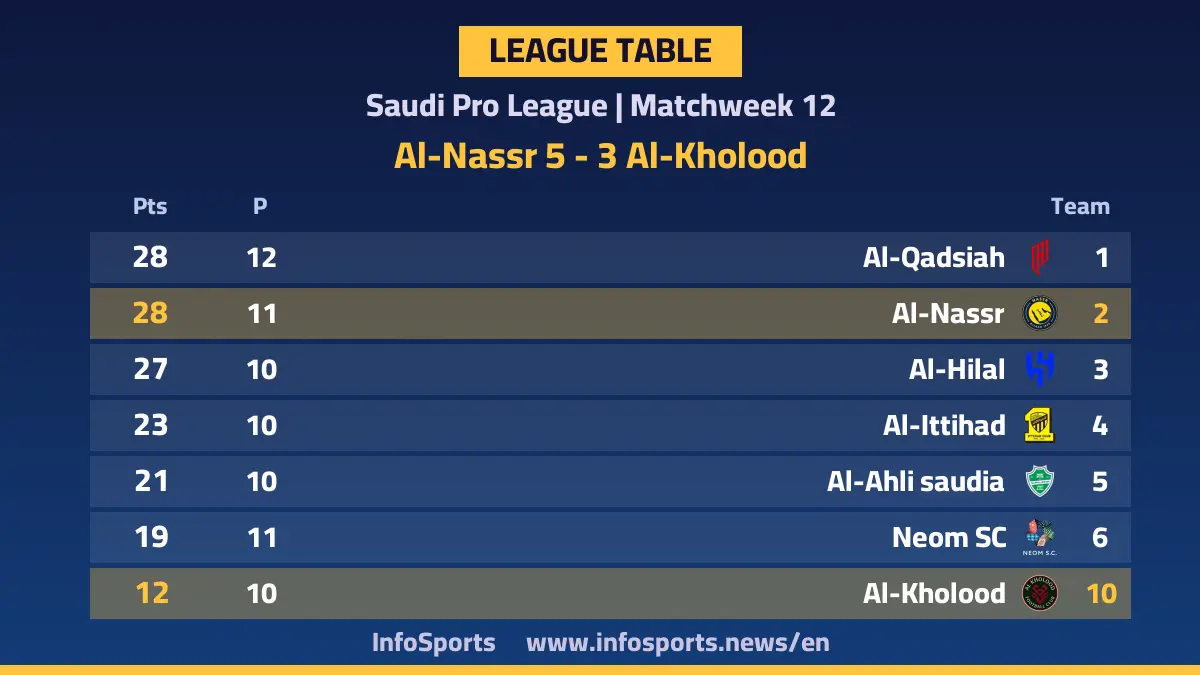

A league table ranks every team in a competition by the results of the matches they have played. Each table on this site shows the same columns, explained below.
The columns
- P – matches played.
- W / D / L – wins, draws and losses.
- GF:GA – goals for and goals against.
- GD – goal difference (goals for minus goals against).
- Pts – points.
- Form – results of the most recent matches, newest last (W = win, D = draw, L = loss).
How points are awarded
Almost every league uses three points for a win, one for a draw and none for a defeat. England introduced the system in 1981 and it became standard worldwide in the mid-1990s.
Tie-breakers
When teams finish level on points, competitions use different rules. The two common families are:
- Goal difference first, then goals scored – used, for example, by the Premier League.
- Head-to-head first – the results between the tied teams decide, before overall goal difference. LaLiga and Serie A use head-to-head criteria.
Always check the competition’s own regulations for the full order of criteria.
Coloured zones
The coloured marker beside a position shows what that place leads to: qualification for a continental competition (green), a play-off or promotion place (amber), or relegation (red). The number of places changes by country and season.
Why a table can change during a match
Tables update when results become final. While a match is in play, the live table reflects the current score, so positions can move until full time.