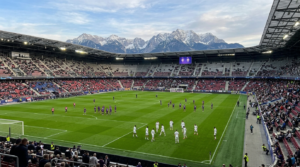

Argentina meet Austria on June 22, 2026 in a crucial Group J fixture at Dallas Stadium. Kickoff is 1:00 p.m. ET (10:00 a.m. PT, 6:00 p.m. BST). Argentina arrive as defending champions and one of the tournament favorites, while Austria bring a well‑drilled, high‑intensity system under Ralf Rangnick.
This preview breaks down the tactical battle, key players, head‑to‑head context, and what each team must do to get a result. It also includes broadcast information for major regions.
Match context: why this Group J fixture matters
For Argentina, this is more than just a second group game. After the opening matchday, they will be aiming to:
Take control of Group J early.
Build momentum and confidence before facing tougher opponents.
Avoid any slip‑ups that could make the final group game decisive.
For Austria, the stakes are different but equally high:
A draw or narrow defeat keeps them in contention.
A heavy loss could leave them needing a big result in their final group match.
A disciplined performance here could set the tone for their entire campaign.
Both teams know that points in this match could define their path in the tournament.
More Read

Tactical preview: how Argentina and Austria are likely to approach the game
Argentina: control, Messi’s freedom, and wide full‑backs
Argentina are expected to dominate possession and dictate the tempo. Their typical approach under Lionel Scaloni includes:
Building from the back with the goalkeeper and centre‑backs, using short passes to draw Austria out.
Enzo Fernández and Alexis Mac Allister as the midfield pivot, linking defence to attack and switching play.
Full‑backs (Molina and Tagliafico) pushing high to provide width, allowing wingers to cut inside.
Lionel Messi operating as a free “10”, drifting between the lines and finding pockets of space.
A front two of Lautaro Martínez and Julián Álvarez, offering different profiles: one more of a penalty‑box striker, the other a mobile second forward.
The aim is to:
Pin Austria in their own half.
Create overloads on the flanks.
Break down a compact block with quick combinations and Messi’s individual brilliance.
If Argentina score early, they can control the game with possession and pick moments to accelerate. If the game remains 0–0 for a long period, they may need to take more risks, which could open space for Austria counters.
More Read

Austria: compact block, intense pressing, and quick transitions
Austria’s best chance lies in staying organized and making the game as difficult as possible for Argentina. Under Ralf Rangnick, expect:
A mid or high block, with the midfield and defence staying compact and narrow.
Midfield trio (e.g., Schlager, Sabitzer, Laimer) working to:
Block central passing lanes.
Force Argentina wide.
Win second balls and start counters.
Wingers and forwards (Baumgartner, Arnautović, Gregoritsch) ready to:
Sprint into space behind Argentina’s high full‑backs.
Carry the ball forward quickly after regaining possession.
Minimal risks in their own half; clearances over risky passes when under pressure.
Austria will likely accept long periods without the ball, focusing on:
Maintaining shape for 70+ minutes.
Staying dangerous on the break and from set pieces.
Taking their few clear chances clinically.
If they can stay level until the last 20–25 minutes, Argentina may become more impatient, creating bigger spaces for counters.
Predicted lineups
These are likely XIs based on recent selections and typical setups. Final lineups may change depending on form, fitness, and coach decisions.
Argentina (predicted 4‑3‑3 / 4‑4‑2 diamond)
GK: Emiliano Martínez
DF: Molina – Romero – Lisandro Martínez – Tagliafico
MF: De Paul – Enzo Fernández – Mac Allister
FW: Messi – Julián Álvarez – Lautaro Martínez
This shape gives Argentina:
Control in midfield with Enzo and Mac Allister.
Freedom for Messi to roam between the lines.
Width from full‑backs, with forwards cutting inside.
Austria (predicted 4‑4‑2 / 4‑2‑2‑2 under Rangnick)
GK: (Keeper – e.g., Pentz or similar, depending on form)
DF: Mwene – Posch – Alaba – Danso
MF: Laimer – Schlager – Sabitzer – Baumgartner
FW: Arnautović – Gregoritsch
This setup offers:

A balanced back four with Alaba’s leadership.
A hard‑working midfield quartet to disrupt Argentina’s rhythm.
Direct forwards for counters and set pieces.
Key players to watch
Argentina
Lionel Messi – Argentina’s main creative hub. His ability to find space between the lines and deliver early passes or dribble past defenders can break down a deep block. Austria’s midfield must track him tightly.
Enzo Fernández – The midfield metronome. He links defence and attack, sets the tempo, and finds passes between the lines. If Enzo is comfortable, Argentina’s attacking patterns flow more smoothly.
Lautaro Martínez – The penalty‑box striker. His movement and finishing are crucial for converting Argentina’s chances. He must be clinical if Argentina are to win comfortably.
Austria
David Alaba – The defensive leader. His positioning, passing, and experience are vital in organizing the back line against Argentina’s fluid attack.
Marcel Sabitzer – Crucial in midfield for breaking up play and starting counters. His passing range can unlock spaces when Austria win the ball.
Christoph Baumgartner – Offers direct running and goal threat from midfield. He must time his runs carefully to exploit spaces behind Argentina’s full‑backs.
Head‑to‑head record and what it suggests
Argentina and Austria do not meet often in major tournament play. That makes this contest feel fresh and unpredictable. There is no long, repetitive history between them at World Cups.
The bigger historical trend favors Argentina in major tournament games. As defending champions, they have more World Cup pedigree in big, high‑pressure matches.
Austria, however, are difficult to break down. If they keep the score level early, they can frustrate Argentina for long periods. That is why the opening goal matters so much. It may decide whether the game becomes open or cautious.
Game scenarios: how this match could unfold
If Argentina score early (first 20–25 minutes)
Argentina can control the game with possession, reducing the need for risky passes.
Austria may be forced to open up slightly, creating more space for Argentina’s wingers and midfield runners.
The match could become an Argentina dominance vs Austria damage limitation scenario, with the scoreline potentially widening in the second half.
If the game remains 0–0 until 60–70 minutes
Pressure on Argentina increases; fans and media expect them to break down a “smaller” opponent.
Argentina may commit more players forward, leaving space behind the full‑backs.
This is the danger zone where Austria’s counters and set pieces become most threatening.
A single goal from a counter or set piece could completely change the dynamics.
If Austria score first
Argentina would likely respond with:
More direct attacking play.
Earlier crosses and shots from distance.
Attacking substitutions (fresh wingers/forwards).
Austria would shift into an even deeper block, focusing on:
Time‑wasting intelligently.
Clearing lines and absorbing pressure.
Trying to hit on the break when possible.
Prediction & odds
The betting market is heavily one‑sided. Major outlets list Argentina as strong favorites, with:
Argentina around ‑145 (implied probability roughly 59% or higher in some models).
The draw and Austria as clear outsiders.
Given Argentina’s technical superiority, squad depth, and experience in big tournaments, they are expected to control this match. Austria are capable of staying organized for long periods, but sustaining that for 90+ minutes against a top side is extremely difficult.
Predicted outcome:
An Argentina win by multiple goals is the most likely scenario. Austria may hold firm early, but Argentina’s quality should eventually break the game open. A 2–0 result is a reasonable expectation if Argentina score before the hour mark.
How to watch: broadcast and streaming info
Kickoff times
Local (Dallas): 12:00 p.m. CT, June 22, 2026
US Eastern Time (ET): 1:00 p.m., June 22
US Pacific Time (PT): 10:00 a.m., June 22
UK: 6:00 p.m. BST, June 22
Gulf time (e.g., Saudi Arabia, Qatar): 9:00 p.m. local, June 22
Broadcasters by region
Fans should check local listings and official broadcaster apps for exact channel and streaming details, as schedules can be adjusted closer to the match.
FAQ: Argentina vs Austria – 2026 World Cup
When and where is Argentina vs Austria played?
The match is on June 22, 2026 at Dallas Stadium, with kickoff at 1:00 p.m. ET (10:00 a.m. PT, 6:00 p.m. BST, 9:00 p.m. Gulf time).
Who is favored to win Argentina vs Austria?
Argentina are overwhelming favorites. Betting markets and most models give them a very high implied probability of winning, with Austria as clear outsiders.
What is the head‑to‑head record between Argentina and Austria?
Argentina and Austria do not meet often at senior level. There is no long, repetitive history between them at major tournaments, which makes this contest feel fresh and unpredictable.
How can I watch Argentina vs Austria in the US, UK, and Arab world?
USA: FOX and FS1; streaming via FOX One and FOX Sports App.
UK: BBC and ITV; coverage expected on BBC and/or ITV.
Arab world: beIN Sports, with streaming on beIN’s digital platforms.