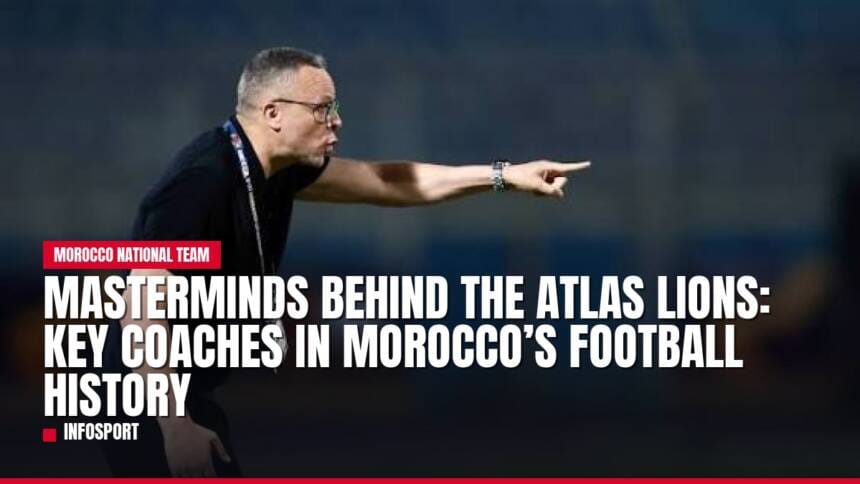
The journey of the Morocco national football team, affectionately known as the Atlas Lions, is a vibrant tapestry woven with moments of breathtaking skill, unyielding determination, and historic achievements. Central to this rich narrative are the masterminds on the sidelines: the coaches. Their strategic vision, leadership, and ability to inspire have profoundly shaped the team’s identity and guided it through various eras of triumph and challenge. Understanding the Morocco national team coaches history is crucial to appreciating the evolution of Moroccan football and its rise on the global stage. From the foundational years to the recent unparalleled successes, each coach has left an indelible mark, contributing to the legacy of a nation passionate about the beautiful game.
This article delves into the pivotal figures who have held the reins of the Atlas Lions, exploring their tenures, tactical philosophies, and the lasting impact they had on the team. It’s a journey through the strategic minds that have navigated the complexities of international football, culminating in some of the most memorable moments in the sport’s history. For a broader perspective on the team’s journey, explore the History and Achievements of the Morocco National Football Team.
The Genesis of Coaching: Early Years and Founding Figures
The early years of the Morocco national team, following the country’s independence, were a period of laying foundations. The initial coaches faced the formidable task of building a cohesive national side from scratch, integrating players from diverse backgrounds and different footballing philosophies. This era saw a mix of foreign and local talent at the helm, each contributing to the nascent identity of the Atlas Lions.
Larbi Benbarek: The Player-Coach Pioneer
One of the most legendary figures in Moroccan football, Larbi Benbarek, often dubbed the “Black Pearl,” played a crucial role not just as a player but also as one of the early coaches. Though his coaching tenure was brief and often intertwined with his playing career, his immense experience from playing in France and Spain provided invaluable guidance. Benbarek’s presence instilled a sense of professionalism and technical prowess, setting an early standard for the team. His influence was more about leadership and example, inspiring a generation of Moroccan footballers.
Kader Firoud and Mohamed Massoun: Navigating Early Challenges
Following Benbarek, coaches like Kader Firoud and Mohamed Massoun took on the challenge of developing the squad further. Firoud, a French-Moroccan, brought European tactical discipline, while Massoun, a Moroccan, understood the local football landscape intimately. These coaches were instrumental in preparing the team for its first significant international competitions, including early attempts at World Cup qualification and participation in the Africa Cup of Nations. Their efforts, though not always culminating in immediate trophies, were vital in building the competitive spirit and foundational structures of the national team.

The Era of African Glory: The 1970s and AFCON Success
The 1970s marked a turning point for the Morocco national team, as they began to assert themselves on the African continent. This period is most famously associated with their first major international trophy, a testament to the strategic acumen of a particular coach.
Gheorghe Mărdărescu: Architect of the 1976 AFCON Title
The Romanian coach Gheorghe Mărdărescu etched his name into Moroccan football history by leading the Atlas Lions to their first-ever Africa Cup of Nations title in 1976. Mărdărescu’s approach was characterized by a strong defensive organization coupled with creative attacking play, a formula that proved highly effective. Under his guidance, players like Ahmed Faras flourished, and the team displayed a remarkable blend of tactical discipline and individual flair. This victory was not just a sporting achievement; it was a source of immense national pride and a clear indication of Morocco’s growing footballing prowess. Mărdărescu’s tenure is a shining example in the Kings of Africa: Morocco’s Journey Through the Africa Cup of Nations.
Breaking Barriers: The 1980s World Cup Breakthrough
The 1980s saw Morocco make history on the global stage, becoming the first African nation to advance past the group stage of a FIFA World Cup. This monumental achievement is inextricably linked to the vision and leadership of a charismatic Brazilian coach.

José Faria: The Mastermind of Mexico ’86
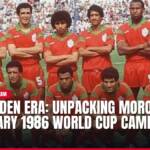
José Faria, a Brazilian coach with a meticulous approach and a deep understanding of football psychology, arrived in Morocco and transformed the national team. His tenure, culminating in the 1986 FIFA World Cup in Mexico, is legendary. Faria instilled a belief system within the squad that they could compete with the world’s best. He forged a cohesive unit, blending tactical discipline with the natural talent of players like Badou Zaki, Mohammed Timoumi, and Aziz Bouderbala. Under his guidance, Morocco famously topped a group containing England, Poland, and Portugal, capturing the imagination of the football world. Faria’s legacy is not just about the results; it’s about pioneering a path for African football and demonstrating what was possible. His strategic brilliance is a cornerstone of The Golden Era: Unpacking Morocco’s Legendary 1986 World Cup Campaign.
The 1990s: Consistency and World Cup Appearances
Following the highs of 1986, the 1990s saw Morocco continue to be a strong presence in African football and make further appearances at the World Cup, albeit with varied fortunes. This decade featured a mix of local and international coaching talent.
Abdellah Blinda: Navigating the 1994 World Cup
Abdellah Blinda, a Moroccan coach, took the reins for the 1994 FIFA World Cup in the United States. While the team did not progress past the group stage, Blinda’s tenure was significant for maintaining Morocco’s presence at the global showpiece. He worked with a generation of talented players, attempting to blend experience with new blood. His challenge was to rebuild after the golden generation, and he laid some groundwork for future success.
Henri Michel: The French Touch and 1998 World Cup
Henri Michel, a respected French coach, brought a new level of professionalism and tactical sophistication to the Atlas Lions in the late 1990s. Under Michel, Morocco qualified for the 1998 FIFA World Cup in France, playing an exciting brand of football that earned them many admirers. Despite an unfortunate early exit due to results in other matches, Morocco’s performances, particularly the memorable victory over Scotland, showcased a team brimming with talent and tactical awareness. Michel’s tenure is often remembered fondly for the attacking flair and the strong team spirit he cultivated. His period is a significant part of Morocco at the FIFA World Cup: A Chronicle of All Appearances.
Early 2000s: Near Misses and Renewed Hope
The turn of the millennium brought a period of promise, highlighted by a strong showing at the Africa Cup of Nations, led by a beloved former player.
Badou Zaki: From Legendary Player to Inspiring Coach
Badou Zaki, a legendary goalkeeper from the 1986 World Cup squad, returned to lead the national team as coach in the early 2000s. His deep understanding of Moroccan football and his iconic status as a player resonated strongly with the fans and the squad. Under Zaki, Morocco reached the final of the 2004 Africa Cup of Nations, playing dynamic and aggressive football. Although they ultimately lost to Tunisia, Zaki’s team reignited national passion and demonstrated Morocco’s enduring quality. His coaching career, particularly this AFCON run, is a key chapter in the Legendary Lions: The Iconic Players Who Shaped Morocco’s Football History.

A Period of Transition: Mid-2000s to Early 2010s
The years following the 2004 AFCON final were marked by a series of coaching changes and mixed results. The team struggled to find consistent form, leading to a rotation of both foreign and local coaches.
Roger Lemerre and Erik Gerets: European Experience
Coaches like French World Cup winner Roger Lemerre and Belgian Erik Gerets were brought in with high expectations. Lemerre had achieved success with Tunisia, and Gerets had a strong club coaching record. However, their tenures with the Atlas Lions, while bringing moments of quality, ultimately failed to deliver the desired consistency or major tournament success. The challenge of integrating European tactical systems with the unique dynamics of Moroccan football proved complex during this period.
Rachid Taoussi and Hassan Benabicha: Local Efforts
Moroccan coaches like Rachid Taoussi and Hassan Benabicha (often in interim roles) also took turns at the helm, aiming to stabilize the team and rekindle its potential. While they had intimate knowledge of the local talent pool, the pressure of international expectations and the competitive landscape of African football made sustained success elusive. This era highlighted the difficulties in finding the right long-term strategic direction for the national team.
The Resurgence: Hervé Renard and World Cup Qualification
The mid-2010s saw a significant upturn in the Atlas Lions’ fortunes, largely thanks to the arrival of a coach with a proven track record in African football.
Hervé Renard: The White Wizard’s Touch
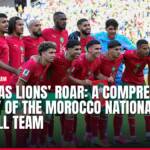
French coach Hervé Renard, known for his distinctive white shirt and his AFCON triumphs with Zambia and Ivory Coast, took over the Morocco national team in 2016. Renard quickly instilled discipline, a strong work ethic, and a clear tactical identity. His charismatic leadership and ability to motivate players were key. Under his guidance, Morocco embarked on a remarkable qualification campaign for the 2018 FIFA World Cup, ending a 20-year absence from the tournament. The team’s defensive solidity and clinical attacking play became hallmarks of his tenure. Renard’s success in bringing Morocco back to the World Cup stage was a momentous occasion for the nation and a highlight in the The Atlas Lions’ Roar: A Comprehensive History of the Morocco National Football Team.
The Road to History: Halilhodžić and Regragui’s Transformative Impact
The period leading up to and including the 2022 FIFA World Cup in Qatar represents one of the most tumultuous yet ultimately triumphant chapters in the Morocco national team coaches history.
Vahid Halilhodžić: Qualification Amidst Controversy
Bosnian coach Vahid Halilhodžić took over from Renard and successfully guided the Atlas Lions through a flawless qualification campaign for the 2022 FIFA World Cup. Known for his strict discipline and pragmatic approach, Halilhodžić built a robust team, but his tenure was marred by controversies, particularly his exclusion of key players like Hakim Ziyech and Noussair Mazraoui due to disciplinary issues. Despite qualifying for the World Cup, growing dissent among fans and the football federation ultimately led to his dismissal just months before the tournament, setting the stage for an unprecedented change.
Walid Regragui: The Hometown Hero and World Cup Sensation
The appointment of Walid Regragui in August 2022 was initially met with skepticism by some, given the proximity to the World Cup and his relatively limited international coaching experience. However, Regragui, a former Moroccan international, quickly proved to be the perfect fit. He immediately reintegrated the previously excluded stars, fostered an incredible team spirit, and instilled a clear tactical philosophy centered on defensive solidity, quick transitions, and unwavering belief. Under Regragui, Morocco embarked on an unforgettable journey at the 2022 World Cup, becoming the first African and Arab nation to reach the semi-finals. His “Dima Maghrib” (Always Morocco) mantra and his ability to unite the squad and the nation behind a common goal made him an instant legend. Regragui’s impact is detailed in From Underdogs to History Makers: Morocco’s Unforgettable 2022 World Cup Journey and stands as a pinnacle in the Morocco national team coaches history.
The Enduring Legacy of Morocco’s National Team Coaches
The journey through the Morocco national team coaches history reveals a dynamic narrative of evolution, adaptation, and relentless pursuit of excellence. From the pioneering efforts of early figures like Larbi Benbarek to the tactical brilliance of José Faria, the AFCON glory under Gheorghe Mărdărescu, the World Cup returns with Henri Michel and Hervé Renard, and finally, the historic semi-final run under Walid Regragui, each coach has contributed a unique chapter to the Atlas Lions’ story.
Their collective efforts have not only brought silverware and memorable performances but have also shaped the identity of Moroccan football, fostering a style of play that combines technical skill with fierce determination. The impact of these masterminds extends beyond the pitch, inspiring generations of players and fans and solidifying Morocco’s place as a proud footballing nation on both the African continent and the global stage. The story of Morocco’s coaches is a testament to the power of leadership and vision in the beautiful game.
Frequently Asked Questions about Morocco National Team Coaches History
Who was the first coach to lead Morocco to a FIFA World Cup?
Mohamed Massoun was the first Moroccan coach to lead the Atlas Lions to a FIFA World Cup, achieving this feat in 1970. His achievement marked Morocco’s first appearance on the global stage, laying the groundwork for future generations.
Which coach led Morocco to their first Africa Cup of Nations title?
The Romanian coach Gheorghe Mărdărescu led the Morocco national team to their first and only Africa Cup of Nations title in 1976. This historic victory cemented his place in Moroccan football lore.
Who was the coach when Morocco became the first African team to advance past the World Cup group stage?
The Brazilian coach José Faria was at the helm when Morocco made history at the 1986 FIFA World Cup in Mexico. Under his guidance, the Atlas Lions topped their group, becoming the first African nation to reach the knockout stages of the tournament.
Which coach ended Morocco’s 20-year World Cup drought?
French coach Hervé Renard successfully guided the Morocco national team to qualify for the 2018 FIFA World Cup in Russia, ending a 20-year absence from the global tournament. His tenure brought renewed hope and success to the team.
Who was the coach during Morocco’s historic 2022 World Cup semi-final run?
Walid Regragui, a Moroccan former international, was the coach who led the Atlas Lions to their unprecedented semi-final finish at the 2022 FIFA World Cup in Qatar. His leadership and tactical acumen were pivotal in their historic journey, making them the first African and Arab nation to reach that stage.