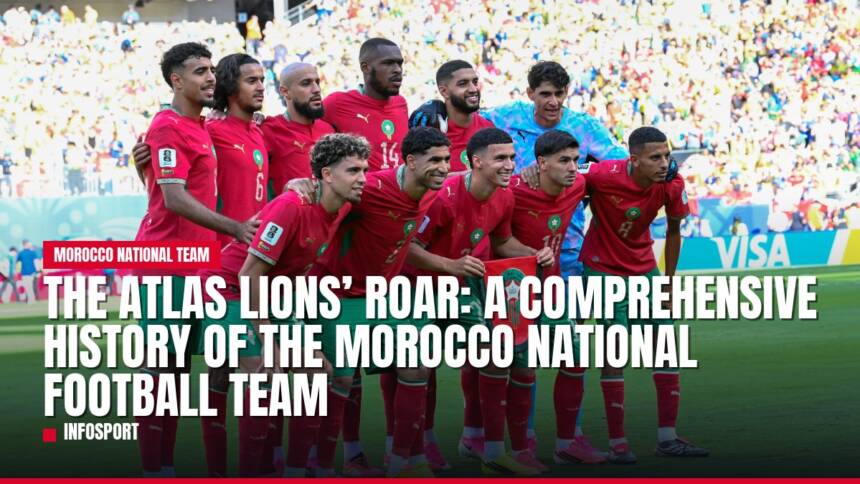
The Morocco national football team—known as the Atlas Lions—is one of Africa’s most successful and influential sides. From their first matches after independence to their historic run at the 2022 FIFA World Cup, the Atlas Lions have shaped the story of African and Arab football on the global stage.
This article provides a complete overview of Morocco’s national team history: their early years, major tournament milestones, golden eras, and the key moments that turned them into a continental powerhouse and World Cup semi‑finalist.
Early beginnings: building a national team (1956–1969)
Morocco’s modern football identity began after independence in 1956, when the Royal Moroccan Football Federation (FRMF) was established. The national team played its first official match in 1957, marking Morocco’s entry into international football.
In these formative years, the focus was on:
Gaining experience through regional competitions and friendlies.
Identifying local talent and building a distinct Moroccan style: technical, creative, and disciplined.
Laying the administrative and sporting foundations for future success.
Though major trophies were still distant, this period created the base on which later achievements would be built.

Breakthrough decade: first World Cup and AFCON glory (1970–1986)
The 1970s and early 1980s transformed Morocco from a promising side into a continental force and a respected name in world football.
1970: First World Cup appearance
In 1970, Morocco qualified for the FIFA World Cup in Mexico, becoming the first African nation to compete in the tournament since Egypt in 1934. Drawn against Bulgaria, West Germany, and Peru, they exited in the group stage but proved that African teams could compete at the highest level.
This experience was crucial: it raised ambitions, improved standards, and set the stage for greater achievements.

1976: AFCON champions
Six years later, Morocco reached the summit of African football. At the 1976 Africa Cup of Nations in Ethiopia, the Atlas Lions won their first major trophy, defeating strong opponents in a tightly contested tournament.
Under coach Gheorghe Mărdărescu, and with legends like Ahmed Faras leading the side, Morocco showcased tactical discipline and technical quality. The 1976 triumph remains a defining moment in the nation’s football history.
1986: Making World Cup history
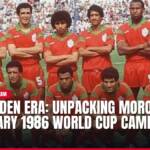
The 1986 FIFA World Cup in Mexico marked Morocco’s golden hour. In a group with England, Poland, and Portugal, the Atlas Lions:
Drew 0–0 with Poland and England, displaying strong defensive organization.
Beat Portugal 3–1 in a decisive match.
Finishing top of their group, Morocco became the first African team to advance past the group stage of a World Cup. Though they were eliminated in the Round of 16, the campaign redefined expectations for African football and cemented Morocco’s place in World Cup folklore.
Players like Badou Zaki, Mohammed Timoumi, Aziz Bouderbala, and Mustafa El Haddaoui, under Brazilian coach José Faria, became icons of this golden generation.
Fluctuations and near misses (1990–2014)
After 1986, Morocco remained a regular presence at major tournaments but struggled to replicate the same level of breakthrough success.
More Read

World Cup appearances in the 1990s
Morocco returned to the World Cup in:
1994 (USA)
1998 (France)
On both occasions, they exited in the group stage. The 1998 campaign was particularly painful, as strong performances were not enough to secure a knockout spot. These tournaments highlighted the growing competitiveness of global football and the fine margins at the top level.
AFCON finals and emerging talent
In the Africa Cup of Nations, Morocco stayed competitive:
Reached the final in 2004, losing to hosts Tunisia.
Consistently qualified for the tournament and reached knockout stages in several editions.
This era also saw more Moroccan players moving to top European leagues, gaining experience that would later benefit the national team. Yet a major trophy remained elusive for decades.
Rebuilding and return to the world stage (2015–2021)
In the 2010s, Morocco embarked on a deliberate rebuilding process:
Investment in youth development and academies.
Improved infrastructure and scouting networks.
Strategic coaching appointments and a focus on blending local and diaspora talent.
2018: Ending the World Cup drought
A key milestone came in 2018, when Morocco qualified for the World Cup in Russia, ending a 20‑year absence from the tournament. Under coach Hervé Renard, the Atlas Lions faced tough opponents—Iran, Portugal, and Spain—and exited in the group stage, but their qualification signaled a strong return to global relevance.
In the same period, Morocco remained a consistent contender at AFCON, regularly reaching the knockout rounds and building a squad capable of competing with Africa’s best.
Historic 2022 World Cup: from underdogs to semi‑finalists
The 2022 FIFA World Cup in Qatar produced the most extraordinary chapter in Morocco’s history.
A record‑breaking run
Drawn against Belgium, Canada, and Croatia, Morocco:
Beat Belgium and Canada.
Drew with Croatia (who later reached the final).
Topped their group, advancing to the knockout stage.
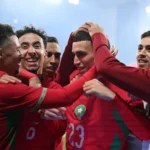
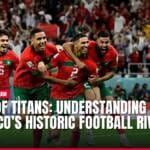
In the Round of 16, they defeated Spain on penalties after a tight 0–0 draw. In the quarter‑finals, they beat Portugal 1–0, becoming the first African and first Arab nation to reach the World Cup semi‑finals.
Although they lost to France in the last four and then to Croatia in the third‑place match, the achievement reshaped perceptions of African and Arab football worldwide.
Key figures behind the success
Coach Walid Regragui, appointed shortly before the tournament, instilled belief, discipline, and a resilient tactical system. Standout players included:
Goalkeeper Yassine Bounou
Captain Romain Saïss
Midfielder Sofyan Amrabat
Attackers Hakim Ziyech and Achraf Hakimi
Their unity, work rate, and support from millions of Moroccan fans created one of the most memorable World Cup stories in recent history.
Timeline: Morocco’s major tournament milestones
You can expand this table over time as new tournaments are played.
Legacy and future: what the Atlas Lions represent
The history of the Morocco national team is more than a list of results. The Atlas Lions have become:
A symbol of national pride and unity, celebrated by Moroccans at home and in the diaspora.
A model for African and Arab football, showing that consistent investment, strong coaching, and belief can produce world‑class results.
A bridge between continents, with squads combining locally developed players and talents from Europe’s top leagues.
Looking ahead, Morocco aims to:
Build on the momentum of 2022.
Compete regularly for AFCON titles and deep World Cup runs.
Potentially host major tournaments, including the 2030 FIFA World Cup, further cementing their status as a global football power.
FAQ: Morocco National Team History
What is the Morocco national team’s nickname?
The Morocco national team is famously known as the “Atlas Lions,” a reference to the Atlas Mountains and the strength of the Barbary lion once native to the region.
When did Morocco first qualify for the FIFA World Cup?
Morocco made its historic debut at the FIFA World Cup in 1970, becoming the first African nation to qualify for the tournament since Egypt in 1934.
Has Morocco ever won the Africa Cup of Nations (AFCON)?
Yes. Morocco won the Africa Cup of Nations in 1976, triumphing in Ethiopia to claim their first major continental trophy.
What is Morocco’s best performance at a FIFA World Cup?
Morocco’s best World Cup performance came in 2022 in Qatar, when they reached the semi‑finals and finished fourth. This made them the first African and first Arab nation to achieve this feat.
Who are some of the most iconic players in Morocco’s history?
Iconic players include Badou Zaki, Mohammed Timoumi, Aziz Bouderbala, and Ahmed Faras from earlier generations, and more recently Achraf Hakimi, Hakim Ziyech, Sofyan Amrabat, and Yassine Bounou from the 2022 World Cup squad.