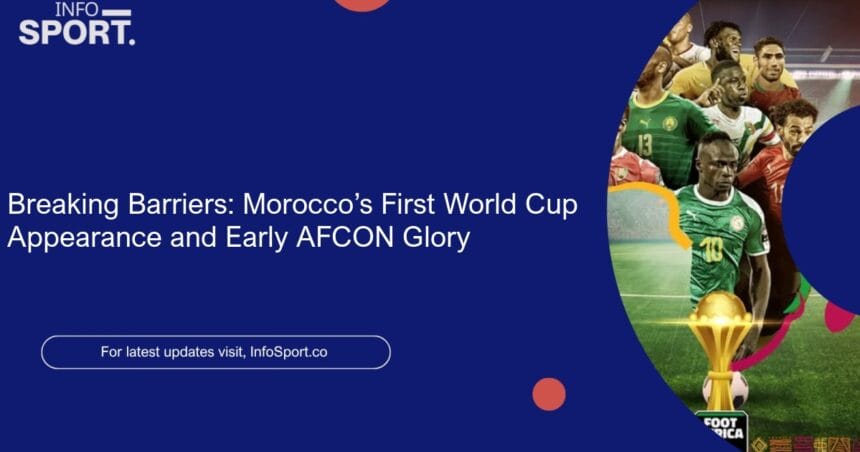
Morocco’s football journey is a tapestry woven with moments of sheer brilliance, unwavering determination, and groundbreaking achievements. Among these, the nation’s Morocco first World Cup appearance in 1970 stands as a monumental milestone, shattering barriers and placing Moroccan football firmly on the global map. This pioneering feat was soon followed by an equally historic triumph on the continental stage, as the Atlas Lions clinched their inaugural Africa Cup of Nations title in 1976. These early successes not only defined an era but also laid the foundational stones for the rich footballing heritage that Morocco boasts today, inspiring generations of players and fans alike. This article delves into these pivotal moments, exploring the context, challenges, and lasting impact of Morocco’s groundbreaking entry onto the world stage and their early continental glory. For a broader understanding of the team’s entire journey, explore the History and Achievements of the Morocco National Football Team.
The Genesis of Moroccan Football: Laying the Foundations
The beautiful game found its way to Morocco during the early 20th century, primarily through European expatriates and colonial influences. Initially a recreational activity, football quickly captivated the hearts of Moroccans, leading to the formation of local clubs and regional competitions. The enthusiasm for the sport grew exponentially, setting the stage for the establishment of a national governing body and, eventually, a national team.
Post-independence in 1956, Moroccan football began to organize itself with renewed vigor. The Royal Moroccan Football Federation (FRMF) was founded in 1955 and subsequently affiliated with FIFA in 1960 and the Confederation of African Football (CAF) in 1966. These affiliations were crucial steps, enabling Morocco to participate in international competitions and pursue its footballing aspirations on a grander scale. The formation of the national team, affectionately known as the Atlas Lions, marked the beginning of Morocco’s quest for international recognition, a comprehensive history of which can be found in The Atlas Lions’ Roar: A Comprehensive History of the Morocco National Football Team.
A Nation’s Dream: Qualifying for the World Cup
The dream of reaching the FIFA World Cup was a powerful motivator for the nascent Moroccan national team. Qualification campaigns were arduous, often involving long journeys, challenging playing conditions, and fierce competition from other African nations. Before 1970, African teams faced significant hurdles, with only one slot often allocated for the entire continent, making the qualification process exceptionally competitive.
Morocco’s journey to the 1970 World Cup in Mexico was a testament to their resilience and growing prowess. The qualification campaign for the 1970 tournament saw Morocco navigate through several demanding stages. They faced strong opposition, including Senegal, Tunisia, and then Nigeria in the final playoff. Each match was a battle, with the Atlas Lions demonstrating tactical discipline and individual brilliance. The decisive moment came in a playoff against Nigeria, held on neutral ground in Marseille, France. A hard-fought 2-1 victory secured their place, making them the first African nation to qualify for the World Cup since Egypt in 1934, and crucially, the first sub-Saharan African nation to do so.

Morocco’s First World Cup: Mexico 1970
The year 1970 etched itself into the annals of Moroccan sports history. The qualification for the FIFA World Cup in Mexico was a moment of immense national pride and celebration. It was not just about football; it was about demonstrating Morocco’s capabilities on a global platform, asserting its presence among the world’s elite footballing nations. This was the Morocco first World Cup appearance, and it carried the hopes and dreams of an entire continent.
The team that traveled to Mexico was a blend of talent, led by Yugoslavian coach Blagoje Vidinić. Key players included legendary figures such as Houmane Jarir, Driss Bamous, Maouhoub Ghazouani, and Ahmed Faras, who would go on to become one of Morocco’s most iconic footballers. Their participation alone was a victory, marking a significant step forward for African football. The full chronicle of Morocco’s World Cup appearances can be explored in Morocco at the FIFA World Cup: A Chronicle of All Appearances.
Group Stage Battles and Lessons Learned
Drawn into Group 4, Morocco faced a formidable challenge. Their opponents were West Germany, featuring stars like Franz Beckenbauer and Gerd Müller; Peru, a technically gifted South American side; and Bulgaria, a strong European contender. The experience of playing against such high-caliber teams on the world’s biggest stage was invaluable, even if the results didn’t go their way.

- Morocco vs. West Germany (June 3, 1970): Morocco made a stunning start, with Houmane Jarir scoring in the 21st minute to give them a shock lead. Despite holding on for much of the game, West Germany’s experience and quality eventually shone through, with goals from Uwe Seeler and Gerd Müller securing a 2-1 victory for the Europeans. This match, however, proved that Morocco could compete and even surprise the giants of world football.
- Morocco vs. Peru (June 7, 1970): Facing another strong attacking side, Morocco succumbed to a 3-0 defeat against Peru, who showcased their vibrant attacking football. Teófilo Cubillas, one of Peru’s greatest players, was instrumental in their victory.
- Morocco vs. Bulgaria (June 11, 1970): In their final group stage match, Morocco managed to secure a historic point, drawing 1-1 with Bulgaria. Maouhoub Ghazouani scored Morocco’s goal, ensuring they didn’t leave the tournament empty-handed.
Although Morocco exited the tournament in the group stage, finishing last in their group with one point, their performance was widely praised. They demonstrated courage, tactical discipline, and moments of individual brilliance. The 1970 World Cup was a steep learning curve but a crucial experience that fueled future ambitions and instilled a belief that African teams could indeed compete at the highest level. It was a pioneering moment that paved the way for subsequent generations of Atlas Lions.
Early AFCON Glory: Conquering Africa
While the World Cup provided global exposure, the Africa Cup of Nations (AFCON) was the primary battleground for continental supremacy. Morocco had participated in earlier AFCON tournaments, but without achieving significant success. These experiences, however, contributed to the team’s growth and understanding of the unique challenges and styles of African football. The desire to conquer Africa was as strong as the dream of the World Cup, and the 1970s proved to be a golden period for Moroccan football on the continental stage. For a detailed look at Morocco’s AFCON journey, see Kings of Africa: Morocco’s Journey Through the Africa Cup of Nations.
The Road to 1976 AFCON Triumph
The 1976 Africa Cup of Nations, held in Ethiopia, represented Morocco’s best chance yet to claim continental glory. The team, under the guidance of Romanian coach Gheorghe Mărdărescu, had matured significantly since their World Cup debut. The squad boasted a formidable blend of experienced players and emerging talents, many of whom had been part of the 1970 World Cup squad or had risen through the ranks in the intervening years.
Qualification for the 1976 AFCON was a rigorous process, with Morocco demonstrating their strength against regional rivals. The team displayed a newfound cohesion and tactical sophistication, building momentum as they progressed. The anticipation back home was immense, as fans believed this squad had the potential to go all the way.
The Unforgettable 1976 Africa Cup of Nations Campaign
The 1976 AFCON featured a unique format where the final four teams played in a round-robin group to determine the champion, rather than traditional semi-finals and a final. Morocco was drawn into Group B alongside Nigeria, Sudan, and Zaire (now DR Congo). Their performance in the group stage was dominant:
- Morocco vs. Sudan (March 1, 1976): Morocco opened their campaign with a convincing 3-0 victory over Sudan, signaling their intent.
- Morocco vs. Zaire (March 4, 1976): A hard-fought 1-0 win against the defending champions Zaire further solidified their position and confidence.
- Morocco vs. Nigeria (March 6, 1976): Morocco secured a 3-1 victory over Nigeria, completing a perfect group stage record with three wins out of three.
This stellar performance propelled them into the final round-robin group, where they faced Egypt, Nigeria (again), and Guinea. The stakes were incredibly high, with every match essentially a final.

- Morocco vs. Egypt (March 9, 1976): In a thrilling encounter, Morocco defeated Egypt 2-1. Ahmed Faras and Abdelaziz Bouderbala were among the scorers, showcasing their attacking prowess.
- Morocco vs. Nigeria (March 11, 1976): Morocco played Nigeria for the second time in the tournament, securing a crucial 2-1 victory. This result put them in a commanding position heading into the final match.
- Morocco vs. Guinea (March 14, 1976): The decisive match was against Guinea, who were also strong contenders for the title. Morocco needed at least a draw to be crowned champions. The game was a tense affair, with Guinea taking the lead. However, with just minutes remaining, Ahmed Makrouh, known as Baba, scored the equalizer, ensuring a 1-1 draw. This historic goal secured Morocco’s first-ever Africa Cup of Nations title, sparking massive celebrations across the nation.
The 1976 AFCON triumph was a monumental achievement, confirming Morocco’s status as a continental powerhouse. It was a victory built on teamwork, tactical discipline, and the individual brilliance of players like Ahmed Faras, who was named the tournament’s best player and later crowned African Player of the Year.
Iconic Figures and Tactical Masterminds of the Era
The success of Morocco’s national team during this period was not solely due to the players’ talent, but also the vision and guidance of influential coaches and the emergence of truly legendary figures. These individuals were instrumental in breaking barriers and securing early glory.
Legendary Players
The teams of the 1970 World Cup and 1976 AFCON featured players who would become household names and national heroes. Their skill, dedication, and leadership were pivotal to Morocco’s pioneering achievements.
- Ahmed Faras: Often regarded as one of Morocco’s greatest players of all time, Faras was a prolific goalscorer and a true leader on the field. He captained the 1976 AFCON-winning side and was the tournament’s top scorer. His contributions extended beyond goals, embodying the spirit of the Atlas Lions.
- Houmane Jarir: The scorer of Morocco’s first-ever World Cup goal, Jarir’s name is forever etched in history. His moment against West Germany showcased Morocco’s ability to challenge the best.
- Driss Bamous: A versatile and influential midfielder, Bamous was a key figure in the 1970 World Cup squad and later served as president of the FRMF. His leadership and composure were vital.
- Maouhoub Ghazouani: Scorer of Morocco’s equalizer against Bulgaria in the 1970 World Cup, Ghazouani was a consistent performer whose contributions were crucial.
- Larbi Benbarek: While Benbarek’s prime was in an earlier era (1940s-50s) and he didn’t play in these tournaments, his legacy as “The Black Pearl” greatly influenced Moroccan football. His pioneering career in European football inspired generations, including those who played in 1970 and 1976.
Many other players like Abdelmajid Dolmy, Mustapha Fahmy, and Ahmed Makrouh (Baba) also played crucial roles in these historic campaigns. Their stories are part of the broader narrative of Legendary Lions: The Iconic Players Who Shaped Morocco’s Football History.
Masterminds Behind the Atlas Lions
The tactical prowess and leadership provided by the coaches were equally important. They molded raw talent into cohesive, competitive units.
- Blagoje Vidinić (1970 World Cup): The Yugoslavian coach was at the helm for Morocco’s Morocco first World Cup appearance. He instilled discipline and a tactical approach that allowed Morocco to compete against superior opposition, earning respect for their performance.
- Gheorghe Mărdărescu (1976 AFCON): The Romanian coach guided Morocco to their first AFCON title. His ability to build a strong team spirit, combine individual talent with tactical solidity, and navigate the challenging tournament format proved decisive.
These coaches, along with others, were pivotal in shaping the team’s identity and success, as detailed in Masterminds Behind the Atlas Lions: Key Coaches in Morocco’s Football History.
The Lasting Legacy of Breaking Barriers
The achievements of Morocco in the early 1970s, particularly the Morocco first World Cup appearance and the 1976 AFCON victory, transcended mere sporting success. They served as a powerful catalyst for the development of Moroccan football and left an indelible mark on the nation’s psyche. These milestones were not just about winning games; they were about proving potential, inspiring national pride, and setting a benchmark for future generations.
The experience of the 1970 World Cup, despite the early exit, provided invaluable lessons and a taste of elite international football. It demonstrated that African teams could not only qualify but also compete with the world’s best. This knowledge was crucial in preparing the ground for future World Cup campaigns, most notably the legendary 1986 team that became the first African nation to reach the World Cup knockout stages. The journey from 1970 to 1986 is a testament to the continuous growth fueled by these early pioneering efforts, as explored in The Golden Era: Unpacking Morocco’s Legendary 1986 World Cup Campaign.
The 1976 AFCON triumph solidified Morocco’s position as a dominant force in African football. It instilled a winning mentality and demonstrated the potential for consistent success. This victory spurred further investment in youth football and coaching, creating a virtuous cycle that would produce more talented players and stronger national teams in the years to come.
Inspiring a Nation and Shaping Identity
Beyond the pitch, these footballing achievements had a profound cultural and social impact. In a newly independent nation, these victories provided a powerful source of national unity and pride. They showcased Morocco’s ability to excel on the international stage, fostering a sense of collective identity and aspiration.
Football became more than just a game; it became a symbol of national ambition and a reflection of the Moroccan spirit. The heroes of 1970 and 1976 became role models, inspiring countless young Moroccans to pursue their dreams in football and beyond. The roar of the Atlas Lions echoed through society, contributing to a vibrant national culture deeply intertwined with the sport. The broader implications of this connection are discussed in More Than a Game: The Cultural and Social Impact of the Morocco National Team.
The legacy of breaking barriers continues to resonate, even as Morocco achieves new heights, such as their unforgettable 2022 World Cup journey, which built upon the foundations laid by these early pioneers. From Underdogs to History Makers: Morocco’s Unforgettable 2022 World Cup Journey highlights how the spirit of 1970 and 1976 lives on.
Conclusion
Morocco’s journey through international football is punctuated by moments of extraordinary significance, and few are as foundational as their Morocco first World Cup appearance in 1970 and their subsequent AFCON glory in 1976. These achievements were not merely isolated victories; they were pivotal turning points that propelled Moroccan football onto the global and continental stages, respectively. They shattered perceptions, proved the potential of African football, and ignited a passion that continues to burn brightly.
The Atlas Lions of that era were trailblazers, demonstrating courage, skill, and an unwavering belief in their abilities. Their legacy is one of inspiration, laying the groundwork for future generations of players and coaches to pursue even greater heights. These early successes are a cornerstone of Morocco’s rich footballing history, a testament to the enduring spirit of a nation that dared to dream big and achieved its aspirations against all odds. For a complete overview of these historic achievements, refer back to the History and Achievements of the Morocco National Football Team.
FAQ Section
When was Morocco’s first World Cup appearance?
Morocco’s first World Cup appearance was in 1970, at the FIFA World Cup held in Mexico. This marked a historic moment for Moroccan and African football, as they were the first sub-Saharan African nation to qualify for the tournament.
Who scored Morocco’s first-ever World Cup goal?
Houmane Jarir scored Morocco’s first-ever World Cup goal. This historic goal came in the 21st minute of their opening match against West Germany at the 1970 FIFA World Cup, giving Morocco a temporary lead.
When did Morocco win their first Africa Cup of Nations title?
Morocco won their first Africa Cup of Nations title in 1976. The tournament was held in Ethiopia, and Morocco emerged victorious after a strong performance in the final round-robin group.
Who was the coach when Morocco won the 1976 AFCON?
The coach who led Morocco to their first Africa Cup of Nations title in 1976 was the Romanian manager Gheorghe Mărdărescu. His tactical acumen and leadership were crucial to the team’s success.
Which iconic player captained Morocco to their 1976 AFCON victory?
The legendary Ahmed Faras captained Morocco to their 1976 Africa Cup of Nations victory. He was also the tournament’s top scorer and later crowned African Player of the Year, solidifying his status as one of Morocco’s greatest footballers.