The Golden Era: Unpacking Morocco’s Legendary 1986 World Cup Campaign
The Golden Era: Unpacking Morocco’s Legendary 1986 World Cup Campaign
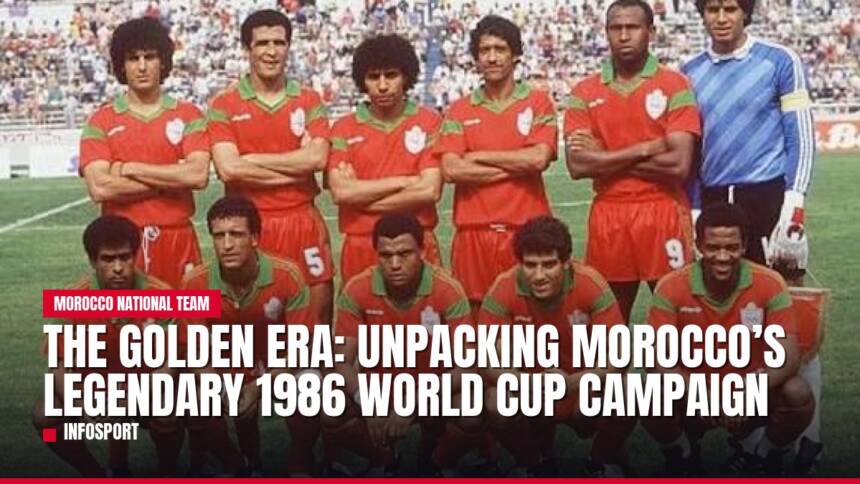
The 1986 FIFA World Cup in Mexico remains a pivotal moment in the annals of Moroccan football history. It was a tournament where the Atlas Lions didn’t just participate; they roared onto the global stage, shattering expectations and carving out a legacy that continues to inspire generations. This extraordinary journey, often referred to as the “Golden Era,” saw Morocco 1986 World Cup team become the first African and Arab nation to advance past the group stage. Their remarkable achievement was a testament to skill, resilience, and tactical brilliance, forever etching their names into the sport’s rich tapestry.
This article delves deep into every facet of that legendary campaign, from the challenging qualification rounds to the unforgettable matches on Mexican soil. We explore the key figures, the tactical masterstrokes, and the lasting impact of a team that defied the odds and captured the hearts of football fans worldwide.
Setting the Stage: Mexico 1986 and African Aspirations
The 1986 FIFA World Cup was a vibrant spectacle, hosted by Mexico for the second time. For African nations, the tournament represented an opportunity to prove their growing prowess on the international stage. Despite significant talent, African teams had historically struggled to make a deep run in the World Cup, often facing logistical hurdles, limited resources, and systemic biases. Morocco’s entry into this tournament carried the hopes and dreams of an entire continent, eager to see one of their own break through the glass ceiling.
The Atlas Lions arrived in Mexico not as favorites, but as determined outsiders, ready to challenge the established order. Their preparation was meticulous, and their spirit was unyielding, setting the stage for a campaign that would redefine expectations for African football.

The Road to Mexico: Morocco’s Qualification Journey
Morocco’s path to the 1986 World Cup was arduous, a series of challenging encounters against formidable African opponents. The qualification process demanded unwavering focus, strategic planning, and exceptional performances from the players.
Overcoming Obstacles: The African Qualifiers
The African qualification rounds for the 1986 World Cup were structured as a knockout competition, requiring teams to win multiple two-legged ties to secure one of the two coveted spots. Morocco’s journey began with a strong start, showcasing their intent and quality from the outset.
In the first round, Morocco faced Sierra Leone. The Atlas Lions secured a comfortable 5-0 aggregate victory, winning 4-0 at home and 1-0 away. This early success built confidence and allowed the team to fine-tune their strategies.

The second round brought a sterner test against Malawi. Morocco demonstrated their resilience, overcoming Malawi with a 2-0 aggregate scoreline, after a 2-0 home win and a disciplined 0-0 draw away. These matches highlighted the defensive solidity that would become a hallmark of their later World Cup performances.
The third round pitted Morocco against Egypt, a regional rival with a rich footballing tradition. This was a highly anticipated clash, and Morocco rose to the occasion, securing a crucial 2-0 victory at home. Despite a 0-0 draw in the return leg in Cairo, the Atlas Lions advanced, demonstrating their ability to perform under pressure against top-tier opposition.
The final hurdle was a two-legged playoff against Libya. This was arguably the most intense and critical phase of qualification. Morocco secured a vital 3-0 victory in the first leg played at home. The return leg in Libya was a tense affair, but Morocco managed to hold their nerve, despite losing 1-0, securing their place in the World Cup with a 3-1 aggregate score. This hard-fought qualification journey underscored the team’s mental fortitude and tactical discipline, qualities that would serve them well in Mexico.
The Architects of History: Squad and Coaching Staff
The success of the Morocco 1986 World Cup campaign was not merely a stroke of luck but the result of careful planning, exceptional individual talent, and brilliant leadership. The squad was a cohesive unit, blending experienced veterans with promising young talents, all guided by a visionary coach.
Badou Zaki: The Legendary Goalkeeper
Central to Morocco’s defensive prowess was their captain and goalkeeper, Ezaki Badou, affectionately known as Zaki. His performances in 1986 were nothing short of heroic. Zaki commanded his area with authority, made breathtaking saves, and instilled confidence in his backline. His leadership was crucial, especially in the high-stakes matches against European giants. Zaki’s exploits earned him widespread acclaim, cementing his place as one of the legendary Moroccan football players and arguably the finest African goalkeeper of his generation.
José Faria: The Mastermind Coach
The tactical genius behind Morocco’s historic run was Brazilian coach José Faria. Faria was a pragmatic and astute manager who understood how to get the best out of his players. He instilled a disciplined defensive system, combined with quick counter-attacking football, which proved incredibly effective against more fancied opponents. His ability to motivate, organize, and strategize was instrumental in Morocco’s success. Faria’s impact on the team, as one of the masterminds behind the Atlas Lions, cannot be overstated; he transformed a talented group of individuals into a formidable collective force.

Key Players and Their Roles
Beyond Zaki, the 1986 squad boasted a wealth of talent across the pitch:
- Mohamed Timoumi: A creative midfielder, Timoumi was the engine of the team, dictating play and providing crucial assists. His vision and passing range were vital in transitioning from defense to attack.
- Abdelkrim Merry “Krimau”: A prolific striker, Krimau was a constant threat to opposition defenses with his pace and clinical finishing. He scored key goals that propelled Morocco forward.
- Mustapha Khairi: Known for his powerful shots and aerial ability, Khairi was a versatile player who contributed both defensively and offensively. His goal against Portugal was a moment of pure brilliance.
- Aziz Bouderbala: An elegant and skillful winger, Bouderbala tormented defenders with his dribbling and flair. He was instrumental in creating attacking opportunities and stretching opposition backlines.
- Lahcen Ouadani: A solid and reliable defender, Ouadani was part of the disciplined backline that frustrated many attacking talents.
- Noureddine Bouyahyaoui: Another stalwart in defense, Bouyahyaoui’s strength and positioning were key to Morocco’s defensive resilience.
- Abdelmajid Dolmy: A midfield maestro, Dolmy was known for his calm presence, exceptional ball control, and intelligent distribution. He was the anchor of the Moroccan midfield.
- Tarik El Haddaoui: A dynamic forward, El Haddaoui provided pace and energy upfront, often creating space for his teammates.
This blend of talent, experience, and tactical discipline created a team that was greater than the sum of its parts, ready to challenge the world’s best.
Breaking New Ground: Morocco’s Group Stage Triumph
Placed in Group F, alongside footballing giants England, Poland, and Portugal, Morocco was widely considered the underdog. Few predicted they would emerge from such a challenging group, but the Atlas Lions were determined to prove their critics wrong.
Match 1: Morocco vs. Poland – A Promising Start
Morocco’s opening match was against Poland, a strong European side featuring talented players. The game, played on June 2, 1986, was a tense affair. Morocco displayed their defensive organization from the outset, frustrating the Polish attack. Despite several attempts from both sides, neither team could break the deadlock. The match ended in a goalless draw, a valuable point for Morocco against a respected opponent. This result immediately signaled that the Atlas Lions were not to be underestimated, showcasing their tactical discipline and resilience.
Match 2: Morocco vs. England – Holding the Giants
The second group stage match, on June 6, 1986, saw Morocco face England, one of the tournament favorites. England boasted stars like Gary Lineker and Peter Shilton. The challenge became even greater when England’s captain, Bryan Robson, was injured early in the game, and Ray Wilkins was sent off, reducing England to ten men. Despite the numerical advantage for a significant portion of the match, Morocco maintained their disciplined approach, refusing to open up excessively. They created a few chances but ultimately settled for another commendable 0-0 draw. This result was a significant achievement, proving that Morocco could stand toe-to-toe with European powerhouses and suggesting that the Atlas Lions’ roar was getting louder.
Match 3: Morocco vs. Portugal – Making History
The final group stage match against Portugal on June 11, 1986, was a do-or-die encounter. Portugal, despite their talent, had underperformed in their previous matches. Morocco, however, seized the moment with an electrifying performance. Abdelkrim Merry “Krimau” opened the scoring in the 19th minute, sending Moroccan fans into raptures. Mustapha Khairi then doubled the lead with a spectacular long-range effort in the 26th minute, cementing Morocco’s dominance. Portugal pulled one back in the second half, but Krimau sealed the historic victory with his second goal in the 84th minute, making the final score 3-1.
This sensational victory not only secured Morocco’s first-ever World Cup win but also propelled them to the top of Group F, ahead of England, Poland, and Portugal. It was an unprecedented achievement for an African nation, marking the first time a team from the continent had advanced to the knockout stages of the FIFA World Cup. The streets of Morocco erupted in celebration, and the world took notice of the Atlas Lions.
The Knockout Stage: A Clash with West Germany
Having topped their group, Morocco advanced to the Round of 16, where they faced a daunting challenge: West Germany, one of the most consistent and powerful teams in World Cup history, featuring legends like Lothar Matthäus and Karl-Heinz Rummenigge.
A Tense Encounter: Morocco vs. West Germany
The match, played on June 17, 1986, was a classic David vs. Goliath battle. Morocco, despite being the underdogs, approached the game with their characteristic tactical discipline and unwavering belief. They defended resolutely, frustrating the German attack and denying them clear-cut opportunities. Badou Zaki delivered another masterclass in goalkeeping, pulling off several crucial saves to keep Morocco in the game.
The match remained goalless for 87 minutes, a testament to Morocco’s incredible resilience and tactical execution. The Atlas Lions even had their moments in attack, threatening the German goal with swift counter-attacks. However, in the 88th minute, disaster struck for Morocco. A free-kick awarded to West Germany just outside the box was expertly curled into the net by Lothar Matthäus. The late goal was a heartbreaking blow, ending Morocco’s dream run with a 1-0 defeat.
The Dignity in Defeat
Despite the agonizing loss, Morocco’s performance against West Germany earned them immense respect. They had pushed one of the world’s footballing superpowers to the brink, demonstrating that African football was capable of competing at the highest level. The team left the tournament with their heads held high, having made history and inspired millions. Their journey was not just about winning; it was about demonstrating capability, resilience, and the sheer joy of competition. This set a new benchmark for Morocco’s World Cup appearances.
The Enduring Legacy of the Morocco 1986 World Cup Campaign
The Morocco 1986 World Cup campaign was far more than a series of football matches; it was a watershed moment that left an indelible mark on Moroccan, African, and indeed, global football.
Inspiring a Continent: African Football’s New Horizon
Morocco’s achievement of being the first African nation to reach the knockout stages shattered long-held stereotypes and opened the door for future African successes. It proved that African teams possessed the talent, tactical acumen, and mental strength to compete with the best in the world. This performance paved the way for Cameroon’s quarter-final run in 1990, Senegal’s in 2002, and Ghana’s in 2010, culminating in Morocco’s own historic semi-final appearance in the 2022 World Cup journey. The 1986 team showed a continent what was possible, fostering belief and ambition within African football associations and players alike.
A Source of National Pride and Identity
For Morocco, the 1986 World Cup campaign was a profound source of national pride. The team became symbols of Moroccan resilience, ambition, and cultural identity. The celebrations that swept the nation after each positive result underscored the unifying power of football. The players were hailed as national heroes, and their achievements transcended the sport, becoming a part of the national narrative. This period significantly boosted the cultural and social impact of the Morocco National Team.
Paving the Way for Future Generations
The legacy of 1986 extended to the development of Moroccan football. It inspired a new generation of footballers to pursue their dreams, demonstrating that reaching the pinnacle of the sport was an attainable goal. The tactical lessons learned, the experience gained by the players, and the boost in national confidence contributed to the continued growth of Moroccan football, influencing coaching philosophies and player development programs for decades to come. Their journey also highlighted the importance of strong national team foundations, including those built through Africa Cup of Nations campaigns.
The history and achievements of the Morocco National Football Team are deeply intertwined with this golden era. It set a benchmark for future generations and remains a shining example of what can be achieved through teamwork, determination, and visionary leadership.
The Golden Era Revisited: A Timeless Achievement
The Morocco 1986 World Cup campaign stands as a monument to courage, skill, and the indomitable spirit of football. It was a period when the Atlas Lions defied expectations, challenged the established order, and etched their names into the history books. Their journey in Mexico was more than just a series of matches; it was a powerful narrative of ambition, resilience, and groundbreaking achievement that continues to resonate with fans and players, inspiring the ongoing evolution of Moroccan football and its historic football rivalries.
The legacy of 1986 is not merely about reaching the knockout stages but about the manner in which it was achieved: with dignity, tactical brilliance, and a flair that captured the imagination of the world. It remains a golden chapter, a source of immense pride, and a perpetual reminder of the Atlas Lions’ enduring capacity to surprise and succeed on the grandest stage.
Frequently Asked Questions (FAQ) about Morocco’s 1986 World Cup Campaign
Q1: What was Morocco’s biggest achievement in the 1986 World Cup?
A1: Morocco’s biggest achievement was becoming the first African and Arab nation to advance past the group stage in the FIFA World Cup. They topped a challenging Group F, which included England, Poland, and Portugal, before facing West Germany in the Round of 16.
Q2: Who was the coach of the Morocco team in the 1986 World Cup?
A2: The Morocco national football team in the 1986 World Cup was coached by the Brazilian tactician José Faria. His disciplined defensive strategies and effective counter-attacking play were instrumental in the team’s historic success.
Q3: Which teams did Morocco play against in the group stage of the 1986 World Cup?
A3: In the group stage (Group F) of the 1986 World Cup, Morocco played against Poland (0-0 draw), England (0-0 draw), and Portugal (3-1 victory). They finished first in their group with 4 points.
Q4: Who were some of the key players for Morocco in the 1986 World Cup?
A4: Key players for Morocco in the 1986 World Cup included legendary goalkeeper and captain Ezaki Badou (Zaki), creative midfielder Mohamed Timoumi, prolific striker Abdelkrim Merry “Krimau,” influential midfielder Aziz Bouderbala, and goal-scorer Mustapha Khairi.
Q5: How did Morocco perform in the knockout stage of the 1986 World Cup?
A5: In the Round of 16, Morocco faced West Germany, who were eventual finalists. Morocco put up a valiant fight, holding the strong German side to a goalless draw for 87 minutes, before a late free-kick goal from Lothar Matthäus resulted in a heartbreaking 1-0 defeat for the Atlas Lions.