
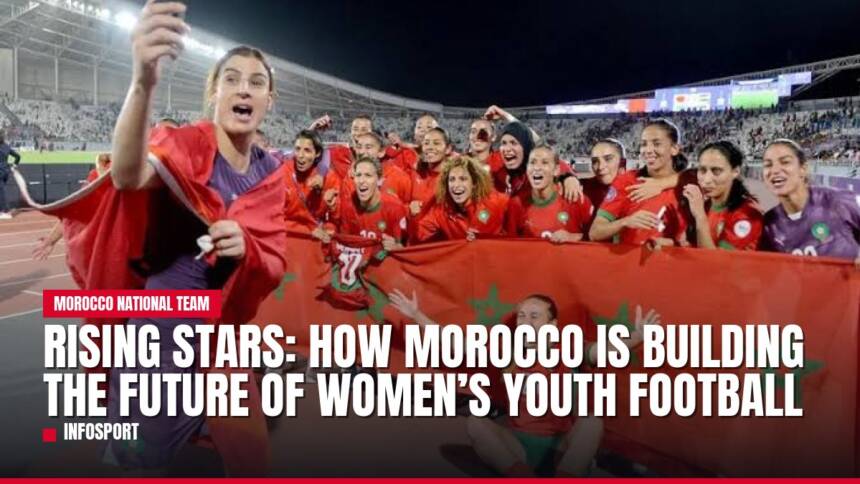
Women’s football in Morocco is no longer a side story; it is a central part of the country’s football identity. The senior Atlas Lionesses have shown what Moroccan women can achieve on the world stage, and now the focus is shifting to the next generation: girls and young female players who are entering structured pathways from grassroots to national teams.
This article explains how Morocco is developing its women’s youth football system: the roles of the FRMF, clubs, academies, and schools; the typical pathway for a young female player; and the specific challenges and opportunities that shape the women’s game.
Why women’s youth football is growing now
The recent rise of women’s football in Morocco is not accidental. Several factors have come together to create a more supportive environment for girls who want to play seriously.
FRMF strategy and investment
The Royal Moroccan Football Federation (FRMF) has made women’s football a priority. Key elements include:
Dedicated budgets for women’s leagues and youth competitions.
Requirements for top clubs to field women’s teams, including youth categories.
Investment in coaching courses and facilities that are increasingly open to female players.
This strategic push has turned women’s football from a niche activity into a structured pathway with clear goals: local clubs, regional academies, national youth teams, and the senior national team.

Infrastructure becoming more accessible
Facilities such as the Mohammed VI Football Academy and regional training centers are now more open to female players. While men’s football still dominates in terms of numbers, girls increasingly train on:
Quality pitches with proper markings and goals.
Gyms and recovery areas previously used mainly by male players.
Centralized locations that allow regional and national youth teams to gather regularly.
Access to better infrastructure raises training standards and signals to families that women’s football is taken seriously.
The Atlas Lionesses effect
The senior women’s national team has had a huge impact on youth participation. When young girls see Moroccan women:

Qualifying for major tournaments.
Competing against top nations.
Being celebrated in media and at home.
…football becomes a realistic dream, not just a hobby. Clubs and schools report more girls asking to join teams, and parents are more willing to support their daughters’ involvement.
From first kick to national team: the pathway for young female players
Morocco’s women’s youth system is still developing, but a recognizable pathway is emerging.
Grassroots: schools, local clubs, and community programs
For most girls, football starts informally:
Playing in streets, schoolyards, or local neighborhoods.
Joining school sports programs where football is offered.
Entering small local clubs that have begun to open girls’ sections.
These entry points are crucial. They:
Introduce girls to basic skills in a fun, low‑pressure environment.
Help break down cultural barriers by normalizing girls playing football.
Allow coaches to spot players with natural ability and enthusiasm.
Talent identification and scouting for girls
Scouting for female talent is more organized than in the past:
FRMF and club scouts attend local tournaments, school competitions, and regional selection days.
They look not only for technical skill but also for attitude, speed, and game understanding.
Networks now reach beyond big cities into smaller towns and rural areas, though coverage is still uneven.
Once identified, promising players are invited to:
More Read

Trials at regional academies or larger clubs.
Training camps with youth national team staff in attendance.
This step is often the first time a girl experiences structured, high‑level training.
Academies: where talent is refined
Specialized academies play a central role for serious young female players:
National academies (such as the Mohammed VI Football Academy) host elite prospects for intensive camps and longer programs.
Regional academies and top clubs provide regular training, often several times a week, alongside school.
In these environments, players work on:
Technical skills: passing, dribbling, shooting, first touch.
Tactical understanding: positioning, shape, decision‑making.
Physical development: speed, strength, endurance, injury prevention.
Mental aspects: confidence, resilience, handling pressure.
Many academies also support education and life skills, recognizing that not every player will become a professional, but all can benefit from discipline and teamwork.
Youth leagues and national youth teams
Competitive experience is essential. Morocco has been developing:
Youth leagues for girls in various age groups (e.g., U‑15, U‑17, U‑20), often linked to clubs and academies.
National youth teams (U‑17, U‑20) that gather the best players for training camps and international tournaments.
These stages help players:
Adapt to higher intensity and faster decision‑making.
Learn what it means to represent their region or country.
Prepare for the demands of senior women’s football, both domestically and abroad.
Exceptional performers in youth teams may then be called into:
Senior club teams in the women’s league.
Senior national team training camps, with a chance to earn caps.
What makes women’s youth development different from men’s?
While many structures are similar, there are important differences in how girls and young women experience football in Morocco.
Later start ages and fewer early opportunities
Many girls start organized football later than boys, often in their early teens rather than primary school age. Reasons include:
Fewer girls’ teams at very young age groups.
Family or cultural hesitancy about young girls playing mixed or visible football.
Less visibility of female role models in earlier generations.
This means coaches often work with players who are:
Highly motivated but less technically drilled at young ages.
Eager to catch up, requiring tailored technical programs.
Cultural and social barriers
Despite rapid change, some barriers remain:
Families may worry about travel, training times, or perceptions of football as “for boys”.
In some areas, girls have fewer safe spaces to play.
Female players may face more scrutiny about appearance, behavior, and balancing sport with education.
Addressing these requires:
Clear communication with parents about schedules, safety, and educational support.
Visible female coaches and staff as role models.
Success stories from older players who have balanced football with school and careers.
Specific physical and psychological needs
Female athletes have different physical development patterns and injury risks compared to males. Good women’s youth programs now consider:
Age‑appropriate strength and conditioning.
Injury prevention focused on common issues in women’s football.
Psychological support around confidence, body image, and pressure.
Coaches trained in these areas can better support long‑term development and reduce dropout rates.
Challenges that still need to be solved
Progress is clear, but several challenges remain if Morocco wants to sustain and accelerate growth in women’s youth football.
Consistent funding and resources
While FRMF investment has increased, consistent funding at all levels is still a work in progress. Key needs include:
Equipment (balls, kits, goals) for girls’ teams in smaller clubs.
Travel budgets for away matches and regional/national camps.
Access to medical support, physiotherapy, and nutrition guidance.
Without this, talented players in less wealthy areas may drop out or never be seen.
More specialized coaches for women’s football
Coaching quality is improving, but there is still a need for:
More coaches trained specifically in women’s football.
More female coaches at youth level, providing relatable role models.
Ongoing education on female athlete development, not just generic coaching.
Investing in coaches is as important as investing in facilities.
Retaining players through the transition to senior football
One of the biggest tests is keeping players engaged as they move from late teens into senior football. Challenges include:
Balancing football with university studies or work.
Limited professional opportunities compared to men’s football.
Fewer visible career paths beyond playing (coaching, scouting, administration).
Creating more roles for former female players in football can help show that there is a long‑term future in the sport, not just as players but as professionals.
Role models and the next generation
The impact of visible success cannot be overstated. When young girls see:
The Atlas Lionesses competing globally.
Older teammates or local players progressing to national teams or clubs abroad.
Female coaches, referees, and staff working in football.
…it changes what they believe is possible for themselves.
Morocco is already seeing a new generation of young female talents emerging in:
Domestic youth leagues.
National youth team camps.
Diaspora players with Moroccan heritage joining the pathway from Europe and beyond.
These players represent the future of women’s football in the kingdom, and their development will determine how competitive Morocco can be in the coming decades.
FAQ: Women’s Youth Football in Morocco
What is driving the growth of women’s youth football in Morocco?
Growth is driven by strategic investment from the FRMF (women’s leagues, youth competitions, coaching programs), better access to facilities, and the inspiring success of the senior women’s national team, which has made football a more realistic and attractive option for girls.
How are young female players identified and developed?
Girls are discovered through school programs, local clubs, and scouting networks that attend grassroots tournaments and selection days. Promising players are invited to academies and youth national team camps, where they receive structured training and competitive experience before progressing to senior football.
What role do academies play for female players?
Academies provide high‑quality coaching, regular training, and competitive matches, along with support for education and personal development. They are key in turning raw talent into technically and tactically prepared players ready for senior women’s football.
What are the main challenges for women’s youth football?
Challenges include overcoming remaining cultural barriers, ensuring consistent funding and resources for girls’ teams, developing more specialized (and female) coaches, and creating clear career paths so players can stay in football beyond their youth years.