Morocco National Team Fixtures: The Economic Powerhouse
The roar of the crowd, the tension of a penalty shootout, the jubilant celebrations—these images typically come to mind when we think about Morocco national team fixtures. Yet beyond the ninety minutes of play lies a sophisticated and lucrative business ecosystem. The national team’s commercial success is crucial to its ability to compete on the world stage, funding everything from player development to state-of-the-art training facilities. This article explores the complex world of sponsorship and revenue generation that fuels the Atlas Lions, examining how matches become major economic events.
Each game represents a commercial opportunity for business partners and the FRMF, from high-profile international competitions such as the FIFA World Cup and the Africa Cup of Nations (AFCON) to friendly matches and qualifiers. Understanding this financial dimension provides insight into the sustainability and growth of football in Morocco, highlighting the strategic decisions and partnerships that underpin the team’s journey.
Modern football is a global industry, with national teams serving as powerful cultural and economic ambassadors. Moroccan fixtures are not merely sporting events but major commercial properties attracting significant investment. Success on the pitch increases the commercial appeal of the Atlas Lions, creating a virtuous cycle in which sporting achievements drive financial growth that can then be reinvested in player development and infrastructure.
The commercialisation of football has transformed national federations from purely administrative bodies into complex organisations with extensive portfolios of rights, brands, and partnerships. For Morocco, a nation with passionate supporters and a fast-growing economy, this commercial engine is essential to maintaining its competitive edge across Africa and beyond.
Sponsorship: The Lifeblood of National Team Operations
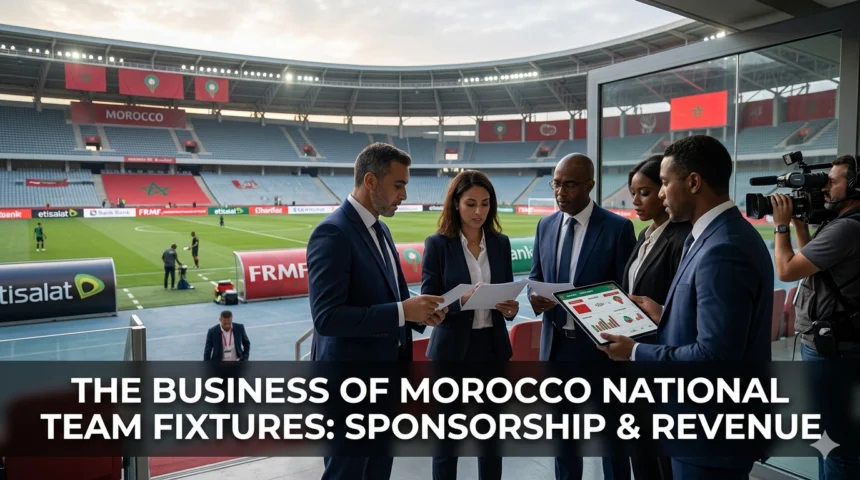
Sponsorship forms the backbone of revenue generation. Such partnerships provide companies with vital funding, brand exposure, and a tangible connection to the national pride associated with the team. Agreements vary widely, from official kit suppliers to diverse commercial partners.
Official Equipment & Kit Sponsors
The most visible sponsorship form involves official kit and equipment suppliers. These multi-year, multimillion-dollar agreements see global sportswear giants outfitting the team. For sponsors, this represents an unmatched opportunity for brand exposure on the international stage, particularly at major tournaments with substantial viewership. The FRMF secures high-quality equipment for players while generating steady income.
Such partnerships extend beyond jerseys to include training gear, travel wear, and merchandise, creating a unified brand image for the team and its supporters.
Tiered Commercial Partnerships
Beyond the primary kit sponsor, the FRMF operates a tiered system of commercial partners encompassing airline companies, telecommunications firms, financial institutions, automotive brands, and consumer goods enterprises. Each tier offers different levels of brand association, marketing rights, and financial commitment.
- Platinum/Gold Sponsors: Major partners with significant backing, receiving extensive branding at matches, in promotional materials, and during team events.
- Silver/Bronze Sponsors: Partners investing smaller but still substantial amounts, gaining visibility through specific activations, digital campaigns, or regional marketing.
- This diverse portfolio provides broad financial support and enables customised marketing strategies appealing to various consumer groups.
Domestic and International Sponsor Strategies
The dual appeal of the Morocco national team is evident in its mix of local and international sponsors. Partnerships with Moroccan companies leverage strong national sentiment and reach domestic consumers, promoting both national pride and economic development. Conversely, international brands capitalise on the team’s global reach, particularly following successful tournament performances. This balance ensures local relevance and global commercial viability for Morocco’s national team fixtures and schedule.
Primary Revenue Streams
Sponsorship represents only one component of the revenue equation. The FRMF diversifies income through several critical streams vital to the financial health and operational capabilities of the national team.
Broadcasting Rights: Access to Global Audiences
Television and streaming platform deals constitute the largest revenue source for most national football federations. Agreements with broadcasters, both domestic and international, enable millions of fans worldwide to watch Morocco national team matches live. Rights packages typically include qualifying campaigns, friendlies, and tournament footage (though FIFA or CAF usually handle major tournament rights).
The value of broadcasting agreements correlates directly with team popularity and performance. A successful campaign, such as Morocco’s historic semifinal run at the 2022 FIFA World Cup, significantly boosts viewership and future agreement valuations. The FRMF negotiates strategically to ensure maximum reach and financial returns, allowing global fans to follow every event on the fixture calendar.
Ticket Sales and Stadium Revenue
Home matches for the national team are highly anticipated events, often achieving sell-out crowds. Significant revenue derives from tickets to qualifiers, friendlies, and tournament games, with pricing reflecting opponent strength, match importance, and stadium capacity.
Beyond standard ticket prices, premium seating, hospitality packages, and VIP experiences generate additional income while catering to diverse fan and corporate clientele. Moroccan supporters are renowned for their passion, transforming these events into both financially rewarding ventures and powerful displays of national unity.

Merchandise and Fan Products
Merchandise sales, including replica jerseys, scarves, hats, flags, and apparel, enable supporters to visibly demonstrate their allegiance. This revenue stream proves particularly robust following successful tournaments as fans seek memorabilia. Working closely with kit sponsors, the FRMF oversees design, production, and distribution of official merchandise to ensure quality and authenticity.
Distribution channels include official team stores, online platforms, and retail partners. High demand for official gear, particularly after recent memorable matches, creates steady income and strengthens brand identity.
Tournament Prize Money
On-field success translates directly into financial rewards through prize money from international and continental competitions. FIFA and CAF offer substantial payments for participation and performance in tournaments such as the World Cup and AFCON. While portions are typically distributed to players and staff as bonuses, federations retain significant shares.
Reaching the World Cup semifinals, for instance, yields substantial cash that can be reinvested in youth academies, infrastructure, and team development. Access to these lucrative opportunities begins with strong performances in World Cup Qualifiers and AFCON 2025 Qualifiers.
Friendly Matches and Exhibition Games
While competitive fixtures remain paramount, friendly matches contribute meaningfully to revenue generation. High-profile encounters against other strong national teams can command substantial appearance fees, particularly at neutral venues or in regions with significant Moroccan diaspora populations. These matches also provide valuable preparation opportunities, allowing coaches to test tactics and player combinations.
The FRMF carefully schedules Morocco national team friendlies to balance sporting benefits with commercial returns, creating opportunities for additional broadcasting deals, ticket sales, and promotional activities.
Performance’s Impact on Commercial Success
An undeniable correlation exists between on-field performance and commercial viability. Sporting success amplifies every revenue stream.
The 2022 World Cup Effect
Morocco’s historic semifinal run at the 2022 FIFA World Cup in Qatar transformed the commercial landscape for Morocco national team fixtures. This unprecedented success captured global attention and elevated the team’s profile substantially:
- Enhanced Sponsorship Appeal: New visibility and partnership value attracted both existing and prospective sponsors.
- Broadcast Viewership Surge: Millions watched Morocco matches, increasing future broadcasting rights valuations.
- Merchandise Sales Explosion: International demand for official jerseys and fan merchandise skyrocketed.
- Increased Prize Revenue: Tournament progression generated significantly higher FIFA payouts.
- Elevated Brand Value: The national team brand became substantially more valuable and widely recognised worldwide.
This success demonstrates how sporting achievement directly drives commercial growth, which subsequently reinvests into the sport through enhanced infrastructure and resources.
Sustaining Growth and Future Development
Maintaining this commercial momentum requires consistent performance in upcoming Morocco national team fixtures, including World Cup qualifiers and AFCON 2025 qualifiers. Regular major tournament qualification and strong performances keep the team in the international spotlight, sustaining sponsor interest, broadcaster engagement, and fan enthusiasm.
The FRMF’s strategy embraces comprehensive sport development through investments in youth programmes, infrastructure improvements, and senior team resources, creating a sustainable talent pipeline. This long-term vision proves essential for sustained commercial success.
Challenges and Opportunities in the Commercial Landscape
While the outlook remains positive, the commercialisation environment presents both challenges and opportunities.
Key Challenges
- Market Competition: The global sports market is intensely competitive, with numerous national teams and club leagues competing for sponsorship dollars and audience attention.
- Economic Volatility: Global and regional economic downturns can impact sponsorship budgets and consumer spending on merchandise and tickets.
- Piracy and Counterfeiting: Unauthorised merchandise and illegal streaming undercut legitimate revenue sources.
- Infrastructure Development: Continued investment in stadium facilities and training infrastructure is necessary to host major events and attract top-tier opponents for Morocco’s national team friendlies, though progress continues.
Growth Opportunities
- Digital Engagement Expansion: Social media platforms, official applications, and digital content services can create new revenue streams through advertising, subscriptions, and direct fan interaction.
- Global Diaspora Market: The worldwide Moroccan diaspora represents a large and passionate fanbase, offering international marketing and event opportunities.
- Youth Academy Development: Cultivating and monetising youth academies develops future talent while potentially generating transfer revenue.
- Tournament Hosting: Co-hosting the 2030 World Cup alongside Spain and Portugal presents tremendous opportunities for economic growth, infrastructure development, and increased commercial revenues.
- E-sports and Gaming: Licensed e-sports ventures and tournaments could tap into rapidly growing markets among younger demographics.
The Royal Moroccan Football Federation’s Role
The FRMF manages all commercial aspects of the Moroccan national team, with responsibilities including:
- Commercial Rights Management: Negotiating and administering all sponsorship, broadcasting, and licensing agreements.
- Financial Oversight: Ensuring transparent and responsible management of revenue and expenditure.
- Development Investment: Reinvesting profits into grassroots football, youth academies, coaching education, and national team infrastructure, ensuring readiness for every fixture and match preview.
- Strategic Planning: Developing long-term visions for sporting achievement and commercial expansion.
- Brand Protection: Safeguarding the Morocco national team brand against unauthorised use and intellectual property violations.
Through the FRMF’s proactive commercialisation approach and strategic investments, Moroccan football’s financial standing and global profile have significantly strengthened. Their efforts ensure that commercial success directly benefits the nation’s wider football ecosystem.
Future Outlook for Morocco National Team Fixtures
The commercial future appears promising. Building on recent achievements, particularly the 2022 World Cup performance, the team has established itself as a major commercial force in African and global football. Continued growth is anticipated through ongoing infrastructure investment, youth development, and strategic partnerships.
Revenue generation and brand expansion opportunities are substantial, with the 2030 World Cup co-hosting arrangements and upcoming major tournaments on the horizon. The FRMF’s commitment to professionalising commercial operations, embracing digital innovation, and nurturing its passionate fanbase will be instrumental in maximising the economic potential of the Atlas Lions. Every post-match analysis and fixture on the calendar contributes to this ongoing commercial narrative.
Summary
The business of Morocco’s national team fixtures represents a dynamic and multifaceted ecosystem powered by sponsorship, broadcasting rights, ticket sales, merchandise, and prize money. Sporting success, exemplified by the 2022 World Cup campaign, serves as a powerful catalyst for commercial opportunities and investment. The Royal Moroccan Football Federation plays a central role in managing these income streams and reinvesting strategically to ensure long-term growth and competitiveness.
As the Atlas Lions continue to inspire on the pitch, the commercial apparatus will evolve, shaping Moroccan football’s future and solidifying Morocco’s position within the global football economy. The journey from pitch to balance sheet demonstrates football’s dual power as both sport and business.
Frequently Asked Questions
What are the main sources of revenue for Morocco’s national team fixtures?
Principal revenue streams include major sponsorships (kit suppliers, federation sponsors, tournament partners), broadcasting rights for matches, ticket sales for home games, merchandise sales (jerseys and fan apparel), and prize money earned from tournament participation and performance in competitions such as the FIFA World Cup and AFCON.
How do sporting successes affect the commercial value of the Morocco national team?
Commercial value increases substantially with sporting success. Reaching the World Cup semifinals, for example, generates greater global exposure, increased sponsor demand, more lucrative television agreements, merchandise sales surges, and larger prize distributions. This creates a positive feedback loop encouraging further investment.
Who holds the commercial rights for Morocco national team matches?
The Royal Moroccan Football Federation (FRMF) manages all commercial rights for the national team. This includes negotiating sponsorship contracts, securing broadcasting agreements, licensing products, and overseeing financial management to ensure transparency and reinvestment in Moroccan football development.
What impact do friendly matches have on the commercial value of the Morocco national team?
Friendly matches contribute meaningfully to commercial value. High-profile friendlies against top teams, particularly at neutral venues or in diaspora regions, attract substantial appearance fees. They also generate ticket sales and broadcasting revenue while providing valuable preparation for competitive Morocco national team fixtures.
What challenges does the Moroccan national team face in realising its commercial potential?
Key challenges include intense global competition for sponsorship and viewership, potential economic volatility affecting budgets, piracy and merchandise counterfeiting, and ongoing infrastructure investment needs. However, substantial growth opportunities exist in digital engagement, the global fanbase, and major tournament hosting.