Morocco’s AFCON Squads Through the Eras: A Roster Retrospective
The history of Moroccan football at the Africa Cup of Nations represents a rich tapestry woven with moments of triumph, heartbreak, and unwavering national pride. This comprehensive retrospective examines the evolution of the Atlas Lions, from their foundational years to their emergence as a continental powerhouse. It delves into the players, formations, and defining characteristics of the teams that have represented Morocco on Africa’s biggest stage, offering unique insight into the nation’s footballing journey. For a broader understanding of their continental endeavors, explore Morocco’s Africa Cup of Nations (AFCON) Record.
The Formative Years: The 1970s and 1980s
Morocco’s initial forays into AFCON saw the development of a distinct footballing identity. The early squads were largely composed of domestically based players, showcasing the strength of the Moroccan league at the time.
The Golden Generation of 1976: A Legendary Roster
The pinnacle of this era was undoubtedly the 1976 AFCON-winning squad. Under Romanian coach Gheorghe Mărdărescu, this team etched its name into history by securing Morocco’s only continental title. The squad combined robust defenders, creative midfielders, and clinical attackers into a cohesive unit. Key figures included Ahmed Faras, the tournament’s top scorer and captain, who exemplified their attacking prowess. Others like Abdelmajid Dolmy, a masterful midfielder, and goalkeeper Tounsi Zaki provided the backbone. Their victory stood as a testament to tactical discipline and individual brilliance. A deeper dive into this achievement can be found in The Golden Generation: Morocco’s 1976 AFCON Triumph Explained.
Squads of the 1980s: Consistency and Near Misses
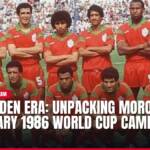
Following their historic 1976 victory, Morocco continued to field competitive teams throughout the 1980s. Under coaches like Just Fontaine and later José Faria, the Atlas Lions reached the semi-finals in 1980 and 1986. These teams often featured a blend of experience from the 1976 squad alongside emerging talents. Players like Badou Zaki, one of Morocco’s most iconic goalkeepers, and Mohammed Timoumi, a gifted midfielder, became central figures. The 1986 squad, in particular, showcased a strong defensive unit and well-organized midfield that proved difficult to break down.
The 1990s: European Influence and Renewed Ambition
The 1990s marked a period when increasing numbers of Moroccan players began competing in European leagues, bringing a new dimension to the national team. These squads featured enhanced technical ability and tactical sophistication.

Squads of the Mid-to-Late 1990s: Talented but Unfulfilled
Despite boasting exceptionally talented players, Moroccan squads in the 1990s often flattered to deceive. The 1998 team featured stars like Mustapha Hadji, the African Player of the Year, alongside Nourredine Naybet, a formidable defender, and Salaheddine Bassir. They played an attractive brand of football but were unable to progress beyond the group stages, a pattern that unfortunately repeated in subsequent tournaments. These teams were often characterized by individual flair but sometimes lacked the collective cohesion needed for deep tournament runs.
The Early 2000s: A Resurgent Force
The turn of the millennium saw a renewed sense of purpose, culminating in one of Morocco’s most memorable continental campaigns.
The 2004 Finalist Squad: A Team of Stars
Under coach Badou Zaki, the 2004 AFCON squad reached the final, captivating fans with their dynamic style. This team, widely considered another “golden generation,” boasted formidable talent. Marouane Chamakh led the line with his aerial prowess, while Youssouf Hadji and Jaouad Zairi provided creativity on the wings. Youssef Safri anchored the midfield, and Talal El Karkouri and Noureddine Naybet formed a robust defensive partnership. Though they narrowly lost to Tunisia in the final, this squad demonstrated Morocco’s potential to compete at the highest level. Their journey stands out among Morocco’s Top 5 AFCON Performances Beyond Their 1976 Victory.

Post-2004 Squads: Maintaining the Standard
Following the 2004 final, Morocco’s teams aimed to build on that momentum. While they didn’t reach another final immediately, the late 2000s featured a mix of established European-based players and promising domestic talents. However, consistency proved challenging, as the Atlas Lions often struggled to replicate their best form in subsequent tournaments.
The Lean Years and Transition (Late 2000s – Early 2010s)
This period marked a challenging phase for Morocco at AFCON, with squads often lacking the consistent star power or tactical stability of earlier eras, leading to early exits.
Struggles and Missed Opportunities
Between 2008 and 2013, Morocco experienced a series of disappointing performances. Teams often featured a blend of aging stars and young, unproven players, struggling to establish a coherent identity. Despite talented individuals like Mbark Boussoufa and Karim El Ahmadi, the collective unit often failed to gel effectively. This period highlighted the difficulties in squad building and maintaining momentum, contributing to the narrative explored in Why Morocco Hasn’t Won AFCON Since 1976: A Deep Dive into Challenges.
The Renaissance and Modern Era (Mid-2010s – Present)
The mid-2010s heralded a significant turning point, with renewed focus on professionalization, talent development, and attracting top coaching talent. This led to a resurgence in squad quality and performance.
Hervé Renard’s Impact and the Rise of New Stars
Under coach Hervé Renard’s stewardship (2016-2019), Morocco’s squads underwent significant transformation. Renard instilled discipline, tactical prowess, and a winning mentality. The teams featured a strong defensive core with players like Medhi Benatia, Achraf Hakimi, and Romain Saïss. Hakim Ziyech and Sofyan Amrabat provided midfield creativity, while Youssef En-Nesyri emerged as a key striker. These squads displayed a blend of European experience and homegrown talent, leading to strong performances, including a quarter-final appearance in 2017.
The Walid Regragui Era and World Cup Momentum
Walid Regragui’s appointment marked another pivotal moment. Building on previous foundations, he further solidified the team’s identity, emphasizing resilience, tactical flexibility, and collective spirit. The squads under his tenure, notably the one that made history at the 2022 FIFA World Cup, showcased remarkable depth. Key players like Yassine Bounou in goal, the defensive solidity of Nayef Aguerd and Achraf Hakimi, midfield engine Sofyan Amrabat, and attacking flair from Hakim Ziyech and Sofiane Boufal formed a formidable unit. While their AFCON results haven’t yet mirrored their World Cup success, recent squads suggest a bright future. Many of these players have become legends in their own right, as discussed in Key Players: The Legends Who Shaped Morocco’s AFCON Journey.
More Read

Evolution of Squad Composition: Key Trends
The composition of Morocco’s AFCON squads has undergone profound evolution over the decades, reflecting broader trends in global football and the development of Moroccan talent.
From Domestic Dominance to European Integration
In the early years, squads were predominantly composed of players from the Botola Pro, Morocco’s domestic league, showcasing the strength of local talent. However, from the 1990s onwards, the number of players based in European leagues steadily increased. This trend accelerated in the 21st century, with many key players now coming from top European clubs. This integration has brought higher tactical understanding, superior physical conditioning, and experience from competitive leagues, significantly enhancing the overall quality of the national team.
Tactical Flexibility and Player Roles
Early Moroccan squads often relied on traditional 4-4-2 or 4-3-3 formations, emphasizing strong individual performances. As football evolved, so did tactical approaches. Modern squads display greater flexibility, capable of adapting formations (4-3-3, 4-2-3-1, 5-4-1) based on opponents and game situations. Player roles have also become more specialized, with emphasis on strong defensive midfielders, attacking full-backs, and versatile forwards.
The Influence of Coaches on Squad Selection and Development
Coaches have played a crucial role in shaping Morocco’s national teams, influencing not only tactics but also player selection and development pathways.
Managerial Philosophies and Player Choices
Each coach has left an indelible mark on the roster. Gheorghe Mărdărescu built the 1976 winning squad on discipline and collective effort. Henri Michel in the late 90s sought to blend flair with solidity. Badou Zaki fostered a cohesive unit that reached the 2004 final. More recently, Hervé Renard meticulously scouted and integrated European-based talent, while Walid Regragui has championed a strong collective identity and mental fortitude. The coach’s philosophy often dictates the type of players called up, favoring certain attributes or tactical profiles. For a detailed look at the figures who guided these squads, see The Coaches Behind the Atlas Lions: Morocco’s AFCON Managerial History.
Conclusion: A Legacy of Evolution and Ambition
The journey through Morocco’s AFCON history is a testament to the nation’s enduring passion for football and its continuous pursuit of continental glory. From the legendary heroes of 1976 to the globally recognized stars of today, each squad has contributed a unique chapter to the Atlas Lions’ narrative. The evolution from predominantly domestic players to a team rich with international experience highlights dynamic adaptation to the demands of modern football. While the AFCON trophy has remained elusive since their 1976 triumph, the quality and potential within recent squads suggest that future generations are poised to write new, glorious chapters in the nation’s footballing history.
FAQ
What was the composition of Morocco’s 1976 AFCON-winning squad?
The 1976 AFCON-winning squad was primarily composed of domestically based players, showcasing the strength of the Moroccan league. Key figures included captain Ahmed Faras, midfield maestro Abdelmajid Dolmy, and goalkeeper Tounsi Zaki, among others. It was a cohesive unit known for its tactical discipline and individual brilliance.
How have Morocco’s AFCON squads evolved in terms of player origin?
Morocco’s squads have significantly evolved from being predominantly domestic-based in the 1970s and 80s to increasingly featuring players based in European leagues from the 1990s onwards. This trend has accelerated, with modern squads boasting a strong contingent of players from top clubs across Europe, bringing enhanced tactical and physical preparedness.
Who are some of the most influential players in Morocco’s AFCON history?
Many players have left an indelible mark on Morocco’s continental legacy. Iconic figures include Ahmed Faras (1976 captain and top scorer), Badou Zaki (legendary goalkeeper and later coach), Mustapha Hadji (1998 African Player of the Year), Noureddine Naybet (long-serving defender), Marouane Chamakh (key striker in 2004), Medhi Benatia (modern defensive leader), and current stars like Hakim Ziyech and Achraf Hakimi. For more details, refer to Key Players: The Legends Who Shaped Morocco’s AFCON Journey.
What was the significance of the 2004 AFCON squad for Morocco?
The 2004 squad, under coach Badou Zaki, reached the final of the tournament, captivating fans with their dynamic style of play. Although they lost to Tunisia, this team, featuring talents like Marouane Chamakh, Youssef Safri, and Noureddine Naybet, demonstrated Morocco’s potential to compete at the highest continental level and is considered one of their strongest teams since 1976.
How have coaching philosophies impacted Morocco’s AFCON squad selections?
Coaching philosophies have profoundly shaped squad selections. Different coaches have favored varying tactical approaches and player attributes. Gheorghe Mărdărescu prioritized discipline and teamwork, while Hervé Renard focused on integrating European-based talent and instilling a winning mentality. Walid Regragui has built a squad emphasizing collective spirit, tactical flexibility, and mental resilience, leading to recent global success. This dynamic interaction between coach and squad is elaborated in The Coaches Behind the Atlas Lions: Morocco’s AFCON Managerial History.