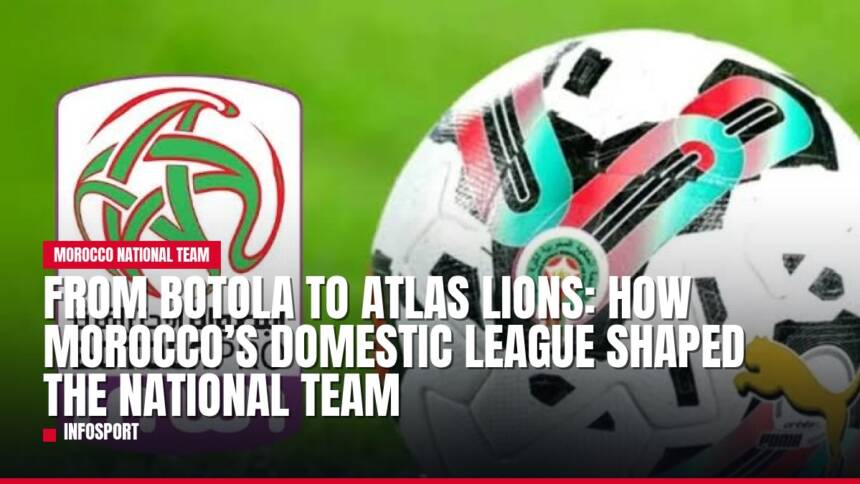
The journey of football in Morocco is a captivating narrative of passion, perseverance, and strategic evolution. From its humble beginnings in the early 20th century to its current status as a formidable force on the African and global stages, the development of the Moroccan league history national team connection is profound. This article delves into how the domestic football league, known as the Botola, has transformed from an amateur pastime into a professional powerhouse, directly influencing the rise and sustained success of the Morocco national football team, the Atlas Lions.
Understanding the intricate relationship between the local league and national team success is crucial to appreciating Morocco’s footballing achievements. The evolution of the Botola reflects a broader national commitment to sports development, providing a critical foundation for nurturing talent, fostering competitive spirit, and ultimately, producing players capable of competing at the highest international levels. This historical trajectory is a testament to the vision and dedication that have shaped Moroccan football over the decades, leading to moments of unparalleled glory for the History and Achievements of the Morocco National Football Team.
The Genesis of Moroccan Football: Laying the Groundwork
The roots of organized football in Morocco stretch back to the early 20th century, influenced largely by the French and Spanish protectorates. During this period, football was introduced as a recreational activity, primarily among the European communities and gradually adopted by the local Moroccan population.
Pre-Independence Era: Colonial Influence and Early Clubs
Before Morocco gained independence in 1956, football was structured under colonial administration. French and Spanish football federations oversaw local competitions, leading to the formation of some of Morocco’s most iconic clubs. Teams like Wydad Athletic Club (founded 1937) and Raja Club Athletic (founded 1949) in Casablanca, and AS FAR (Royal Army Club) post-independence, began to emerge, often as symbols of Moroccan identity and resistance.
These early clubs, though operating under colonial rule, laid the foundational stones for a vibrant football culture. Competitions were often regional, but they ignited a passion for the sport that would endure and expand significantly after national sovereignty was restored.
Post-Independence: The Birth of the Moroccan Football League
With independence, Morocco embarked on establishing its own national sporting infrastructure. The Royal Moroccan Football Federation (FRMF) was founded in 1956, marking a pivotal moment. One of its first and most crucial tasks was to organize a unified national football league.
The first official Moroccan Championship, known today as the Botola, was launched in the 1956-1957 season. This marked the formal beginning of the Moroccan league history national team connection, as the league instantly became the primary source for identifying and developing national talent. The early years were characterized by an amateur spirit, but the desire for excellence and national representation was palpable.
The Formative Years of the Botola: Amateurism and Passion
The initial decades of the Botola were defined by a blend of raw talent, intense local rivalries, and an overarching amateur structure. Despite the lack of professional resources, the league quickly became the heart of Moroccan football.
Amateur Era: Challenges and Regional Focus
In its early days, the Botola faced numerous challenges. Infrastructure was basic, funding was limited, and players often balanced football with other jobs. Travel between cities for matches could be arduous. However, these challenges were often overshadowed by the sheer passion for the game.
Regional strongholds emerged, with Casablanca (Wydad, Raja) and Rabat (FAR) becoming central hubs of footballing excellence. The rivalries between these clubs, particularly the Casablanca derby between Wydad and Raja, became legendary, drawing massive crowds and fostering a competitive environment that pushed players to their limits.
Key Clubs Emerge and Their Impact
Clubs like Wydad AC, Raja CA, and AS FAR quickly established themselves as dominant forces. AS FAR, in particular, benefited from state support and a disciplined structure, leading to multiple league titles and a strong pipeline of players for the national team. These clubs not only competed for domestic glory but also began to represent Morocco in continental competitions, gaining valuable experience that would eventually benefit the national side.
First National Team Impact: League-Bred Talent
During this period, the Morocco national team relied almost exclusively on players from the domestic league. The Botola served as the breeding ground for the Atlas Lions, with coaches scouting talent directly from league matches. Players who excelled in the Botola were often rewarded with national team call-ups, representing their country in early AFCON tournaments and World Cup qualifiers. This direct link solidified the importance of a strong domestic league for national team aspirations, as detailed in Breaking Barriers: Morocco’s First World Cup Appearance and Early AFCON Glory.
Towards Professionalism: The Botola’s Evolution
The late 20th and early 21st centuries witnessed a gradual but significant shift in the Botola’s structure and operations, moving decisively towards professionalism. This transformation was crucial for the league to keep pace with global football standards.
Late 20th Century: Gradual Improvements and Infrastructure
Throughout the 1970s, 80s, and 90s, the FRMF, often with government support, began investing more in football infrastructure. Stadiums were improved, training facilities started to see upgrades, and there was a growing recognition of the need for more structured youth development programs within clubs. This period also saw Moroccan clubs achieve greater success in African club competitions, further highlighting the potential of the domestic game.
The experience gained by clubs like FAR Rabat and Wydad AC in winning the CAF Champions League (or its predecessor, the African Cup of Champions Clubs) brought a new level of professionalism and ambition to the league, inspiring other clubs to follow suit.
Introduction of Professionalism: Structural Changes and Investment
The early 2000s marked a more concerted effort to professionalize the Botola. The FRMF, under new leadership, initiated reforms aimed at modernizing the league. This included better financial management, stricter licensing criteria for clubs, and improved player contracts. The league was rebranded as Botola Pro in 2011, officially signifying its professional status.
This shift brought increased investment from sponsors, better broadcasting deals, and a greater emphasis on marketing and club management. Clubs were encouraged to develop their own academies and invest in sports science and modern coaching techniques. The goal was clear: to raise the standard of play and produce more refined talents for both the league and the national team.
Impact on Player Development: Better Facilities and Youth Academies
Professionalization directly led to a significant upgrade in player development. Youth academies became more structured, offering young players comprehensive training, education, and medical support. This created a more systematic pathway for aspiring footballers to progress from grassroots to professional levels. The improved infrastructure meant players had access to better pitches, gyms, and sports scientists, leading to a higher quality of athletic preparation.
The Botola as a Nursery for National Talent
The transformation of the Botola solidified its role as an indispensable nursery for the Morocco national team. Many of the Atlas Lions’ most celebrated players honed their skills within the Moroccan league system before achieving international fame.
Homegrown Stars: Rising Through the Ranks
Throughout its Moroccan league history national team connection, the Botola has been the initial stage for numerous legendary figures. Players like Ahmed Faras, the first African Player of the Year from North Africa, began his career at Chabab Mohammédia. Mohammed Timoumi, a key player in the legendary 1986 World Cup squad, played for US Sidi Kacem and FAR Rabat. Abdelmajid Dolmy, another icon of that era, was a product of Raja CA.
Even in more recent times, players like Youssef En-Nesyri, who played for Maghreb Fès youth teams before moving to Europe, and Achraf Bencharki, a star for Wydad AC before his move abroad, highlight the league’s continuing role in talent identification and development. These players demonstrate the quality of training and competition available domestically, preparing them for the rigors of international football.
For more on these iconic players, see Legendary Lions: The Iconic Players Who Shaped Morocco’s Football History.
Role in AFCON Successes
The strength of the domestic league has consistently underpinned Morocco’s performances in the Africa Cup of Nations (AFCON). A robust Botola ensured a steady supply of match-fit, tactically aware players who could seamlessly integrate into the national team. While many key players for the national team eventually moved to European leagues, the foundation laid in the Botola was crucial.
The league has provided a competitive environment where players gain experience in high-stakes matches, preparing them for the intensity of continental tournaments. This sustained contribution from the domestic league has been a silent but significant factor in Morocco’s AFCON journey, as explored in Kings of Africa: Morocco’s Journey Through the Africa Cup of Nations.
World Cup Contributions: Direct and Indirect
While the majority of players in recent World Cup squads have come from European leagues, the Botola’s influence on Morocco’s World Cup history is undeniable. In earlier campaigns, particularly the The Golden Era: Unpacking Morocco’s Legendary 1986 World Cup Campaign, a significant portion of the squad was still drawn from the domestic league, showcasing the direct impact of local talent.
Even today, the league serves as a crucial platform for players to catch the eye of national team selectors and, subsequently, European scouts. It provides a competitive proving ground, ensuring that even if players move abroad, their fundamental skills and competitive edge were honed within Morocco’s borders. The league’s sustained development has contributed to the overall football ecosystem that ultimately supports the national team’s World Cup aspirations, chronicled in Morocco at the FIFA World Cup: A Chronicle of All Appearances.
Modern Era: The Professional Botola and its Global Reach
Today, the Botola stands as one of Africa’s premier football leagues, characterized by its professional structure, increased investment, and growing international recognition.
Current Structure: Botola Pro 1 and Botola Pro 2
The Moroccan league system is now fully professionalized, comprising Botola Pro 1 (top tier) and Botola Pro 2 (second tier). Both leagues adhere to strict professional standards regarding club licensing, financial transparency, and infrastructure. This structured approach ensures a competitive environment across multiple tiers, fostering talent development at all levels.
The competition in Botola Pro 1 is fierce, with clubs like Wydad, Raja, and FAR Rabat consistently challenging for the title, alongside other strong contenders. This level of competition is vital for keeping players sharp and ready for international duties.
Increased Investment: Sponsorships, Broadcasting, and Foreign Talent
The professional era has brought significant financial growth to the Botola. Robust sponsorship deals, lucrative broadcasting rights, and increased club revenues have allowed teams to invest more in player salaries, training facilities, and youth development programs. This financial stability has also made the league an attractive destination for foreign players and coaches, further enhancing its quality and diversity.
The influx of foreign talent not only raises the technical and tactical level of play but also provides Moroccan players with the opportunity to compete against different styles and gain invaluable experience without leaving the country.
Tactical and Technical Advancements: Modern Coaching
With professionalization came a greater emphasis on modern football tactics, sports science, and coaching methodologies. Clubs now employ qualified coaches, often with international experience, who implement advanced training regimes and tactical systems. This has resulted in a more sophisticated style of play within the Botola, moving away from purely physical football towards a more technical and strategic approach.
These advancements directly benefit the national team, as players are exposed to high-level tactical instruction from an early stage, making their transition to the national squad smoother and more effective. Many of the masterminds behind the Atlas Lions have also had significant ties to the Botola, as seen in Masterminds Behind the Atlas Lions: Key Coaches in Morocco’s Football History.
Exporting Talent: A Stepping Stone to Europe
The Botola has become a recognized stepping stone for Moroccan players aspiring to play in top European leagues. Clubs from France, Belgium, Spain, and other major leagues regularly scout talent from the Botola. This export of talent is a testament to the league’s quality and its ability to prepare players for the demands of European football.
While the departure of top talents can sometimes be seen as a loss for the domestic league, it also serves as a powerful incentive for young players and validates the quality of the Moroccan football development system. The success of players like Hakim Ziyech (who played youth football in Morocco briefly before moving to the Netherlands) and Achraf Hakimi (who was born and raised in Spain but has strong ties to Moroccan football) reflects the broader ecosystem of talent identification, which the Botola is a part of.
Synergy: How the League Elevates the National Team
The symbiotic relationship between the Botola and the national team is one of mutual benefit. A strong league provides the foundation, and a successful national team, in turn, inspires and elevates the league.
Consistent Player Pool and Tactical Cohesion
A well-structured and competitive Botola ensures a consistent pool of talented players for the national team. Even if these players eventually move abroad, their formative years in the Moroccan league instill a foundational understanding of Moroccan football culture and style.
Furthermore, the shared footballing philosophy and tactical approaches prevalent in the Botola can contribute to greater cohesion within the national team. Players who have grown up playing against each other or even with each other in the league often possess an inherent understanding that benefits the national squad, reducing the time needed to build chemistry.
Competitive Edge and Psychological Preparation
The intensity of the Botola, especially its major rivalries like the Casablanca derby, prepares players mentally and physically for the pressures of international competition. Playing in front of passionate crowds and under high stakes in the domestic league helps players develop resilience, composure, and a winning mentality.
This competitive edge is invaluable when the Atlas Lions face formidable opponents on the global stage. The experience of performing under pressure in the Botola equips players with the psychological fortitude required for World Cup qualifiers, AFCON tournaments, and even historic runs like the Morocco’s Unforgettable 2022 World Cup Journey.
The 2022 World Cup Phenomenon: A Global Showcase
Morocco’s historic semi-final run at the 2022 FIFA World Cup, while primarily featuring players from top European clubs, was built on decades of football development within Morocco. The Botola, throughout its Moroccan league history national team connection, has contributed to this success by fostering a robust football culture, developing coaches, improving infrastructure, and creating a talent pipeline that eventually feeds into European academies and clubs.
The success of the national team at the World Cup, in turn, casts a positive light on the Botola, attracting more attention, investment, and aspiring young players to the domestic league. It creates a virtuous cycle where national team success inspires league growth, and league growth feeds national team success.
Challenges and Future Prospects
Despite its significant progress, the Botola still faces challenges, but its future prospects remain bright.
Challenges: Infrastructure, Finance, and Talent Retention
Challenges include the need for continued investment in infrastructure, particularly for smaller clubs, to meet evolving international standards. Financial stability for all clubs, not just the traditional powerhouses, remains a focus. Perhaps the biggest ongoing challenge is retaining top talent. While exporting players is a sign of success, keeping some of the best talents in the league for longer could further elevate its profile and competitiveness.
Addressing these challenges requires ongoing strategic planning, robust governance from the FRMF, and sustained financial commitment from both public and private sectors.
Future Vision: Continued Professionalization and Youth Development
The future of the Botola is geared towards continued professionalization, with an emphasis on further strengthening youth development programs and integrating sports science more deeply into club operations. There’s a vision to make the Botola not just a stepping stone, but a destination league within Africa, capable of attracting and retaining high-quality players and coaches.
By focusing on sustainable growth, leveraging technology, and maintaining high standards, the Botola aims to further solidify its position as a leading African league, ensuring a continuous flow of world-class talent for the Atlas Lions and cementing the Moroccan league history national team bond for generations to come. The fierce Clash of Titans: Understanding Morocco’s Historic Football Rivalries within the league will continue to fuel this competitive spirit.
Conclusion
The evolution of the Moroccan football league, the Botola, from its amateur beginnings to its current professional stature, is a remarkable story of growth and ambition. This journey is inextricably linked to the fortunes of the Morocco national football team. The league has consistently served as the primary incubator for talent, a battleground for competitive spirit, and a foundational pillar for the Atlas Lions’ successes on the continental and global stages.
From providing the bedrock for early AFCON appearances to contributing to the footballing ecosystem that produced the stars of the 2022 World Cup, the Botola’s impact is undeniable. As the league continues to professionalize and expand its global reach, it promises to further elevate Moroccan football, ensuring that the Moroccan league history national team connection remains a powerful force in the beautiful game. This enduring synergy is a testament to Morocco’s deep-rooted passion for football and its commitment to excellence, continually enriching the History and Achievements of the Morocco National Football Team.
FAQ
What is the Moroccan football league called?
The top-tier Moroccan football league is officially called Botola Pro 1 (or simply Botola). It is overseen by the Royal Moroccan Football Federation (FRMF).
When was the Moroccan football league established?
The first official Moroccan Championship, which is the predecessor to the modern Botola, was established in the 1956-1957 season, shortly after Morocco gained independence.
How has the Botola contributed to the success of the Morocco national team?
The Botola has contributed significantly by serving as the primary talent development ground for Moroccan players. It provides a competitive environment for players to hone their skills, gain match experience, and adapt to high-pressure situations, preparing them for international competition with the national team. Many legendary Atlas Lions began their careers in the Botola.
Are there foreign players in the Moroccan league?
Yes, the professional Botola Pro 1 and 2 allow for the inclusion of foreign players. This influx of international talent helps raise the overall quality of play, introduces diverse styles, and provides Moroccan players with the opportunity to compete against different footballing backgrounds.
What are some of the most successful clubs in the history of the Moroccan league?
Historically, Wydad Athletic Club and Raja Club Athletic, both from Casablanca, along with AS FAR (Royal Army Club) from Rabat, are considered the most successful and dominant clubs in the history of the Moroccan league, collectively holding the majority of league titles and enjoying significant fan bases.