
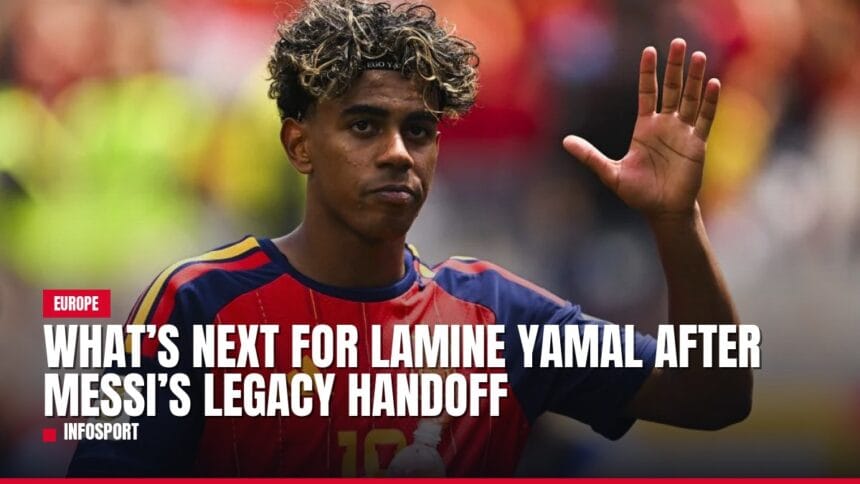
Lionel Messi’s farewell at the 2026 World Cup final between Spain and Argentina has set the stage for a generational shift in football. Lamine Yamal, the Barcelona teenager, emerged from the tournament as the sport’s brightest prospect, with the symbolic passing of the torch captured in a quiet embrace between the two players after the final whistle.
The Collision of Two Eras
Spain’s victory over Argentina represented fundamentally different conclusions for its two central figures. For Messi, the final marked what is anticipated to be his last World Cup appearance—a farewell to football’s grandest stage after a career that has already secured his place among the sport’s immortals.
For Yamal, the outcome carried entirely different weight. Before the tournament, he was football’s most celebrated young talent, a prodigy accumulating records with weekly regularity and displaying composure that seemed improbable for his age. The World Cup final transformed his status. He transitioned from prospect to protagonist—the player supporters will now look towards as Messi departs.
The narrative gained an almost improbable resonance when a photograph resurfaced showing Messi, then 20 and fighting to establish himself in Barcelona’s first team, cradling an infant Lamine during a charity calendar shoot. Neither could have envisioned the paths their careers would take, yet the image has since become part of football folklore, shared millions of times as a visible bridge connecting generations.
The Weight of Inheritance
Yamal has inherited far more than Messi’s absence. He has claimed Barcelona’s right wing—the very position Messi transformed into football’s most dangerous attacking outlet for over a decade. He now wears the club’s No. 10 shirt, a number inseparable from Barcelona’s modern identity.

Beyond the shirt itself lies the true responsibility. Camp Nou rises to its feet whenever Yamal receives the ball, and supporters are not simply requesting outstanding performances. They are asking him to become the defining player of an era, as Johan Cruyff represented, as Ronaldinho briefly embodied, as Messi perfected across two decades.
Talent represents a gift; expectation represents burden. History provides an instructive warning. Argentina spent years demanding Messi become “the next Maradona,” and every tournament invitation triggered comparisons to Diego. Messi struggled under this weight for much of his international career, enduring repeated disappointments until the scrutiny finally ceased—not because he matched Maradona, but because he became his own player.
What This Means for Barcelona and Yamal
Barcelona’s greatest mistake would be asking Yamal to recreate Messi’s history rather than forge his own identity. Yamal’s defining strength has always been spontaneity—attempting passes others cannot perceive, dribbling without hesitation, playing as though pressure exists exclusively for opponents. That freedom is precisely what makes him exceptional to watch.
More Read

The comparisons will persist. Every substandard display will invite criticism; every injury will spark concern; every setback will generate questions about his capacity to shoulder Barcelona’s and Spain’s ambitions. Protecting the teenager from this relentless external pressure becomes essential for Barcelona’s hierarchy.
The greatest tribute Yamal can offer Messi is not imitation but independence—building an empire entirely his own. Football’s greatest figures are remembered not for replacing predecessors but for carving singular identities. Pelé did not succeed Maradona; both defined their respective generations through distinctive brilliance.
Yamal returns to Barcelona as a World Cup champion, wearing football’s most iconic number at the club, occupying the position that shaped the greatest player in its history. He arrives carrying supporter hopes for another extraordinary chapter. That represents both privilege and immense burden.
The symbolic embrace after the final whistle captured something sport rarely provides—visible generational passage. Years from now, observers will remember Spain’s trophy lift and Messi’s departure. They will also remember that moment. The torch has already transferred. What Yamal constructs with it remains entirely within his control.