
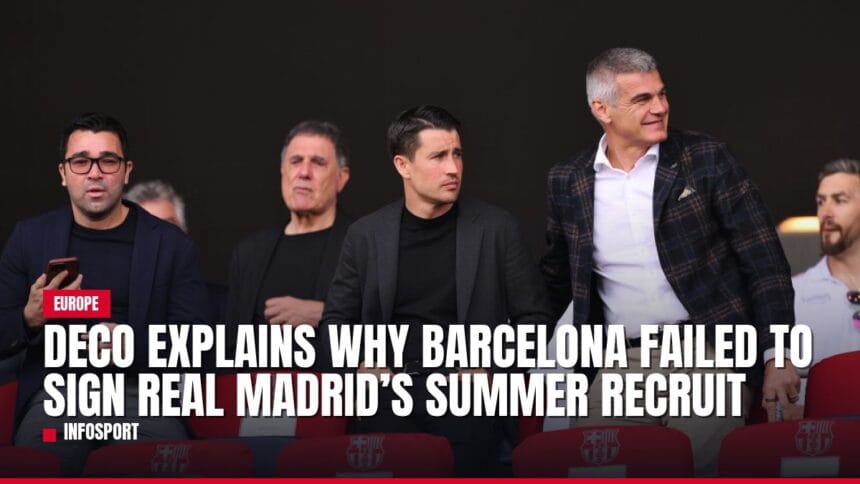
Barcelona passed on the opportunity to sign Bernardo Silva this summer despite the Portuguese midfielder’s explicit desire to join Camp Nou, director Deco has confirmed. Silva ultimately moved to Real Madrid instead, where José Mourinho facilitated his arrival from Manchester City following the expiration of his contract.
Deco’s explanation, given in an interview with SPORT, reveals that the decision was rooted in squad-building strategy rather than financial inability or competitive loss to Madrid. Barcelona identified specific concerns about Silva’s expectations that made the move incompatible with the club’s current project.
Why Barcelona Rejected Silva’s Move to Camp Nou
Silva had publicly announced his intention to leave Manchester City and was repeatedly linked with Barcelona throughout the window. Advanced talks between the player’s representatives and the club had occurred, positioning a Camp Nou switch as a genuine possibility until Madrid intervened.
Deco acknowledged Silva’s elite standing but drew a clear line between recognising quality and meeting Barcelona’s recruitment criteria. The deciding factor centred on a fundamental disagreement over the player’s role and minutes allocation.
“It wasn’t the position we were looking for. I love him – he’s one of the best in the world in his position and he’s Portuguese. He wanted to come to Barça, but it didn’t work out because we have certain criteria. If things go any further, there’s nothing we can do. It was a question of money and playing time.”
Deco continued: “We’re not saying whether he’ll play or not. If his views differ from ours, there’s nothing we can do. He wanted to play, but I prefer to rely on our own players.”
More Read

The distinction matters: Barcelona were not unwilling to spend or unable to convince Silva to join them. Rather, the club maintained its recruitment principles even when a world-class midfielder actively sought the transfer, prioritising long-term squad harmony over short-term prestige additions.
Barcelona’s Strategic Response in the Transfer Window
That disciplined approach proved vindicated when Barcelona subsequently signed Rodri from Manchester City, addressing their midfield requirements on more favourable terms aligned with their tactical vision.
When asked about Real Madrid’s strengthened squad, Deco expressed respect for their capabilities but signalled Barcelona’s focus would remain inward. “They’ve got some brilliant players, a great manager – my manager at Porto. I wish them luck, though not against us,” he said. “If they manage to build a team, it’ll be tough this season. We’ll just focus on our own game.”
More Read

The Silva episode illustrates how Barcelona’s recruitment operates under Deco’s stewardship—willing to walk away from established talent when philosophical misalignment exists, rather than compromise structural principles for individual names or rivalries.