
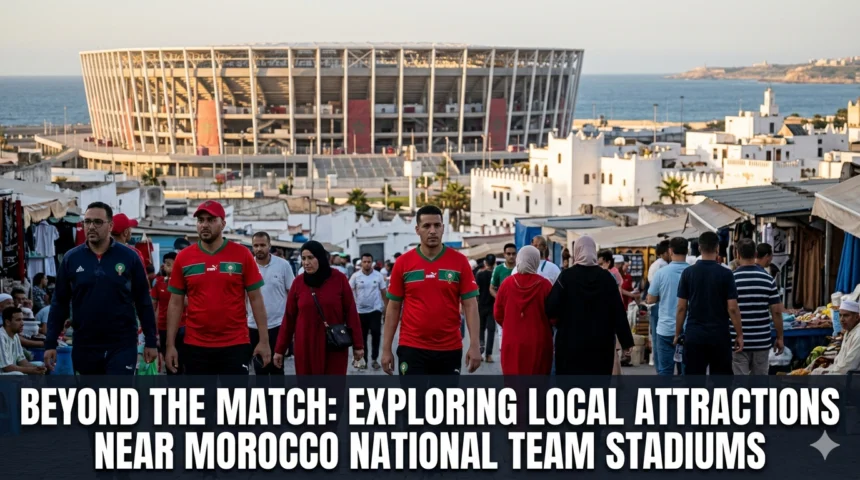
Morocco is a country with an unparalleled passion for football, and for fans travelling to support the Atlas Lions, match day represents just the beginning of a much larger adventure. Beyond the roar of the crowd and the thrill of the game lies a rich tapestry of culture, history, and natural beauty waiting to be discovered. This article explores the fascinating attractions near Morocco’s national team stadiums, offering a complete guide for those looking to enhance their trip. Whether you find yourself in Rabat, Casablanca, Marrakech, or other host cities, numerous experiences await off the pitch. Understanding the context of these venues will enrich your travel experience. You can read more about the stadiums and home grounds of the Morocco National Team in our special pillar content.
Rabat: Discover the Treasures of the Capital Around Prince Moulay Abdellah Stadium
Prince Moulay Abdellah Stadium is one of the major venues hosting national team matches, situated in Rabat, the country’s peaceful and culturally rich capital. While the stadium bustles on match days, the surrounding city offers a beautiful blend of ancient and modern life.
Discover Rabat’s Rich History and Culture
Rabat is a UNESCO World Heritage site featuring a well-preserved medina, historical monuments, and beautiful gardens. Its coastal location provides refreshing sea breezes and stunning ocean views.
Mausoleum of Mohammed V and Hassan Tower
The Hassan Tower stands as perhaps Rabat’s most iconic landmark. Dating back to the 12th century, this unfinished minaret of an ancient mosque rises proudly from a forest of columns, offering insight into Almohad architecture. Adjacent to it sits the magnificent Mausoleum of Mohammed V, the final resting place of the grandfather and father of the current king. This site showcases Moroccan craftsmanship through its fine zellige tiles, carved cedar wood, and intricate stucco work. It represents one of the finest attractions near Morocco’s national team stadiums and provides a comprehensive look at the country’s royal heritage.
Kasbah of the Udayas
Perched on a cliff overlooking the Bou Regreg River and the Atlantic Ocean, the Kasbah of the Udayas is a charming fortified village. Its narrow, winding streets are painted in vibrant shades of blue and white, reminiscent of Chefchaouen. Visitors can wander through quaint passages, explore the Andalusian Gardens, and enjoy panoramic vistas from the Café Maure—an ideal spot for photography and soaking in the atmosphere.

Chellah Necropolis
Just outside the city walls lies the Chellah Necropolis, an ancient Roman settlement and medieval fortified necropolis. This quiet, evocative archaeological site blends Roman ruins with Islamic monuments and lush gardens, while storks nest in the old minarets, adding an air of mystery. It appeals strongly to history enthusiasts and those seeking a peaceful retreat.
Andalusian Gardens
Located within the Kasbah of the Udayas, the Andalusian Gardens provide a serene escape from the bustling city. Vibrant flowers, fragrant orange trees, shaded pathways, and beautifully landscaped grounds create a tranquil setting. These traditional Moorish gardens were redesigned in the early 20th century.
Shopping and Contemporary Art
Rabat also caters to modern tastes. The Mohammed VI Museum of Modern and Contemporary Art showcases exceptional collections of Moroccan and international works. For shopping, the modern city centre features international boutiques, while the traditional medina houses lively souks brimming with handicrafts, spices, and textiles.

Casablanca: Discovering the Buzz Around Mohammed V Stadium
The legendary Mohammed V Stadium in Casablanca, Morocco’s largest city and economic hub, hosts some of the most electrifying national team matches. Beyond the stadium’s energy, Casablanca reveals a modern, vibrant side of Morocco, complete with a rich cinematic heritage and stunning architectural achievements.
Discovering Casablanca’s Vibrant Spirit
As a major port city and economic centre, Casablanca presents a city of contrasts, where Art Deco buildings stand alongside traditional markets and modern skyscrapers.
Mosque Hassan II
The Hassan II Mosque represents Casablanca’s crowning jewel and ranks among the world’s largest mosques. This architectural masterpiece features a soaring minaret—the tallest in the world—that rises majestically from an outcrop overlooking the Atlantic Ocean. The intricate design, handcrafted details, and sheer scale are breathtaking. Guided tours are available for non-Muslims, making it a must-see attraction near Morocco’s national team stadiums and an epitome of the country’s rich Islamic art and ambition.
The Corniche (Ain Diab)
For leisure and entertainment, Ain Diab Corniche stretches along the Atlantic coast, offering a lively promenade lined with restaurants, cafés, luxury hotels, and beach clubs. This popular destination attracts both locals and tourists seeking to stroll, enjoy sea breezes, and dine with ocean views. The Corniche provides a glimpse into the city’s modern lifestyle and vibrant nightlife.
Habous Quarter and the Old Medina
Casablanca’s medina, while smaller and less ancient than those in Fez or Marrakech, still offers an authentic traditional market featuring labyrinthine narrow streets, artisan shops, and local eateries. The Habous Quarter (New Medina), built in the 1930s by the French, merges traditional Moroccan architecture with modern planning. It provides a more organized and charming shopping experience with crafts, spices, and traditional goods in a relaxed setting.
Shopping and Dining
As Morocco’s economic capital, Casablanca excels in both shopping and cuisine. Modern malls like Morocco Mall—one of Africa’s largest—complement lively souks, while the diverse culinary scene ranges from traditional Moroccan tagines and fresh seafood to international cuisine in upscale establishments. The city’s cosmopolitan dining scene is well worth exploring.
More Read

Marrakech: The Captivating Charm of the Red City Near Stade de Marrakech
Marrakech, known as the “Red City,” blends ancient traditions with vibrant contemporary energy. Home to the modern Stade de Marrakech, this city offers an unforgettable experience far beyond football. With its exotic charm, bustling souks, and stunning architecture, it has become a premier destination for travellers.
The Enchanting Allure of the Red City
Marrakech engages all the senses through blazing colours, fragrant spices, and the constant buzz of life. The city awakens visitors to authentic Moroccan culture in all its vibrancy.
Jemaa el-Fna Square
The mythical Djemaa el-Fna square forms the beating heart of Marrakech and holds UNESCO World Heritage status. Its character shifts dramatically throughout the day—transforming from a bustling market by day into an open-air spectacle of storytellers, snake charmers, musicians, acrobats, and street food vendors by night. Dining at one of the food stalls here is a quintessential Marrakech experience. This iconic square stands as one of the liveliest attractions near Morocco’s national team stadiums, offering endless entertainment.
El Badi Palace and Bahia Palace
Marrakech boasts beautiful palaces showcasing its architectural heritage. Constructed in the late 19th century, the Bahia Palace exemplifies Moroccan design through elaborate tilework, painted ceilings, and lovely courtyards that reveal insights into the lives of Morocco’s elite. Nearby, the ruins of the 16th-century El Badi Palace, though largely despoiled, still hint at its former splendour through expansive courtyards, sunken gardens, and imposing walls where storks often nest.
Jardin Majorelle
Offering respite from the city’s hustle and bustle, Majorelle Garden is a beautifully landscaped botanical oasis created by French artist Jacques Majorelle and later restored by Yves Saint Laurent. Famous for its striking blue buildings, exotic plants, and peaceful ambiance, it provides an ideal spot for relaxation and photography. The garden also houses a Berber Museum displaying traditional Berber culture.
Marrakech Souks
Exploring Marrakech remains incomplete without venturing into its souks. These traditional markets showcase an impressive array of goods, including spices, leather items, textiles, pottery, jewellery, and traditional Moroccan slippers. Bargaining is customary, and navigating the busy alleys becomes an adventure in itself. The souks represent the commercial and cultural heart of the city.
Excursions in the Atlas Mountains
For those seeking natural beauty and adventure, Marrakech serves as an excellent base for day trips to the nearby Atlas Mountains. Popular excursions include visits to Ourika Valley, traditional Berber villages, or camel treks. These journeys offer a striking contrast to the city’s vibrant energy, providing stunning vistas and valuable cultural insights.
Other Moroccan Cities and Their Attractions Beyond the Main Hubs
While Rabat, Casablanca, and Marrakech host the most frequent national team matches, football’s popularity continues rising throughout Morocco. The country’s World Cup bids and future plans typically involve other major cities. The regions surrounding existing and potential national team stadiums feature an incredible variety of additional attractions.
Grand Stade d’Agadir (Agadir Things to Do)
Along the country’s South Atlantic coast lies Agadir, a large city featuring the impressive Grand Stade d’Agadir, which occasionally hosts national team matches. This popular tourist destination is renowned for its beautiful beaches, warm climate, and modern infrastructure.
Agadir’s Beaches and Corniche
Agadir boasts a magnificent crescent-shaped beach stretching over 10 kilometres, ideal for sunbathing, swimming, and water sports. The city’s lively corniche offers the perfect venue for leisurely strolls, complete with cafés, restaurants, and shops. With its resort-like atmosphere, Agadir provides a more laid-back experience than the imperial cities.
Souk El Had Agadir
One of Morocco’s largest markets, Souk El Had d’Agadir immerses visitors in local life and traditional shopping. Here you’ll find everything from fresh produce and spices to clothing, handicrafts, and electronics in an authentic, vibrant setting.
Agadir Oufella Ruins
Perched on a hill overlooking the city and bay, the ruins of Agadir Oufella (the old kasbah) offer panoramic views. Though largely destroyed by the 1960 earthquake, the site provides historical context and breathtaking vistas, particularly at sunset.
Fez Stadium (Things to Do in Fez)
One of Morocco’s four imperial cities, Fez serves as a cultural and spiritual centre. While the Complexe Sportif de Fès hosts fewer national team games than other stadiums, it merits a visit for its historical significance and unique atmosphere.
Old Medina (Fez el-Bali)
Fez el-Bali, the city’s medina, holds UNESCO World Heritage status and ranks among the world’s largest car-free urban areas. This labyrinth of narrow lanes features frenetic souks and ancient madrasas (Islamic schools). An extraordinary journey through time includes visits to the Chouara Tannery, the Al-Attarine Madrasa, and the University of Al-Karaouine—the world’s oldest existing university. It offers an unparalleled cultural immersion experience.
Bab Bou Jeloud (The Blue Gate)
The iconic Bab Bou Jeloud, or “Blue Gate,” serves as the grand entrance to Fez el-Bali. This structure, adorned with beautiful blue and green tiles, exemplifies Moroccan craftsmanship and functions as a popular photography spot.
Grand Stade de Tanger (Attractions in Tangier)
Located in Tangier, the Grand Stade de Tanger (also known as Stade Ibn Batouta) sits in a historic port city with a fascinating international heritage. Its unique appeal stems from its position at the crossroads of Europe and Africa.
Tangier Kasbah and Medina
Tangier’s medina presents a captivating fusion of Moroccan and European influences. From the Kasbah’s highest point, views encompass the Strait of Gibraltar and the city below. The winding streets invite exploration, revealing hidden cafés, while the Kasbah Museum provides fascinating insights into the city’s rich history.
Hercules Caves and Cap Spartel
Just outside Tangier, Cap Spartel marks a scenic headland where the Atlantic Ocean meets the Mediterranean Sea. The nearby Hercules Caves, steeped in mythology, feature impressive rock formations and unique ocean views. These natural wonders rank among the most popular attractions in the northern region near Morocco’s national team stadiums.
Planning Your Trip: Combining Football and Sightseeing
Watching a match featuring the Moroccan National Team thrills, yet represents merely the beginning of Morocco’s offerings. Visits to these remarkable attractions can transform a simple football trip into a rich cultural experience. Whether your interests lie in ancient history, bustling markets, stunning natural scenery, or modern urban culture, Morocco’s host cities deliver across all categories. Understanding the Atlas Lions’ home grounds provides important local context, as our pillar article on the stadiums and home grounds of the Morocco National Team explains.
For enhanced planning, consider exploring topics such as How to Get Tickets for Morocco National Team Matches and Making Your Visit Better: Hospitality and Fan Zones at Morocco National Team Stadiums. These resources will help you maximize your football pilgrimage to Morocco, ensuring a memorable and enriching journey both on and off the field.
FAQ: Attractions Near Morocco National Team Stadiums
Prince Moulay Abdellah Stadium: Things to Do in Rabat
Prince Moulay Abdellah Stadium sits close to Rabat’s main attractions, including the historic Hassan Tower and Mausoleum of Mohammed V, the charming blue-and-white Kasbah of the Udayas with its Andalusian Gardens, and the ancient Chellah Necropolis. These sites combine history, culture, and tranquil beauty, making them appealing nearby attractions to Morocco’s national team stadiums in the capital.
Things to See and Do Near Stade Mohammed V, Casablanca
The top sight near Mohammed V Stadium is the remarkable Hassan II Mosque, one of the world’s largest and most ornately constructed mosques. Other popular destinations include the vibrant Ain Diab Corniche for dining and relaxation, and the Habous Quarter (New Medina) for traditional shopping. These sites combine architectural grandeur with modern urban lifestyle.
What Natural Features Are Near Stade de Marrakech?
While Stade de Marrakech sits within the city, Marrakech serves as an excellent gateway to beautiful natural attractions. A day trip to the nearby Atlas Mountains is highly recommended, featuring visits to Ourika Valley or traditional Berber villages. These exceptional destinations appeal to nature enthusiasts and provide a striking contrast to the city’s bustling energy.
What Cultural Activities Exist in the Vicinity of Morocco’s Stadiums?
Stadium cities throughout Morocco overflow with cultural experiences. Discover ancient Roman and Islamic ruins in Rabat. Explore the Hassan II Mosque in Casablanca. Experience the lively Djemaa el-Fna square and maze-like souks in Marrakech. Fez offers an unparalleled experience within one of the world’s oldest medinas. These locations brim with Moroccan history, art, and daily life, forming the core of attractions around the country’s national team stadiums.
How Can I Combine Visiting Morocco with Watching a Football Match?
To blend football with sightseeing, plan your itinerary strategically, allocating at least 2-3 extra days around match day in the host city. Research local points of interest near the Moroccan national team stadiums you’ll visit, book accommodation close to both the stadium and desired attractions, and consider guided tours for a more enriching cultural experience. Public transport and reliable taxis enable efficient city exploration.