Morocco’s Women’s National Team: A Parallel History of Growth and Achievement
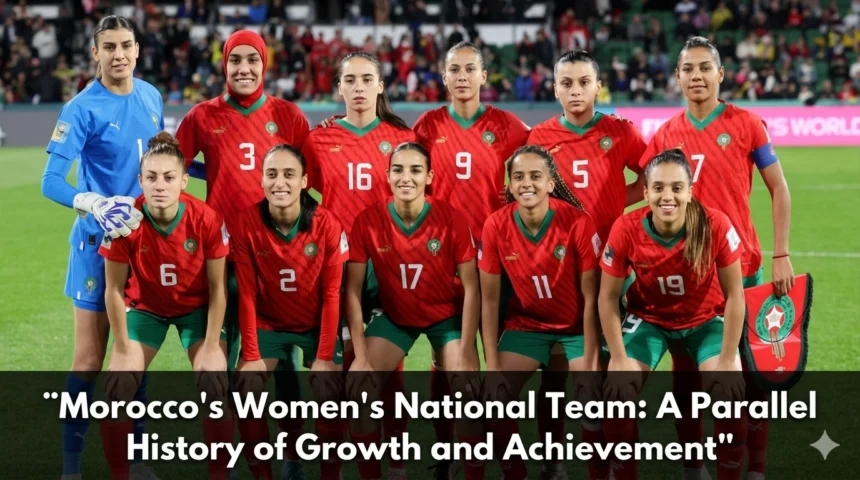
The history of Morocco’s women’s national team is characterized by perseverance, evolving aspirations, and significant breakthroughs. Similar to the broader trajectory of Moroccan football, as documented in the History and Achievements of the Morocco National Football Team, the Atlas Lionesses have established their own legacy by overcoming substantial challenges to become a prominent force in both continental and global competitions. Their development reflects a process of gradual progress, strategic investment, and the nation’s growing support for women’s sports.
From modest beginnings to historic participation in the FIFA Women’s World Cup, Morocco’s women’s team exemplifies the nation’s increasing commitment to gender equality in sports. This article examines the key milestones, influential figures, and defining moments that have shaped the team’s development.
Early Beginnings and Formative Years: Laying the Groundwork
Women’s football in Morocco has roots stretching back several decades, though formal organisation and international recognition took time to materialise. In the late 20th century, the sport was largely an amateur pursuit, lacking the structured support and investment seen in men’s football.
The Royal Moroccan Football Federation (FRMF) officially established the women’s national team in the early 1990s. This period was characterised by foundational efforts, carried out with limited resources yet fueled by the passion of pioneering players and coaches.
Morocco’s first official international match took place in 1998, marking their debut in the African Women’s Championship qualifiers (now known as the Women’s Africa Cup of Nations, or AWCON). These early encounters proved crucial for gaining experience and understanding the competitive landscape of African women’s football.
Despite competing against well-established opponents, the Atlas Lionesses began to form a core group of players. The challenges included inadequate training facilities and prevailing societal perceptions regarding women in sport. Nevertheless, these early teams established the essential foundation for subsequent generations.
The Dawn of a New Millennium: Building Foundations (2000-2010)
The turn of the millennium brought gradual but steady growth in focus on women’s football in Morocco. The FRMF began to recognise the game’s potential, leading to improved infrastructure and more consistent participation in continental qualifiers.
Throughout this decade, the team competed in AWCON qualifiers, often facing tough opposition from established powerhouses like Nigeria, Ghana, and Equatorial Guinea. While qualification for the main tournament remained elusive, each campaign provided invaluable experience and exposure to higher levels of competition.
Efforts to develop domestic women’s leagues gained traction, albeit on a smaller scale than today. These leagues were vital for nurturing local talent and creating a pipeline of players for the senior squad. Coaches like Mustapha Chahdi guided the team through these formative years, instilling tactical discipline and a winning mentality.
This period also witnessed the emergence of players who became foundational members of the team, demonstrating notable commitment despite persistent resource disparities. Their dedication sustained the team’s progress, even as major breakthroughs remained forthcoming.
Steady Progress and Emerging Talent (2010-2018)
The years between 2010 and 2018 marked a phase of increasingly consistent progress. While major tournament qualifications remained hard-won, the team showed growing competitiveness and an expanding pool of talent.
The FRMF increased its support for women’s football, placing particular emphasis on youth development. Investment in younger age groups was essential for establishing a sustainable future and maintaining a consistent pipeline of skilled players for the senior team. An increasing number of Moroccan women participated in football at various levels, both domestically and, for a select few, internationally.
The team participated regularly in AWCON qualifiers, often reaching the final stages before being eliminated. These near-misses fueled the desire for greater success and revealed areas requiring improvement. The gap between Morocco and the continent’s top teams began to narrow noticeably.
Players such as Ghizlane Chebbak, who later became a national icon, distinguished themselves during this era. Their skill and leadership highlighted the potential of Moroccan women’s football. This period established the groundwork for the team’s subsequent advancement.
The Rise of the Atlas Lionesses: A New Era of Investment and Success (2018-Present)
The period from 2018 onward represents a pivotal moment in the team’s history. Under the leadership of FRMF President Faouzi Lekjaa, a strategic and substantial investment plan was implemented to professionalise women’s football nationwide.
This comprehensive strategy included increased funding for clubs, infrastructure improvements, professional contracts for players, and the establishment of robust youth academies. The objective was to elevate Moroccan women’s football to the highest international standards. This commitment resulted in significant progress and enabled subsequent achievements.
Professionalisation and Strategic Appointments
A central aspect of this period was the professionalisation of the women’s leagues. The Moroccan Women’s Championship became one of Africa’s first fully professional women’s leagues, offering players stable careers and higher-quality competition. This development attracted additional talent and enabled players to concentrate on their athletic growth.
In 2020, the FRMF appointed Reynald Pedros as head coach—a former French international and highly successful coach with Lyon’s women’s team, where he won two Champions League titles. His arrival signalled Morocco’s serious ambitions, bringing invaluable experience, tactical acumen, and a winning mentality.
Hosting the 2022 Women’s Africa Cup of Nations (AWCON)
Morocco’s commitment was further demonstrated by hosting the 2022 Women’s Africa Cup of Nations. This event provided the Atlas Lionesses with the advantage of playing on home soil before supportive crowds. The tournament’s organisation highlighted Morocco’s capacity to host major international football events.
Under Pedro’s guidance, the team delivered a strong performance, demonstrating dynamic play, resilience, and tactical discipline. Led by captain Chebbak, they advanced through a challenging group stage and progressed to the knockout rounds, including a notable victory over Nigeria in the semi-final.
Reaching the AWCON final for the first time was a significant achievement for the team. Although they narrowly lost to South Africa, their silver medal secured automatic qualification for the 2023 FIFA Women’s World Cup, representing another milestone for Moroccan football.
Historic Qualification for the 2023 FIFA Women’s World Cup
Qualification for the 2023 FIFA Women’s World Cup in Australia and New Zealand marked a pivotal moment for the team and Moroccan sport more broadly. As the first Arab nation to qualify for the women’s global tournament, Morocco overcame significant barriers and served as an inspiration for many.
The team’s journey to the World Cup generated considerable anticipation and support. Their participation demonstrated the effectiveness of the FRMF’s investment and the players’ dedication, establishing Morocco’s presence in global women’s football.
Performance at the 2023 FIFA Women’s World Cup
At the World Cup, the Atlas Lionesses faced a challenging group alongside two-time champions Germany, South Korea, and Colombia. Many pundits predicted an early exit, especially after a heavy opening defeat to Germany.
The team demonstrated notable resilience and determination. They responded with a 1-0 victory over South Korea, their first-ever World Cup win, with Ibtissam Jraïdi scoring the decisive goal. This was followed by another 1-0 victory against Colombia, with Anissa Lahmari providing the winning goal.
These two victories, combined with Germany’s unexpected exit, enabled Morocco to advance to the knockout stages. The team became the first Arab and North African nation to reach the Round of 16 at a Women’s World Cup.
The team’s World Cup campaign concluded with a 4-0 defeat to France in the Round of 16. Despite this result, their performance demonstrated significant potential and served as an inspiration for future generations of footballers.
This successful campaign established the team’s status as pioneers in Moroccan football, paralleling the achievements of the men’s team at the 2022 World Cup.
Key Players and Influential Figures
Morocco’s women’s team boasts individuals who have left an enduring legacy:
- Ghizlane Chebbak: The inspirational captain, prolific goalscorer, and true leader both on and off the pitch. Her experience and skill have been central to recent successes.
- Fatima Tagnaout: A dynamic winger known for pace and dribbling ability, consistently posing a threat to opposition defences.
- Khadija Er-Rmichi: The reliable goalkeeper whose crucial saves have often kept Morocco competitive in critical matches.
- Anissa Lahmari & Ibtissam Jraïdi: Key goal scorers at the World Cup whose contributions proved pivotal in the team’s historic run.
- Nesryne El Chad & Nouhaila Benzina: Vital defenders who formed the backbone of a resilient defence. Benzina also made history as the first player to wear a hijab at a World Cup.
- Reynald Pedros: The astute coach whose tactical prowess and motivational ability were instrumental in the team’s transformation.
- Faouzi Lekjaa: The FRMF President whose strategic vision and substantial investment propelled women’s football to unprecedented heights.
These individuals, along with many others, have contributed to the legacy of the Atlas Lionesses, demonstrating that Moroccan talent is competitive at the highest levels. Their achievements form part of the broader narrative of influential figures who have shaped Moroccan football.
Challenges Overcome and Future Outlook
The team’s journey involved overcoming numerous obstacles, including historically limited funding, inadequate infrastructure, societal barriers, and scarce competitive opportunities.
The FRMF’s recent strategic shift, combined with player and staff dedication, has systematically addressed these challenges. Professionalising the domestic league, increasing investment in youth development, and securing strategic international exposure have created fertile ground for growth.
The Atlas Lionesses’ future prospects are promising. Their recent success has generated nationwide interest in women’s football and encouraged increased participation among young girls. The experience gained at AWCON and the World Cup will provide a foundation for future campaigns.
The team aims to consistently qualify for major tournaments and improve its standing in global women’s football. With continued investment and momentum from recent achievements, the Atlas Lionesses are positioned to achieve further success and strengthen their status as a leading force in African and international women’s football.
The team’s history demonstrates the impact of vision, perseverance, and investment, illustrating that with adequate support, significant achievements are attainable at the highest levels of competition.
Frequently Asked Questions about Morocco Women’s National Team History
What is the history of Morocco’s women’s national football team?
Morocco’s women’s national team was formally established by the FRMF in the early 1990s, with their first official international match in 1998. For decades, they navigated challenges with limited resources and recognition while steadily building foundations. The pivotal turning point came from 2018 onwards, with substantial investment and professionalisation efforts, resulting in their first AWCON final in 2022 and a historic qualification for the 2023 FIFA Women’s World Cup, where they reached the Round of 16.
When did Morocco’s women’s team qualify for their first World Cup?
Morocco’s women’s team qualified for their first FIFA Women’s World Cup in 2023. Reaching the final of the 2022 Women’s Africa Cup of Nations secured automatic qualification for the global tournament held in Australia and New Zealand.
Who is the coach of the Morocco women’s national team?
Reynald Pedros serves as head coach of the Morocco women’s national team. The former French international and accomplished club coach was appointed in 2020 and has been instrumental in the team’s recent rise, guiding them to the AWCON final and World Cup Round of 16.
What were Morocco’s biggest achievements in women’s football?
Key achievements for the team include reaching the 2022 Women’s Africa Cup of Nations final as hosts and subsequently qualifying for their first FIFA Women’s World Cup in 2023. At the World Cup, they made history as the first Arab and North African nation to reach the Round of 16.
How has the FRMF supported the growth of women’s football in Morocco?
Since 2018, the Royal Moroccan Football Federation has significantly bolstered women’s football through the professionalisation of the domestic league, increased funding for clubs and academies, infrastructure improvements, professional player contracts, and strategic coaching appointments such as Reynald Pedros. These investments have proven crucial to the national team’s recent successes.