The Atlas Lions’ Fan Culture: A Historical Look at Morocco’s Passionate Supporters
The experience of watching Morocco’s national football team is defined by the roar of the crowd, a sea of red and green, and the rhythmic beat of drums. This fervent support extends beyond a contemporary phenomenon, representing a complex tapestry woven through decades of shared history, national pride, and devotion to football. The following analysis examines the evolution of this distinctive culture and its lasting impact on both domestic and international football. For a broader understanding of the team’s journey, see the History and Achievements of the Morocco National Football Team.
The Roots of Moroccan Football Fandom: Early Days and National Identity
Morocco’s passionate football following emerged during a pivotal period in the nation’s history, closely linked to the struggle for independence and the formation of a modern national identity. Football transcended its role as a sport, becoming a powerful symbol of unity and cultural significance.
Football as a Symbol of Resistance and Unity
During the colonial era, football fields became spaces where Moroccans could express their burgeoning national identity and resist foreign rule. Local clubs, particularly those formed in working-class neighbourhoods, served as vital community hubs. Composed entirely of Moroccan players, these teams fostered pride and unity that transcended tribal and regional divides. Victories against colonial opponents were celebrated not merely as sporting triumphs but as assertions of Moroccan strength and spirit, laying the foundation for what would become a distinctive supporter culture.
The Birth of the Atlas Lions and Early International Support
After Morocco gained independence in 1956, the national football team was officially established and became known as the Atlas Lions. This development marked a significant milestone, as the team served as a direct representation of the newly sovereign nation on the international stage. Early matches, both domestically and internationally, galvanized support throughout the country. Stadiums became vibrant arenas of national pride and collective aspiration as supporters gathered to witness their team’s progress.
The Evolution of Fan Culture Through Key Eras
The evolution of Morocco’s supporter culture has been influenced by significant milestones, each contributing unique characteristics and passion. From early achievements to international recognition, supporters have consistently served as a driving force.

The 1970s and 1980s: Golden Age of Support
The 1970s and 1980s are widely regarded as a golden era for Moroccan football and its associated supporter culture. The Atlas Lions’ victory in the 1976 Africa Cup of Nations and their historic qualification for the 1986 FIFA World Cup generated unprecedented national enthusiasm. The 1986 campaign was particularly significant, as Morocco became the first African nation to top a World Cup group and reach the knockout stages, an achievement that strengthened fan devotion. During this period, informal fan groups emerged as precursors to modern ultras, traveling extensively to support the team and create dynamic stadium atmospheres. For further exploration of this era, see The Golden Era: Unpacking Morocco’s Legendary 1986 World Cup Campaign and Breaking Barriers: Morocco’s First World Cup Appearance and Early AFCON Glory.
The Late 20th Century: Sustained Passion Amidst Mixed Fortunes
After the successes of previous decades, the late 20th century brought periods of inconsistency for the Atlas Lions, with moments of excellence alternating with underperformance. Despite these fluctuations, supporter passion remained steadfast. This loyalty reflected a profound connection between the team and national identity. Local league matches continued to attract large audiences, sustaining enthusiasm for football and ensuring that future generations inherited this fervent support. For a detailed account of the team’s journey in continental competition, refer to Kings of Africa: Morocco’s Journey Through the Africa Cup of Nations.
The 21st Century: Globalisation and the Rise of Ultras
The beginning of the 21st century introduced new influences to Morocco’s supporter landscape. Drawing inspiration from European fan culture, organised “ultras” groups first appeared within local clubs and soon extended their coordinated support to the national team. These groups brought elaborate tifos, synchronised chants, and enhanced visual displays to stadiums. The rise of social media further expanded their influence, facilitating rapid organisation and broader communication among supporters both within Morocco and abroad. This period marked a modernisation of supporter expression, combining traditional enthusiasm with contemporary forms of fan activism.

The Atlas Lions’ Global Roar: Moroccan Diaspora and International Support
A defining feature of Morocco’s supporter culture is the significant role played by its global diaspora. Millions of Moroccans residing abroad form a powerful support base, making their presence felt wherever the national team competes.
A Worldwide Network of Supporters
The Moroccan diaspora, especially prominent in Europe (France, Belgium, the Netherlands, Spain, and Italy) and increasingly in North America, constitutes a vital component of the national team’s supporter network. These communities maintain strong connections to their homeland and express patriotism through football. During international matches, diaspora groups often transform host cities into vibrant extensions of Morocco, sometimes surpassing local support in numbers. Their collective presence provides a significant psychological advantage to the team, making away matches resemble home games.
Iconic Moments of International Fandom
The influence of diaspora support has been evident in numerous international tournaments. At every FIFA World Cup appearance from 1998 to 2018, and especially in 2022, Moroccan supporters have travelled in large numbers, filling stadiums with red and green. Their passionate chants and rhythmic drumming have become hallmarks of these events, earning recognition as some of the world’s most dedicated supporters. These instances underscore the global reach of Morocco’s supporter culture and the enduring connection between the team and its supporters, regardless of distance. For a comprehensive overview, see Morocco at the FIFA World Cup: A Chronicle of All Appearances.
Key Characteristics of Morocco National Team Fan Culture
The supporter culture associated with the Atlas Lions ischaracterisedd by distinctive features that set it apart from those of other footballing nations. It combines deep emotional engagement, vibrant displays, and strong community ties.
Unwavering Loyalty and Emotional Investment
Extraordinary loyalty is central to Morocco’s supporter culture. Supporters do not merely follow the team; they are deeply invested in its journey, experiencing victories with elation and defeats with profound disappointment. This level of emotional engagement surpasses typical fan-team relationships and often mirrors familial support. The team’s performance is closely tied to national sentiment, positioning football as a significant emotional indicator for the country.
Vibrant Stadium Atmosphere: Chants, Flags, and Tifos
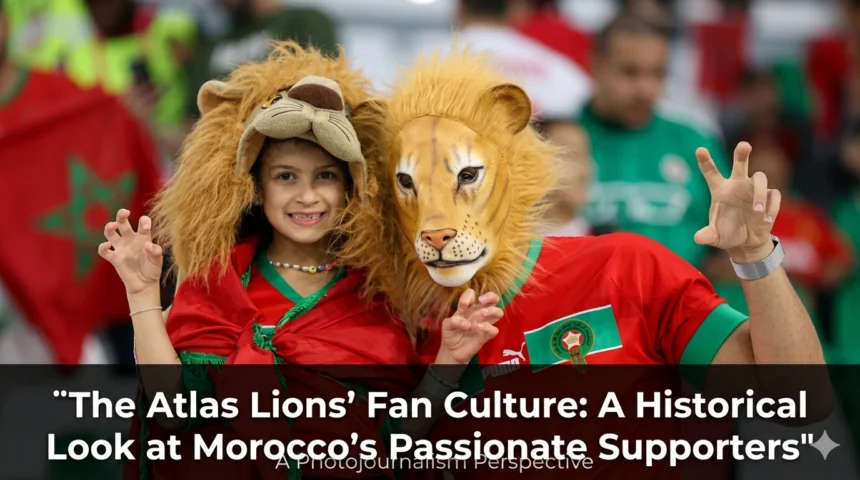
A dynamic sensory experience marks matches featuring the Atlas Lions. Stadiums resonate with traditional chants, modern songs adapted from popular music, and continuous drum beats. Visually, the stands form a mosaic of red and green, with thousands of flags displayed in unison. Elaborate tifos, often spanning entire sections, portray national symbols, prominent players, or messages of support. This vibrant atmosphere creates a challenging environment for opponents and inspires the home team.

Family, Community, and Intergenerational Support
Football fandom in Morocco is characterized by strong communal and intergenerational participation. Families, including members of all ages, regularly attend matches or gather to watch games together. This tradition ensures that enthusiasm for the Atlas Lions is transmitted across generations, fostering sustained support. Football functions as a significant medium for family bonding and community cohesion, reinforcing social connections and a shared national identity.
Resilience and Optimism
Despite intervals of disappointment or extended periods without major successes, Moroccan supporters consistently exhibit resilience and optimism. They readily move beyond setbacks and maintain belief in the team’s potential. This enduring spirit reflects the profound connection between supporters and the Atlas Lions, where hope for future achievements prevails over past frustrations.
The 2022 World Cup: A Defining Moment for Moroccan Fans
The 2022 FIFA World Cup in Qatar represented a pivotal moment in Morocco’s supporter culture, highlighting their passion on the global stage to an unprecedented degree.
From Underdogs to History Makers: The Supporters’ Role
During the Atlas Lions’ historic progression to the semi-finals, supporters maintained a strong presence throughout the tournament. The proximity of Qatar to Morocco and the substantial diaspora in the Gulf region contributed to an atmosphere that closely resembled home matches. The volume and intensity of supporter participation generated an electrifying environment that energized the team and contributed to their remarkable achievements. Persistent chanting, drumming, and displays of national pride played a significant role in motivating the players. For a detailed account, see From Underdogs to History Makers: Morocco’s Unforgettable 2022 World Cup Journey.
Global Recognition and Impact
Moroccan supporters in Qatar attracted significant international attention. Their passionate yet respectful conduct, vibrant displays, and steadfast belief in the team garnered widespread admiration. International media frequently highlighted their distinctive contribution to the tournament atmosphere, often referring to them as the “best fans” of the World Cup. This global recognition solidified their reputation and enhanced Morocco’s history of support, projecting a positive image of Moroccan culture and hospitality to a global audience.
The Future of Morocco National Team Fan Culture
The outlook for Morocco’s supporter culture remains promising. The recent World Cup campaign has inspired a new generation of supporters, eager to uphold traditions of passionate support. Digital platforms are expected to play an increasingly important role in connecting supporters worldwide, facilitating coordination and shared experiences. As the Atlas Lions pursue further achievements, their dedicated supporters will continue to play a vital role in shaping the team’s ongoing narrative.
Conclusion
Morocco’s supporter culture exemplifies the enduring influence of football as a source of national pride, unity, and emotional expression. From the early days of resistance to the global stage of 2022, supporters have consistently exhibited exceptional passion, loyalty, and creativity. They are more than spectators; they form an essential part of the Atlas Lions’ identity, inspiring generations through their presence. This vibrant culture remains fundamental to Moroccan football, reflecting a unique bond between team and nation. For further exploration of the team’s broader narrative, see the History and Achievements of the Morocco National Football Team.
FAQ
What makes Moroccan football fans unique?
Moroccan supporters stand out due to their extraordinary emotional investment, unwavering loyalty, and vibrant, highly coordinated stadium atmospheres. Their deep connection to national identity, combined with strong community bonds and intergenerational support, creates a distinct and powerful culture recognised globally.
When did Moroccan fan culture begin to take shape?
The culture began taking shape during the colonial era, as football became a symbol of national identity and resistance. It solidified with the national team’s formation following independence in 1956 and flourished during the successful campaigns of the 1970s and 1980s, particularly with the 1976 AFCON victory and the 1986 World Cup appearance.
How does the Moroccan diaspora contribute to the fan culture?
The diaspora plays a crucial role by forming a vast, global network of supporters. They travel in large numbers to international tournaments, creating a “home away from home” atmosphere and often outnumbering local fans. Their passionate presence and financial contributions significantly boost team morale and global visibility.
What was the significance of the 2022 World Cup for Moroccan fans?
The 2022 World Cup represented a defining moment for supporters. Their unprecedented numbers and passionate presence in Qatar created an electrifying atmosphere widely credited with inspiring the Atlas Lions to their historic semi-final run. It earned them global recognition as some of football’s most dedicated and vibrant supporters.
Are there organised fan groups for the Morocco national team?
Yes, while there isn’t a single official national team fan club in the traditional sense, numerous organised “ultras” groups primarily support local clubs but extend their coordinated, visually spectacular support to the national team. These groups are responsible for elaborate tifos, synchronised chants, and the vibrant atmosphere at matches.