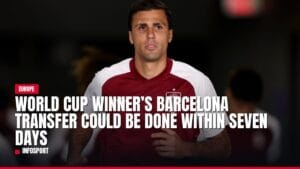
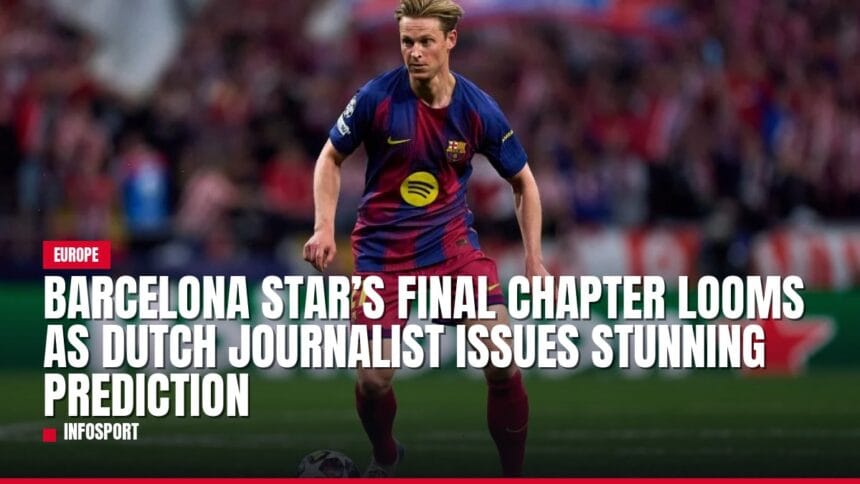
Frenkie de Jong’s position at Barcelona has come under fresh scrutiny, with Dutch journalist Valentijn Driessen suggesting the midfielder could depart when his contract enters its final year in 2026/27. The arrival of Rodri and De Jong’s current injury layoff have combined to cast doubt over his long-term role in Hansi Flick‘s midfield plans.
Speaking on De Telegraaf’s podcast, Driessen outlined the converging pressures facing the Dutch international. “He has been injured a lot; they already tried to get rid of him before, and now they bring Rodri,” Driessen said. “I don’t think that now that he’s injured they’re trying to transfer him – I can’t imagine it – but I do think he’s in his last season at Barça.”
De Jong has publicly expressed his ambition to finish his career at the Catalan club, but Driessen dismissed that prospect as unrealistic given Barcelona’s recent business. The club’s recruitment of one of Europe’s finest midfielders fundamentally alters the competitive landscape De Jong must navigate upon his return to fitness.
Rodri’s Central Role Threatens De Jong’s Standing
Barcelona’s decision to sign Rodri places the Spanish international at the heart of Flick’s tactical setup, leaving limited scope for De Jong to retain his established position. Driessen questioned whether the two midfielders could function as regular starters together, citing the specificity of Rodri’s skill set and De Jong’s traditional role.
“You always have to perform to keep playing. If an excellent player comes in who plays in your position, I can’t imagine those two playing together,” Driessen explained. The journalist’s assessment suggests De Jong faces a choice between accepting a reduced role or seeking an exit before his final contract year arrives.
More Read

Can De Jong Reinvent Himself Tactically?
De Jong’s career has been constructed on possession retention, ball-carrying from midfield, and orchestrating transitions between defensive and attacking phases. To coexist with Rodri, Driessen believes he would need to adopt a more advanced, attacking responsibility—a shift the journalist views with skepticism.
“He might be able to try, but he needs to be more attacking, and that’s usually the point of criticism: that he lacks that. He’s never managed it,” Driessen said. Flick’s preferred system and his willingness to accommodate tactical flexibility will prove decisive once De Jong regains match fitness. Barcelona’s midfield depth offers multiple configurations, but incremental pressure on the Dutchman appears unavoidable following Rodri’s arrival and his ongoing recovery from injury.