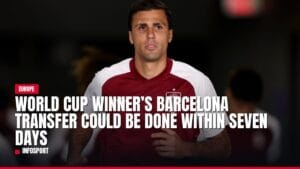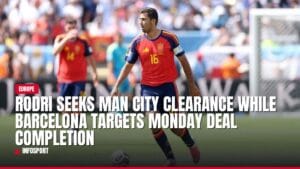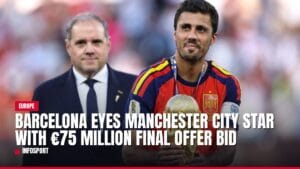
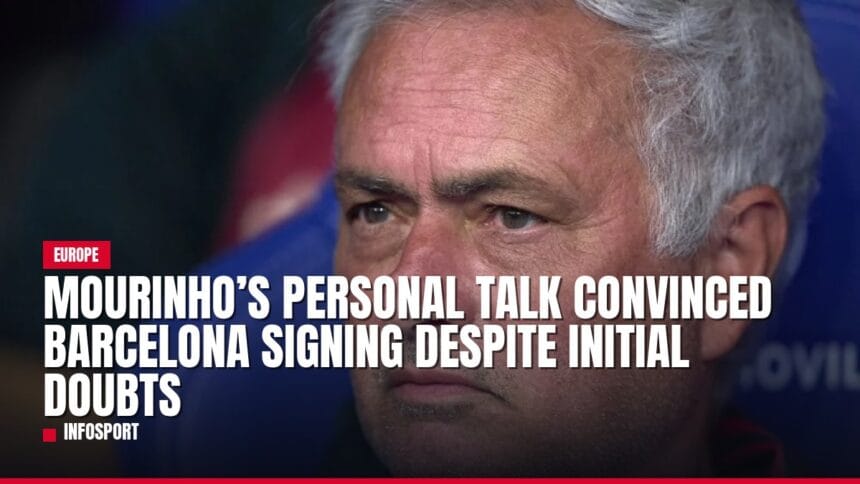
Jose Mourinho has revealed he personally engaged with Rodri before the Spanish midfielder chose Barcelona over Real Madrid, exposing fractures in the club’s pursuit of one of Europe’s most coveted midfielders. The 30-year-old completed his transfer from Manchester City to Barcelona on a four-year deal running through summer 2030, ending weeks of speculation linking him to the Santiago Bernabéu.
Mourinho’s Doubts About Rodri’s Commitment
Speaking to El Chiringuito TV, Mourinho outlined the breakdown in negotiations, pinpointing a lack of absolute conviction from Rodri as the decisive factor. The new Madrid manager held multiple conversations with the player but grew concerned about his hesitation toward the move.
“Rodri is an extraordinary player, but Real Madrid is a different dimension. Real Madrid cannot have players who think twice,” Mourinho stated. “You get the call and say: ‘When do you want me there?’ Did I speak to Rodri? Yes, a couple of times. Real Madrid made him a generous offer. Rodri had doubts. His doubts created doubts in me.”
Madrid’s approach was substantive—a competitive financial package was tabled—but Rodri’s hesitation proved terminal to the club’s hopes of orchestrating a marquee midfield acquisition.
Barcelona’s Decisive Edge in the Transfer Race
Barcelona ultimately prevailed in what became a multi-club auction for Rodri’s services. The Catalan side secured the midfielder for a total package worth €76.5 million, structured across guaranteed and conditional payments: €60 million guaranteed, €11.5 million in easily achievable add-ons, and €5 million tied to more demanding performance-based clauses.
More Read

Rodri himself confirmed the extensive interest he fielded before selecting his destination. “I studied and analysed the offers I received; they were very important clubs,” he explained. “Together with my family and friends, we made the decision we thought was best. My decisions have always been linked to a sporting challenge.”
What Rodri’s Choice Reveals About Madrid’s Summer Strategy
Mourinho’s candid admission signals a rare miscalculation in Real Madrid’s transfer planning. The club identified Rodri as a priority target and invested time and resources in courting him, yet failed to overcome Barcelona’s appeal—whether sporting, personal, or otherwise. For a manager entering his tenure intent on reshaping the midfield, the setback underscores the limits of financial power alone in securing elite talent. Rodri’s preference for Barcelona despite Real Madrid’s resources suggests the pull of project continuity and collective ambition outweighed the prestige of the Bernabéu, a telling indicator of Barcelona’s strategic positioning in the market.