
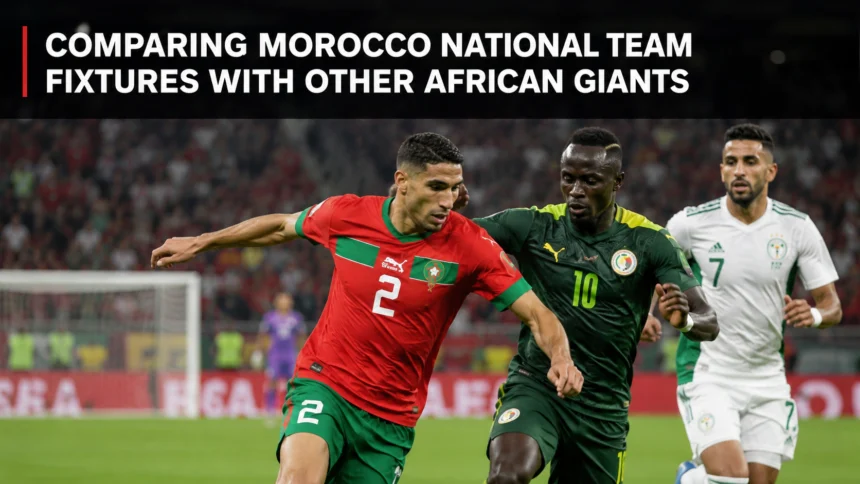
Morocco’s rise on the global football stage has captivated audiences worldwide. Since their historic semi-final appearance at the 2022 FIFA World Cup, the Morocco national team’s fixtures have garnered substantial attention. Examining their fixture demands, strategic planning, and schedule alongside those of other African powerhouses reveals how the Atlas Lions continue to challenge traditional football supremacies. This comparison underscores Morocco’s unique trajectory while reflecting the broader challenges and opportunities facing top African nations in international competition.
The details of Morocco’s fixtures against continental rivals illuminate the strategic decisions driving their success. World Cup qualifiers, Africa Cup of Nations matches, and carefully selected international friendlies all serve essential purposes: building momentum, developing talent, and sustaining peak performance levels.
Strategic Planning Behind Morocco’s National Team Fixtures
The Moroccan Royal Football Federation (FRMF) has established a comprehensive framework to manage the national team fixture calendar. This approach balances competitive demands with player health and development. The Atlas Lions prioritize tournament readiness while continuously integrating emerging talents into their squad rotation.
World Cup Qualifiers: The Path to Global Competition
Participation in FIFA World Cup qualifiers remains fundamental to Morocco’s campaign. These high-stakes encounters determine qualification for football’s pinnacle event. With expectations elevated following recent success, every qualifier demands total commitment. The schedule frequently involves extended travel and consecutive matches, requiring considerable physical and mental resilience. For comprehensive details on their qualifying journey, visit Morocco’s World Cup Qualifiers Fixtures.

AFCON Qualifiers and Tournament: Continental Ambitions
The Africa Cup of Nations remains a primary objective for Morocco’s program. AFCON qualifiers form a critical component of Morocco’s fixture schedule ahead of the biennial tournament. However, these matches frequently clash with European league commitments, complicating player availability and team cohesion. Morocco’s pursuit of continental honours demands careful squad selection and thorough preparation. Learn more about upcoming matches at AFCON 2025 Qualifiers: Morocco National Team Fixtures & Group Stage Analysis.
International Friendlies: Development Opportunities
International friendlies feature prominently in Morocco’s tactical blueprint. These matches serve multiple purposes: testing new strategies, integrating emerging talent, maintaining fitness, and gauging performance against varied opponents. Contests with elite European or South American sides offer valuable exposure to different footballing approaches, while matches against African nations provide insight into continental competitors. The federation exercises careful judgment in opponent selection, prioritizing quality fixtures that enhance squad development.
Fixture Philosophies Among Africa’s Elite
Understanding Morocco’s fixture strategy requires examining how other top African teams approach their schedules. While nations face comparable challenges, they implement distinct strategies based on available resources, player pools, and historical priorities.

Senegal: The Lions of Teranga’s Approach
As a perennial African powerhouse and recent AFCON champions, Senegal maintains an demanding fixture calendar. Their strategy emphasizes major tournaments to ensure European-based stars participate in World Cup and AFCON qualifiers. The resulting fixture density reflects consistent tournament performance and extended runs. Friendlies serve as platforms for integrating new talent and maintaining tactical flexibility, often featuring top-tier European or South American opposition.
Egypt: The Pharaohs’ Continental Focus
As Africa’s most decorated AFCON nation, Egypt has traditionally prioritized continental competition. AFCON qualifiers and the tournament itself heavily shape their fixture scheduling. While World Cup participation has been less consistent in recent decades, their continental commitment remains unwavering. Their roster typically blends domestic and European professionals, with friendlies used to harmonize these groups and test tactical approaches. Managing player availability alongside a congested domestic league remains an ongoing challenge for Egyptian administrators.
Nigeria: The Super Eagles’ Complex Logistics
Nigeria’s exceptional talent pool creates unique fixture management complexities. With players distributed across global leagues, coordination and logistical planning become intricate. Regular participation in World Cup and AFCON qualifiers reflects their consistent presence in these competitions. The Federation frequently uses friendlies to evaluate diverse player options and build squad chemistry within constantly evolving rosters. Competing in demanding qualifying groups places substantial pressure on their athletes.
Algeria: The Fennecs’ Competitive Strategy
Like Morocco, Algeria has achieved recent AFCON success and adopts a comparable fixture approach. Their focus remains on World Cup and AFCON campaigns, resulting in intensive qualifying schedules. The Fennecs maintain competitive intensity through carefully selected friendlies against strong opponents. With predominantly European-based squads, meticulous planning ensures optimal preparation for crucial matches.
Cameroon: The Indomitable Lions’ Legacy
Cameroon’s rich competitive history shapes its contemporary fixture philosophy. Their calendar consistently features World Cup and AFCON qualifiers, reflecting ongoing tournament participation. While fewer high-profile friendlies feature compared to some counterparts, focus remains on developing competitive squads capable of elite-level performance. The Indomitable Lions strategically incorporate emerging players in friendlies, ensuring squad depth sustains their legacy across generations.
Comparative Fixture Demands: Morocco and Continental Rivals
Direct comparison of Morocco’s fixtures with other African leaders reveals distinct pressures and opportunities each nation encounters.

Tournament Progression and Advancement
Morocco’s World Cup semi-final run imposed substantial fixture demands during qualifying and tournament phases—an intensity experienced regularly only by select African nations. Senegal and Nigeria similarly manage such demanding periods through consistent World Cup qualification and strong AFCON performances. While Egypt and Algeria dominate AFCON, their World Cup qualification records have been inconsistent, affecting overall fixture intensity in certain cycles.
Qualifier Density and Competitive Intensity
All leading African nations follow identical World Cup and AFCON qualification structures. However, challenging group compositions intensify qualifying cycles. Despite Morocco’s high seeding, formidable opponents ensure pressure on every fixture. African football’s competitiveness means any opponent poses genuine threats, making every match in Morocco’s recent results significant.
Friendly Match Strategy and Opponent Selection
Morocco increasingly pursues high-profile international friendlies against elite European and South American teams—a strategy mirrored by Senegal and Algeria. This exposure develops players’ adaptability to varied footballing styles and prepares them for elite competition. Some nations prefer regional fixtures or fewer matches for logistical reasons. Morocco’s active approach emphasizes opponent quality and diversity as critical components of tactical development and confidence building.
Player Availability and Travel Considerations
Travel demands represent a primary challenge for African nations, particularly for European-based players. Morocco, like Senegal, Nigeria, and Algeria, depends heavily on diaspora talent, requiring strong club coordination and efficient logistics. Long-distance travel and time zone transitions significantly impact player fatigue, influencing fixture management. Minimizing travel stress and optimizing recovery times provide competitive advantages.
European Club Calendar Impacts
The demanding European club schedule affects player availability for all African national teams. FIFA international breaks remain infrequent, requiring federations to maximize every training session and match. Morocco, Senegal, and Nigeria—nations with substantial European-based contingents—navigate complex club-versus-country balancing acts. Effective communication between national federations and clubs remains essential for modern international football management.
Fixture Congestion and Performance Implications
Fixture congestion challenges modern football globally, with African national teams facing particular pressures. Morocco’s demanding schedule mirrors those of continental rivals, creating multiple implications.
Player Welfare and Injury Prevention
Intensive fixture lists pose significant injury risks. Constant travel, demanding matches, and limited recovery periods strain athletes’ bodies. Like other federations, Morocco invests increasingly in sports science, medical teams, and recovery protocols to mitigate these risks. Protecting key players proves vital—squad absences can derail entire campaigns.
Squad Depth Requirements
Managing fixture congestion and injuries demands deep, versatile squads. Morocco, Nigeria, and Senegal benefit from broader talent pools, enabling effective rotation and sustained performance. Successful national teams maintain quality reserves without significant performance drops. This depth facilitates tactical flexibility, allowing adjustments to various opponents and match scenarios.
Tactical Preparation and Team Cohesion
Limited international breaks constrain tactical preparation time, elevating the importance of clear communication, efficient training, and consistent footballing philosophy. Preparing for Morocco’s fixtures with minimal lead time requires strong cohesion and team spirit, allowing rapid adaptation to emerging challenges, as emphasized by coach Walid Regragui.
Morocco’s Fixture Management Excellence and Future Prospects
Morocco’s success reflects not merely talent but sophisticated fixture management and strategic planning. The FRMF’s investments in infrastructure, coaching, and player development cultivate sustained excellence:
- Centralized Planning: A unified strategy across all national team levels—from youth to senior squads—ensures consistent talent development and shared footballing philosophy.
- World-Class Training Facilities: The Mohammed VI Football Academy provides premium training environments, enabling player development regardless of international match locations.
- Experienced Coaching Leadership: Appointments of tactically sophisticated coaches like Walid Regragui unlock squad potential and effectively manage challenging fixture schedules.
- Thoughtful Friendly Selection: Strategically chosen opponents refine tactics and build confidence against diverse playing styles.
Looking forward, Morocco’s fixture calendar will balance high-stakes qualifiers with strategically selected friendlies. The ambition extends beyond African dominance toward consistent global competitiveness. This demands continuous adaptation to evolving international football dynamics, sustained player development, and meticulous planning for every match—whether crucial qualifiers or friendly challenges. Insights from match previews and post-match analyses continuously inform planning processes.
Summary
Morocco’s fixture list, compared against other African leaders’ schedules, reflects the substantial challenges and tactical considerations inherent in competing at continental and global levels. While leading African nations face identical World Cup and AFCON qualification demands, Morocco’s recent ascent has intensified scrutiny of their schedule. Their fixture planning balances competitive requirements with player welfare and development, positioning them favorably for sustained success. As the Atlas Lions progress, their fixture management will remain a critical indicator of their ambitions and international competitive capabilities.
The careful orchestration of Morocco’s fixture schedule demonstrates their organizational commitment to excellence, ensuring perpetual readiness to compete against elite opposition across continents.
FAQs
What types of matches does the Morocco national team compete in?
The Moroccan national team participates in FIFA World Cup qualifiers, Africa Cup of Nations qualifiers and tournaments, and international friendlies. These competitions are strategically scheduled to balance competitive demands with player development and tournament preparation.
How does Morocco’s fixture schedule compare to other top African nations?
Morocco’s schedule matches the intensity and density of other African leaders like Senegal and Nigeria, particularly during World Cup and AFCON qualifiers. All rely heavily on European-based players, creating comparable challenges regarding travel, player availability, and international windows. Morocco has notably expanded high-profile friendlies against elite non-African opposition to enhance squad testing and preparation.
How does Morocco manage player availability with so many athletes in European leagues?
The Moroccan Royal Football Federation coordinates closely with clubs to secure player releases during FIFA international windows. They emphasize efficient travel logistics and advanced recovery protocols to minimize player fatigue. Strategic friendly scheduling and deliberate squad depth management also help mitigate European club schedule impacts on Morocco’s fixtures.
What role do international friendlies play in Morocco’s schedule?
International friendlies allow Morocco to test tactical innovations, integrate emerging talent, maintain fitness, and gain experience against varied opponents. High-profile friendlies particularly serve important purposes: measuring squad development against elite opposition and preparing for major tournaments.
Where can I find information about Morocco’s upcoming matches?
For the latest Morocco fixture information, consult the official FRMF website, reputable sports news platforms, and dedicated football statistics resources. Visit Morocco’s recent matches and upcoming fixtures and Morocco National Team Fixtures 2024: Full Schedule & Match Dates for comprehensive scheduling details.