Legendary Stadiums: The Historic Moments of the Moroccan National Team’s Home
The roar of the crowd, the vibrant colours, that electric tension in a crucial match – these define football’s greatest moments. For Morocco’s national team, such encounters unfold in a handful of mythical venues that transcend their role as mere sports grounds.
These stadiums are far more than physical structures. They represent the historical crucibles where the Atlas Lions have fought, triumphed, and occasionally endured heartbreak. Each has contributed to building a rich tapestry of national football heritage across generations.
From the energetic atmosphere of Casablanca to the tranquil Agadir coastline, every venue carries its own narrative. Stories of passion and pride, of support that lifts teams to glory or eases the sting of defeat. What truly captivates is how each stadium embodies its city’s spirit while maintaining the distinctive Moroccan football style that has captivated the world.
This exploration focuses on the iconic venues hosting Morocco’s national side over the years, examining what makes each ground unique – from architectural significance and historical importance to those unforgettable moments that still resonate with fans.
It is a journey through past, present, and future. These are not merely sports sites; they form vital elements of Moroccan football’s identity. The Atlas Lions’ remarkable 2022 World Cup campaign intensified the emotional connection between team, stadiums, and supporters, authoring a new chapter in an already legendary story.

Mohammed V Stadium – The Legendary Roar of Casablanca
Arguably the crown jewel among Morocco’s national venues, Mohammed V Stadium stands in Casablanca’s heart. Since opening in 1955, this historic ground has served as Moroccan football’s spiritual home.
What distinguishes this place? The atmosphere is electrifying. The crowd’s roar here transcends mere volume – it becomes deafening in the most magnificent way. Its central location ensures accessibility, drawing massive audiences for every significant encounter. As Morocco’s economic capital, the stadium attracts supporters nationwide, creating a regional melting pot unified under the national banner.
The architectural design was visionary for its mid-1950s construction period. Built as Morocco approached independence, it represents far more than a sporting venue – a symbol of national pride and sovereignty. Though aged, the modernist concrete bowl still generates an intimidating cauldron of noise that visiting teams find formidable.

A Monumental Castle of Football History
Mohammed V has witnessed countless historic victories, devastating losses, and defining moments shaping the nation’s football narrative. While capacity has evolved, it remains substantial enough to create an impressive sea of red and green before opposition sides.
The stadium’s design performs something remarkable – it amplifies crowd energy in ways that create unmatched home-field advantage. Even seasoned international teams acknowledge intimidation upon entering this pitch. Steep stands position supporters close to the action, while the concrete structure’s acoustic properties ensure every chant, whistle, and roar reverberates with maximum impact.
The stadium has grown alongside Moroccan football itself. As the nation claimed its place among African football’s elite during the 1970s and 1980s, Mohammed V Stadium staged unforgettable continental performances. This hallowed ground witnessed qualifying matches culminating in Morocco becoming the first African nation topping a World Cup group in 1986.
Unforgettable Moments at Mohammed V Stadium
World Cup qualifiers that held the nation breathless, Africa Cup of Nations clashes displaying Moroccan talent on the continental stage – this ground has hosted it all. The rise of legendary players, glorious victories, and the pain of near misses are woven into its fabric.
Today, it serves as a shrine for supporters and a powerful emblem of national sporting aspirations. The semi-final victory against Guinea in the 1976 Africa Cup of Nations, witnessed by a full house, remains legendary in Moroccan football lore as one of the greatest nights ever staged.
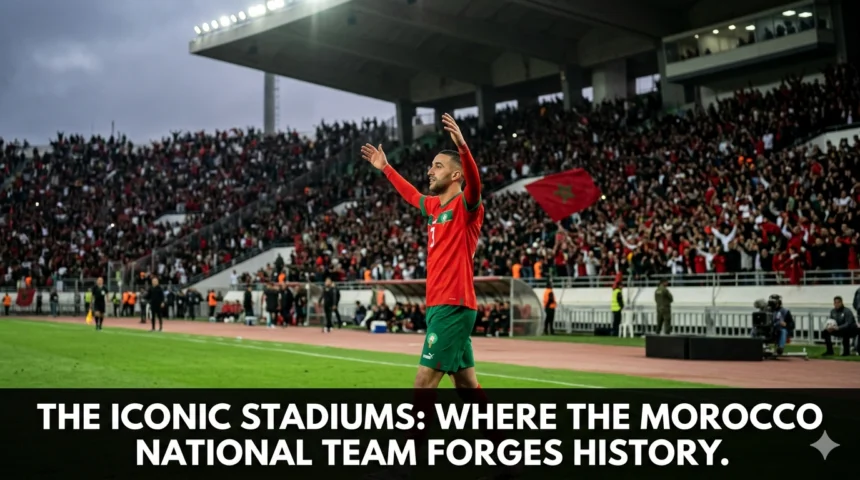
More recently, crucial 2022 World Cup qualifying matches showcased the stadium at its atmospheric finest. Victories against Guinea-Bissau and Sudan that secured Qatar qualification generated passion that reminded all why this venue remains special. Achraf Hakimi’s celebration following his Sudan goal, with the crowd as a wall of sound behind him, perfectly captured the player-stadium-supporter nexus.

Beyond international matches, local clubs Wydad AC and Raja CA’s intense rivalry elevates the stadium’s legendary status, cementing it as central to Moroccan football culture. The Casablanca Derby transforms Mohammed V into one of football’s most hostile and passionate arenas.
Stade Prince Moulay Abdellah – Fortress of Rabat
Morocco’s national team also utilises another primary venue in the capital. Prince Moulay Abdellah Stadium offers a modern counterpoint to Casablanca’s historical grandeur.
This multi-purpose facility opened in 1983, yet extensive renovations have brought it to contemporary international standards, creating a state-of-the-art venue capable of hosting major global events. The 2008 upgrade achieved FIFA and CAF compliance while increasing capacity to accommodate larger crowds.
Located in Morocco’s political capital, the venue possesses a unique atmosphere. More formal than other Moroccan grounds yet equally passionate, it frequently hosts government officials, diplomats, and foreign dignitaries. The modern, spacious design maintains an intimidating presence that impresses all visitors.
Modern Facilities and World Events
Prince Moulay Abdellah combines traditional character with contemporary amenities. Renovations extended beyond cosmetic improvements, creating a pitch rivalling any global stadium while retaining the distinctly Moroccan character opposing teams have learned to respect and fear.
State-of-the-art floodlighting aligned with international broadcasting standards ensures Morocco’s matches receive optimal television presentation worldwide. Pitch quality consistently ranks among Africa’s finest, providing the perfect surface for the technical, possession-based football Morocco has cultivated under recent coaching regimes.
The stadium has hosted major international tournaments, including 1988 Africa Cup of Nations matches and FIFA youth competitions. This experience has established Prince Moulay Abdellah as one of the continent’s premier venues, regularly selected for significant continental fixtures.
Strategic Importance in Contemporary Morocco
Beyond football matches, the stadium symbolises Morocco’s modernisation and international ambitions. When the Atlas Lions take the pitch here, they represent more than their federation – they showcase Morocco’s capabilities to the world.
The venue has hosted Morocco’s tactically astute recent performances. Its facilities suit the technical, patient football serving the national team well in contemporary tournaments. Modern amenities enable detailed tactical preparation and video analysis, while playing surface quality facilitates the quick, intricate passing combinations that have become a Moroccan trademark.
The Coastal Jewels: Agadir and Beyond
While Casablanca and Rabat dominate headlines, Morocco’s national team has created enduring memories at coastal venues. Agadir’s Adrar Stadium provides a unique experience, blending Atlantic breezes with Moroccan supporter passion. These coastal grounds possess distinctive character – the relaxed resort atmosphere contrasts sharply with the footballing intensity. Visiting teams frequently arrive expecting a holiday ambience, only to discover Moroccan passion flows equally through laid-back coastal towns as bustling metropolises. These venues have served effectively for friendlies and lower-pressure competitions, allowing tactical experimentation and emerging players opportunities. The looser atmosphere unleashes the creative, expressive side of Moroccan football that has delighted global audiences.
The Future of Moroccan Stadium Culture
Morocco’s successful 2030 FIFA World Cup hosting bid (alongside Spain and Portugal) promises a new era for the country’s football infrastructure. Stadium renovations and constructions are already planned, providing forthcoming generations of Moroccan footballers superior facilities.
Unchanging, however, is Moroccan fan passion and commitment. Whether in a renovated Mohammed V or state-of-the-art World Cup venue, the atmosphere created by Atlas Lions supporters will constitute one of football’s great experiences. Morocco’s 2030 hosting preparations will strengthen the bonds among team, stadiums, and supporters cultivated across decades.
The Enduring Legacy
These iconic stadiums’ legacy transcends their physical structures. They embody the hopes, ambitions, and relentless spirit of Moroccan football – qualities enabling the Atlas Lions to rise from local heroes to global superstars and inspiring future generations of players and fans alike.