
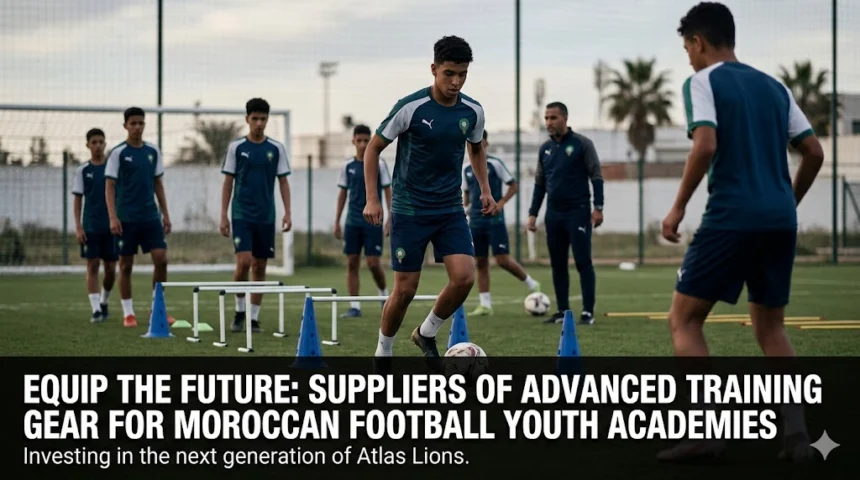
Morocco’s recent successes on the international football stage have highlighted the remarkable strides made in its youth development programs. The Atlas Lions’ historic run to the semi-finals at the 2022 FIFA World Cup, the first African nation to do so, was more than a point of national pride; it reflected years of systematic investment in youth football infrastructure. This progress, however, stems from more than raw talent and dedicated coaching. The quality of facilities and specialized training equipment used across academies play a crucial role in player development.
Morocco’s approach mirrors that of established football powers such as Spain, France, and Germany. Leading academies in the country have adopted training philosophies emphasizing technical precision from a young age, requiring specialized equipment to support this development. The Mohammed VI Football Academy in Salé exemplifies this commitment, offering state-of-the-art facilities to nurture world-class talent.
These institutions continually seek to produce the next generation of stars, and access to high-quality equipment proves paramount. This article examines the various suppliers of advanced training equipment equipping Moroccan youth academies to develop tomorrow’s champions.
The Important Role of Advanced Training Equipment

Football training has evolved dramatically from basic drills and simple cones. Today, sports science and technological advancement have transformed skill development. Modern equipment plays a critical role in improving player performance, ensuring safety, and promoting holistic development. Investment in better facilities aligns directly with Morocco’s ambitious vision for youth football, creating a strong foundation for future success. The Royal Moroccan Football Federation’s 2030 strategic plan places special emphasis on renewing training facilities across all youth categories.
This investment philosophy is already delivering results. Consider Achraf Hakimi, who graduated from the Moroccan youth system and then Real Madrid’s academy, benefiting from exposure to professional-standard equipment. Modern training methods, supported by quality gear, also formed the technical foundation for players like Sofyan Amrabat and Youssef En-Nesyri. This commitment to excellence from the ground up ensures young athletes receive every opportunity to reach their potential while creating pathways in coaching and technical roles for those who pursue alternative paths in football.
Improvement of Performance and Skill
More Read

Specialized training equipment targets various aspects of a player’s game. Speed ladders develop reflexes and footwork coordination, while agility hurdles enhance spatial awareness and speed. Reaction balls improve first touch and quick decision-making in unpredictable situations.
Manufacturers now design equipment for different ages and skill levels. Younger players can use weighted training balls to strengthen striking technique, while adjustable rebounders accommodate players of varying heights and abilities. This tailored approach ensures training remains both challenging and developmentally appropriate.
Passing arcs and rebounders refine first touch, passing accuracy, and shooting technique through targeted exercises that accelerate learning. GPS tracking devices and heart rate monitors have become increasingly common in youth programs, enabling coaches to monitor development with unprecedented precision.
Specialized equipment makes training more challenging and dynamic, ultimately producing technically superior, tactically aware, and physically prepared players. The results speak for themselves: Moroccan youth teams have consistently performed well in international competitions over the past decade, regularly reaching the later stages of FIFA and CAF youth tournaments.
Injury Prevention and Safety
Beyond skill development, safety remains a top priority for young athletes. High-quality protective gear is essential, given modern football’s physical demands and growing competition intensity. Sturdy shin guards, well-padded goalkeeper gloves, and proper footwear significantly reduce injury risk during demanding training sessions.
Academies increasingly invest in medical and recovery equipment, including first-aid kits, cold therapy devices, and basic physiotherapy equipment to treat minor injuries and accelerate recovery. Responsible youth development depends on injury-prevention protocols supported by appropriate equipment.

Moroccan academies have adopted injury-prevention strategies learned from European clubs, incorporating balance boards, resistance bands, and proprioceptive training equipment to strengthen stabilizing muscles and improve body awareness. These precautions prove particularly important for young players whose bodies are still developing.
Well-maintained equipment prevents accidents and fosters a safe training environment, giving young players confidence to train and challenge themselves without unnecessary risk. The mental benefits of training safely and securely cannot be overstated, allowing players to focus on skill development rather than worry about potential injury.
Types of Football Youth Training Equipment in Morocco
Comprehensive training programs require diverse equipment, each serving specific developmental purposes across various aspects of football performance.
Equipment for Developing Technical Skills
The foundation of any successful academy lies in teaching technical fundamentals from a young age. Developing ball control, passing accuracy, shooting technique, and first touch requires specialized equipment. Cone sets and marker discs create training environments for dribbling and agility drills, while passing gates help players build passing accuracy.
Training poles and mannequins simulate defensive pressure, allowing players to practice in realistic situations. Many Moroccan academies employ flexible training goals catering to different age groups, ensuring shooting exercises remain appropriately challenging as players progress.
Fitness Equipment & Physical Conditioning
Modern football demands peak physical condition. Youth development programs must meet this requirement while respecting players’ developmental stages. Resistance bands, agility ladders, and plyometric boxes form the foundation of young athletes’ conditioning programs.
Advanced conditioning equipment develops football-specific fitness rather than general athleticism. Sprint sledges improve acceleration, while coordination rings enhance balance and spatial awareness. The key is selecting equipment that builds functional strength and endurance while minimizing injury risk.
Tools for Game Intelligence and Tactical Understanding
Developing tactical awareness requires equipment that replicates game situations effectively. Tactical boards—physical or digital—provide visual aids for conveying complex concepts. Small-sided games enable players to practice tactics in realistic scenarios.
Position-specific training equipment has become increasingly important. Goalkeeper training demands specialized tools including reaction training lights, diving mats, and adjustable crossbars. Positioning markers and tactical grids help outfield players understand space and movement patterns.
Major Equipment Suppliers in Morocco
International brands and local companies compete to serve Morocco’s growing youth football sector. Academy administrators and coaches must identify reliable suppliers offering quality equipment.
International companies such as Nike, Adidas, and Puma have established strong market presence, providing comprehensive equipment packages from basic training cones to advanced analysis technology. These partnerships often include technical support and training methodology guidance.
Local suppliers have emerged as viable alternatives, frequently offering cost-effective solutions while maintaining quality standards. These companies possess expertise in Moroccan academy operations and provide flexible services including equipment maintenance and replacement programs.
Investments and Budgeting
Establishing a quality youth academy requires significant financial investment and strategic planning for equipment procurement. Initial costs can be substantial, but long-term benefits in player development and financial returns justify the expenditure.
A phased approach to equipment acquisition allows academies to maintain cash flow control while continuously improving training quality. Successful academies typically allocate 20-25% of their annual budget to equipment acquisition and maintenance.
Success stories from Moroccan academies demonstrate strong return on investment. Players from these programs contribute to the national team, generate transfer revenue, and enhance Morocco’s reputation as a football development destination. With ongoing investment in cutting-edge equipment, natural talent, and passionate coaching, Moroccan youth academies are well-positioned to compete with the world’s leading development programs. As technology advances and new training techniques emerge, remaining at the forefront of equipment innovation will prove essential to maintaining this competitive advantage.