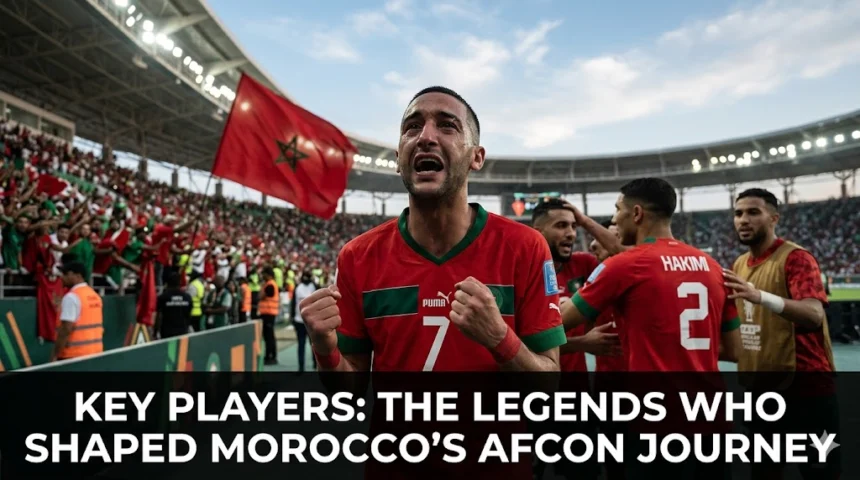
Morocco’s Africa Cup of Nations (AFCON) story is filled with memorable moments and the outstanding efforts of talented footballers. Although the Atlas Lions have won just one continental trophy, their teams have always displayed remarkable skill. This article looks at the legendary Morocco AFCON players who have shaped the country’s football identity and dreams in Africa’s top tournament. Thanks to their talent, leadership, and dedication, these players have left a lasting legacy that still inspires new generations. For more details on their participation, see Morocco’s Africa Cup of Nations (AFCON) Record.
The Golden Generation: Architects of the 1976 Triumph
Morocco reached its greatest AFCON achievement in 1976. Led by coach Gheorghe Mărdărescu, a talented group of players surprised many and made history. Their teamwork brought Morocco its only continental title, a victory still celebrated today.
Ahmed Faras: The Captain and Goalscoring Icon
Ahmed Faras, the team’s top striker and captain, was the key player in the 1976 squad. His strong leadership and goal-scoring ability made him essential. Faras ended the tournament as the top scorer with three important goals that helped Morocco win. He was known for staying calm under pressure and inspiring his teammates, showing both skill and determination.
Larbi Ehardane: The Midfield Maestro
Larbi Ehardane was the driving force in Morocco’s 1976 team. As a dynamic midfielder, he had great vision and passing skills, helping control the pace of play. He often broke up opponents’ attacks and started quick counters, which were key to Morocco’s success. His hard work and smart play gave the team a strong base for their attacking style, making him an essential but often unsung hero.
Abdelmajid Dolmy: The Elegant Distributor
Abdelmajid Dolmy is considered one of Africa’s best midfielders, and he showed his talent during the 1976 tournament. His smooth style, excellent ball control, and accurate passing made him stand out. Even when under pressure, Dolmy stayed calm and made smart decisions, helping Morocco keep the ball and control the midfield, which was key to their win. His long career made him a constant presence in Moroccan football.
Other Key Figures in 1976
Although Faras, Ehardane, and Dolmy are often mentioned, Morocco’s 1976 victory was a team effort. Players like goalkeeper Tazi, defenders Chicha and Baba, and forwards such as Mustapha Fetoui (Petit) all played important roles. Their teamwork and determination made the squad stronger together. For a deeper look at this achievement, see The Golden Generation: Morocco’s 1976 AFCON Triumph Explained.
The Resilient Era: 1980s and 1990s Icons
After their 1976 win, Morocco stayed strong in African football, often reaching the later rounds even if they didn’t win another title. During this time, standout players kept the Atlas Lions competitive and inspired new fans.
Badou Zaki: The Legendary Goalkeeper
Badou Zaki is often seen as Morocco’s greatest goalkeeper. He became a legend for his 1986 World Cup performances, but he was just as impressive at AFCON. Zaki was known for his quick reflexes, strong presence, and excellent saves. He captained Morocco to the 1988 AFCON semi-finals at home, showing great leadership and commitment. Later, asa coach, he led the team to the 2004 AFCON final. Zaki’s name is closely linked with Moroccan football success.

Mustapha Hadji: The African Player of the Year
Mustapha Hadji was an exciting attacking midfielder known for his skilful dribbling, creative passes, and impressive goals. He was named African Player of the Year in 1998 and was Morocco’s standout player in the late 1990s. At the 1998 AFCON, where Morocco reached the quarter-finals, Hadji’s individual talent was clear. His ability to create chances out of nowhere made him popular with fans and tough for defenders, showing the flair and style of Moroccan football.
Noureddine Naybet: The Rock at the Back
Noureddine Naybet was a key defender for Morocco for over ten years. He was known for his strength, aerial skill, tactical acumen, and leadership. Naybet captained Morocco at several AFCON tournaments, including 1998 and 2000, and provided the team with strong defensive support. His successful career at top European clubs showed his high level. Naybet’s tough style and ability to read the game made him one of Africa’s best defenders of his time.
Other Notable Players of This Era
During this time, other important players, such as Tahar El Khalej, a hardworking midfielder, and Salaheddine Bassir, a sharp striker, also made their mark. Their contributions helped Morocco stay strong in African football, even though another title was out of reach. For more on these teams, see Morocco’s Top 5 AFCON Performances Beyond Their 1976 Victory.
The Early 2000s: A New Wave of Talent and a Near Miss
In the early 2000s, the Atlas Lions made a strong comeback, reaching the 2004 AFCON final in Tunisia. This team mixed experienced players with promising young talent, once again showing the depth of Morocco’s legendary footballers.
Youssef Hadji: The Goalscoring Forward
Youssef Hadji, Mustapha’s younger brother, built his own strong reputation. As a forward who could play in many attacking roles, he was important to the 2004 team. His strong shots, smart movement, and knack for scoring made him a constant danger. Hadji continued to play well in later AFCONs, showing steady performance and commitment, and became one of Morocco’s top scorers in the tournament.
Marouane Chamakh: The Aerial Threat
Marouane Chamakh became a top striker during this time. He was known for his skill in the air, ability to hold up the ball, and hard work. Chamakh played a key part in the 2004 campaign, scoring important goals and linking up well with teammates. His attacking skills were a big help in Morocco’s push for another title.

Talal El Karkouri: The Defensive Backbone
Talal El Karkouri was a strong centre-back, known for his physical presence and defensive skills. His tough tackles, aerial strength, and leadership made him a dependable part of the defence. In the 2004 AFCON, his performances were key to Morocco’s solid defence, helping the team reach the final. His work with other defenders gave the team a solid base.
Jaouad Zairi: The Dribbling Winger
Jaouad Zairi was a winger whick pace skilfullful dribbling could change a gamean instantents. He often beat defenders and sent in dangerous crosses. Zairi’s flair and unpredictability made him popular with fans and able to create many chances. For more about top scorers, see Morocco’s All-Time Leading Goalscorers in AFCON History.
The Modern Era: Paving the Way for Future Glory
In recent years, Morocco has brought together some of its most talented teams, with players known around the world. Although they haven’t won another AFCON title yet, these modern stars have raised the team’s profile and given fans new hope for future victories.
Mehdi Benatia: The Modern Defensive Leader
Mehdi Benatia was the model of a modern central defender: strong, smart, skilled, and a great leader. He played for top European clubs like Bayern Munich and Juventus, bringing valuable experience and a winning attitude to Morocco’s team. As captain in several AFCON tournaments, he gave the defense stability and inspired confidence with his calm leadership and ability to read the game.
Hakim Ziyech: The Wizard of Amsterdam
Hakim Ziyech is known for his excellent passing, accurate crosses, long-range shots, and ability to break down defenses. As a creative attacking midfielder, his left foot can produce goals and assists from almost anywhere. Ziyech has been a key player in Morocco’s recent teams, bringing energy and standout moments that make him one of the most exciting Atlas Lions ever.
Achraf Hakimi: The Dynamic Full-Back
Achraf Hakimi is a world-class full-back known for his speed, stamina, attacking skills, and solid defense. Mostly playing on the right side, he has changed what it means to be a full-back by helping both in attack and ddefence Hakimi’s runs forward, dangerous crosses, and hard work make him a key player for Morocco. He continues to shine on the world stage.
Yassine Bounou: The Safe Hands
Yassine Bounou, or “Bono,” is now seen as one of Africa’s top goalkeepers. He is calm, great at stopping shots, and handles the ball well, making him vital for Morocco. His strong performances in recent AFCONs and the 2022 World Cup have confirmed his world-class status and given the team confidence. Bono follows in the footsteps of legends like Badou Zaki.
Sofyan Amrabat: The Midfield Enforcer
Sofyan Amrabat became well known worldwide for his strong defensive midfield play. His nonstop energy, skill at winning the ball, and disciplined tactics give Morocco important defensive support. Amrabat’s presence lets the team’s creative players shine, and his leadership in midfield has been crucial in recent tournaments. He shows the toughness and determination of today’s Moroccan team.
Along with Romain Saïss, Youssef En-Nesyri, and Azzedine Ounahi, these players make up the current group of ’sMorocco’s AFCON legends. Together, they have brought Morocco closer to winning another title and earned respect worldwide. Even with challenges, their efforts keep the dream alive. To learn more about the title drought, see Why Morocco Hasn’t Won AFCON Since 1976: A Deep Dive into Challenges.
Key Positions and Their Legendary Occupants
Morocco’s football history is full of talented players in every position. Some roles have seen a series of outstanding players, each making a lasting impact on the country’s AFCON story.
Goalkeepers: The Last Line of Defence
From Badou Zaki’s quick reflexes to Yassine Bounou’s calmness, Morocco has always had top goalkeepers. These players have often made the difference with key saves and strong defensive organisation. Their back-line leadership has been vital in many AFCON tournaments.
Defenders: The Unyielding Wall
Noureddine Naybet, Mehdi Benatia, and Achraf Hakimi show Morocco’s defensive strength and skill. Whether leading at centre-back or making fast runs as full-backs, these players have been the backbone of the Atlas Lions, giving the team stability and starting attacks.
Midfielders: The Engine Room and Playmakers
Midfield has always been a strong area for Morocco, with players like Abdelmajid Dolmy as skilled passers, Mustapha Hadji and Hakim Ziyech as creative playmakers, and Sofyan Amrabat as a tough defender. These midfielders control the game’s pace, set up chances, and protect the defence, showing Morocco’s skill and smart tactics.
Forwards: The Goalscorers and Game-Changers
From Ahmed Faras’s sharp finishing to Marouane Chamakh’s strength in the air and Youssef En-Nesyri’s current skills, Moroccan forwards have always scored important goals. Their knack for performing under pressure and winning close games has shaped Morocco’s AFCON story.
The Enduring Legacy of Morocco AFCON Legendary Players
The story of Morocco’s AFCON legends is more than just a list of names. It’s a tale of passion, resilience, and national pride. From the heroes of 1976 to today’s stars, each player has added to Morocco’s football history. Their achievements have brought happiness to millions and inspired many young Moroccans to chase their football dreams.
These legendary players have shaped the Atlas Lions’ identity, building belief in the team’s potential and creating a style known for skill, discipline, and determination. Their stories live on, inspiring new generations. As Morocco aims for another AFCON title, the spirit of these legends reminds everyone what dedication, talent, and teamwork can achieve. Their legacy is a key part of Morocco’s AFCON history and shows how football can bring people together.
FAQ Section
Who are considered the most legendary Morocco AFCON players?
The most legendary figures include Ahmed Faras (captain of the 1976 winning team), Badou Zaki (iconic goalkeeper and captain), Mustapha Hadji (African Player of the Year), Noureddine Naybet (world-class defender), and modern stars like Mehdi Benatia, Hakim Ziyech, Achraf Hakimi, and Yassine Bounou.
Which Moroccan player has scored the most goals in AFCON history?
While official records vary and continue updating, Ahmed Faras is widely recognised as one of Morocco’s top goalscorers in AFCON history, particularly for his crucial 1976 goals. Other notable scorers include Youssef Hadji and Marouane Chamakh. For comprehensive lists, consult dedicated articles on Morocco’s AFCON top scorers.
Who was the captain of the Morocco team that won the AFCON in 1976?
Ahmed Faras, the prolific striker and iconic figure, captained the Morocco national team that won the Africa Cup of Nations in 1976, leading his team to their sole continental title.
Have any legendary Moroccan AFCON players also managed the national team?
Yes, notably Badou Zaki, one of Morocco’s most legendary goalkeepers, later managed the national team. He led the Atlas Lions to the 2004 Africa Cup of Nations final, demonstrating his influence both as a player and as a coach.
What is the legacy of the 1976 AFCON-winning squad for future generations of Moroccan players?
The 1976 squad’s legacy runs profound. They established a benchmark for excellence and demonstrated Morocco’s continental potential. Their triumph instilled national pride and inspired countless young Moroccans to pursue football, influencing the development of future players and coaches while providing perpetual hope and ambition for the national team.