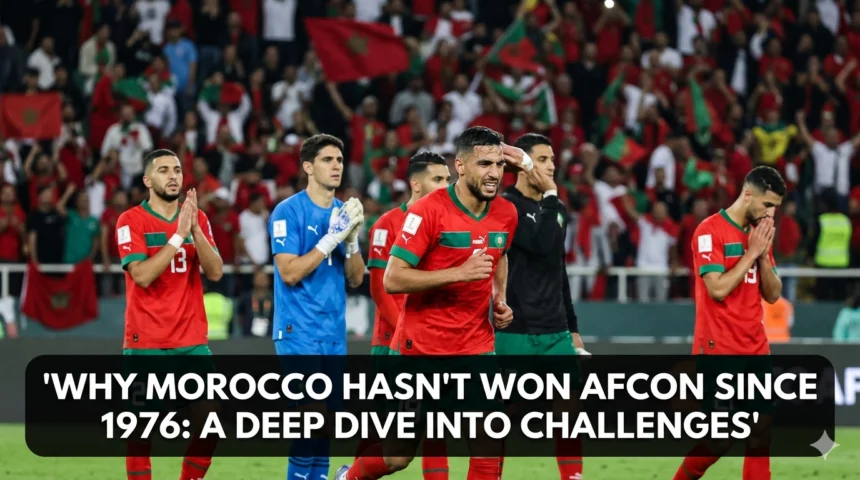
Morocco, recognized for its rich footballing heritage and passionate supporters, presents a notable paradox in the Africa Cup of Nations (AFCON). Despite consistently producing world-class talent and being regarded as strong contenders, the Atlas Lions have not secured the trophy since their only victory in 1976. This extended absence from continental success has prompted analysts and supporters to investigate the underlying causes. The following analysis examines the multifaceted factors contributing to Morocco’s AFCON win drought, including historical context, systemic challenges, and structural issues that have hindered the nation from translating its considerable potential into a second title.
A comprehensive understanding of the current situation requires an examination of Morocco’s full record in the Africa Cup of Nations. The 1976 victory remains a significant milestone, representing a golden generation of players who made a lasting impact on the nation’s football history. Subsequent decades have been marked by narrow defeats, unexpected eliminations, and unfulfilled potential. Analyzing this historical trajectory offers essential context for understanding the factors contributing to the prolonged title drought.
The Historical Context: A Legacy of Hope and Heartbreak
Morocco’s footballing history features notable moments of brilliance, particularly on the global stage. However, the AFCON tournament has presented unique challenges. The 1976 triumph, as detailed in The Golden Generation: Morocco’s 1976 AFCON Triumph Explained, set a standard that subsequent generations have found difficult to replicate.
Since 1976, Morocco has participated in numerous tournaments, often advancing to the knockout stages and occasionally reaching the finals, as documented in Morocco’s Top 5 AFCON Performances Beyond Their 1976 Victory. These performances highlight the high caliber of Moroccan football talent but also emphasize a recurring frustration: the inability to secure the championship. The pattern of promising beginnings followed by disappointing conclusions has become a defining feature of their campaigns, prompting continued analysis of the underlying causes of the drought.
Key Factors The factors contributing to Morocco’s prolonged wait for a second continental title are multifaceted, encompassing tactical, psychological, and structural dimensions. Detailed analysis reveals several persistent themes.
Managerial Instability and Tactical Inconsistency
A frequently cited factor is the high turnover of national team coaches. Frequent changes in management hinder the development of a coherent tactical philosophy and long-term vision. Each new manager introduces different systems, requiring players to adapt repeatedly, which undermines squad unity and overall development.

Frequent Coaching Changes
Morocco has experienced frequent coaching changes, particularly during AFCON preparations and tournaments. This instability prevents coaches from building cohesive teams, establishing a distinct tactical framework, or developing meaningful relationships with players over time. The demand for immediate results in a highly competitive environment often takes precedence over long-term development.
Lack of Consistent Tactical Identity
In the absence of stable leadership, the national team has struggled to establish a recognizable and consistent playing style. Successful tournament champions typically maintain a distinctive approach throughout competitions. Morocco’s frequent changes in formation, strategy, and player roles from one tournament to another have created vulnerabilities against well-organized opponents.
The Weight of Expectation and Psychological Pressure
The intense passion of Moroccan football supporters acts as both a source of motivation and a potential burden. While it can inspire players, it also generates significant pressure, particularly during critical knockout matches. This psychological factor has a substantial impact on tournament outcomes.

Performance Under Pressure
Morocco often performs strongly during group stages but tends to falter when the stakes are highest. Penalty shootouts, late concessions, and missed opportunities in extra time are recurring issues. These patterns suggest psychological constraints or difficulties in maintaining peak performance under extreme pressure, a phenomenon sports psychologists refer to as “choking.”
The Shadow of Historic Success
Although the 1976 achievement serves as a source of inspiration, it also imposes significant psychological pressure. Each new generation faces the expectation of replicating that success, which adds psychological burden. Persistent comparisons to historical achievements can overwhelm players, hindering their ability to perform optimally when opportunities for success arise.
Squad Cohesion and Player Availability Challenges
Morocco possesses numerous talented players competing in elite European leagues. However, integrating these individuals and maintaining optimal team cohesion presents significant challenges.
Integrating Foreign-Based Players
Many key Moroccan players were born and developed in Europe, representing clubs in France, Spain, the Netherlands, and Belgium. Although these players bring valuable international experience, integrating them into a cohesive national team can be challenging. Cultural differences, language barriers, and limited pre-tournament preparation time may hinder mutual understanding and on-field chemistry.
Injuries and Conflicting Club Interests
AFCON tournaments are typically held in January and February, coinciding with the critical mid-season period for European clubs. This scheduling often results in players arriving fatigued, carrying minor injuries, or experiencing pressure from their clubs to limit participation. Key absences or reduced fitness due to club commitments have weakened squad depth at crucial moments.
The Increasingly Competitive Nature of AFCON
African football has undergone significant transformation since 1976. The tournament now features more teams, and overall standards have increased substantially. This heightened level of competition presents an additional challenge for Morocco.

Rise of Competing African Nations
Nations such as Egypt, Cameroon, Nigeria, Algeria, and Senegal have each experienced periods of dominance, producing strong teams and winning multiple titles. The competitive balance has shifted, resulting in unpredictable outcomes even during group matches. Morocco regularly faces formidable opposition throughout the continent, making progression to the final increasingly challenging.
Diverse Environmental Conditions
AFCON tournaments take place in diverse African climates, ranging from extreme heat and humidity to challenging pitch conditions. These environmental factors impose significant physical demands and may favor teams accustomed to such environments, potentially disadvantaging European-based players who are less familiar with these conditions.
Failure to Leverage Home Advantage
Historically, hosting the AFCON has conferred substantial advantages to the host nation. However, Morocco has not translated this advantage into tournament success.
Home Tournament Performance
Morocco hosted the tournament in 1988, finishing fourth despite strong home support. The failure to capitalise on home advantage during this sole hosting opportunity represents a significant missed chance. Subsequent unsuccessful bids to host the tournament have prevented further attempts to reverse this outcome.
Inconsistent Performances and Inefficiency in Attack
Statistical analysis of Morocco’s AFCON campaigns reveals a consistent pattern: the team often controls possession and creates numerous opportunities but fails to convert them efficiently. This inefficiency has proven costly in closely contested knockout matches.
Missed Opportunities
Morocco frequently dominates possession and creates clear scoring opportunities but often struggles with conversion efficiency. This shortcoming can be decisive in tightly contested knockout matches, where a single goal determines advancement. Even Morocco’s leading AFCON goalscorers have faced challenges in maintaining consistent productivity.
Defensive Lapses
Conversely, isolated defensive errors have also been costly, leading to goals conceded at crucial moments. Achieving a balance between attacking ambition and defensive stability has remained a persistent challenge for Moroccan teams.
Near Misses and MDespite the extended absence of titles, Morocco has delivered several impressive campaigns in which success appeared attainable. The 2004 AFCON in Tunisia exemplifies this trend, as a talented squad reached the final but narrowly lost to the host nation. This performance, among others, is highlighted in Morocco’s Top 5 AFCON Performances Beyond Their 1976 Victory.heir 1976 Victory.
These near misses intensify the frustration, highlighting the significant potential within Moroccan football. Players featured in Key Players: The Legends Who Shaped Morocco’s AFCON Journey, such as Mustapha Hadji, Noureddine Naybet, and more recently Hakim Ziyech and Achraf Hakimi, have made notable contributions to the tournament. However, even their efforts have not ended the prolonged drought.
The Road Ahead: Learning from the Past
A review of Morocco’s complete AFCON history reveals a recurring cycle of optimism followed by disappointment. However, recent developments indicate the potential for change. The Atlas Lions’ notable semi-final appearance at the 2022 FIFA World Cup demonstrated improved tactical discipline, mental resilience, and team cohesion.
This achievement, realized under stable coaching and with highly motivated players, provides a valuable model for future continental campaigns. Addressing the identified structural challenges will be essential. Key priorities include ensuring managerial continuity, enhancing mental preparation, optimising player integration, and maintaining consistency throughout tournament stages.
The insights gained from the World Cup run, particularly regarding tactical flexibility and effective performance under pressure, could be instrumental in overcoming the AFCON challenge. Prioritising strong leadership in both tactical and organizational aspects, along with a unified strategic approach, may provide the key to ending the prolonged wait for continental success.
Conclusion
Morocco’s pursuit of a second continental title has been lengthy and frequently frustrating. The extended drought results from a complex interplay of managerial turnover, psychological pressures, player availability constraints, and increased continental competition. Although talent has consistently been present, converting that talent into sustained tournament success remains the primary challenge.
Nevertheless, the emergence of a strong current generation of players and the valuable experience gained from recent World Cup achievements have renewed optimism. By building on past lessons, prioritising consistency, developing mental resilience, and maintaining a unified vision, Morocco may be able to end the four-decade absence and reclaim a leading position in African football. The journey continues, with global attention focused on whether the Atlas Lions will achieve continental glory once more.
FAQ: Morocco AFCON Win Drought
Why has Morocco not won the AFCON since 1976?
The extended drought results from several interconnected factors: managerial instability leading to inconsistent tactical approaches; psychological pressure during crucial knockout stages; squad cohesion challenges and player availability issues stemming from injuries or club commitments; and intensifying competition from other African football powers.
Did Morocco ever reach an AFCON final after 1976?
Yes, Morocco reached the final in 2004 in Tunisia, where they delivered a strong tournament performance but ultimately lost to the host nation in a closely contested match.
How does managerial instability affect Morocco’s AFCON performance?
Frequent coaching changes prevent the development of a coherent tactical approach and long-term planning. Players constantly adapt to new systems and philosophies, hindering squad unity and limiting the team’s capacity to build a strong, consistent identity essential for tournament success.
What role does psychological pressure play in Morocco’s struggles?
Intense fan passion and high expectations create significant psychological demands on players. This pressure has sometimes led to critical errors or underperformance in high-stakes knockout matches, preventing the team from performing optimally when it matters most.
Has Morocco’s recent World Cup success changed expectations for their AFCON future?
Yes, the 2022 World Cup semi-final appearance has elevated expectations considerably. That tournament demonstrated newfound mental resilience, tactical discipline, and team cohesion, suggesting the squad has acquired valuable lessons that could address longstanding AFCON challenges.