


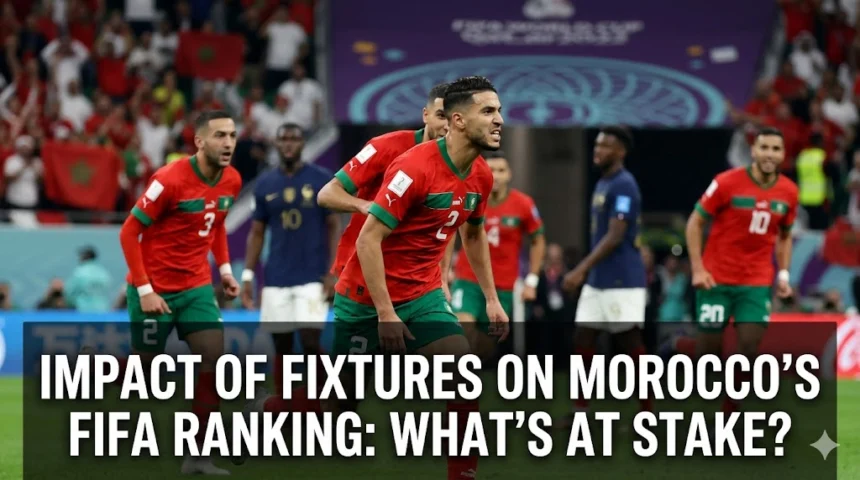
Morocco FIFA Ranking: What’s at Stake in the Matches?
The Moroccan national team’s international performance is closely monitored by passionate fans and tracked by the FIFA World Ranking system. Every fixture—whether friendly or competitive World Cup qualifier—directly impacts the Atlas Lions’ FIFA ranking. A higher ranking brings strategic advantages, from tournament seeding to international prestige. Understanding how these matches influence Morocco’s standing on the world stage is essential. This article examines the FIFA ranking system and explores how past and future results affect the team’s global position.
How the FIFA Points System Works
To grasp the impact of match results on Morocco’s ranking, we must first understand the system itself. In 2018, FIFA adopted an Elo-based ranking model where points are added or deducted based on match results, competitive significance, and opponent strength. This dynamic system means recent victories and major wins carry more immediate weight.
FIFA Ranking Points: How Do They Work
The formula used is P = Pbefore + I × W × T × C. While confederation weight (C) has been largely eliminated, the other factors remain crucial. Pbefore represents the team’s existing points, while I, W, and T are multipliers for match importance, outcome, and opponent strength. This formula demonstrates that not all matches carry equal ranking value.
Match Importance (I)
The importance factor arguably most determines ranking changes. Friendlies yield the fewest points, while World Cup and continental tournament finals offer the most. A victory over the same opponent in World Cup group play generates significantly more points than in a friendly. For Morocco to advance in the rankings, competitive matches are essential.
While friendlies allow tactical experimentation and player evaluation, World Cup qualifiers and Africa Cup of Nations (AFCON) campaigns carry substantial weight. Every point gained or lost in these competitions is critical. Major tournament matches, particularly knockout stages, produce the greatest ranking fluctuations globally.

Match Outcome (W)
The outcome factor is straightforward: wins award positive points, draws grant fewer points (or negative points against weaker opponents), and losses result in point deductions. The magnitude depends on other multipliers. Morocco improves its ranking primarily through victories, especially against higher-ranked teams.
Draws against superior opponents demonstrate quality and resilience, yielding positive returns. However, draws against lower-ranked teams represent lost opportunities and cost points. For Morocco, the priority is consistent wins against teams they should beat, combined with positive results against elite opposition.
Opponent Strength (T)
This factor reflects an opponent’s current FIFA ranking. Defeating a significantly higher-ranked team provides a substantial points boost compared to beating a lower-ranked side. Conversely, losses to much weaker teams incur major point penalties. This structure encourages matches against top-tier nations. Friendlies against elite opposition offer opportunities for significant gains if successful, though defeats carry considerable risk of point deductions.
More Read

Morocco’s FIFA Ranking and Fixtures: Direct Impact
Every match Morocco plays influences their ranking position on the global stage. Understanding this direct connection clarifies the strategic importance of each fixture.
Friendly and Competitive Matches
The distinction between friendlies and competitive matches significantly affects Morocco’s ranking progression. While friendlies offer preparation opportunities and tactical flexibility, their low importance factor yields minimal points. Defeating a strong opponent in a friendly might earn a few points, whereas the same victory in a World Cup qualifier could be worth substantially more.
Competitive matches—such as Morocco’s World Cup Qualifier fixtures or the AFCON 2025 Qualifiers—produce the most dramatic ranking shifts. These contests determine whether Morocco gains significant points or suffers substantial losses.
Playing Stronger Opponents
The most effective path for Morocco to improve its ranking involves defeating higher-ranked teams. A victory over a top-20 team yields far more points than a win over a team ranked outside the top 50. Strategic fixture selection, when possible, should prioritize quality opposition provided the team is in strong form.
Beyond ranking points, these encounters offer invaluable experience and test the team’s quality against elite competition. Strong performances in high-profile matches enhance Morocco’s international standing and improve their seeding prospects in future tournaments.
Losses to Lower-Ranked Teams
Equally critical is avoiding defeats to weaker teams. Losses to lower-ranked opponents cost significant points, erasing gains from previous victories. This pattern severely impacts ranking trajectory. For Morocco, the message is clear: maintain focus and consistency regardless of opponent perceived strength. Complacency against supposedly weaker teams could devastate their ranking progress.
More Read

Momentum and Consistency
Consistency forms the foundation of FIFA rankings. A successful run of results, even against mid-table teams, gradually increases point totals. Inconsistency—mixing wins with losses—makes climbing the rankings extremely difficult. Morocco benefits substantially from building momentum through their fixture schedule.
Sustained performance not only improves standings but also strengthens team confidence and fan engagement. A positive run could elevate Morocco into a higher seeding pot for major tournaments, providing a more favorable path to success.
Results and Ranking Implications
Recent performance offers concrete examples of ranking dynamics. Morocco’s recent match results demonstrate how accumulated wins and losses determine current standing.
Analysis of Recent Key Matchups
Morocco’s recent competitive campaigns illustrate ranking fluctuations. Successful AFCON performances or World Cup qualifying runs historically deliver significant boosts. Continental victories, especially against higher-ranked rivals, generate substantial points. Conversely, unexpected tournament exits or surprising qualifying losses cause sharp declines. Resources such as post-match analysis of Morocco’s recent games examine individual result implications within the broader ranking context.
World Cup Qualification
World Cup Qualifiers represent the most impactful fixtures for ranking changes. The high importance factor means every result significantly affects the standings. Beyond securing World Cup participation, successful progression through African qualifying generates valuable ranking points. Consistent victories against tough African opposition can propel Morocco up the world rankings and improve their World Cup draw seeding. The stakes in these matches are so high they prove central to ranking advancement.
AFCON Qualification and Tournaments
The Africa Cup of Nations is critically important for the continent. Qualifying matches and the tournament itself carry substantial weight. Morocco gains considerably from strong AFCON performances and deep tournament runs. Every match presents opportunities to earn or lose crucial points. Extended runs establish Morocco as an African powerhouse and elevate their international profile, benefiting future seeding in continental and intercontinental tournaments.
What’s at Stake for Morocco’s Ranking in Upcoming Matches?
The Morocco National Team Fixtures 2024 and beyond will prove significant for future ranking developments. Each upcoming match offers opportunities to consolidate or improve current standing.
Expected Challenges
Morocco typically faces a blend of continental rivals and opponents from other confederations. Major fixtures involve World Cup or AFCON qualifiers against strong African teams. The ranking implications of such contests are substantial. Victories over top teams provide major boosts, while draws or losses—especially to lower-ranked sides—prove expensive. Monitor important dates through the Morocco National Team Fixture Calendar.
Strategic Fixture Planning
The Moroccan Football Federation likely considers ranking implications in fixture scheduling. While competitive matches follow fixed schedules, friendly opponent selection carries strategic importance. Scheduling friendlies against moderately-ranked opponents Morocco can confidently beat allows incremental point gains while minimizing large deduction risks from elite team losses.
Testing the team against world-class opposition, though riskier, provides invaluable experience and potentially substantial ranking rewards for positive results. Strategic planning balances these risk-reward considerations.
Effect on Future Tournament Seeding
An improved FIFA ranking directly benefits tournament seeding. Higher rankings ensure better positioning in major tournament draws, such as the World Cup or AFCON. Superior seeding typically produces easier theoretical group draws and fewer top-ranked opponents in opening stages. Securing a strong ranking before these draws significantly impacts Morocco’s tournament prospects. Maintaining point accumulation through consistent match results becomes strategically essential.
Broader Implications of FIFA Ranking for Morocco
A high FIFA ranking carries significant implications beyond tournament mechanics, affecting international prestige and national standing.
Tournament Positioning
FIFA ranking directly determines tournament seeding, as stated. Morocco, as a top-ranked African and global team, avoids unfavorable “group of death” scenarios. Higher seeding creates easier knockout stage paths, improving championship prospects and further boosting ranking position. The difference between Pot 1 and Pot 2 or 3 in World Cup draws can mean facing continental champions versus lesser opponents—a substantial impact on tournament trajectory.
International Prestige and Global Recognition
A higher FIFA ranking conveys consistent global excellence and earns respect from nations and football federations worldwide. This prestige elevates Morocco’s international profile, attracting increased media attention and scout interest.
Strong rankings boost fan engagement and national pride. Supporters more readily embrace teams recognized globally, driving increased viewership and attendance while strengthening national identity. Fans can easily access where to watch Morocco National Team matches live to follow their progression.
Sponsorship and Talent Attraction
Successful, highly-ranked national teams appeal to emerging talent. Young Moroccan players, both domestically and abroad, aspire to represent successful teams competing at the highest level. This strengthens the talent pipeline for future generations.
Strong rankings also attract lucrative sponsorship deals and investments. Brands prefer aligning with prestigious, successful teams, providing financial resources for infrastructure development, youth programs, and coaching—investments that strengthen long-term national team prospects.
Conclusion
Morocco’s FIFA ranking represents a continuous, complex process directly influenced by each match played. From strategic friendly opponent selection to hard-fought World Cup and AFCON qualifier battles, every fixture contributes to their global reputation. Higher rankings deliver tangible benefits: improved tournament seeding, enhanced international prestige, and greater opportunities to attract talent and commercial partnerships.
The Atlas Lions require consistency, especially in competitive matches against strong opposition, to climb the rankings. As fans worldwide await Morocco’s upcoming fixtures, it’s evident that every moment counts—not just for current trajectory but for the team’s enduring football legacy.
Frequently Asked Questions
How is Morocco’s National Team Ranked in FIFA?
Like all national teams, Morocco operates within FIFA’s Elo-based ranking system. Points are added or subtracted after each match based on match importance (friendlies, qualifiers, tournaments), result (win, draw, loss), and opponent strength (current ranking). Major games against higher-ranked teams generate the most points.
Why Does Morocco’s FIFA Ranking Matter?
Morocco’s FIFA ranking influences seeding in major tournaments like the World Cup and Africa Cup of Nations. Higher seeds receive better group-stage draws and avoid early meetings with top heavyweights. Rankings also enhance Morocco’s international profile, attract talent, and create commercial opportunities for Moroccan football.
How Do Friendly Matches Affect Morocco’s FIFA Ranking?
Friendlies impact the ranking but less significantly than competitive matches. Their lower importance factor generates minimal points. Defeating a strong opponent in a friendly yields fewer points than winning the same matchup in a qualifier or tournament. However, consistent friendly victories still build point totals incrementally.
Impact of World Cup Qualifiers on Morocco’s FIFA Ranking
World Cup qualifiers carry substantial ranking weight. Every match offers significant point-earning opportunities through victories, particularly against top-ranked opposition. Losses in qualifying matches prove costly and can impede ranking advancement. These matches prove instrumental in Morocco’s ranking progression.
How Can Morocco Improve Their FIFA Ranking?
Morocco should pursue consistent victories, particularly in competitive matches (World Cup qualifiers and AFCON), especially against higher-ranked opponents. Avoiding losses to lower-ranked teams prevents major point deductions. Strategic scheduling of challenging yet winnable friendlies further supports ranking improvement.