
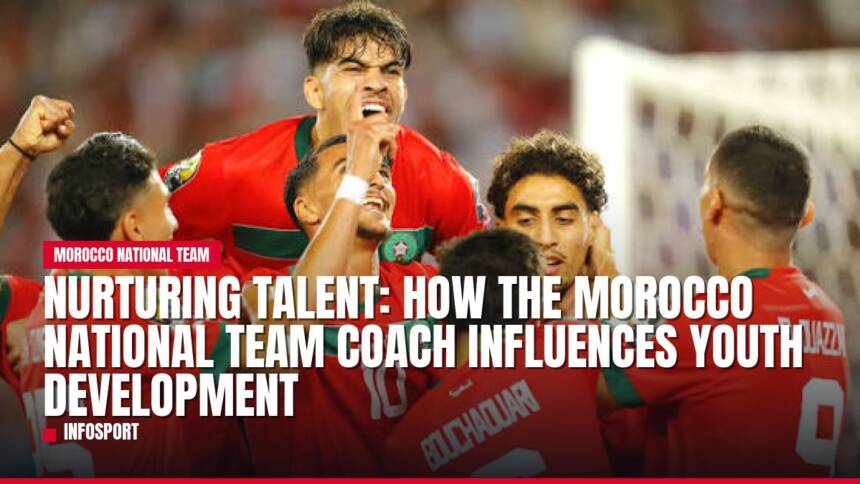
How Morocco’s National Team Coach Shapes Youth Development
The long-term success of any national football team depends as much on its talent pipeline as on its current squad. In Morocco, the national team coach plays a central role in shaping that pipeline — influencing how young players are identified, developed, and ultimately integrated into the Atlas Lions setup. This article examines the strategies, challenges, and structural mechanisms through which coaching leadership drives Morocco’s footballing future.
Strategic Vision: Building Beyond the Next Match
A robust youth development system requires a clearly defined strategic vision — and in Morocco, that vision flows directly from the senior team’s head coach. Rather than focusing solely on immediate results, forward-thinking leadership establishes long-term frameworks that align the efforts of the Royal Moroccan Football Federation (FRMF), local clubs, and regional academies.
The coach’s footballing philosophy — whether built around high pressing, positional play, or physical athleticism — informs the attributes scouts prioritise at youth level. When a consistent identity runs from the U17 team through to the senior squad, players arrive at the top level already familiar with the system’s demands, reducing transition friction and accelerating integration.
Scouting: Reaching Every Corner of the Moroccan World
Modern Moroccan football exists on two fronts: domestically, across every region from Casablanca to rural areas, and internationally, through one of African football’s most significant diaspora populations concentrated across France, Belgium, the Netherlands, and Spain.
The national team coach works alongside scouting departments to define precise talent criteria — technical ability, tactical awareness, physical profile, and mental resilience. This shapes a recruitment network designed to identify players regardless of their socio-economic background or geographical location.

Tracking youth players in European club academies has become particularly critical. Morocco’s ability to compete for dual-nationality players against European nations depends partly on how early and how effectively the federation establishes contact and commitment.
Academy Collaboration: Aligning Club and Country
Strong club academies form the bedrock of international success. The national team coach fosters direct collaboration with institutions like the FRMF’s Mohammed VI Football Complex — widely regarded as one of Africa’s finest development facilities — as well as major club academies at Wydad Casablanca, Raja Casablanca, and FUS Rabat.
This collaboration takes practical forms: shared coaching workshops, alignment on technical standards, and regular visits from national team staff to observe sessions and provide feedback. The goal is standardisation — ensuring that a talented 15-year-old in Marrakech receives coaching built on the same principles as one developing in Casablanca or Lyon.
More Read

Age-Group Integration: The Structured Pathway
Morocco’s U17, U20, and U23 national teams operate as deliberate stepping stones rather than isolated competitions. The senior coach works in tandem with age-group coaches to maintain consistent tactical principles across all levels, creating vertical integration throughout the national setup.
Young players progressing through this system arrive at senior level already versed in national team expectations — its defensive shape, pressing triggers, and transition rhythms. This continuity reduces the adaptation period and allows coaches to focus on performance rather than re-education.
Gradual exposure is key. Rather than fast-tracking teenagers into high-stakes competitive fixtures, the coaching staff typically introduces promising players through training camps and friendly matches first — assessing how they handle the pace, pressure, and professionalism of senior international football before assigning greater responsibility.
Culture and Character: What Happens Off the Pitch
Technical quality alone does not determine whether a young player reaches their potential. The national team coach is responsible for cultivating a professional culture that extends beyond training sessions — covering nutrition standards, sports psychology access, media preparation, and behavioural expectations.
Mental fortitude receives particular emphasis. The journey to professional football involves setbacks, public criticism, and intense competitive pressure. Programmes that provide psychological support and resilience training — often through embedded sports psychologists — help young players develop the mindset required to sustain high performance over a long career.
Mentorship from established senior players reinforces these standards. When experienced internationals model professionalism in their daily habits, younger squad members absorb those standards organically.

The Brain Drain Challenge: Keeping Talent in the System
One of the persistent structural challenges facing Moroccan youth development is retaining top talent within the domestic system. European clubs — with superior facilities, higher wages, and greater Champions League exposure — present an attractive alternative for dual-nationality players and domestically raised prospects alike.
Addressing this requires more than patriotic appeals. Competitive professional contracts, clear progression pathways to the senior national team, and demonstrable investment in academy infrastructure all contribute to making the Moroccan system genuinely competitive with European alternatives.
The FRMF’s ongoing investment in the Mohammed VI Football Complex — which includes medical facilities, sports science laboratories, and elite-standard pitches — represents the most visible commitment to creating an environment where top players want to develop.
Infrastructure and Coaching Education
Player quality is ultimately a product of coaching quality. Sustained development requires continuous investment in coach education — through UEFA and CAF licensing programmes, international exchange initiatives, and regular workshops that keep Moroccan youth coaches current with global methodologies.
When youth coaches are well-trained and philosophically aligned with the national team’s approach, the quality of preparation young players receive improves at every level of the pyramid — from grassroots academies to professional reserve teams.
The Inspiration Effect
Beyond structures and strategies, the senior national team’s performances carry a motivational weight that no development programme can manufacture artificially. Morocco’s historic run to the semi-finals of the 2022 World Cup in Qatar — the first African nation to reach that stage — produced a generation of young Moroccan players who grew up believing the summit of world football was genuinely within reach.
When the national team coach gives opportunities to emerging talents on that stage, it reinforces the message that the pathway is real and achievable. That belief, embedded early, is perhaps the most powerful development tool of all.
Frequently Asked Questions
How does the Morocco national team coach influence youth development programs?
The national team coach establishes the strategic vision, defines scouting criteria, fosters academy collaboration, oversees age-group player pathways, and promotes professional culture. Their philosophy guides the entire youth footballing structure, ensuring alignment with senior team requirements.
What is the role of the Morocco national team coach in identifying young talent?
The coach works with scouting departments to define desired player profiles. They oversee domestic and international scouting networks — particularly targeting diaspora players in Europe — and monitor progress in club academies and youth national teams.
How does the Morocco national team coach integrate young players into the senior squad?
Typically through gradual integration: training camps first, then friendly matches, then competitive fixtures. The coach creates a supportive environment, encourages mentorship from senior players, and adapts tactical systems to accommodate emerging talent.
What challenges does the Morocco national team coach face in youth development?
The primary challenges are retaining top talent from the diaspora, preventing brain drain to European academies, and ensuring sustained investment in infrastructure and coach education across all levels of the pyramid.
Why is youth development crucial for the Morocco national team’s long-term success?
Youth development ensures a continuous pipeline of quality players, builds a consistent footballing identity across all age groups, and reduces dependence on any single generation of talent — creating sustainable competitive performance over decades rather than years.