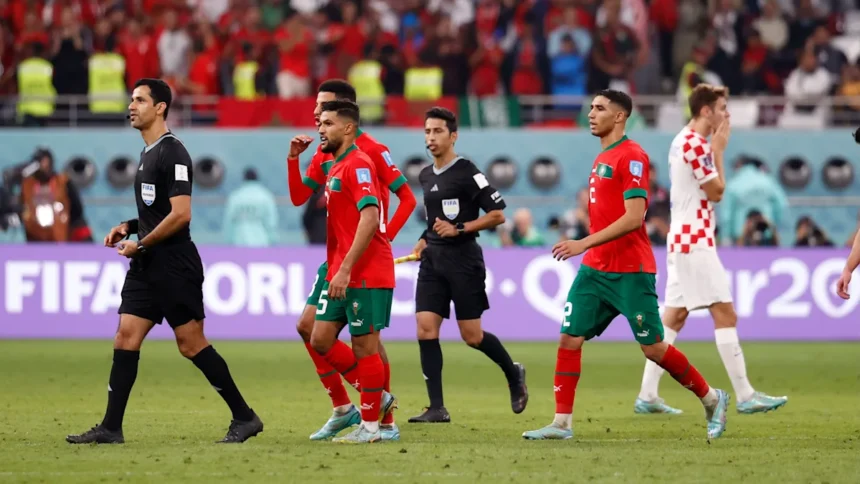
Morocco’s historic run to the 2022 FIFA World Cup semi-finals captivated the world and established the nation as the first African and Arab team to reach this stage. This achievement signaled the significant potential of Moroccan football. Looking ahead, the key question is what the future holds for the national team. This article examines the current squad’s strengths, emerging talents, tactical evolution, and the challenges and opportunities ahead. While the foundation is strong, ongoing development and a clear strategic vision are essential for sustained success.
The Foundation of Success: Analysing the Current Squad’s Core
The national team features a mix of experienced veterans and players in their prime, creating a strong core that shapes its direction. This combination offers stability and sets a high standard for new additions.
Experienced Pillars: Leaders for the Next Cycle
Yassine Bounou, Romain Saïss, Hakim Ziyech, and Sofyan Amrabat are not only talented but also serve as the team’s emotional and tactical leaders. Bounou’s shot-stopping and composure make him a world-class goalkeeper. Amrabat’s work rate and defensive strength anchor the midfield. Ziyech consistently contributes creativity and decisive play for Morocco. These leaders bring top-level experience and a winning mentality that supports the development of younger players.
Peak Performers: The Golden Generation in Their Prime
Achraf Hakimi, Noussair Mazraoui, Azzedine Ounahi, Sofiane Boufal, and Youssef En-Nesyri are central to the squad’s strength. Most are in their mid-20s and at their peak. Hakimi and Mazraoui provide world-class quality from full-back positions. Ounahi stands out for his technical skill, Boufal adds unpredictability in attack, and En-Nesyri is a consistent goal threat. Their World Cup experience and individual talent position them as leaders for the coming years. For more on these key players, see The Pillars of the Atlas Lions: Key Players in the Morocco National Team Squad.
Nurturing Talent: The Emerging Stars and Youth Development
Long-term success relies on a steady influx of new talent, not just current stars. Morocco has advanced its youth development, ensuring a consistent pipeline of players for the national team.

Rising Through the Ranks: Young Talents to Watch
Several promising young players are joining the senior team or nearing significant impact. Bilal El Khannouss shows maturity as a midfielder, while Abde Ezzalzouli adds pace and dribbling on the wings. Benjamin Bouchouari and Chadi Riad are excelling in European leagues, highlighting the depth of emerging talent. Their development in top leagues and under skilled coaches is crucial. Learn more in Future Stars: Young Talents to Watch in the Morocco National Team Squad.
Scouting and Academy Systems: Fueling the Pipeline
The national team’s success depends on strong youth development. The Mohammed VI Football Academy nurtures domestic talent with advanced facilities and coaching. An extensive European scouting network also identifies Moroccan diaspora players in top academies. Recruiting and integrating players from diverse backgrounds, both locally and abroad, is essential for sustained success. This approach ensures a steady supply of skilled players as veterans retire.
Tactical Evolution and Coaching Philosophy
Tactics and coaching philosophy are central to the team’s future. Walid Regragui has already introduced significant changes, and ongoing adaptation is vital for continued success.

Walid Regragui’s Enduring Impact
Coach Regragui has transformed the team with a pragmatic approach focused on defensive strength, discipline, and quick transitions, which proved effective at the World Cup. He fosters unity and a strong team spirit, creating a supportive environment. His vision emphasises long-term excellence and a clear identity for Moroccan football. This focus on planning and cohesion underpins sustained competitiveness. For more on his strategies, see Coach Regragui’s Vision: Decoding the Morocco National Team’s Preferred Starting XI.
Adapting to Modern Football Trends
Although Regragui’s tactics are effective, the team must adapt to evolving football trends. Continued refinement of possession play, diverse attacking strategies, and more aggressive pressing are needed. The squad’s technical ability allows for greater tactical flexibility. Experimenting in friendlies and qualifiers will expand strategic options and maintain unpredictability.
Strengthening Key Areas: Positional Depth and Competition
While the squad is strong, depth in every position is essential for long-term resilience. Ongoing development and healthy competition will help the team manage injuries, suspensions, and career transitions.
Goalkeeping: Securing the Last Line
Bounou is a world-class goalkeeper, but succession planning is necessary. Munir Mohamedi is a reliable backup, yet younger goalkeepers must be developed for the future. Identifying and nurturing new talent in both European and domestic leagues is a priority. For more on goalkeeping, see The Last Line of Defense: Analyzing Morocco National Team’s Goalkeepers.
Defensive Resilience: Reinforcing the Backline
The Saïss-Aguerd partnership was key to the World Cup run. Aguerd is still in his prime, but Saïss is nearing retirement. Developing new central defenders with leadership and technical skills is essential. Chadi Riad is promising, but more options are needed. Similarly, while Hakimi and Mazraoui excel at full-back, reliable backups are crucial. Players like Yahia Attiyat Allah have contributed, but maintaining depth remains important. For more, see Iron Curtain: Meet the Defenders of the Morocco National Team Squad.
Midfield Creativity and Control
Amrabat, Ounahi, and Bilal El Khannouss create a balanced midfield, but depth is essential. Identifying players who can match Amrabat’s defensive skills or Ounahi’s creativity is important. Developing versatile midfielders will ensure continued strength and competition. For more, see The Engine Room: Midfield Maestros of the Morocco National Team Squad.
More Read

Attacking Prowess: Goals for the Future
Goal-scoring is a challenge, and Morocco must diversify its attack. En-Nesyri is a key striker, but developing additional finishers is vital. Emerging wingers like Ezzalzouli, along with Ziyech and Boufal, add creativity, but consistent scoring from multiple players is needed. Identifying and nurturing young forwards remains a priority. For more, see Goal Scorers and Attackers: The Forwards of the Morocco National Team Squad and Beyond the Starting XI: Assessing the Depth of the Morocco National Team Squad.
Challenges and Opportunities Ahead
While prospects are positive, addressing challenges and seizing opportunities will be crucial to sustaining and building on recent achievements.
Sustaining Performance and Managing Expectations
After a historic World Cup run, managing expectations is the main challenge. The team is now a respected contender, facing increased pressure from fans, media, and opponents. Sustaining high performance and focus will require strong leadership and mental resilience.
Competition and Player Integration
Integrating new talent presents challenges. Ensuring new players fit the tactical system and maintain team spirit is essential. Increased competition can motivate the squad but must be managed to preserve harmony and depth.
Hosting AFCON 2025: A Catalyst for Growth
Hosting the 2025 Africa Cup of Nations offers a significant advantage. Home support and national interest create a unique opportunity for success. Strong performance, especially a win, would confirm Morocco’s status as a continental leader and build momentum for future competitions.
The Road Ahead: Ambitious Goals
With a solid foundation, emerging talent, and a clear vision, the team is well-positioned to pursue ambitious goals in Africa and globally.
Continental Dominance
After reaching the World Cup semi-finals, the next goal is to dominate African football. Winning the Africa Cup of Nations, especially as hosts in 2025, is a key objective. Consistent AFCON success would establish Morocco as Africa’s leading team and serve as a benchmark for progress.
World Stage Ambitions
The 2022 World Cup was a stepping stone, not the peak. The aim is to regularly qualify for the World Cup and advance beyond the semi-finals. With Morocco potentially co-hosting in 2030, playing at home offers a unique chance to make history. Ongoing improvement will help Morocco become a consistent global contender.
Morocco’s future is promising, supported by strong talent, youth development, and progressive coaching. Transitioning from World Cup success to sustained global competitiveness will be challenging, but with passionate fans, committed players, and strategic leadership, the Atlas Lions are prepared for new achievements. The coming years offer the potential for further triumphs and lasting legacy.
FAQ Section
Q1: What is the most significant factor contributing to the team’s bright future?
A1: The combination of a strong core entering their prime, a robust youth development system including the Mohammed VI Football Academy, and a clear, unifying coaching philosophy under Walid Regragui ensures both immediate competitiveness and a sustainable talent pipeline.
Q2: How important is the upcoming AFCON 2025 for development?
A2: Hosting AFCON 2025 is incredibly important. It provides a unique opportunity to win a major continental trophy on home soil, boosting confidence, solidifying status as an African powerhouse, and generating momentum for future international competitions.
Q3: Which young players are expected to play crucial roles?
A3: Young talents like Bilal El Khannouss (midfielder), Abde Ezzalzouli (winger), Chadi Riad (defender), and Benjamin Bouchouari (midfielder) are highly anticipated. They are already gaining valuable experience in top European leagues and integrating into the senior squad.
Q4: What challenges might the team face in maintaining performance levels?
A4: Key challenges include managing heightened expectations, consistently sustaining high performance, effectively integrating new players while maintaining squad harmony, and adapting tactically to counter evolving opponents’ strategies. Avoiding complacency after World Cup success is equally vital.
Q5: What are the long-term ambitions?
A5: Long-term ambitions include consistently dominating African football by winning AFCON titles, regularly qualifying for the FIFA World Cup, and becoming a perennial global contender, potentially reaching or surpassing their 2022 semi-final achievement.