Football Business: Morocco National Team Stadium Naming Rights & Sponsorships
The football world is a living ecosystem where passion meets commerce. As Morocco emerges as a football power, the commercial value of its national team and associated infrastructure continues to grow. This article examines the lucrative world of naming rights and sponsorships for Morocco’s national team stadiums and how these financial partnerships drive growth, development, and sustained success. Understanding Morocco’s approach to stadium sponsorships offers insight into the future of Moroccan football, both on and off the pitch.
The Commercial Landscape of Moroccan Football is Shifting
The country has seen a surge in popularity and performance, highlighted by the Atlas Lions’ historic run in recent international tournaments. This achievement has inspired national pride and attracted considerable commercial interest. The Royal Moroccan Football Federation (FRMF) and local authorities increasingly recognise the need to modernise infrastructure and optimise revenue streams to maintain this momentum. This approach places heavy emphasis on commercial alliances, particularly involving stadium assets.
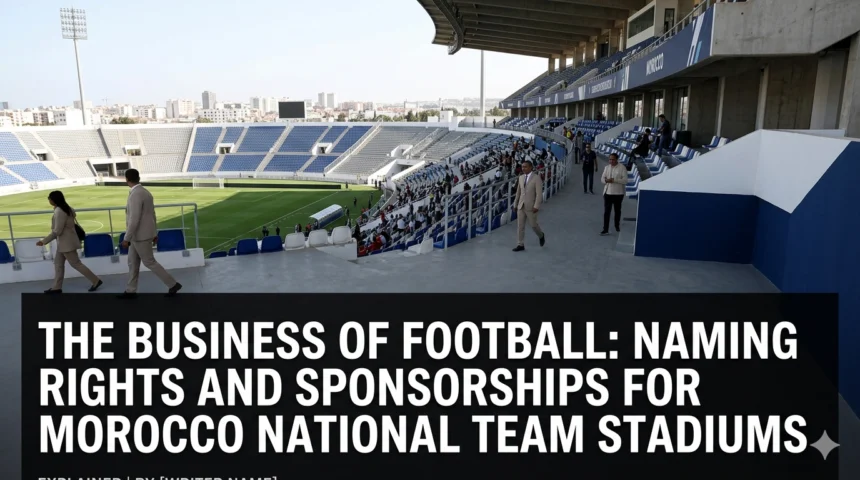
As Morocco’s football profile rises, so does the appeal of its main venues. Stadiums and Home Grounds of the Morocco National Team serve not only as match venues but also as cultural symbols and powerful marketing tools. With strategic naming rights and sponsorships, the next logical step in Morocco’s football development is to maximise its potential.
What Are Stadium Naming Rights?
A naming rights agreement is a major commercial contract in which a company pays to have its brand name incorporated into the official name of a stadium or venue. This extends beyond simple advertising; it establishes a strong, long-term connection between the brand and the facility. For stadium owners, it represents a significant revenue stream that can fund operations, maintenance, and future upgrades. For sponsors, it provides unmatched brand exposure, prestige, and a powerful association with millions of attending and viewing fans.
Given the scale of such investments, teams typically negotiate naming rights deals spanning multiple years, often for decades. These arrangements create mutual benefits: the venue gains financial stability while the brand enjoys sustained exposure. For Moroccan national team stadiums, a major naming rights deal could significantly improve financial stability and enhance revenue potential.

The Value Proposition for Sponsors
- Extended Brand Visibility: The stadium’s name appears repeatedly across media, broadcasts, and merchandise, ensuring continuous brand recall.
- Enhanced Brand Image: Partnership with a premier national team stadium elevates brand perception and leverages football’s emotional appeal.
- Market Dominance: For local or regional brands, naming rights agreements can cement their position in the Moroccan market.
- Exclusive Marketing Opportunities: Naming rights typically include exclusive marketing benefits such as signage, hospitality suites, and digital presence within the venue beyond the name itself.
Sponsorships: Beyond Logos on the Pitch
While naming rights represent a specific, high-value partnership, sponsorships encompass a broader range of commercial agreements. These can include official partner or supplier status, event-specific sponsorships, fan zone partnerships, and arrangements of varying scope and value. Sponsoring Morocco’s national team stadiums offers multi-faceted opportunities for brands to engage with the sport and its passionate fan base.
Unlike naming rights, sponsorships do not necessarily involve renaming the venue. Instead, they focus on specific elements or activations such as LED perimeter advertising, official beverage partnerships, telecommunications provider status, or digital content sponsorship. Different sponsorship types offer distinct benefits tailored to specific brand marketing objectives.
Stadium Sponsorship Types
- Perimeter Board Advertising: High visibility during live games and broadcasts.
- Official Partner Status: Labelling a brand as the “official” supplier of a specific product or service.
- Hospitality and VIP Experiences: Brands can sponsor hospitality and fan zones to provide exclusive experiences for clients and guests.
- Digital and Social Media Integration: Use of the stadium and team’s digital channels to promote the brand.
- Youth Development or Community Programs: Supporting grassroots football initiatives and social responsibility programs that link the brand to community engagement.
Morocco National Team Stadium Sponsorships – Current Landscape
Morocco’s iconic stadiums, including the Prince Moulay Abdellah Stadium in Rabat and the Mohammed V Stadium in Casablanca, hold legendary status with storied histories in the country’s football heritage. These venues retain their traditional names, reflecting their historical significance, though they do benefit from several existing commercial sponsorships. These typically include local telecoms, banks, and consumer brands capitalising on the high profile of national team matches.
For instance, LED perimeter boards display advertisements from various companies during major fixtures, while official partner branding appears in concession areas and designated zones throughout the stadiums. These existing partnerships demonstrate the commercial appetite to connect with the Atlas Lions and their home grounds. However, significant untapped potential exists for larger-scale naming rights deals, which could generate substantial revenue streams—particularly as Morocco pursues hosting major international tournaments.
Beyond these historic counterparts, the modern Stade de Marrakech represents another venue capable of attracting considerable commercial interest. As Morocco develops its football infrastructure, opportunities for brands to forge meaningful collaborations with these important facilities will continue to expand.
Why Sponsors Should Be Interested
The value proposition for brands considering Morocco’s national team stadium sponsorships is compelling, especially given the national team’s recent successes and the country’s rising economic power. Investment in Moroccan football stadiums offers a rare combination of national pride, international exposure, and direct engagement with a passionate consumer base.
Brand Exposure and Global Visibility
The Atlas Lions’ global performances have significantly boosted viewership of their matches. Any brand linked to their home stadiums gains exposure not only within Morocco but across Africa and worldwide. This international reach is invaluable for brands seeking to extend their global presence and strengthen their international image. Stadium branding provides worldwide recognition as millions of viewers watch major matches.
Connection to National Pride and Success
Morocco’s national team symbolises national pride and sporting achievement. Brands aligning themselves with these symbols benefit from a halo effect—associating their products and services with positive emotions, success, and community spirit. This emotional connection drives consumers toward deeper loyalty, ultimately resulting in greater brand affinity and market share. Supporting a national team stadium provides authentic connection to this compelling narrative.
Community Engagement and Market Penetration
Football runs deep in Moroccan culture. Sponsorships enable brands to connect directly with local communities and demonstrate corporate social responsibility. Initiatives around youth development, fan experiences, and stadium improvements enjoy broad public support. This engagement can translate into increased market penetration by building trust and demonstrating commitment to the country’s most beloved sport. The opportunity to interact directly with supporters at venues or through stadium-backed initiatives represents a key attraction.
More Read

Challenges and Opportunities in Realising Commercial Potential
While Morocco’s national team stadium sponsorships hold tremendous potential, certain challenges must be addressed to formulate sound commercial strategies.
Key Challenges
- Public Ownership Models: Many stadiums are publicly owned, and decision-making processes can be slower than at privately owned clubs or venues.
- Infrastructure Development: While significant progress has been made, further investment in state-of-the-art facilities, digital connectivity, and fan experience is necessary to attract premium sponsors.
- Competing for Marketing Spend: Brands have numerous options for their marketing budgets, and Moroccan football must demonstrate it offers unique return on investment.
- Valuation and Benchmarking: Proper valuation of naming rights and sponsorship packages requires sophisticated market analysis and benchmarking against international standards.
Growth Opportunities
Morocco’s joint bid for the 2030 FIFA World Cup presents a significant opportunity. This bid includes major upgrades to existing stadiums and construction of new state-of-the-art facilities, including the Grand Stade de Casablanca. These projects will create substantial new opportunities for naming rights and long-term sponsorships, as detailed in Morocco’s World Cup Bid: Unveiling Future Stadium Plans and Upgrades.
- International Visibility: The national team’s continued success has garnered significant international media attention, making stadium assets increasingly appealing to global brands.
- Growing Economy and Consumer Market: Morocco’s sustained economic growth and expanding consumer base make it an increasingly attractive opportunity for local and international businesses.
- Technological Integration: Opportunities exist to integrate smart stadium technologies that enhance fan experience and create new digital sponsorship assets.
Future Outlook: Revenue Growth through Strategic Alliances
With Morocco’s footballing ambitions and economic development trajectory, the future of national team stadium sponsorships appears promising. Realising this commercial potential requires a strategic approach.
The FRMF, in partnership with local authorities and stadium management, can proactively pursue potential sponsors, both locally and internationally. This involves packaging sponsorships to clearly articulate the value proposition, supported by data on fan demographics, viewership figures, and economic impact. Professionalising the sales and marketing of stadium assets will be essential to success.
Additionally, investments in fan experience and stadium modernisation will enhance venue appeal. Improved seating, better concessions, enhanced digital connectivity, and improved accessibility benefit fans while creating premium assets for sponsors. For those visiting these venues, understanding how to get tickets for Morocco national team matches represents an important aspect of the experience that can be enhanced through commercial partnerships.
New stadiums proposed for the World Cup bid offer a blank canvas for commercial innovation. These venues can integrate commercial elements from inception, featuring bespoke naming rights and comprehensive sponsorship programs that maximise revenue streams. This forward-thinking approach ensures that financial rewards from Morocco’s national team stadium sponsorships directly support the long-term success of Moroccan football.
Examining the history of Morocco’s national team home grounds reveals these venues have always been central to the country’s football identity. Now they are positioned to become key engines of commercial growth, supporting the Atlas Lions in their pursuit of sustained excellence. The transition from The Iconic Stadiums: Where the Morocco National Team Forges History to commercially appealing modern arenas is already underway.
Summary
Naming rights and sponsorships for Morocco’s national team stadiums represent a significant frontier for commercialisation in Moroccan football. As the Atlas Lions continue to inspire, their home grounds offer valuable opportunities for brands seeking visibility, prestige, and deep connection with a passionate fanbase. By strategically leveraging these commercial partnerships, Morocco can secure essential funding for infrastructure and sports projects while enhancing its role as a significant participant in the global football economy. The future of Morocco’s national team is bright, with stadium sponsorships poised to usher in a new era of prosperity and sustained success for the beautiful game in the Kingdom.
FAQ
Q1: What are the naming rights for Morocco’s national team stadiums?
A1: Naming rights constitute a commercial agreement where a company pays a substantial sum to incorporate its brand name into a stadium’s official designation. For example, “Prince Moulay Abdellah Stadium” could be rebranded as “Company X Arena” for a specified period, providing the company with significant brand exposure and association with the national team.
Q2: What’s the difference between sponsorships and naming rights for national team stadiums?
A2: Naming rights represent the highest level of brand integration, involving the renaming of the entire venue. Sponsorships, by contrast, encompass broader commercial arrangements including perimeter advertising, official supplier designation, hospitality suite branding, or digital content partnerships. They provide varying levels of exposure and engagement without renaming the stadium itself.
Q3: What are the key benefits of a company sponsoring a Moroccan national team stadium?
A3: Stadium sponsorship with a Moroccan national team offers substantial brand exposure both domestically and internationally through televised matches, association with the Atlas Lions’ success and national pride, direct engagement with a large and passionate fanbase, and opportunities for unique marketing activations in the stadium environment and digital platforms.
Q4: Does the Morocco National Team have any existing stadiums with naming rights deals?
A4: The primary stadiums hosting the Morocco National Team, such as Prince Moulay Abdellah Stadium in Rabat and Mohammed V Stadium in Casablanca, retain their original names. While they benefit from several commercial sponsorships and advertisements, currently they lack major naming rights deals. Significant untapped opportunity exists for future revenue generation.
Q5: What does Morocco’s World Cup bid mean for future stadium sponsorships?
A5: Morocco’s World Cup bid will significantly impact future stadium sponsorships, as existing venues require major upgrades and new state-of-the-art stadiums will be constructed. These new or refurbished venues will be prime assets for securing substantial naming rights and long-term sponsorship deals, driven by increased international exposure, improved infrastructure, and the prestige of hosting a global tournament.