
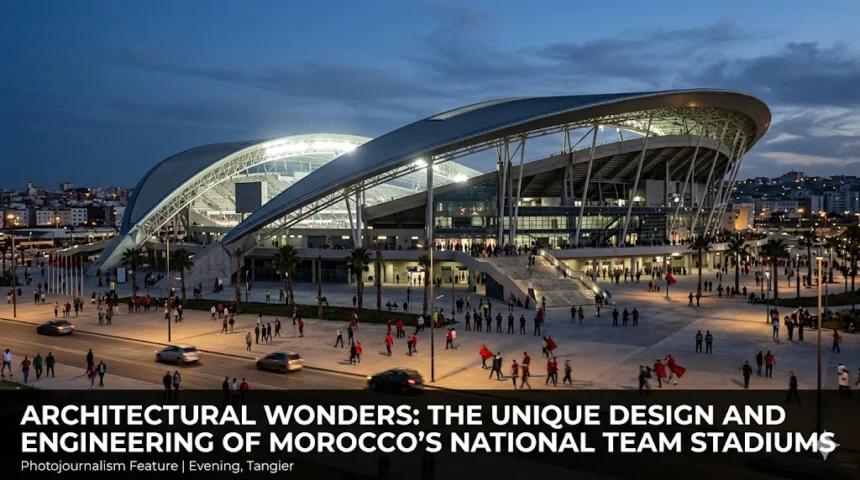
Architectural Wonders: The Distinctive Design and Engineering of Morocco’s National Team Stadiums
Morocco, a land steeped in rich history and vibrant culture, translates the artistic mastery found in its ancient medinas and intricate mosaics into contemporary sports infrastructure. The stadiums and home grounds of the Morocco National Team transcend their function as mere venues for football. They stand as architectural masterpieces, each narrating its own story of tradition, innovation, and national pride. These facilities exemplify a deliberate fusion of functional requirements with profound cultural aesthetics, resulting in spaces that are simultaneously cutting-edge and unmistakably Moroccan. This commitment ensures that every match unfolds in a setting reflecting the nation’s identity, captivating both local supporters and international visitors alike.
Stadium Architecture and the Moroccan Design Tapestry
Morocco’s stadiums embody an architectural philosophy rooted in the country’s artistic heritage. Rather than adopting generic modern designs, Moroccan architects and engineers draw inspiration from traditional Islamic and Moorish patterns, materials, and forms. This approach transforms functional structures into cultural statements, with each venue becoming a landmark in its own right. Contemporary designs subtly integrate intricate details such as zellige tiles, geometric patterns, and horseshoe arches, creating a harmonious blend that proves both aesthetically striking and functionally efficient.
Blending Traditional and Contemporary Elements
Modern stadium design faces the challenge of incorporating local identity without compromising global standards for safety, capacity, and spectator experience. Morocco has addressed this through a “glocal” approach, reinterpreting traditional elements using contemporary materials and construction techniques. For example, perforated screens featuring mashrabiya motifs serve dual purposes: they provide natural ventilation and shade—essential in Morocco’s climate—while enhancing visual appeal. This thoughtful integration ensures stadiums feel authentic and rooted in their locations rather than appearing as imported designs.
Signature Architectural Features
Several consistent motifs characterize Moroccan stadium designs. Warm, earthy tones evoke the country’s ancient cities, including Marrakech and Fes. Geometric patterns appear throughout—in facades, seating arrangements, and lighting schemes—reflecting their deep cultural and religious significance. Traditional Moroccan homes and riads often feature courtyard-like spaces, reimagined in stadium concourses and external plazas to foster community and gathering. These elements transcend mere decoration, forming part of the overall design philosophy that gives Moroccan national team stadiums their distinctive character.
Signature Architectures of Key Stadiums
The Moroccan national team plays at several important venues, each with its own architectural identity. These sites represent not only football history but also symbols of their cities and the nation’s sporting aspirations. For additional information about these venues’ heritage, visit A History of Morocco National Team’s Home Grounds.

Mohammed V Stadium, Casablanca: The Historic Pulse
Casablanca’s Mohammed V Stadium stands as a classic symbol of Moroccan football. Though its origins trace to the mid-20th century, successive renovations have transformed it into a vibrant, modern facility. While its original form lacked overt traditional elements compared to newer venues, the stadium has adapted to contemporary standards while preserving its iconic status. As the economic capital’s premier venue, it was designed for substantial capacity and functionality.
Legacy and Structural Development
Constructed in 1955, Mohammed V Stadium underwent major renovations, particularly in preparation for the 1988 Africa Cup of Nations. Its robust structure has been repeatedly upgraded to meet international safety and spectator comfort standards. Towering floodlight pylons punctuate its outline, testament to its commanding presence. The facility delivers a high-density spectator experience designed to create the electric atmosphere that has become legendary in African football. Its architectural and engineering philosophy emphasizes maximizing fan presence, a principle that has endured across decades.
Urban Integration and Community Impact
Mohammed V Stadium is seamlessly woven into central Casablanca’s urban fabric. Its design facilitates easy access for massive crowds and serves as a focal point for community gatherings on match days. The surrounding area buzzes with activity, and the stadium has fundamentally shaped the local landscape. Efficient crowd management requires carefully designed entrances and concourses capable of handling substantial visitor volumes. For matchday details, explore Enhancing Your Visit: Hospitality and Fan Zones at Morocco National Team Stadiums.

Prince Moulay Abdellah Stadium in Rabat: Modern Grandeur and Flexibility
Prince Moulay Abdellah Stadium in Rabat represents a contemporary interpretation of Moroccan stadium architecture, merging modern aesthetics with multi-purpose functionality. As the capital’s premier sporting venue, its design reflects national ambitions for world-class facilities. Clean lines and solid construction convey a forward-looking vision.
Transformation Through Renovation
The Prince Moulay Abdellah Stadium underwent extensive renovation ahead of the 2014 FIFA Club World Cup and other international events, introducing significant design and engineering improvements. The redesigned façade employs sleek, contemporary materials while occasionally incorporating subtle references to Moroccan geometric patterns and colors. The roofing structure represents an engineering achievement, providing comprehensive coverage while maintaining an open, airy atmosphere. These upgrades have established it as a modern facility capable of hosting major international tournaments.
Engineering for Versatile Events
Multi-functionality stands as a hallmark of the Prince Moulay Abdellah Stadium design. Though primarily a football venue, its engineering permits conversion for athletic events featuring a running track. This versatility demands careful consideration of seating configurations, sightlines, and infrastructure. The structure’s modularity demonstrates engineering excellence, accommodating diverse sporting requirements for national and international competitions.
Stade de Marrakech: A Sporting Oasis in the Desert
Stade de Marrakech tells a distinct architectural story, capturing the essence of the “Red City.” Its design poetically translates Marrakech’s vibrant culture, fusing traditional Moroccan aesthetics with contemporary stadium requirements. This venue exemplifies how modern infrastructure can remain deeply rooted in local identity.
The Spirit of the Red City
The stadium’s façade and exterior design feature earthy red tones that evoke Marrakech’s iconic clay buildings. The building’s skin incorporates intricate patterns inspired by local craftsmanship and Islamic art, creating striking visual effects, particularly when illuminated at night. Shading elements serve practical purposes in Marrakech’s hot climate while evoking traditional architectural forms, offering both functional relief and aesthetic appeal. The overall impression is of a contemporary structure that integrates naturally within its ancient context.
Commitment to Sustainable Design
Beyond aesthetics, the Stade de Marrakech embraces sustainable design principles increasingly prevalent in contemporary stadium architecture. The facility incorporates natural ventilation, rainwater harvesting, and energy-efficient lighting. Local material sourcing reinforces the stadium’s regional character while reducing its environmental footprint. This careful balance between design and engineering positions it as a model for future Moroccan developments.

Engineering Wonders: Beyond Aesthetics
The engineering foundations supporting Moroccan national team stadiums prove as impressive as their visual appeal. Modern facilities represent complex civil and structural engineering endeavors requiring meticulous planning, advanced materials, and state-of-the-art construction techniques to guarantee safety, durability, and functionality.
Structural Safety and Integrity Standards
Large public spaces must be structurally sound and secure for their occupants. Moroccan stadiums adhere to rigorous international standards established by FIFA and CAF. This encompasses solid foundation engineering, earthquake-resistant design—particularly important in seismically active regions—and high-strength concrete and steel construction. Every beam, column, and truss is engineered to withstand massive loads, from dynamic crowd movement to environmental factors including wind and rain. This rigorous approach ensures these massive structures protect occupants and maintain integrity for decades.
Advanced Roofing and Lighting Systems
Modern stadium roofs represent engineering marvels in themselves. They must be light yet robust enough to provide shelter without obstructing views. Many Moroccan stadiums feature cantilevered roofs extending far over seating areas, supported by sophisticated truss systems. Lighting presents another critical engineering consideration, with state-of-the-art LED technology delivering optimal illumination for both players and broadcasters while maintaining energy efficiency. These systems integrate seamlessly into the stadium’s architectural design, enhancing its aesthetic impact day or night.
Environmental Sustainability and Green Practices
Environmental responsibility increasingly influences new Moroccan stadium projects and renovations. Contemporary designs maximize natural light and ventilation to reduce energy consumption, incorporate systems for rainwater capture and greywater reuse, and utilize renewable energy sources such as solar panels. These measures aim to minimize the ecological footprint of these massive structures, aligning with global movements toward greener infrastructure. This forward-thinking approach reflects a commitment to long-term environmental stewardship in Morocco’s national team stadium development.
The Road Ahead: Morocco’s World Cup Aspirations and Stadium Evolution
Morocco has long pursued hosting major international tournaments, including the FIFA World Cup, and has invested substantially in future stadium infrastructure. The successful joint bid with Spain and Portugal to host the 2030 World Cup heralds an era of even more spectacular, technologically advanced facilities. This vision builds upon the existing foundation of distinctive design and engineering excellence. Learn more about future plans at Morocco’s World Cup Bid: Revealing Future Stadiums and Upgrades.
Morocco’s 2030 World Cup Bid and Visionary Goals
The 2030 World Cup bid has accelerated plans for brand-new, ultra-modern stadiums and comprehensive upgrades to existing facilities. Beyond satisfying FIFA requirements, this initiative demonstrates Morocco’s capacity to deliver world-class infrastructure that harmonizes tradition with innovation. Designs for these new venues will elevate Moroccan national team stadium architecture, incorporating cutting-edge technology and sustainable practices.
The Grand Stade de Casablanca and Upcoming Projects
Among the most anticipated future developments is the Grand Stade de Casablanca, envisioned as a global benchmark for stadium architecture and a monumental structure. Major cities across the country are receiving new stadiums or significant upgrades, each featuring a distinctive Moroccan identity within a modern framework.
Pioneering Design Innovations
Future Moroccan stadiums will likely introduce even more groundbreaking features, potentially including retractable roofs, modular seating configurations with adaptable capacity, and advanced digital integration enhancing fan engagement. Architects aim to create venues that transcend their sporting function, becoming multi-use urban hubs that enrich their communities beyond match days. Increasingly, stadium complexes blend public spaces, commercial areas, and cultural centers into cohesive developments.
Capacity Expansion and Enhanced Fan Experience
These venues will accommodate significantly larger crowds for World Cup attendance, with exceptional fan experience as a priority. Features include optimal sightlines from every seat, premium hospitality suites, and seamless connectivity. Engineering will emphasize rapid access and egress, efficient circulation, and superior acoustics to elevate the matchday atmosphere. For ticket information, consult “How to Get Tickets for Morocco National Team Matches: A Fan’s Guide“.
Stadium Architecture: Shaping National Identity and Fan Culture
Stadium architecture extends far beyond functional utility; it becomes a vital instrument in forging national identity and fan culture. For Morocco, where football commands passionate devotion, these venues transcend sports facilities—they function as cultural institutions. This profound connection is exemplified in the Iconic Stadiums: Where the Moroccan National Team Forges History.
Expressions of National Pride
When the Atlas Lions take the field, their home stadiums become vibrant symbols of Moroccan pride and unity. Architectural elements, whether subtle or prominent, reinforce this connection. A stadium celebrating the nation’s heritage amplifies fans’ sense of belonging and national pride. It transforms into a monument to collective aspiration and achievement, embodying the nation’s spirit. Moroccan cultural influences permeate the stadium’s visual identity, deepening national connection and transforming each match into a heritage celebration.
Elevating the Matchday Experience
Stadium architecture increasingly defines the overall matchday experience as profoundly as the competition itself. Spectators appreciate thoughtfully designed concourses, comfortable seating, and clear sightlines. The facility becomes a visual feast, merging historical and contemporary elements while providing an elegant backdrop to the drama unfolding on pitch. These architectural choices establish a uniquely Moroccan ambience and create indelible memories for fans and athletes alike. The careful design and execution of Morocco’s national team stadiums transform them from functional structures into truly iconic destinations.
Conclusion
Morocco’s national team stadiums represent architectural achievements that demonstrate the nation’s capacity to embed its rich cultural heritage into the fabric of modern engineering. From the historic Mohammed V Stadium to the contemporary Stade de Marrakech and ambitious plans for the Grand Stade de Casablanca, each venue reflects a deliberate and thoughtful design approach. The synthesis of traditional Moroccan aesthetics with advanced engineering produces not merely functional sports venues but landmark structures embodying national pride, fostering community connection, and enriching the fan experience. As Morocco pursues its ambition to host the 2030 FIFA World Cup—set to elevate the nation’s dedication to distinctive and sustainable stadium architecture—it will cement its position as a leader in architectural innovation on the international stage.
Frequently Asked Questions: Morocco National Team Stadium Design
Q1: What distinguishes Morocco’s national team stadium architecture?
The architecture stands out for its successful integration of traditional Moroccan and Islamic design elements—including geometric patterns, zellige tilework, and earthy color schemes—with contemporary engineering and construction methods. This creates facilities that are simultaneously state-of-the-art and deeply connected to the nation’s cultural identity.
Q2: How do Moroccan stadiums blend tradition with modern design?
Architects and engineers reinterpret traditional motifs using contemporary materials and techniques. Perforated facades may mimic mashrabiya screens for ventilation and visual interest, while interior spaces echo traditional courtyards. The goal is seamless integration where historical elements inform present functionality.
Q3: Which Moroccan stadiums best exemplify this architectural philosophy?
Notable examples include the Stade de Marrakech, which draws inspiration from the “Red City’s” distinctive colors and patterns, and the Prince Moulay Abdellah Stadium in Rabat, celebrated for its contemporary sophistication and adaptability. The forthcoming Grand Stade de Casablanca is expected to represent the pinnacle of this approach, merging innovative design with Moroccan heritage.
Q4: What engineering challenges characterize these stadium designs?
Key challenges encompass achieving structural strength and safety compliance with international standards, including earthquake resistance; designing advanced roofing and lighting systems for optimal performance and efficiency; and implementing environmental sustainability through natural ventilation, rainwater harvesting, and renewable energy sources.
Q5: How will Morocco’s 2030 World Cup bid influence future stadium architecture?
The bid will substantially accelerate construction of cutting-edge new stadiums and extensive existing facility upgrades. Future designs will introduce innovations such as retractable roofs and modular seating configurations, while maintaining strong emphasis on Moroccan identity, enhanced fan experiences, and adherence to the highest international tournament standards.