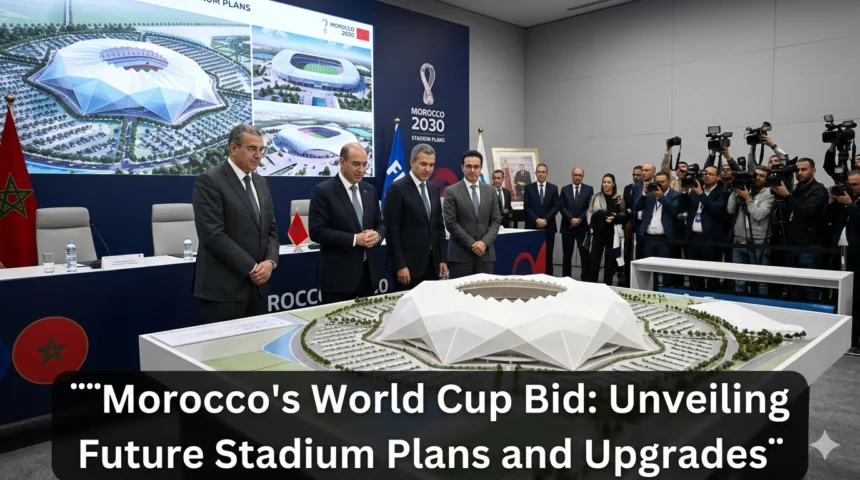
Morocco is on the cusp of a historic opportunity. The Kingdom is bidding to host the FIFA World Cup 2030 with Spain and Portugal—an ambitious target that involves massive investment in infrastructure, particularly football stadiums.
The focus is on upgrading existing venues and constructing state-of-the-art facilities. These changes transcend tournament preparation and represent a transformational vision for Moroccan football on the global stage.
Morocco is determined to deliver a world-class event, as demonstrated by its detailed proposals designed to meet and exceed FIFA’s stringent requirements. The nation stands on the brink of a revolution in sports infrastructure, with upgrades ranging from increased seating capacity to cutting-edge technology and enhanced fan experiences.
The country’s strong performance at the 2022 Qatar World Cup, where it became the first African nation to reach the semi-finals, has boosted international confidence in its hosting capabilities. This historic achievement elevated Morocco’s football profile and showcased its passionate fanbase and organisational excellence on the world stage.
This article explores the details of these exciting plans and the stadiums central to Morocco’s World Cup dream.

Morocco’s Bid To Host FIFA World Cup 2030
Morocco has long aspired to host the FIFA World Cup. It now advances a joint bid alongside Iberian neighbours Spain and Portugal. This tri-continental proposal represents a historic collaboration between Europe and Africa, offering a unique tournament experience.
This marks Morocco’s fifth attempt to host the World Cup, following unsuccessful bids for 1994, 1998, 2006, and 2010. What distinguishes this bid is its strategic partnership approach, which harnesses the combined strengths and existing infrastructure of three nations while distributing financial burden and organisational responsibilities.
A Historic Opportunity for African Football
Hosting the World Cup would represent a landmark achievement for Morocco and a significant boost for African football broadly, demonstrating the continent’s growing influence and capacity to host major international events.
More Read

The bid symbolises unity and testifies to the country’s rich football heritage and passion for the game. Beyond sporting competition, it promises substantial socio-economic benefits. The tournament would accelerate infrastructure development, boost tourism, and inspire a new generation of athletes and sports enthusiasts across the region.
This opportunity aligns with Morocco’s Vision 2030 development strategy, which emphasises modernising infrastructure, advancing sustainable development, and positioning the country as a bridge between Africa and Europe. The World Cup would catalyse these broader national objectives and reinforce Morocco’s status as a regional leader.
Vision for the Tri-Continental Bid
The 2030 bid prioritises sustainability, innovation, and cultural exchange. It aims to provide a condensed yet comprehensive tournament experience while showcasing the diverse cultures and hospitality of all three nations.
For Morocco, this means creating modern, efficient, and culturally appropriate venues for global audiences. The vision extends beyond football to encompass lasting infrastructure benefits for local communities. Plans include new and upgraded sports facilities, enhanced public transport, expanded hospitality offerings, and elevated international visibility.
The timing holds particular significance: 2030 marks the centenary of football’s first World Cup, held in Uruguay. Organisers promise to honour this heritage while demonstrating how the sport has evolved and spread across continents.
Matches Distributed Across Venues
The proposed framework would see Morocco host a substantial number of tournament matches, including group stage fixtures and knockout rounds across upgraded and newly constructed stadiums. This distribution reflects FIFA’s confidence in the country’s organisational capabilities and infrastructure development plans.

The strategic decision considers geography, fan travel patterns, and attendance maximisation while minimising environmental impact through shorter travel distances. Morocco’s position as a gateway between Europe and Africa positions it ideally for efficient tournament logistics.
Morocco’s World Cup Stadiums
Several of Morocco’s premier stadiums are undergoing or have planned major renovations and expansions to meet FIFA’s stringent World Cup standards. These upgrades balance preserving the character and ambience of existing venues with integrating modern amenities and technology.
Stade Mohammed V, Casablanca
Stade Mohammed V in Casablanca, Morocco’s largest city and economic hub, anchors the country’s World Cup infrastructure strategy. The venue currently accommodates approximately 67,000 spectators and will undergo substantial upgrades to expand capacity and facilities.
Renovation plans include modernising technological infrastructure, improving accessibility features, and upgrading hospitality areas to international standards. Architects are carefully preserving the stadium’s distinctive architectural identity while incorporating sustainable design features and state-of-the-art broadcasting capabilities.
Casablanca’s commercial significance, established tourism infrastructure, and proximity to Mohammed V International Airport make it an ideal location for hosting key tournament matches.
Stade Prince Moulay Abdellah, Rabat
The Prince Moulay Abdellah Stadium in Morocco’s capital represents another cornerstone of the World Cup venue portfolio. With current capacity around 52,000, significant modifications will increase spectator numbers and enhance the overall experience.
Upgrades emphasise smart stadium technology, featuring advanced lighting systems, improved acoustics, and enhanced security. Renovations will also address climate considerations, incorporating cooling systems and shade structures to optimise playing conditions and fan comfort.
As the nation’s political and administrative centre, events here carry diplomatic importance. The city’s extensive historical heritage provides visitors with a culturally rich experience.
Stade Marrakech
Marrakech’s status as a premier Moroccan tourist destination informs the planned stadium upgrades, which reflect the city’s distinctive aesthetic while satisfying FIFA’s technical specifications.
Beyond football, Marrakech attracts visitors with its renowned souks, palaces, and gardens, offering an authentic Moroccan experience. Stadium improvements include enhanced transportation connections to accommodate increased visitor flows during the tournament.
Construction of New Stadiums
Morocco’s bid encompasses ambitious plans for entirely new stadiums that would establish fresh benchmarks for African stadium design.
Grand Stade de Casablanca
The proposed Grand Stade de Casablanca represents the most ambitious project in Morocco’s portfolio—a 93,000-capacity venue positioned as a multi-purpose entertainment and sports complex, among Africa’s largest.
The design integrates advanced sustainable technologies including solar panels, rainwater harvesting systems, and natural ventilation to minimise energy consumption. The architectural concept combines traditional Moroccan design elements with contemporary aesthetics.
Beyond its sporting function, the project anchors broader urban development for Casablanca, incorporating improved public transport and business districts that will benefit the city long after the tournament.
Technological Innovation and Sustainability
Innovation and environmental responsibility form the foundation of Morocco’s stadium development programme. Each venue features smart capabilities including mobile app integration, cashless payment systems, and real-time crowd management technologies.
The sustainability approach aligns with FIFA’s environmental commitments and Morocco’s climate objectives. All projects incorporate solar energy, water conservation systems, and locally sourced materials.
Several venues target carbon-neutrality during operations, establishing new benchmarks for regional stadium environmental performance and demonstrating innovative solutions other nations can replicate.
Economic Impact and Legacy Planning
The stadium programme represents a multi-billion-dollar investment in Moroccan sports infrastructure. Economic benefits extend well beyond construction, with projections indicating substantial job creation, tourism revenue, and long-term advantages for host cities.
Legacy planning ensures sustained venue utilisation beyond the tournament, incorporating national league matches, international competitions, cultural events, and community sports programmes. Multi-purpose designs enable venues to host concerts, conferences, and other large-scale events.
Success depends on careful management and continued investment in maintenance and programming. Morocco’s experience hosting events like the FIFA Club World Cup provides valuable lessons for maximising long-term benefits from such investments.
Transportation and Regional Development
Infrastructure improvements extend beyond the stadiums themselves. Stadium construction is coordinated with high-speed rail connections, highway enhancements, and airport expansions to ensure seamless connectivity.
These transportation improvements will serve Moroccan citizens indefinitely, enhancing domestic connectivity and developing previously underserved economic areas. This comprehensive approach to infrastructure demonstrates how major sporting events catalyse broader national modernisation.
Fan Culture and Match Day Experience
Morocco’s stadiums are designed to provide international visitors with distinctly Moroccan experiences reflecting the nation’s passionate football culture. This includes traditional architectural elements, local cuisine, and cultural performances integrated into match days.
Fan zones and surrounding areas reflect Moroccan hospitality and heritage, creating lasting impressions that generate post-tournament tourism benefits. These cultural elements distinguish Morocco’s World Cup experience while celebrating the country’s rich traditions.
Morocco’s stadium projects transcend their sporting function, symbolising national aspirations to modernise, gain international recognition, and establish itself as a footballing force. Successful delivery of these ambitious infrastructure plans will underpin hosting capabilities while establishing new development benchmarks for African and global stadium design.