
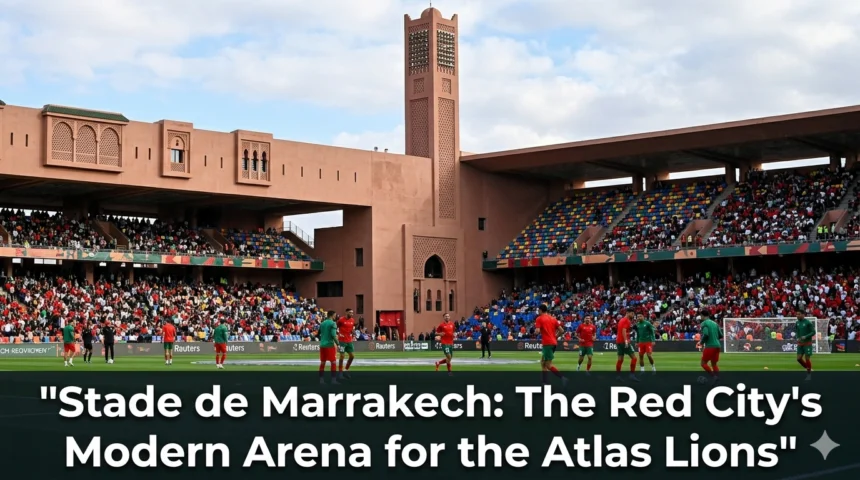
Stade de Marrakech: Modern Venue for Atlas Lions in Red City
Marrakech, the vibrant “Red City,” is a cultural and historical centre that is also home to one of Morocco’s most important modern sports venues: the Stade de Marrakech. This impressive multi-purpose stadium stands as a testament to Morocco’s commitment to world-class sports infrastructure, offering a state-of-the-art arena for international football and athletics. The venue has proven invaluable for the Morocco National Team, serving as a high-quality alternative where the Atlas Lions can host significant matches before passionate crowds in a modern, vibrant setting.
A Contemporary Wonder in the Heart of the Red City
The Stade de Marrakech opened its doors in 2011 and quickly established itself as a premier sports destination. Its construction represented a significant milestone in Morocco’s drive to modernise its sports infrastructure according to international standards. The stadium’s architecture is distinctive in its own right, blending contemporary design with subtle Moroccan influences.
Architectural Vision and Design
Designed by Gregotti Associati International, the Stade de Marrakech represents a perfect fusion of functionality and aesthetics. The stadium features an elegant elliptical shape with a roof that provides ample shade for spectators while allowing natural light to illuminate the playing field. Its most striking feature is the intricate latticework facade, which draws inspiration from traditional Moroccan architectural patterns and reinforces a strong sense of place and cultural identity.
With a seating capacity of approximately 45,240, the stadium offers excellent sightlines from every vantage point. Steeply angled stands bring spectators closer to the action, creating an intense atmosphere that can be particularly intimidating for visiting teams. The broader complex includes extensive facilities for players, officials, media, and VIP guests, all designed to meet the rigorous standards of international sporting bodies.
Construction & Opening: Realising the Vision
The Stade de Marrakech began as an ambitious vision to create a world-class facility capable of hosting major international events. Construction commenced in 2003 and was completed triumphantly on 5 January 2011, with an elaborate opening ceremony that showcased the venue’s impressive capacity and operational readiness. This major investment in regional sports infrastructure reflected Morocco’s commitment to building comprehensive sporting capabilities. Since its inauguration, the stadium has hosted diverse events, proving its versatility and cementing its position within Morocco’s sports landscape.

Atlas Lions’ Home Away from Home
While the Moroccan national team traditionally plays at iconic venues such as the Mohammed V Stadium in Casablanca and the Prince Moulay Abdellah Stadium in Rabat, the Stade de Marrakech has become an important alternative. Its modern facilities, exceptional pitch quality, and electric atmosphere have established it as a preferred choice for various international fixtures, including World Cup qualifiers, Africa Cup of Nations matches, and friendly encounters.
Memorable Matches & Moments
The Stade de Marrakech has witnessed many significant chapters in Moroccan football history. It has hosted crucial qualifiers where the Atlas Lions have battled hard to secure places at major tournaments. The atmosphere generated by passionate local fans creates a formidable home advantage for the national side. Beyond international fixtures, the stadium has hosted numerous club competitions and youth tournaments, further establishing its reputation as a premier football destination. Its contribution to developing Moroccan football—from grassroots level to elite competition—is substantial and undeniable.
Strategic Importance in the Moroccan Stadium Network
The Stade de Marrakech plays a vital role within Morocco’s network of major stadiums. It provides capacity to alleviate pressure on other venues and ensures the national team consistently has access to top-tier facilities, regardless of scheduling conflicts or maintenance elsewhere. When coupled with facilities like Stade Adrar in Agadir throughout the country, it enables Morocco to host multiple international events simultaneously or rotate venues to reach diverse fan bases across the nation. This strategic positioning is crucial for a country with ambitious footballing aspirations, particularly when bidding for major tournaments. Morocco’s international credibility is strengthened considerably by possessing several modern, internationally compliant venues.

Beyond Football: A Multi-Purpose Venue
While football dominates the calendar at Stade de Marrakech, its versatile design and comprehensive facilities establish it as a genuinely multi-purpose arena capable of meeting the region’s broader sporting and cultural requirements.
Sports & Athletics
The stadium features a world-class athletic track meeting International Association of Athletics Federations (IAAF) standards, making it an ideal venue for international track and field events. The seamless transition between football and athletics configurations demonstrates the thoughtful engineering that underpins its design. The facility has successfully hosted major continental athletics championships, attracting elite athletes from across Africa and beyond. This dual functionality optimises facility usage while simultaneously promoting broader sporting participation throughout Morocco.
Concerts and Cultural Events
Beyond sports, the Stade de Marrakech regularly welcomes large-scale concerts and cultural festivals. Its vast capacity and modern infrastructure make it an attractive venue for major entertainment productions that draw substantial audiences and enhance the city’s cultural vitality. These events underscore the stadium’s significance as both a community focal point and a destination for visitors.
Fan Experience at the Stade de Marrakech
The Stade de Marrakech is purposefully designed to deliver a comfortable and exhilarating experience for every spectator. Its location and amenities are carefully planned to enhance visitor satisfaction.
Location and Accessibility
Situated approximately 11 kilometres northwest of the city centre, the Stade de Marrakech offers convenient access without adding to congestion in Marrakech’s historic core. The site benefits from reliable public transport connections and abundant parking facilities for those driving. This strategic location allows both local residents and international visitors to explore the city’s renowned attractions before or after attending events. The journey to and from the stadium is typically straightforward, contributing to an overall hassle-free matchday experience.
Spectator Facilities
The Stade de Marrakech provides modern amenities designed for spectator comfort and convenience. Ergonomic seating arrangements ensure clear sightlines from all areas, while numerous concession stands offer diverse food and beverage options. Well-maintained, accessible restroom facilities complement the overall infrastructure. For those seeking premium experiences, the stadium offers VIP lounges and hospitality suites with enhanced services, including fine dining, exclusive seating, and dedicated staff support. This commitment to spectator satisfaction aligns with contemporary stadium standards. For further details on these premium offerings, consult our guide on Improving Your Experience: Hospitality and Fan Zones at Morocco National Team Stadiums.

Match Tickets
Securing tickets for matches at Stade de Marrakech, particularly for high-profile international fixtures featuring the Atlas Lions, requires advance planning. Official sources include the Royal Moroccan Football Federation (FRMF) website, authorised ticket vendors, and the stadium box office. Purchasing from official channels well in advance protects against counterfeit tickets. For comprehensive ticket acquisition guidance, refer to our detailed resource: How to Get Tickets for Morocco National Team Matches: A Fan’s Guide.
Stade de Marrakech in the Context of Morocco’s Football Future
The Stade de Marrakech extends its significance beyond the present, serving as a crucial component in Morocco’s ambitious plans for advancing football and pursuing international hosting opportunities.
Morocco’s World Cup Aspirations
Morocco has pursued multiple FIFA World Cup hosting bids, repeatedly positioning the Stade de Marrakech as a key venue. Its contemporary infrastructure, adequate capacity, and international compliance standards make it a strong candidate for hosting group-stage matches and potentially knockout rounds should Morocco secure a hosting role, such as through the successful 2030 joint bid with Spain and Portugal. The stadium’s readiness to satisfy rigorous FIFA requirements underscores its significance within the country’s footballing ambitions. Potential future enhancements would likely focus on capacity expansion, improved media facilities, and enhanced spectator flow while preserving its distinctive architectural character. Explore Morocco’s World Cup prospects further in Morocco’s World Cup Bid: Unveiling Future Stadium Plans and Upgrades.
Position Within Morocco’s Stadium Landscape
The Stade de Marrakech represents a jewel in Morocco’s sporting crown, yet it functions as part of a broader network of impressive facilities. It complements the historical significance of the Mohammed V Stadium and the political importance of the Prince Moulay Abdellah Stadium, while coexisting with the ambitious Grand Stade de Casablanca. Each venue contributes distinct strengths to Morocco’s sporting infrastructure, offering versatile options for hosting competitions and events across various scales. This rich portfolio of venues reflects the nation’s enduring passion for football. Learn more in A History of Morocco National Team’s Home Grounds and The Iconic Stadiums: Where the Morocco National Team Forges History.
Conclusion
The Stade de Marrakech exemplifies Morocco’s investment in modern sports infrastructure. Its sophisticated design, operational flexibility, and strategic significance establish it as a vital venue for the Atlas Lions and a defining landmark in the Red City. The stadium serves as a stage for exhilarating international football, premier athletics competitions, and cultural celebrations that embody Morocco’s aspirations and commitment to excellence.
As Morocco strengthens its presence on the global sporting stage, the Stade de Marrakech will continue to serve as a cornerstone of national infrastructure, a cherished home for the national team, and a source of enduring pride. Its legacy extends beyond architectural achievement to encompass the unforgettable memories created for fans and athletes—moments that resonate long after the final whistle.
Frequently Asked Questions
Q1: When was the Stade de Marrakech opened?
A1: The Stade de Marrakech was officially opened on 5 January 2011, marking a major advancement in Morocco’s modern sports infrastructure development.
Q2: What is the stadium’s seating capacity?
A2: The Stade de Marrakech has a capacity of approximately 45,240 spectators, positioning it among Morocco’s largest and most contemporary stadiums.
Q3: What types of events are hosted at the Stade de Marrakech?
A3: As a multi-purpose facility, it hosts Moroccan National Team matches, international athletics competitions, and large-scale concerts and cultural events.
Q4: What role does the Stade de Marrakech play for the Morocco National Team?
A4: The stadium serves as a significant secondary venue for the Atlas Lions, providing a high-quality alternative for hosting international qualifiers, competitive matches, and friendly encounters alongside the national team’s primary stadiums.
Q5: Will the Stade de Marrakech feature in Morocco’s future World Cup bids?
A5: Yes, the stadium has consistently featured prominently in Morocco’s World Cup hosting proposals due to its modern infrastructure, capacity, and compliance with international standards, making it a viable venue for hosting matches should Morocco be selected as a host nation.