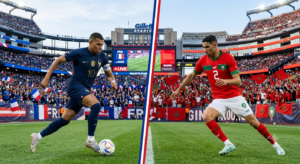
Morocco’s electrifying performance at the 2022 FIFA World Cup captivated the globe, showcasing not only the immense talent of its senior squad but also the fruits of years of strategic investment in football infrastructure. This historic achievement has highlighted the nation’s robust Youth Development and Future Prospects of Moroccan Football, particularly its commitment to nurturing promising young players. The continuous pipeline of exceptional Moroccan football youth talent suggests that the Atlas Lions’ success marks the beginning of a sustained era of dominance. As the football world watches, attention turns to the next generation: which emerging talents will follow in the footsteps of stars like Achraf Hakimi and Yassine Bounou?
The Rising Tide of Youth Talent
Morocco’s success on the international stage is rooted in a deliberate, long-term strategy focused on youth development. This commitment has transformed the country’s football landscape, creating an environment where young talent flourishes from an early age. The Royal Moroccan Football Federation (FRMF) has spearheaded initiatives combining state-of-the-art facilities with expert coaching, ensuring that potential stars receive the best possible foundation.
This systematic approach identifies, nurtures, and integrates young players into professional pathways. Development extends beyond technical skills to encompass tactical understanding, physical conditioning, and mental resilience—preparing players for the rigors of professional competition. The ambition is clear: consistently producing world-class athletes capable of competing at the highest levels, both domestically and internationally, thus securing the national team’s future.
Identifying Future Stars
The process of identifying emerging talent spans various levels of Moroccan football. From community pitches to regional academies and national centers, scouts constantly search for individuals with exceptional potential. This comprehensive Scouting the Future: How Morocco Discovers Its Next Football Prodigies network ensures no stone remains unturned in discovering footballing heroes.
Beyond raw ability, scouts evaluate game intelligence, adaptability, work ethic, and leadership qualities. These non-technical attributes often prove as crucial as on-ball ability in determining long-term success. Early identification allows academies to tailor development plans addressing individual needs and fostering comprehensive growth.

Key Age Groups and Talent Hotbeds
While talent can emerge at any age, the U17 and U20 categories represent critical development phases. These periods mark the transition from foundational training to specialized tactical and physical preparation. Success in national and international tournaments at these levels often indicates a player’s potential trajectory.
The Mohammed VI Football Academy stands out as a premier institution and established talent source. Numerous club academies—including those at Wydad AC, Raja CA, and FUS Rabat—also play pivotal roles in nurturing young players. These academies provide structured environments where promising youngsters hone their skills under experienced guidance, setting them toward professional careers. Learn more about their impact in The Golden Generation: How Moroccan Football Youth Academies are Forging Future Stars.
Spotlight on Promising Emerging Players
While predicting which young players will reach football’s pinnacle remains uncertain, several emerging talents are already generating significant buzz. Currently making waves in youth leagues, reserve teams, or earning early first-team minutes, these players represent Morocco’s future. Their dedication, skill, and potential make them exciting prospects.

Midfield Maestros: Orchestrating the Future
Morocco has a tradition of producing technically gifted and tactically astute midfielders. The next generation of playmakers and pivotal players already shows signs of brilliance, ready to control tempo and dictate play for club and country.
Player Profile: Youssef El Amrani (Attacking Midfielder)
Youssef El Amrani, a Mohammed VI Football Academy product, is a dynamic attacking midfielder renowned for exquisite ball control, vision, and the ability to unlock defenses with a single pass. At just 17, his agility and close dribbling allow him to navigate tight spaces, while intelligent off-ball movement creates opportunities for teammates. El Amrani possesses a keen eye for goal, often arriving late in the box to convert chances. A standout performer for Morocco’s U17 national team, many view him as a future senior international.
Player Profile: Omar Benali (Central Midfielder)
Omar Benali, 18, is a robust central midfielder combining defensive solidity with excellent distribution. Developed through Raja CA’s youth system, Benali works tirelessly to break up opposition attacks and quickly transition play. His strong tackling, positional awareness, and ability to dictate pace from deep positions make him invaluable. Having appeared in Raja’s reserve team, he approaches first-team promotion, exemplifying the depth of Moroccan football youth development.
Defensive Dynamos: Building a Solid Foundation
Strong defense forms the bedrock of successful teams, and Morocco’s youth ranks feature promising defenders possessing both physical prowess and tactical intelligence.
Player Profile: Karim Ziani (Centre-Back)
Karim Ziani, 19, is a commanding centre-back from the FUS Rabat academy, renowned for aerial dominance, strong leadership, and composure under pressure. His game-reading ability enables crucial interceptions, while his passing range helps initiate attacks from deep. Ziani’s physical presence and tactical discipline have seen him captain youth teams, earning comparisons to established Moroccan defenders. Senior professional football awaits imminently.
Player Profile: Ayman Boufal (Full-Back)
Ayman Boufal, 18, is an energetic and technically gifted full-back capable of operating either flank. Developed within a European academy maintaining strong ties to Moroccan football, Boufal excels defensively while contributing offensively. His blistering pace, accurate crossing, and tenacious defending embody the modern full-back archetype. A regular for his club’s U19 side, he has already attracted national youth team selectors’ attention, demonstrating the reach of Moroccan football youth development beyond its borders.

Attacking Aces: Scoring Goals for Tomorrow
Morocco’s attacking prowess will continue through a new generation of forwards possessing pace, trickery, and clinical finishing.
Player Profile: Bilal Haddadi (Winger)
Bilal Haddadi, 17, is an electrifying winger with blistering pace and exceptional dribbling abilities. Coming through a local Casablanca club, Haddadi loves taking on defenders, leaving them behind with quick directional changes and close control. Equally capable of cutting inside to shoot or delivering precise crosses from wide areas, his flair and ability to create magic make him a thrilling prospect. He already plays a key role for his club’s U18 side and Morocco’s U17s.
Player Profile: Rayan Mansour (Striker)
Rayan Mansour, 19, is a natural goalscorer with keen predatory instincts. A product of Fez’s thriving youth setup, Mansour demonstrates excellent off-ball movement, finding pockets of space in crowded defenses, and possesses a powerful, accurate shot. Strong in the air and capable of holding play to involve teammates, he has already made several senior appearances for his club. Mansour is viewed as a potent attacking force for Moroccan football youth and the national team’s future.
The Role of Academies and Development Pathways
These promising players’ emergence is no accident. A well-structured system provides clear pathways from grassroots football to elite professional levels. Academies serve as crucial incubators, offering comprehensive training, education, and welfare support to young athletes. These institutions recognize that developing professional footballers requires more than on-field training; it demands a holistic approach nurturing both player and individual.
The journey from local pitches to national glory presents significant challenges, yet Morocco has established clear From Local Pitches to National Glory: Pathways for Moroccan Football Youth Talent. These include regional selections, national youth teams, and strong professional club connections, ensuring continuous progression for exceptional talent.
Integration of Diaspora Talent
A significant factor in Morocco’s footballing success is integrating talented players from the Moroccan diaspora abroad. Many current senior national team stars honed their skills in European academies before choosing to represent Morocco. This dual approach—developing domestic talent while attracting diaspora players—creates powerful synergy.
The FRMF actively scouts and engages young players of Moroccan heritage worldwide, fostering strong connections to their roots and clear pathways to representing the Atlas Lions. This strategy maintains competitive advantage while expanding the talent pool available to the national team. Further insights appear in Diaspora Dynamos: Integrating Moroccan Talent from Abroad into the National Team Pipeline.
Challenges and Support Systems
Despite positive prospects, youth development faces notable challenges. Young players navigate intense competition, performance pressure, and balancing education with football. Injuries, homesickness, and the difficult transition to professional life present common obstacles. Challenges and Triumphs: The Reality of Youth Development in Moroccan Football highlights these realities.
To address these hurdles, Morocco has invested heavily in support systems including psychological assistance, educational programs, and mentorship from experienced players and coaches. Financial backing remains crucial, as outlined in Investment in Tomorrow: Funding the Future of Moroccan Football Youth. The contributions of dedicated Coaching the Champions: The Role of Youth Coaches in Moroccan Football cannot be overstated, as they guide young athletes through formative years.
The Strategic Vision for Youth Football
Morocco’s long-term vision encompasses continuous infrastructure investment, coach education, and talent identification. Beyond producing individual stars, the goal is building a sustainable footballing culture consistently competing at global levels. This strategic blueprint ensures World Cup success becomes a stepping stone rather than a peak. The Strategic Blueprint: Morocco’s Long-Term Vision for Youth Football Development provides deeper insight into this vision.
Among African nations, Morocco’s structured approach and significant investment often position it ahead regarding youth development infrastructure and outcomes. This commitment to continuous improvement and international best practices establishes Morocco as a continental leader in football development. A detailed comparison is available in Compare & Contrast: Moroccan Youth Football Development vs. Other African Nations.
Morocco’s football future shines brightly, illuminated by the remarkable potential of its next generation. The players highlighted represent just a portion of the immense talent emerging from the nation’s robust youth system. As these young stars progress, their development will captivate not only Moroccan fans but the global football community. Their achievements will testify to Morocco’s unwavering commitment to nurturing Moroccan football youth, ensuring a legacy of excellence for years ahead.
Frequently Asked Questions About Moroccan Football Youth
Q1: What makes Morocco’s youth football development successful?
A1: Morocco’s success stems from strategic, long-term investment in state-of-the-art academies like the Mohammed VI Football Academy, comprehensive scouting networks, high-quality coach education, and holistic player development encompassing technical, tactical, physical, and psychological dimensions.
Q2: How does Morocco identify its promising young talents?
A2: Identification involves a multi-layered approach: extensive grassroots scouting, regional tournament participation, and club academy evaluation across the country. Significant efforts also target players of Moroccan heritage developing in European academies.
Q3: What are the key age groups for youth development in Moroccan football?
A3: While development begins in early years, the U17 and U20 categories prove particularly crucial. These periods feature intensive training, competitive youth leagues, and international exposure vital for transitioning toward professional careers.
Q4: How important is the Moroccan diaspora to the nation’s youth football pipeline?
A4: The diaspora holds tremendous importance. Many current and future stars developed their skills in top European academies before choosing to represent Morocco. The Royal Moroccan Football Federation actively engages these players, ensuring integration into the national team pipeline.
Q5: What challenges do young Moroccan footballers face, and how are they supported?
A5: Young players face intense competition, performance pressure, balancing education, potential injuries, and transitioning to professional life. Support systems include psychological assistance, educational programs, mentorship from experienced professionals, and financial development investment.