
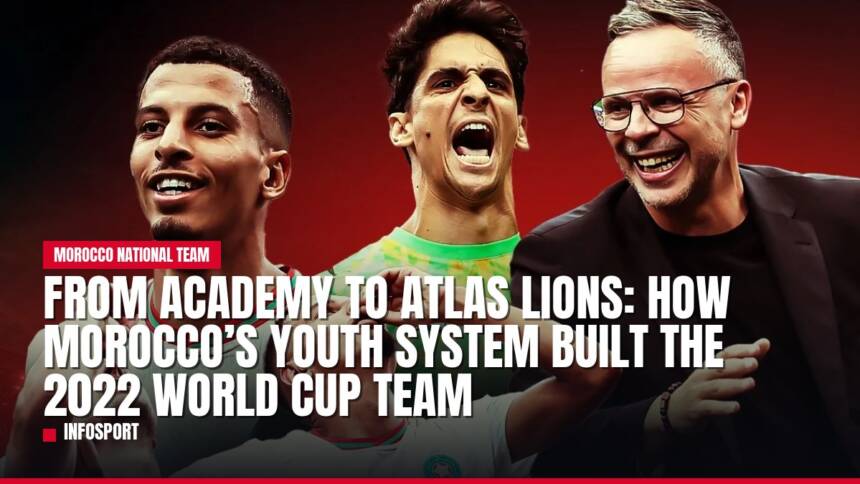
Nurturing the Future: Morocco’s Youth Academies and World Cup Performance
Morocco’s remarkable journey in recent international football, culminating in an unprecedented semi-final appearance at the 2022 FIFA World Cup, has captivated the world. This historic World Cup performance wasn’t merely a stroke of luck or fleeting brilliance; it represented the culmination of years of strategic investment and unwavering dedication to youth development. The foundation of the Atlas Lions’ success lies within meticulously designed and expertly run youth academies across the nation, which have systematically nurtured talent, instilled discipline, and prepared a new generation for the global stage. This comprehensive approach to grassroots football has fundamentally reshaped Morocco’s capabilities on the pitch, transforming them from perennial underdogs into a formidable force in world football. To understand this transformation, one must examine the very heart of their youth development system, a model increasingly recognized as a blueprint for success.
The commitment to building a robust footballing future is central to Moroccan football strategy. This vision extends far beyond assembling a competitive national team for a single tournament; it’s about creating a sustainable pipeline of talent that can consistently elevate Morocco’s FIFA World Cup Campaigns and Performance for decades to come. The academies are not merely training grounds; they are educational institutions and character-building centers where future stars are forged with both technical skill and mental fortitude. This long-term perspective has enabled Morocco to not only compete but to genuinely challenge established footballing giants, redefining expectations for African nations on the biggest stage.
The Foundation of Success: Morocco’s Investment in Youth Football
Morocco’s strategic shift toward prioritizing youth football development began with a clear understanding that sustainable international success required a homegrown talent base. Historically, many Moroccan players representing the national team were products of European club academies, particularly in France, Belgium, and the Netherlands. While diaspora talent remains crucial, the vision evolved to create a self-sufficient system within Morocco capable of producing world-class players. This ambitious undertaking involved significant financial investment, infrastructure development, and a complete overhaul of coaching philosophies aimed at enhancing Morocco’s international standing.
The Moroccan Royal Football Federation (FRMF), under the leadership of Fouzi Lekjaa, embarked on an ambitious program to modernize football infrastructure and elevate coaching standards. This wasn’t merely about building new facilities; it was about fostering a culture of excellence from the youngest age groups upwards. The goal was to provide young Moroccan athletes with an optimal environment to develop their technical skills, tactical understanding, and physical conditioning, while ensuring their academic and personal growth. This holistic approach recognized that true athletic development extends beyond the football pitch, creating well-rounded individuals prepared for both footballing careers and life beyond the game.
Mohammed VI Football Academy: A Game-Changer
At the epicenter of Morocco’s youth development revolution stands the Mohammed VI Football Academy (Académie Mohammed VI de Football), inaugurated in 2009. Located near Salé, this state-of-the-art facility serves as a comprehensive educational and athletic institution designed to identify, nurture, and develop Morocco’s most promising young talents. The academy features world-class pitches, modern gymnasiums, medical facilities, and comfortable living quarters, alongside classrooms and study areas, reflecting its dual commitment to sports and academics.
The academy’s philosophy is rooted in a long-term vision, focusing on developing players with a unique Moroccan footballing identity emphasizing technical prowess, tactical intelligence, and strong mental resilience. It employs highly qualified coaches, many with international experience, who guide young players through structured training programs adapted to their developmental stage. The rigorous curriculum combines intensive football training with a robust academic schedule, ensuring students receive comprehensive education alongside their athletic pursuits. This integrated approach means that even if a professional football career doesn’t materialize, graduates are well-equipped for alternative pathways, embodying a truly holistic development model.
The academy’s impact is undeniable, having produced numerous players who have gone on to represent the national team and secure contracts with top European clubs. Key figures from Morocco’s 2022 World Cup squad, including Azzedine Ounahi, Youssef En-Nesyri, and Nayef Aguerd, are direct products of this institution. Their success on the global stage serves as powerful testimony to the academy’s efficacy and its role in elevating Morocco’s World Cup performance.
Regional Academies and Club Development Programs
While the Mohammed VI Football Academy serves as the flagship institution, it operates within a broader, decentralized network of youth development. The FRMF has actively supported the establishment and improvement of regional academies and club-level development programs across the country. This ensures that talent identification extends to every corner of Morocco, providing opportunities for promising young players regardless of their geographic location or socioeconomic background.
Major Moroccan clubs such as Wydad AC, Raja Casablanca, and FAR Rabat have significantly bolstered their own youth structures, investing in modern training facilities and qualified coaching staff. These club academies serve as crucial feeder systems, nurturing talent from a young age and preparing players for professional football. They often provide the first point of contact for many aspiring footballers, delivering foundational training and competitive experience. The synergy between the national academy and regional programs creates a robust ecosystem ensuring a continuous flow of talent into the national team setup. This widespread investment maintains a deep and diverse talent pool for future international campaigns.
From Academy to Atlas Lions: Tracing the Path to World Cup Performance
The journey from promising young talent in a Moroccan youth academy to celebrated member of the Atlas Lions at the FIFA World Cup follows a carefully orchestrated pathway. This system is designed to provide continuous development, exposure to high-level competition, and seamless integration into the national team structure. The success of this approach directly correlates with Morocco’s improved international standing, particularly evident in 2022.
The national team coaching staff, in collaboration with academy directors and club coaches, closely monitors young players’ progress. A clear progression exists from youth national teams (U17, U20, U23) to the senior squad, ensuring players are gradually introduced to international football and adequately prepared for elite competition. This systematic approach minimizes the shock of stepping onto the world stage while maximizing the potential for success.
The 2022 World Cup Breakthrough: A Testament to Youth Investment
Morocco’s historic run to the semi-finals of the 2022 FIFA World Cup in Qatar validated its long-term youth development strategy. The squad that achieved this unprecedented feat blended experienced diaspora players with significant numbers of talents nurtured within Morocco’s own academies. This combination provided a perfect balance of international exposure and homegrown resilience, driving their exceptional performance.
The composure, technical skill, and tactical discipline displayed by academy products such as Azzedine Ounahi proved crucial to Morocco’s success. Their ability to perform under immense pressure against some of the world’s best teams showcased the quality of their foundational training. The collective effort and individual brilliance demonstrated by these players proved that Morocco’s investment in its youth was delivering tangible results on the biggest stage, elevating the entire nation’s international standing to unprecedented heights.
Key Players Forged in Morocco’s Youth System
The list of players who have benefited from Morocco’s robust youth development system and excelled at the World Cup continues to grow, representing the tangible output of years of dedication and investment:
- Azzedine Ounahi: A product of the Mohammed VI Football Academy, Ounahi’s remarkable rise during the 2022 World Cup was among the tournament’s standout stories. His tireless energy, dribbling ability, and tactical intelligence made him indispensable in Morocco’s midfield.
- Youssef En-Nesyri: A graduate of the Mohammed VI Academy, En-Nesyri’s aerial prowess and goal-scoring instincts proved vital for the Atlas Lions, including his decisive header against Portugal in the quarter-finals.
- Nayef Aguerd: While also spending time in the FUS Rabat academy, Aguerd’s development within Moroccan structures provided the groundwork for his strong defensive performances before injury curtailed his 2022 World Cup campaign.
- Achraf Dari: Emerging from the Raja Casablanca youth system, Dari delivered impressive defensive displays during the 2022 tournament, demonstrating the depth of available talent.
These players, among many others, embody the success of Moroccan youth development and are now recognized as top performers who shined on the global stage, inspiring countless young Moroccans to pursue their footballing dreams.
The Evolution of Morocco’s World Cup Performance Through Youth
Structured youth development has profoundly influenced Morocco’s international campaigns, representing a story of gradual yet profound evolution. For decades, Morocco’s World Cup campaigns were often characterized by flashes of individual brilliance but lacked the consistent tactical discipline and depth to truly compete with elite teams. Early campaigns, such as their 1970 debut and impressive 1986 run, showcased potential while highlighting areas for improvement, particularly in sustained performance over multiple matches. The investment in youth academies has fundamentally altered this narrative, providing the bedrock for a new era of competitiveness.
By producing technically proficient and tactically astute players from a young age, Morocco has elevated overall team quality. This allows for greater consistency, adaptability, and resilience—crucial attributes for success in demanding tournaments. The national team no longer relies solely on a few star players but benefits from a deeper talent pool, ensuring that injuries or performance dips can be managed without significantly compromising team strength. This systemic improvement has been a key factor in Morocco’s evolution as a competitive force.
Tactical Flexibility and Technical Prowess
A strong youth development system cultivates players with high technical skills and robust understanding of various tactical approaches. Moroccan academies emphasize ball control, passing accuracy, spatial awareness, and decision-making from an early age. This foundational training equips players with the tools to adapt to different formations, playing styles, and in-game situations.
At the 2022 World Cup, Morocco demonstrated remarkable tactical flexibility under coach Walid Regragui. Their ability to switch between defensive solidity and quick, incisive attacks—often dictated by the technical quality of their midfielders and forwards—directly reflected the players’ comprehensive training. The confidence to play out from the back, execute intricate passing moves, and maintain possession under pressure are hallmarks of players who have received extensive technical coaching from a young age, underscoring the effectiveness of this foundational approach.
Sustaining Success: A Model for African Football
Morocco’s approach to youth development is increasingly recognized as a sustainable model for other African nations. The 2022 World Cup success was not a singular achievement but rather a milestone in a long-term strategic plan. Continuous investment in academies, coaching education, and infrastructure ensures Morocco is preparing not just for the next tournament but for future generations.
This commitment to sustainability, coupled with clear vision and strong FRMF leadership, positions Morocco as a leader in African football development. By demonstrating that homegrown talent can achieve global success, Morocco provides a powerful example for other African countries to invest in their own youth structures, fostering a new era of competitiveness for the entire continent. The lessons learned and blueprint established offer valuable insights for football associations worldwide seeking to build sustainable success.
Beyond the Pitch: The Societal Impact of Youth Academies
The influence of Morocco’s youth academies extends far beyond football fields and World Cup statistics. These institutions play a vital role in the nation’s broader social fabric, acting as catalysts for social development, education, and national pride. The success of the Atlas Lions, fueled by academy graduates, has profoundly impacted Moroccan society, inspiring a new generation and fostering unity and aspiration.
The academies are producing educated, disciplined, and globally-aware citizens alongside footballers. The emphasis on academic achievement alongside athletic development ensures that young players are equipped with skills and knowledge serving them throughout their lives, regardless of their footballing trajectory. This holistic development approach contributes significantly to positive societal outcomes across the nation.
Inspiring the Next Generation
The sight of Moroccan-trained players excelling on the world stage has had an immeasurable inspirational effect on millions of young Moroccans. Children across the country now see tangible proof that with hard work, dedication, and proper opportunities, they too can achieve their dreams. This inspiration fuels sports participation, encourages healthy lifestyles, and instills belief in the power of ambition. The heroes forged in these academies become role models, demonstrating that success is attainable through perseverance and commitment.
The academies serve as beacons of hope and opportunity, attracting talented youngsters from diverse backgrounds and providing structured pathways to personal and professional growth. This ripple effect strengthens the entire sporting ecosystem within Morocco, ensuring a continuous cycle of talent identification and development that will further enhance future international performance.
Economic and Infrastructural Development
Investment in youth academies and football infrastructure carries positive economic implications. The construction and maintenance of state-of-the-art facilities create jobs, stimulate local economies, and attract further investment in sports tourism and related industries. The success of Moroccan players in European leagues also brings economic benefits through transfer fees and increased visibility for Moroccan football.
Additionally, improved infrastructure benefits not only elite youth development but also grassroots football and community sports programs. This widespread improvement in sporting amenities enhances overall quality of life for citizens and contributes to the nation’s broader development goals. The long-term vision for football has become intertwined with strategic development plans, ensuring that sporting success resonates throughout society.
Conclusion
Morocco’s extraordinary journey to the semi-finals of the 2022 FIFA World Cup stands as powerful testimony to the transformative impact of strategic investment in youth development. The meticulous planning, significant financial commitment, and unwavering dedication to nurturing talent within institutions like the Mohammed VI Football Academy have fundamentally reshaped Moroccan football’s landscape. This systematic approach has elevated the country’s international standing to unprecedented heights while laying a robust foundation for sustained success on the global stage.
The academies are more than training centers; they are crucibles where future stars are forged with technical prowess, tactical intelligence, academic knowledge, and strong character. This holistic development model has produced a generation of players capable of competing with the world’s best while inspiring an entire nation. As Morocco looks toward future World Cups, continuous investment in its youth academies will remain the cornerstone of its ambition, ensuring a vibrant pipeline of talent ready to wear the Atlas Lions’ jersey with pride and continue writing new chapters in the nation’s footballing history.
FAQ Section
Q1: What is the Mohammed VI Football Academy and what role did it play in Morocco’s 2022 World Cup performance?
A1: The Mohammed VI Football Academy, inaugurated in 2009, is a state-of-the-art institution dedicated to identifying, nurturing, and developing young Moroccan football talents. It provides world-class training, facilities, and academic education. Its pivotal role in Morocco’s 2022 World Cup campaign cannot be overstated, as several key players, including Azzedine Ounahi and Youssef En-Nesyri, are direct products of this academy. Their contributions were instrumental in the Atlas Lions’ historic semi-final run, showcasing the success of Morocco’s long-term youth investment strategy and elevating Morocco’s international standing.
Q2: How has Morocco’s youth development strategy evolved over time?
A2: Historically, many Moroccan national team players were developed in European academies. Morocco’s strategy evolved to create a self-sufficient system within the country, spearheaded by the Mohammed VI Academy and supported by regional club academies. This shift involved significant investment in infrastructure, coaching education, and a holistic development approach combining football training with academic education. This evolution has led to a more consistent and high-quality talent pipeline, directly impacting Morocco’s improved international competitiveness.
Q3: Which Moroccan players from the 2022 World Cup squad are products of the national youth system?
A3: Several key players from Morocco’s historic 2022 World Cup squad were developed within the national youth system. Notable examples include Azzedine Ounahi and Youssef En-Nesyri, both graduates of the Mohammed VI Football Academy. Nayef Aguerd also benefited from Moroccan youth structures, notably FUS Rabat’s academy. Their success on the global stage highlights the effectiveness of these development programs in preparing players for elite international competition.

Q4: What are the broader societal impacts of Morocco’s youth academies beyond football?
A4: Morocco’s youth academies have significant societal impacts beyond football. They contribute to social development by providing education, instilling discipline, and fostering national pride. The success of academy graduates on the world stage inspires millions of young Moroccans, promoting healthy lifestyles and ambition. Additionally, investment in infrastructure creates jobs and stimulates local economies, demonstrating how athletic success can have wide-ranging positive effects on the nation.
Q5: How does Morocco’s youth development model compare to other African nations?
A5: Morocco’s comprehensive and well-funded youth development model, centered on the Mohammed VI Football Academy and a network of regional programs, is increasingly seen as a blueprint for other African nations. It stands out due to its long-term vision, significant financial commitment, state-of-the-art facilities, and holistic approach to player development combining sports and academics. This structured approach has allowed Morocco to consistently produce high-quality talent, providing sustained competitive advantage and significantly enhancing their international standing compared to many continental peers.