Prince Moulay Abdellah Stadium: Rabat’s Fortress for the Atlas Lions
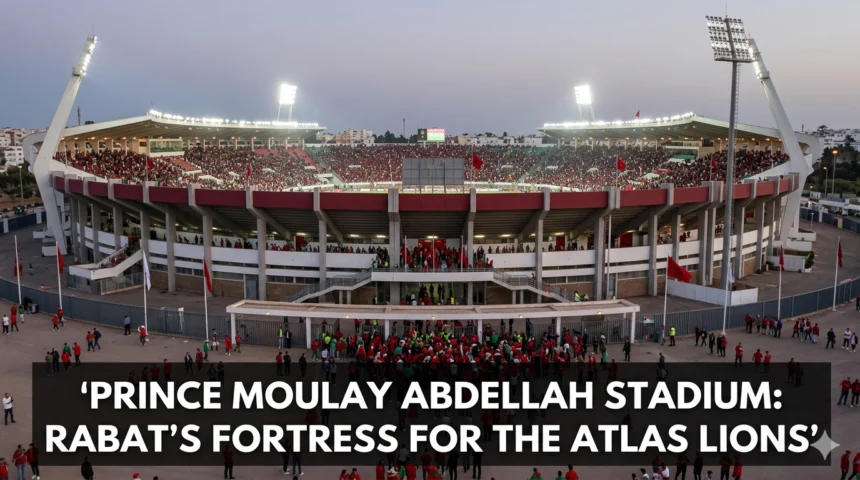
The Prince Moulay Abdellah Stadium stands as a magnificent sporting complex in Rabat, Morocco’s capital. Far more than a conventional arena, this iconic venue serves as a fortress for the Morocco National Team, affectionately known as the Atlas Lions.
With its long and storied history, the stadium has earned a distinguished reputation for hosting some of football’s most electrifying matches. It stands as a pillar of Moroccan football infrastructure and remains integral to the national team’s home grounds. What distinguishes this venue is its vibrant atmosphere and modern facilities, creating a beloved home where the Atlas Lions pursue glory on the world stage.
Beyond its role as a sports facility, it represents the pulse of Moroccan football culture—a place where generations of supporters have witnessed historic victories and endured heartbreaking defeats. Its atmosphere has become legendary throughout African football circles, with visiting teams frequently commenting on the intimidating yet respectful reception they receive from passionate Moroccan supporters.
The stadium also reflects Morocco’s broader aspirations in football. As a leader in African sports infrastructure, the country has positioned this venue as a testament to its vision. Its privileged location in the political capital enables it to host high-level diplomatic events, state visits, and ceremonial matches, seamlessly blending sport with Morocco’s international relations.

A History and Evolution of Sport
Prince Moulay Abdellah Stadium opened in 1983, named after Prince Moulay Abdellah, brother of King Hassan II. Conceived as a multi-purpose venue for major sporting events, it reflected Morocco’s growing ambitions in the world of sport.
The choice to name it after Prince Moulay Abdellah held particular significance given his reputation as a sports enthusiast and his role in advancing athletics throughout Morocco. His vision was to create a facility that would inspire future athletes and exemplify the country’s sporting prowess—a vision that has undeniably materialized. Over four decades, the stadium has witnessed countless memorable matches and athletic competitions.
The complex has undergone substantial transformations since its inauguration, evolving from its original design to meet modern international standards. This progression mirrors Morocco’s football trajectory—from the early post-independence era to today’s world-class Atlas Lions, whose historic 2022 FIFA World Cup semi-final run captivated millions worldwide.

In the 1980s and 1990s, it primarily hosted regional competitions and friendly matches. However, as Morocco’s national team gained prominence and pursued major tournaments, the venue’s importance grew exponentially. Each renovation phase has brought it closer to FIFA’s strict requirements for World Cup hosting.
Key Milestones in Stadium Development
Prince Moulay Abdellah Stadium has undergone several significant upgrades and renovations, with each development phase aimed at enhancing its capabilities and maintaining its status as a premier venue.
- Original Construction (1983): The stadium was inaugurated and quickly became the center of football and athletics activity in Rabat. The original design featured approximately 52,000 seats, making it one of North Africa’s largest venues at the time. The Moroccan national team played its inaugural match here, establishing a tradition that continues today.
- Early Renovations: Regular improvements were made to maintain contemporary standards and enhance fan experience, including lighting system upgrades, pitch drainage improvements, and amenity enhancements. During this period, the stadium also hosted several international athletics competitions, demonstrating its versatility as a multi-sport facility.
- International Tournament Preparations: As Morocco submitted bids for major tournaments including the FIFA World Cup and Africa Cup of Nations, the stadium received significant investment. Renovations included increased seating capacity, modernized VIP areas, upgraded media facilities, and improved pitch quality. Notable work occurred in preparation for the 2015 Africa Cup of Nations (which Morocco subsequently withdrew from hosting) and the 2023 FIFA Club World Cup. The media center underwent complete renovation with cutting-edge broadcast facilities meeting international television production standards.
- 2030 World Cup Aspirations: Following Morocco’s successful joint bid to co-host the 2030 FIFA World Cup, the stadium is positioned for major modernization and expansion. Proposed enhancements include capacity increases to over 65,000, state-of-the-art LED lighting installation, and improved accessibility for disabled spectators.
- These continuous improvements underscore the stadium’s strategic importance to Moroccan sports while reflecting the country’s commitment to world-class facilities. Infrastructure investment has also generated positive economic impacts on the surrounding area, creating employment opportunities and stimulating local businesses during major events.
A Marvel of Architecture and Modern Facilities
Prince Moulay Abdellah Stadium represents an architectural achievement that merges traditional Moroccan design with contemporary engineering. Its exterior features geometric patterns echoing Islamic design philosophy, combined with the clean lines and functionality demanded by modern stadium construction. The facility seamlessly integrates into Rabat’s urban landscape while commanding visual prominence.
The stadium was engineered to create an imposing impression on visiting teams while ensuring spectator comfort. Steep stands draw fans closer to the action, amplifying crowd noise and generating the cauldron-like atmosphere characteristic of Morocco’s home matches—a design inspired by Europe’s most atmospheric stadiums and adapted through the lens of Moroccan football culture.
Modern amenities include world-class player facilities featuring spacious dressing rooms and latest recovery technology. The pitch utilizes sophisticated drainage systems and hybrid grass technology to maintain optimal playing conditions regardless of weather. The lighting system meets FIFA’s broadcast vision requirements, ensuring clear coverage for global audiences.
Concourse areas have been designed with Morocco’s climate in mind, incorporating adequate ventilation and shading for spectator comfort during hot afternoon matches. Food and beverage offerings blend international cuisine with traditional Moroccan fare, creating a unique matchday experience celebrating local culture while accommodating diverse preferences.

Historic Moments and Memorable Games
Prince Moulay Abdellah Stadium has hosted numerous iconic moments in Moroccan football history. The venue has witnessed World Cup qualification celebrations, dramatic Africa Cup of Nations encounters, and friendlies against international powerhouses.
A particularly memorable evening occurred during Morocco’s successful 2018 World Cup qualifying campaign for Russia, when the Atlas Lions secured their World Cup berth with a commanding performance that sent the Rabat crowd into jubilation.
The stadium has hosted prestigious internationals, including friendlies against European giants such as Spain, France, and Germany—invaluable experiences for Moroccan players and opportunities for local fans to witness world-class football. Yet the venue’s special atmosphere truly comes alive during competitive matches, with players frequently citing passionate home supporters as instrumental to the team’s strong home record.
Beyond football, the stadium has demonstrated its versatility as a multi-purpose facility, successfully hosting track and field events including Diamond League competitions. This ability to accommodate multiple sports while maintaining football-specific standards testifies to the careful planning and design underlying its development.
As Morocco co-hosts the 2030 FIFA World Cup, the Prince Moulay Abdellah Stadium stands ready to write new chapters in its history. This tournament will spotlight Morocco’s venues and provide the Atlas Lions an opportunity to showcase their development on the world stage. The stadium’s evolution from a regional venue to a world-class facility mirrors Morocco’s own progression as a footballing nation—more than mere infrastructure, it symbolizes ambition, progress, and unwavering passion for the beautiful game.