
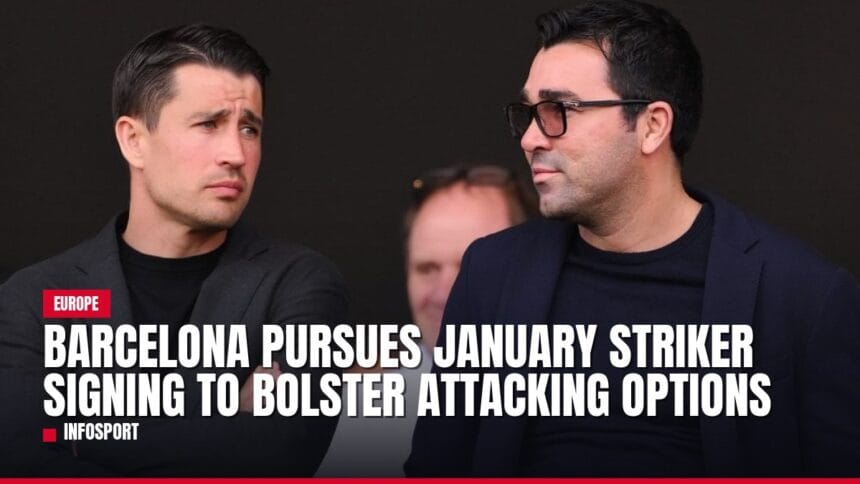
Barcelona’s leadership is deliberately holding back from major summer signings, instead ringfencing financial firepower for a January forward push. With the transfer window closing next Tuesday, the La Liga champions have decided to bank resources rather than chase immediate reinforcements, reports MARCA.
Flick’s early form buys Barcelona time in attack
Hansi Flick’s side has won both opening La Liga matches—against Elche and Athletic Club—scoring seven goals without conceding. That start has fundamentally altered the club’s spending calculus. Raphinha, deployed as a false nine, has netted three goals alongside Fermin Lopez, matching the scoring output the club originally hoped a new striker would deliver.
Barcelona had identified Julian Alvarez as their sole attacking priority following the departures of Robert Lewandowski and Ferran Torres. Atlético Madrid’s refusal to negotiate left the pursuit stalled. Rather than pivot to alternatives, the club has embraced an either/or stance: Alvarez in summer or a fresh No. 9 hunt in January, with nothing in between.
How January window strategy shields Barcelona’s finances
The decision reflects a calculated trade-off between immediate need and future optionality. By preserving financial fair play headroom now, Barcelona positions itself to act decisively if January presents a superior striker target or if injury or form dip demands intervention. Outgoings could accelerate that timeline: the club targets €25–30 million for Marc Casado and roughly €15 million for Héctor Fort, money that would unlock additional capacity should Flick request late-window reinforcement.
Centre-back represents the only position still under active review. Ronald Araújo’s exit and Álvaro Cortés’ planned departure have thinned that unit, though Pau Cubarsí, Gerard Martín, Jules Koundé, Andreas Christensen and Eric García provide Flick with established depth. Any defensive addition would compete directly with the overriding priority of maintaining striker-signing budget for the New Year window.
More Read

Barcelona’s calculation: current form over panic buys
The strategy hinges on confidence in Flick’s early work and the form curve of existing attacking personnel. Seven goals in two matches and a clean sheet in each suggests the coaching staff has unlocked efficiency gains from the current squad. That foundation allows sporting director Deco and his team to defer spending until a clearer picture emerges—injury trends, goalscoring consistency, and which elite forwards actually enter the market come winter transfer activity.