Input: ~1,800 tokens
Output: ~1,800 tokens
Remaining: ~196,400 tokens
Morocco National Team Fixtures: First Years and Games in the Region
Morocco’s national team story officially began in the late 1950s, following the country’s independence. During this developmental period, the Morocco national team’s fixtures mainly consisted of regional competitions and friendly matches, helping establish the team’s identity and build international experience.
Founding and Early Competitive Landscape
Morocco’s first official match was against Iraq in 1957. In those early days, the fixture list was irregular and often featured games against North African neighbours or other newly independent African nations. These encounters proved crucial for team development and laid the groundwork for future competitive endeavours. International travel was challenging, and the football calendar far less organised than today’s standards.
The focus centred on developing homegrown talent and integrating Moroccan football into the wider African and international communities. While the team didn’t capture major titles during these formative years, this period established the infrastructure and resilient spirit that would define the Atlas Lions.
Early Attempts at AFCON and World Cup Qualification
As the 1960s progressed, Morocco’s fixture schedule expanded to include qualification campaigns for major tournaments. The team made its AFCON (Africa Cup of Nations) debut, aiming to impress continental football’s established powers. Success didn’t come immediately, yet the experience gained from these early attempts proved invaluable in high-stakes international football.

Morocco also began its World Cup qualification journey. These demanding cycles, often involving extensive travel and difficult conditions, tested the team’s resolve and gradually raised its profile globally. Each match, regardless of outcome, contributed to the team’s development and experience.
The Rise of Morocco National Team Fixtures: 1970s–1990s and Emergence on the African Stage
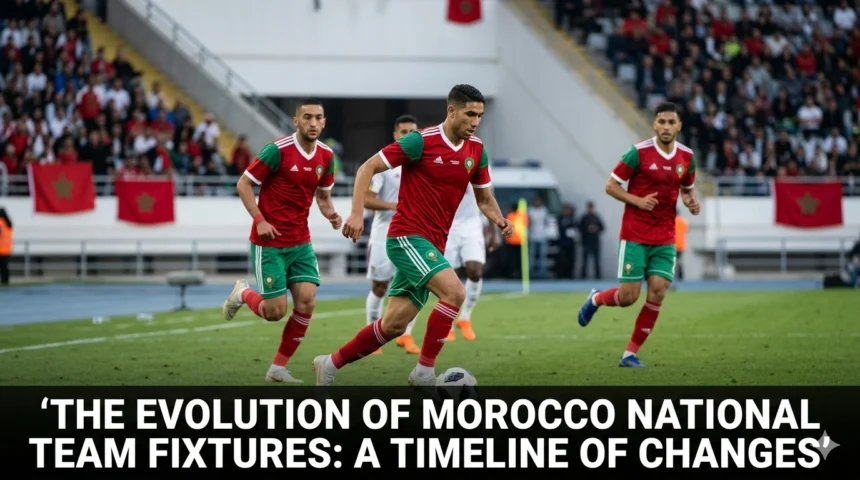
The 1970s through 1990s marked a significant period of growth and achievement for Moroccan football. The team established itself as a continental force, and the Morocco national team fixtures became increasingly regular, organised, and internationally recognised.
AFCON Success and Consistent Participation
Morocco achieved its first major international milestone in the 1970s, winning the 1976 Africa Cup of Nations. This victory transformed everything, elevating the team’s standing and adding prestige to their fixture schedule. Over the following years, Morocco became a consistent AFCON contender, regularly advancing to the later stages.

Regular participation in AFCON tournaments ensured the side faced competitive matches against Africa’s best teams. These competitions served as showcases for Moroccan talent while simultaneously fostering national pride and heightened expectations surrounding team performance.
World Cup Breakthroughs and Global Acclaim
Perhaps the most significant development regarding Morocco’s national team fixtures was their emergence on the FIFA World Cup stage. Morocco made history in 1986 when they became the first African nation to progress beyond the group stage in Mexico. Morocco’s World Cup Qualifiers Fixtures: Path to the Next Tournament became high-profile events, attracting international media attention and exposing Moroccan players to a worldwide audience. The tactical lessons gained from these elite-level competitions significantly influenced the team’s evolution.
Evolution of Friendly Matches and International Camps
As competitive fixtures developed, friendly matches transformed considerably. These encounters became tactical opportunities for coaches to experiment with new players, test formations, and prepare for major tournaments. International camps grew more frequent, featuring extended training periods and stronger team-building initiatives.
Friendlies typically matched Morocco against European or South American opponents, providing invaluable exposure to different playing philosophies and helping the team adapt to international football’s demands. Fixture planning became more sophisticated to optimise preparation while managing player workload.
The New Millennium: Global Competitiveness and Modern Morocco National Team Fixtures (2000s–Present)
Moroccan football has ascended to new levels in the 21st century, emphasising global excellence, strategic planning, and the integration of diaspora talent. The Morocco national team’s fixture calendar has intensified, reflecting international football’s increased competitiveness.
How World Cup Qualification Cycles Work
World Cup qualification remains a primary focus for the Atlas Lions, who navigate demanding African qualification rounds with consistent determination. The path to Qatar 2022, including the historic semi-final appearance, demonstrated the team’s ambition and capability. All matches in Morocco’s World Cup Qualifiers Fixtures: Road to the Next Tournament are meticulously planned and executed, carrying significant implications for national pride and global standing.
More Read

These qualification cycles demand intense preparation. Every match holds crucial importance, requiring coaches and players to maintain peak performance and tactical adaptation. Success extends beyond individual victories—it encompasses continuous improvement and strategic evolution.
AFCON Ambitions and Sustained Efforts
While World Cup aspirations remain prominent, the Africa Cup of Nations remains a vital benchmark for Morocco’s national side. With evolving tournament formats and qualifying rounds, the competitive AFCON 2025 Qualifiers: Morocco National Team Fixtures & Group Stage Analysis features throughout the year. The team hunggers to capture a second AFCON title, and recent performances demonstrate considerable strength.
These tournaments significantly influence team rankings and continental standing. Recent results, reflected in Morocco National Team Match Results: Performance Review, shape both immediate perception and long-term objectives.
FIFA International Match Calendar
Today, Morocco national team fixtures follow the FIFA International Match Calendar framework, which designates specific periods for international competition. During these windows, clubs must release players for national team duty, creating a more organised fixture structure. However, this arrangement presents challenges, particularly for players based in Europe who must endure frequent international travel.
Understanding the Morocco National Team Fixture Calendar helps fans and analysts anticipate when the national team will compete, whether in competitive qualifiers or significant friendlies.
Strategic Importance of Friendly Matches and Rankings
Modern friendlies serve purposes beyond preparation. They’re strategically selected to optimise FIFA ranking points, test the team against varied opponents, and integrate emerging talent. Morocco National Team Friendlies: Upcoming Schedule and Opponents against elite nations provide valuable competitive experience and performance assessment.
These encounters enable coaches to refine tactics and manage player fitness outside tournament pressure. While potentially less competitive than knockout matches, results significantly impact international rankings and future tournament seeding.
Current Factors Affecting Morocco National Team Fixtures
Multiple elements influence the scheduling and characteristics of Morocco’s national team fixtures within modern football’s complexity. These range from administrative decisions to logistical challenges and player availability concerns.
Influence of CAF (Confederation of African Football)
As a CAF member, Morocco’s fixture list is primarily determined by the confederation’s tournament calendars. This encompasses AFCON qualifiers, the final tournament, and occasional other CAF-organised competitions. The Atlas Lions’ schedule—including match dates and locations—directly reflects CAF decisions regarding hosting arrangements, formats, and timing.
FIFA Ranking and Seedings
FIFA rankings significantly determine seeding allocations for World Cup and AFCON qualification draws. This incentivises Morocco to select matches offering positive ranking points, influencing friendly opposition choices and emphasising the importance of each competitive encounter. A strong ranking position facilitates more favourable draws and potentially easier qualification pathways.
Player Availability and Club Obligations
With numerous key Moroccan players competing in top European leagues, managing availability presents constant challenges. FIFA international windows provide designated periods, yet coaches must balance national team requirements against club commitments, player fatigue, and injury prevention. These competing demands affect training camp timing and friendly match scheduling.
Logistics, Venues, and Fan Engagement
International fixture organisation involves substantial logistical coordination, including travel arrangements, accommodation, security protocols, and venue selection. Morocco frequently rotates match locations across the country to engage supporters nationwide. Venue choices consider strategic factors such as climate conditions, pitch quality, and home-field advantage. Fan participation—whether attending matches or accessing Where to Watch Morocco National Team Matches Live: TV & Streaming Guide—remains integral to the team’s ecosystem.
Morocco National Team Matches: Live Stream Technology
Technology has transformed how supporters access, follow, and engage with Morocco’s national team fixtures. Gone are the days of relying solely on newspaper reports or radio broadcasts; fans now enjoy instant updates and comprehensive coverage.
Live Updates and Digital Platforms
Match schedules, scores, and news are now available in real time through official football federations, dedicated sports platforms, and news outlets. Supporters instantly access the Morocco National Team Fixtures 2024: Full Schedule & Match Dates and track live scores with alerts directly on mobile devices. This immediacy significantly enhances fan engagement and makes following the team more interactive and dynamic.
International Reach and Broadcasting Rights
Broadcasting extends globally, enabling Morocco national team fixtures to reach worldwide audiences. Major tournaments and friendlies receive television or online coverage from international sports networks. This increased visibility strengthens the team’s global profile while enabling the Moroccan diaspora to remain connected regardless of location.
Social Media and Fan Engagement
Social media platforms have become primary spaces where supporters interact, discuss, and share content regarding the Atlas Lions. From pre-match anticipation to post-match analysis—What We Learned from Morocco’s Last Game—fans engage directly with the team, players, and each other. This digital community fosters deeper connection and collective support for the national squad.
What’s Next? The Future of Morocco National Team Fixtures
The outlook for Morocco’s national team fixtures appears as dynamic and exciting as its history. The team is positioned to build upon recent achievements and pursue even greater international success.
Maintaining Peak Performance
Emphasis will centre on sustaining standards established in recent years, particularly following the 2022 World Cup campaign. This requires consistent engagement in elite competitive fixtures, strategically planned friendlies, and ongoing tactical development. The pursuit of excellence will define the team’s calendar and preparation strategies.
Talent Pipeline and Youth Development
A robust youth development system remains essential for building a sustainable pipeline to the senior national team. Upcoming fixtures will feature emerging talents gaining valuable international experience, establishing foundations for future success. Balancing experienced players with promising youngsters proves critical for long-term competitiveness.
Long-Term Planning for Major Tournaments
Future World Cups and AFCON tournaments will necessitate increasingly strategic fixture scheduling. This encompasses careful opponent selection, optimally timed training camps, and thorough preparation for specific tournament environments. Once confirmed, the Morocco National Team Fixture Calendar: Important Dates to Note generates considerable anticipation, frequently prompting detailed match previews analysing key personnel and tactical outlooks.
Morocco’s evolving national team fixtures reflect the enduring spirit of Moroccan football. The trajectory from modest regional origins to global prominence testifies to a nation’s unwavering passion for the sport and commitment to excellence. As the Atlas Lions continue their journey, their fixture schedule will chronicle an ongoing quest for international glory.
Frequently Asked Questions
What are Morocco national team fixtures?
Morocco national football team fixtures are the scheduled official and friendly matches of the Morocco men’s national team. These include competitive matches in tournaments such as FIFA World Cup qualifiers, Africa Cup of Nations (AFCON) qualifiers and finals, plus international friendly encounters.
How have Morocco’s national team matches evolved over the years?
Moroccan fixtures have transformed from sporadic regional matches in early years into a highly structured global schedule. This evolution encompasses increased participation in major tournaments, more strategically selected friendlies, and adherence to the FIFA International Match Calendar. Technological advances have also expanded these fixtures to broader global audiences.
Where can I find the latest Morocco national team fixtures?
For current Morocco national team fixtures, including upcoming matches and recent results, consult our dedicated page: Morocco National Team Recent Matches and Upcoming Fixtures. Official football federation websites, established sports news outlets, and specialised sports applications also provide updated schedules.
What are the major tournaments in Morocco’s national team fixture schedule?
Primary tournaments include the FIFA World Cup (qualification and final stages) and the Africa Cup of Nations (AFCON qualification and final tournament). The team additionally plays strategically scheduled international friendlies around these major competitions.
Why are friendly matches important to Morocco’s national team fixtures?
Friendly matches enable coaches to trial new players, experiment with tactical approaches, and build team chemistry without competitive pressure. They also provide preparation for upcoming tournaments, contribute to FIFA ranking points, and expose the team to diverse playing styles across international opponents.