Moroccan football’s recent rise is not only about current stars; it is also about what happens after the final whistle. Many former Moroccan internationals and top‑level players are now working directly with youth: as coaches, academy managers, scouts, mentors, and advisors. Their experience from elite clubs and national teams gives them a unique ability to guide young players through the technical, tactical, and mental demands of modern football.
This article focuses on the specific roles former players occupy in Moroccan youth football, how they influence development day‑to‑day, and why their involvement is a key part of the country’s long‑term football strategy.
Why former players matter for youth development
Youth players need more than drills and matches. They need role models who understand the full journey: from local pitches to professional academies, from national youth teams to senior football, and sometimes to clubs abroad.
Former Moroccan players bring:
Practical experience of high‑pressure matches and elite training environments.
Cultural understanding of the Moroccan context: family expectations, education vs football, and the realities of breaking through locally.
Credibility that instantly captures young players’ attention and respect.
When a former national team player walks into an academy session, it signals to youngsters that the path they are dreaming of is real and achievable.

Main roles of former players in Moroccan youth football
Former players are not limited to one job. Across clubs, academies, and federations, they occupy several distinct roles that together strengthen the youth system.
1. Youth coaches and mentors
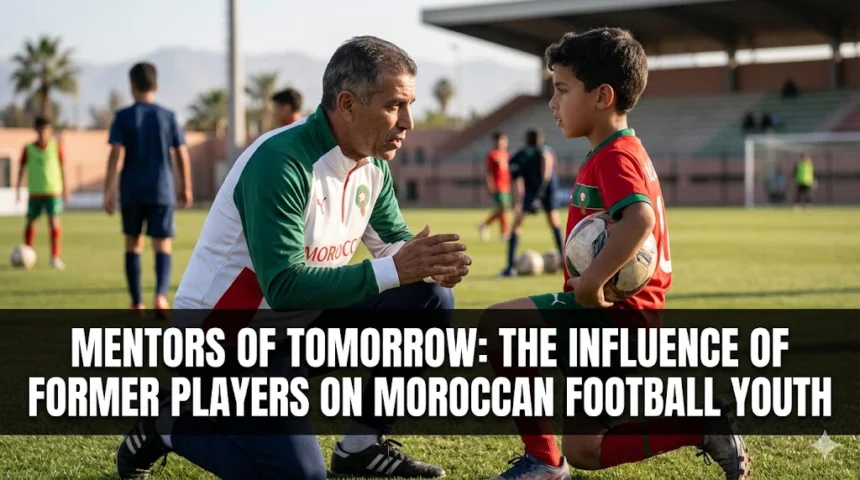
The most visible role is as youth coaches. Many ex‑players transition into coaching at U‑15, U‑17, or U‑20 levels, where they:
Teach technical skills (ball control, passing, shooting) with an emphasis on game situations.
Share tactical understanding: positioning, decision‑making, reading the game.
Instill professional habits: punctuality, discipline, recovery, and respect for teammates and staff.
Beyond tactics, they often become mentors. Young players face pressure from coaches, family, and peers. A former player who has lived through similar pressures can:

Advise on handling setbacks (being dropped, injuries, not being selected).
Guide decisions about school vs full‑time football, or moving to a bigger club.
Model how to behave on and off the pitch.
This dual role—coach plus mentor—helps develop both skill and character, which is essential for long‑term success.
2. Academy managers and technical directors
Some former players move into leadership roles within academies and clubs:
As academy managers, they oversee daily operations: training schedules, coach coordination, player welfare, and communication with families.
As technical directors, they define the playing philosophy, age‑group curricula, and progression pathways from U‑12 up to reserve or senior teams.
Their playing background helps them:
Design training that reflects how the game is actually played at higher levels.
Ensure that youth football is not just about winning now, but about preparing players for the next level.
Align the academy’s style with the broader Moroccan football identity (technical, creative, disciplined).
In this way, they shape not just individual players, but the system that produces them.
3. Scouts and talent identifiers
Ex‑players often become scouts for clubs, academies, or the national federation. Their experience gives them an edge in:
Recognizing technical quality under pressure, not just in isolated drills.
Spotting game intelligence: positioning, anticipation, decision speed.
Assessing mentality: competitiveness, resilience, response to mistakes.
They frequently visit:
More Read

Local tournaments and school competitions
Regional selection days
Grassroots clubs in cities and smaller towns
Because they know what it takes to progress, they can identify players who may not yet be physically mature but have the potential and mindset to develop. This makes them crucial in finding talent that might otherwise be overlooked.
4. Ambassadors and role models
Former players naturally become ambassadors for Moroccan football:
They appear at youth events, opening ceremonies, and charity matches.
They speak at schools and academies about discipline, education, and healthy lifestyles.
They share their own stories—successes, failures, and comebacks—to motivate young athletes.
For many children, seeing a former national team player in their community makes football feel accessible. It reinforces the message that talent plus work can lead to real opportunities, whether in Morocco or abroad.
5. Advisors and board members
At a higher level, some prominent ex‑players serve as advisors to:
The Royal Moroccan Football Federation (FRMF)
Regional football associations
Clubs and academy boards
In these roles, they:
Contribute to long‑term strategies for youth development.
Advocate for better facilities, coaching education, and player welfare.
Ensure that policies reflect the realities players face on the ground.
Their presence helps keep decision‑making connected to the actual experience of players, not just administrative or commercial priorities.
How former players influence Moroccan football philosophy
Moroccan football is known for a particular style: technical ability, creativity, tactical discipline, and strong competitive spirit. Former players are key to preserving and evolving this identity.
Through their coaching and leadership, they:
Emphasize ball mastery and confident possession from a young age.
Encourage creative attacking play while maintaining defensive responsibility.
Teach young players to compete fiercely but fairly, respecting opponents and officials.
At the same time, many ex‑players who have experienced football abroad bring back:
New training methods and tactical ideas
Insights into how top academies structure development
This blend helps Moroccan youth football stay true to its roots while adapting to modern demands.
Practical pathways: from retired player to youth developer
For many former players, the transition is not automatic. A typical pathway might look like:
Retirement or reduced playing time
The player begins to think about life after football, often while still active.Coaching education and licenses
Through FRMF or club programs, they pursue coaching badges (from introductory levels up to advanced licenses).
Some also study sports management, scouting, or related fields.Entry roles in academies or clubs
They start as:Assistant coaches for youth teams
Skills coaches focusing on technical sessions
Scouts covering specific regions
Progression to larger responsibilities
Over time, they may become:Head coaches of youth sides
Academy managers
Technical directors or federation advisors
Supporting this pathway with structured programs, funding, and clear career progression is essential to keep experienced players engaged in youth development rather than leaving the game entirely.
Challenges and how they are being addressed
Despite their value, integrating former players into youth development is not without challenges.
Need for modern coaching education
Experience alone is not enough. Modern youth coaching requires:
Knowledge of current tactics and formations
Understanding of sports science, load management, and injury prevention
Basic psychology to support young players’ mental health
Programs that combine former players’ experience with up‑to‑date coaching education are critical. This ensures they can translate their knowledge into effective, age‑appropriate training.
Financial and structural support
To attract and retain quality ex‑players in youth roles, clubs and federations must offer:
Competitive salaries or stipends
Clear career paths (from youth coach to senior roles)
Access to continuous learning and development
Without this, many former players may choose other careers, and the youth system loses valuable expertise.
Connecting local and diaspora talent
Many former players have experience in both Moroccan and foreign football. This makes them ideal for:
Helping diaspora youth understand Moroccan football culture and expectations.
Acting as bridges between European academies and Moroccan national youth teams.
Supporting players who move between countries in their development.
Their dual perspective eases the integration process and helps build a more cohesive national pipeline.
The long‑term impact on Moroccan football
The involvement of former players in youth development is a long‑term investment. Its effects may not be immediate, but over time they include:
More technically sound and tactically aware young players.
Stronger mental resilience and professionalism from an early age.
A clearer pathway from local clubs to national teams and abroad.
As Morocco continues to build on its recent successes, the contribution of ex‑players at grassroots and academy levels will be a key factor in sustaining that progress.
FAQ: Former Players in Moroccan Youth Football
What roles do former Moroccan players typically take in youth football?
Common roles include youth coaches, mentors, academy managers, technical directors, scouts, ambassadors, and advisors to federations or clubs.
How do former players help young footballers beyond training?
They act as mentors, advising on career decisions, handling pressure, balancing school and football, and developing professional habits on and off the pitch.
Why are former players especially effective as scouts?
Their experience helps them recognize not only technical skill but also game intelligence, mentality, and potential under pressure—qualities that are hard to assess without high‑level playing experience.
What support do former players need to work in youth development?
They benefit from coaching education programs, fair compensation, clear career paths, and access to modern facilities and sports science resources.