
Grassroots Initiatives for the Development of Youth Football in Morocco: Keys to Success
Moroccan football has been taking the world by storm with its recent exploits on the international stage, demonstrating a remarkable blend of skill, tactical acumen, and unwavering spirit. This rise to prominence is not accidental but rather the result of decades of strategic investment and dedicated effort to develop talent from the grassroots level. This success is built on strong youth development and prospects of Moroccan football, particularly the active and comprehensive community-based projects that lay the foundation for future stars.
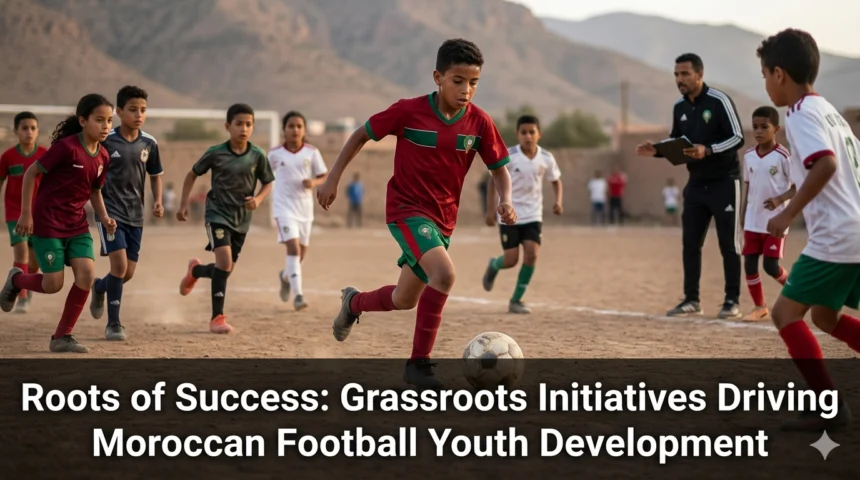
For many young Moroccans, the journey begins in these grassroots programs, where dusty fields become arenas of dreams. These initiatives serve as unsung heroes, fostering a love of the game and providing the first platform for talent identification and basic skills development long before players enter formal academies. To fully appreciate the scope of Morocco’s footballing achievements, understanding the depth and breadth of these initiatives is essential.
What is Moroccan Football Youth Grassroots Development?
Youth grassroots football development encompasses both informal and formal community-level activities aimed at introducing children and young people to the sport. Key characteristics include accessibility, inclusiveness, and a focus on fundamental skill-building rather than immediate competitive success. These initiatives prioritize enjoyment, participation, and establishing a broad player base.
Unlike elite colleges and universities, grassroots programs tend to be volunteer-driven and community-oriented. They reach all parts of the country, from busy city neighborhoods to distant rural villages. Serving as the first filter, these programs give millions of children their initial exposure to football and cultivate lifelong passion for the game.
The Importance of Local Clubs and Associations
Local clubs and small community associations form the bedrock of youth development initiatives. Though often resource-constrained, these organizations offer organized training and playing opportunities for children of all ages. They typically represent the first formal setting where young players learn basic rules, teamwork, and discipline.

While not as celebrated as professional club academies, these grassroots organizations are vital for identifying raw talent and channeling it into more advanced systems. Many future professionals begin their careers at small local clubs, which serve as important stepping stones before advancing to prestigious institutions, as mentioned in The Golden Generation: How Moroccan Football Youth Academies are Forging Future Stars.
Community Pitches and Neighbourhood Games
In Morocco, the informal environment of community fields and local competitions is equally important as formal club structures. These are spaces where children gather independently, create their own games, and refine skills through passion and street smarts. Playing in such environments fosters creativity, improvisation, and problem-solving—traits often displayed by top Moroccan players.
These informal gatherings frequently mark the true beginning of many talents’ journeys, establishing a natural pathway for developing love of the game. This foundation eventually leads to national success, as seen in From Local Pitches to National Glory: Pathways for Moroccan Football Youth Talent.

Fundamental Pillars of Grassroots Success in Morocco
Moroccan grassroots programs have succeeded through several fundamental principles that ensure broad participation and productive early development. These core pillars are essential for building a large and diverse talent pipeline.
Inclusivity and Accessibility
Affordability stands as a significant aspect of grassroots football development. Programs are designed to be free or low-cost, enabling children from all socioeconomic backgrounds to participate. This extends to initiatives targeting rural and underprivileged areas where organized sports may be unavailable.
Gender barriers are also being addressed through increasing efforts to promote girls’ participation from a young age. By eliminating barriers to entry, Morocco ensures that no potential talent is lost due to circumstances beyond a player’s control.
Volunteer and Community Engagement
Volunteerism forms the backbone of many grassroots programs. Parents, community leaders, and former players donate their time and effort to organize training sessions, manage teams, and maintain facilities. This high degree of local ownership creates a supportive and nurturing environment for young athletes.
These volunteers often serve as first coaches and mentors, instilling values of sportsmanship, teamwork, and dedication. Their commitment is invaluable for ensuring the sustainability and growth of grassroots football throughout the country.
Basic Skill Development and Fun
Early programs concentrate on developing fundamental abilities and fostering enthusiasm for the game. Coaches emphasize basic ball control, passing, dribbling, and shooting rather than complex tactics or competitive pressure. The primary objective is making football enjoyable so young players remain engaged and develop skills naturally.
More Read

The importance of enjoyment in youth development cannot be overstated, as it ensures player retention and natural skill progression. As discussed in Coaching the Champions: The Role of Youth Coaches in Moroccan Football, the quality of early coaching, even at rudimentary levels, is crucial.
Talent Scouting in the Early Stages
While participation remains the emphasis, grassroots initiatives also function as early talent identification platforms. Local coaches, volunteers, and visiting scouts from regional academies continuously search for young players displaying outstanding ability, athleticism, or intuitive game understanding.
Early identification ensures promising talent is not overlooked and can be directed toward more structured development pathways. This first step initiates the larger process detailed in Scouting the Future: How Morocco Discovers Its Next Football Prodigies, maintaining a steady pipeline of talent to upper-level programs.
Government and Federation Support for Moroccan Football Youth Grassroots
The government and national football federation provide strategic support to strengthen grassroots programs. This top-down commitment complements bottom-up community efforts, creating powerful synergy.
FRMF Activities and Funding
The Royal Moroccan Football Federation plays a key role in supporting grassroots football. It provides financial assistance, equipment, and training to local clubs and associations. The FRMF also organizes national grassroots festivals and tournaments, offering young players opportunities to compete and showcase their abilities.
This centralized support maintains quality standards and helps address resource gaps in underprivileged areas. The Federation’s foundational investment represents a critical component of broader financial commitment to youth development, as detailed in Investment in Tomorrow: Funding the Future of Moroccan Football Youth.
Engagement with Local Authorities
The FRMF, Ministry of Youth and Sports, and local municipal authorities collaborate to develop infrastructure. This includes constructing and upgrading community pitches, providing sporting equipment, and creating safe playing environments. Local authorities frequently contribute land and resources for community sports facilities, recognizing the social and developmental benefits of football.
These partnerships provide the physical spaces grassroots programs require to operate effectively and expand accessibility. Sustained growth depends on synergy between national and local bodies.
Grassroots Development: Strategic Perspective
Grassroots development is not an isolated element but an integral part of Morocco’s comprehensive national football strategy. The FRMF’s long-term vision explicitly recognizes grassroots initiatives as the primary talent source and foundation of the entire football pyramid. This strategic alignment ensures resources and efforts remain focused on strengthening this base.
By incorporating grassroots into the national framework, Morocco secures a sustainable talent pipeline, linking community initiatives with elite academies and national team pathways. This holistic approach represents a main pillar of The Strategic Blueprint: Morocco’s Long-Term Vision for Youth Football Development.
Impact and Results: From Local Heroes to National Superstars
The cumulative effect of grassroots initiatives extends far beyond individual player development, significantly influencing the nation’s footballing identity and social fabric.
Building a Deep Talent Pool
By reaching vast numbers of children, grassroots programs create an extensive talent reservoir for professional academies and national youth teams. A wider pool statistically increases the likelihood of identifying exceptional outliers who might be overlooked in more exclusive systems.
This inclusive approach consistently enables Morocco to produce successive generations of talented players. Most athletes featured in Morocco’s Next Top Talents: Players to Watch in Youth Football likely developed their skills through such grassroots platforms.
Creating Football Intelligence
Grassroots football, particularly street football, cultivates a distinctive form of game intelligence. Players learn to adapt to varied surfaces, improvise in limited spaces, and make rapid decisions. This “street smarts” frequently translates into highly creative and resilient professional players.
These early experiences develop deeper game understanding, natural flair, and tactical awareness that can subsequently be refined through formal training.
Building Community Spirit and Social Cohesion
Beyond athletics, grassroots football strengthens community bonds and social cohesion. It provides a constructive outlet for young people, teaching essential life skills including teamwork, discipline, and respect while bringing individuals from diverse backgrounds together. These programs often catalyze broader community engagement.
The social benefits are substantial, contributing to positive youth development and fostering stronger, more connected communities across Morocco.
Addressing Challenges in Grassroots Development
Despite successes, youth grassroots initiatives face notable obstacles, including securing sustainable funding, maintaining appropriate infrastructure in rural areas, and recruiting adequate numbers of qualified volunteer coaches. However, coordinated efforts from the FRMF, local authorities, and committed communities are actively addressing these challenges.
Ongoing efforts to overcome these obstacles underscore continued focus on grassroots development, as examined in Challenges and Triumphs: The Reality of Youth Development in Moroccan Football.
Morocco’s Next Step: Youth and Grassroots Development
With continued strategic investment and evolving development approaches, the future of Moroccan youth grassroots football appears promising. There is clear commitment to expand program reach so more children benefit from quality football experiences.
Future directions include leveraging technology to better administer and coordinate grassroots networks and introducing modern coaching principles at early development stages. There is also increasing emphasis on integrating talent from the Moroccan diaspora into the development pipeline from a young age, as noted in Diaspora Dynamos: Integrating Moroccan Talent from Abroad into the National Team Pipeline.
Continued refinement of these core programs will be essential to sustaining Morocco’s footballing trajectory and establishing a steady pipeline of talented, passionate players for generations to come.
Conclusion: The Unsung Heroes of Footballing Success in Morocco
Morocco’s path to global footballing recognition is built on the tireless efforts and commitment of grassroots initiatives. These community-based programs are far more than training grounds; they are vibrant hubs where talent flourishes, values develop, and aspirations take root.
From neighborhood pitches to organized local clubs, these foundational programs are the unsung heroes that feed the talent pipeline producing national team stars. Their continued strength is crucial for Morocco’s ongoing footballing success, demonstrating that true achievement is built from the ground up, one young player at a time.
FAQ: Moroccan Football Youth Grassroots Development
Q1. What do you mean by ‘grassroots’ in Moroccan football youth development?
A1: Grassroots refers to informal and formal football activities occurring at the community level. In this context, it encompasses introducing the sport to children through local clubs, neighborhood teams, community pitches, and informal games. The emphasis is on participation, basic skill development, and fostering enjoyment rather than elite competition.
Q2: How important are youth grassroots initiatives to the Moroccan national team’s success?
A2: Grassroots activities are vital because they establish a large talent pool and ensure many children have opportunities to play football. They facilitate early talent identification, develop fundamental skills, and cultivate passion for the game. This broad foundation feeds into structured academy systems and the pipeline producing national youth and senior team players.
Q3: How is the FRMF involved in grassroots football in Morocco?
A3: The Royal Moroccan Football Federation supports grassroots football through financial aid, equipment provision, and training for local clubs and associations. They also organize national grassroots festivals and integrate grassroots development into the overall national football strategy, ensuring its sustainability and growth.
Q4: Are grassroots programs accessible to all Moroccan children?
A4: Accessibility and inclusivity are core pillars of grassroots football in Morocco. Programs are designed to be affordable or free for children from all socioeconomic backgrounds, including those in rural and marginalized communities. There is also increasing emphasis on encouraging girls’ participation.
Q5: What are some of the challenges facing youth grassroots initiatives in Moroccan football?
A5: Key challenges include securing sustainable funding, maintaining adequate infrastructure in remote areas, and recruiting sufficient qualified volunteer coaches. However, the FRMF, local authorities, and communities are continuously working to overcome these obstacles and strengthen grassroots development.