Morocco’s Home Advantage and Effect on Hosting AFCON Record
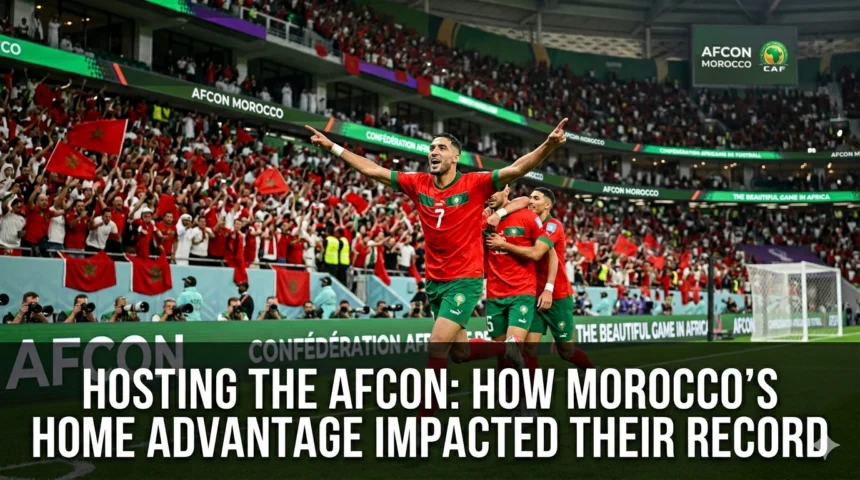
Morocco has a rich history with the AFCON and a deep love for the game. There has been much said and analysed about their overall tournament record, but one unique aspect of their journey is their experience as a host nation. Playing on home ground with a passionate fan base can be a double-edged sword, with huge benefits and significant pressure. Here, we look at Morocco’s history as AFCON hosts and how home advantage has impacted their performances in Africa’s top football competition.
Morocco’s tournament record as hosts offers an important context to their broader Africa Cup of Nations history. It allows analysis of psychological, tactical and environmental factors involved when the Atlas Lions play in front of their home crowd.
Morocco’s Brief History of Hosting AFCON
Despite its regular presence at the AFCON and strong football infrastructure, Morocco has officially hosted the AFCON only once. And that one time is the main data point for their hosting performance. But there’s another level of understanding in their relationship with the competition at home, where they were to host, but later pulled out.
The country’s appetite to host major football events is well documented, with numerous bids to host the FIFA World Cup and subsequent AFCON tournaments. These are indicative of a desire to prove themselves and capitalise on the potential benefits of home advantage for their national side.
1988 AFCON – Morocco’s only time as hosts
The only time the Atlas Lions have really played as hosts was during the 16th edition of the Africa Cup of Nations held in Morocco from 13 to 27 March 1988. The tournament, featuring eight teams, was a big moment for Moroccan football and a rare opportunity to compete for the continental crown on home soil.

Pre-Tournament Environment & Predictions
As AFCON 1988 approached, the mood in Morocco was electric. The country was hopeful that a team playing before passionate supporters would take the team to glory. The Moroccan team, led by Brazilian coach Jaime Valente, incorporated experienced players with new talent. With a solid base and the chance of a home game, the pressure and expectations were built for a memorable performance.
Most of the matches were to be played in Rabat and Casablanca, and the infrastructure was ready. The Moroccan public, famous for their passionate support, were prepared to build a daunting atmosphere for visiting teams and to inspire their own.
Morocco at the 1988 African Cup of Nations
Morocco was placed in Group A with Algeria, Zaire (now the DR Congo), and Côte d’Ivoire. They started with a goalless draw in Casablanca against Zaire, not a victory but a stay of execution. The second game against fellow North African rivals Algeria also ended 0-0, and with momentum draining away, they needed to win to go through.

The important group game was against Côte d’Ivoire. Mustapha El Haddaoui scored the winner for Morocco in a thrilling 1-0 victory. Their important victory put them at the top of Group A with 4 points, a semi-final spot, and a great record against regional opponents in the competition.
Morocco met Nigeria in the semi-finals in a tense encounter that was settled by Augustine Eguavoen’s 76th-minute goal that sent the Super Eagles through to the final and ended Morocco’s dream of winning at home. The Atlas Lions then lost the third-place playoff 3-4 on penalties to Algeria after a 1-1 draw, finishing fourth.
Fourth place was a respectable showing in a tough tournament, but it was not the prize the home fans desperately craved. The performance revealed the team’s resilience but also the immense pressure of hosting.
Role of Family Support in Player Morale and Performance
In 1988, the home advantage was evident in several ways. There was no doubt that the crowd’s roars fired up the Moroccan players. The familiar surroundings, the limited travel, and the immediate support of family and friends probably contributed to a sense of comfort and confidence. Many opponents pointed out the intimidating atmosphere created by Moroccan fans, which can positively or negatively influence the opposition’s performance and decision-making.
On the other hand, having strong home support puts a lot of pressure on the home team. National expectations can be crushing, leading to tentative play or blunders under pressure. Morocco was toughing it up in the group stage, but despite the crowd’s support, they couldn’t find a cutting edge against Nigeria in the semi-final, and pressure could have played a part. The emotions of playing big games in front of your home crowd will be hard on any coaching staff.
To conclude, the 1988 AFCON demonstrated that home support was a significant advantage, but it was no guarantee of success. The Atlas Lions performed well to reach the semi-finals. Still, they ultimately failed to turn their advantage into a triumph at the tournament, a major factor in their overall continental record.

The Aborted Host Role: AFCON 2015 and Beyond
Morocco was also to host the Africa Cup of Nations in 2015, after 1988. There had been much national investment in the preparations for this much-anticipated event, with hopes of lifting the trophy on home soil. Then came the health crisis of a global pandemic, unprecedented.
In 2014, the Ebola virus disease epidemic had reached alarming proportions in West Africa, and the Moroccan government requested a postponement of the tournament on public health grounds, fearing the spread of the virus inside their borders. The Confederation of African Football (CAF) had insisted the tournament should go ahead as planned.
Following a row, CAF took away Morocco’s right to host and suspended the national side from the 2015 edition of the tournament. This decision had a huge impact on Moroccan football, both with the lost opportunity to host the tournament and the failure to qualify. Equatorial Guinea replaced them at the last minute.
The withdrawal meant a whole generation of Moroccan players missed the special experience of playing a major continental tournament on home soil. Many were left to wonder what a home tournament could have done to that squad, whether it could have been a turning point in their quest for a second continental title, with the length of time since their 1976 victory.
Home Field Advantage Psychology in Football Tournaments
Home advantage is a well-known phenomenon in sports, and it is amplified in major tournaments such as the AFCON. This advantage is due to several factors:
- Crowd Support: A boisterous home crowd gives players a boost, puts opponents on edge and influences referee decisions, whether consciously or not. For Morocco, with its passionate fan base, this is a major plus.
- Knowledge of Environment: Being used to playing on the same pitches, in the same climate conditions, and not having to travel far and disrupt your routine is a huge advantage.
- Players are familiar with their routines, local food and environment.
- Less Travel Fatigue: Away teams endure long flights, time zone changes, and unfamiliar accommodations, while home-country players maintain their normal training schedules with little travel.
- Psychological Pressure for Opponents: The home team enjoys the crowd’s support and the psychological pressure on the opposing team to defeat the home side.
- Logistical Control: The host nation controls training facilities, match schedules, and accommodation options for teams, potentially giving a subtle advantage to their own side.
But to host is also to be under tremendous pressure, as Morocco found in 1988. National pride brings with it the expectation of winning, and that can bring anxiety, caution or underperformance under the spotlight. It’s a big challenge for any home nation and its coaching staff to harness the crowd’s positive energy and manage the pressure that comes with it.
Morocco’s Record as Hosts vs Other AFCON Hosts
It’s instructive to compare Morocco’s hosting record with that of other countries that have staged the tournament. Many countries have been able to take advantage of their home and achieve great success:
- Egypt: As the most successful AFCON nation, Egypt has won four titles on home soil (1959, 1986, 2006, 2019), demonstrating a strong ability to take advantage of home support.
- Ghana: Won twice as host in 1963 and 1978.
- Nigeria: Won home 1980.
- South Africa: Finalist, 1996; Winner, 1996.
- Cameroon: Won in 1972 as hosts.
These examples show that winning AFCON as a host is not easy, but it is possible. A fourth place in 1988 is respectable, but it does not put Morocco in the elite company of nations that have lifted the trophy on home soil. That suggests home advantage did give a competitive edge, but not enough to beat the tough competition and pressure cooker of the tournament. It fuels the questions about why Morocco has not won AFCON since 1976, when they seemed to have an advantage.
Morocco’s Future Hosting Aspirations and What That Could Mean
Morocco’s commitment to hosting big tournaments remains unchanged. The country has always invested in world-class stadiums, training facilities and infrastructure. Their successful joint bid to host the 2030 FIFA World Cup with Spain and Portugal is a testament to their capabilities and aspirations.
Morocco boasts state-of-the-art facilities and a passionate football culture and is a strong candidate for future AFCON hosting duties. If they hosted again, it would be a world away from 1988. “The current crop of Moroccan players, many of whom are playing at the highest levels of European football, are more used to high-pressure situations. The national team has also enjoyed a recent resurgence, reaching the semi-finals of the 2022 FIFA World Cup.
A future home AFCON could be the key to Morocco claiming a second continental title. An experienced and talented team, modern infrastructure, and a fan base second to none could be a potent formula for success. The lessons of 1988 and the unkept promise of 2015 would surely inform their approach, trying to exploit benefits and reduce pressures.
The road through AFCON qualifying campaigns always ends in the finals, and for Morocco, the dream of hosting and winning remains a strong motivation. It could be the ultimate test of their “Golden Generation’s” capacity to perform under the most intense national scrutiny.
Summary
The hosts, Morocco, offer an interesting insight into the nuances of home advantage in international football. They hosted in 1988, their only experience of doing so, and finished a respectable fourth, showing resilience and the power of home support but ultimately falling short of the ultimate prize. It is a huge missed opportunity of 2015 and highlights how hard and important it is to host a big tournament.
While home advantage has undeniable benefits—from enthusiastic crowd support to logistical comfort—it also comes with immense pressure and heightened expectations. It is a country with a rich football pedigree and high ambitions, and the dream of lifting the AFCON trophy on home soil remains. With the modern infrastructure and a talented squad, a future home tournament could well be the occasion for the Atlas Lions to finally add a second star to their crest, cementing a truly triumphant performance in their history.
FAQ Section
Q1: How many times has Morocco hosted the AFCON?
A1: Morocco has hosted the Africa Cup of Nations once before, in 1988.
Q2: How did Morocco perform as AFCON hosts?
Q2: Which country has hosted the AFCON the most? A2: Morocco hosted the AFCON once, in 1988, reaching the semi-finals and finishing fourth after losing the third-place playoff on penalties.
Q3: Why did Morocco withdraw from hosting the AFCON 2015?
A3: Morocco withdrew from the 2015 AFCON, citing concerns about the Ebola virus disease outbreak in West Africa, and requested that the tournament be moved, but CAF refused.
Q4. Does playing at home significantly improve a team’s chances at the AFCON?
Q4: Does playing at home help? A4: Yes, home advantage generally improves a team’s chances due to crowd support, familiarity with conditions, and less travel fatigue. But it also means immense pressure, and success is not guaranteed, as shown by several host countries.
Q5: How did Morocco fare in the 1988 AFCON as hosts?
Q5. How did Morocco do as hosts in 1988? A5. As hosts in 1988, Morocco topped their group and reached the semi-finals, where they lost to Nigeria, then finished fourth after a penalty shoot-out loss to Algeria in the third-place playoff.