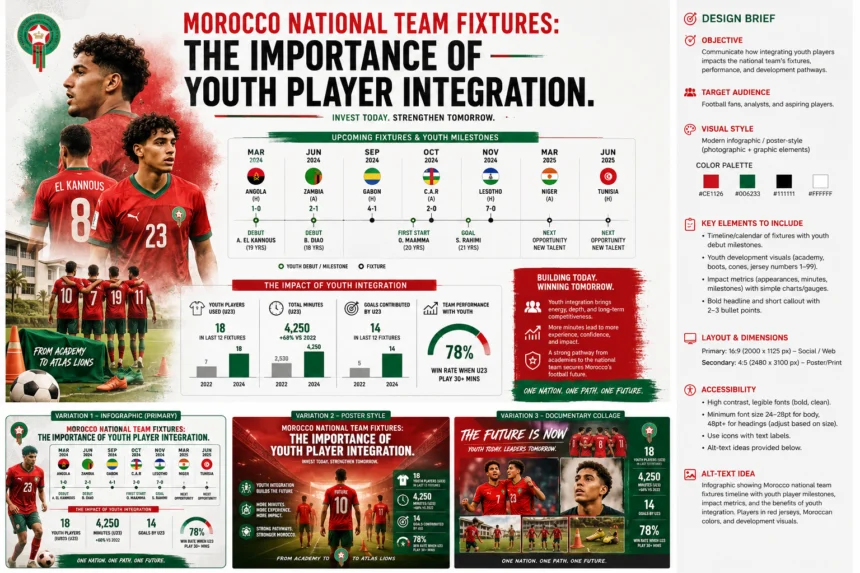
Morocco National Team Fixtures: Why Integrating Youth Players is Crucial
The planning of any national football team, both on and off the pitch, is inextricably linked to its success and future direction.
For the Atlas Lions, attention to Morocco national team fixtures extends far beyond scheduling. It represents a crucial part of their long-term vision, particularly regarding the integration of promising young talents. With recent successes and a historic World Cup run, developing youth players and smoothly transitioning them into the senior squad has become more important than ever.
Strategic management of Morocco’s fixtures can serve as a vital springboard for cultivating the next generation of footballing talent. This article explores the strategic role of different match types, reviews the current youth development landscape, and examines both the benefits and challenges of integrating young players into high-stakes international football.
Morocco National Team Fixtures Strategy
Each fixture on the calendar—whether a friendly, qualifier, or major tournament—presents a unique opportunity for the national team. These Morocco national team fixture calendar events serve multiple purposes beyond securing victories. They provide platforms for squad building, tactical experimentation, and most importantly, player development. The coaching staff must carefully plan how each match supports broader objectives, including youth integration.
For the complete team schedule, consult the Recent Matches and Upcoming Fixtures of the Morocco National Team.

Understanding the context of these matches proves essential when considering youth integration strategies.
Balancing Immediate Success with Long-Term Development
The primary challenge facing any national team coach is striking equilibrium between immediate results and long-term planning. While winning qualifiers and excelling in major tournaments like the AFCON or World Cup remains the priority, this cannot come at the expense of developing future talent. Morocco’s recent performances have raised expectations, intensifying the pressure to maintain standards while simultaneously evolving the squad.
For example, the Morocco National Team Fixtures 2024: Full Schedule & Match Dates combines competitive matches with less pressured games, each serving a distinct purpose in this delicate balance.

Why Youth Integration Matters for Morocco’s Future
Morocco’s success on the world stage demonstrates that blending seasoned players with spirited young talent yields remarkable results. Youth integration is not merely altruistic—it represents a strategic imperative for sustainable excellence. It ensures a continuous flow of talent, prevents stagnation, and injects fresh energy into the squad.
Succession Planning and Long-Term Sustainability
Football demands constant renewal, as players’ careers have finite lifespans. For Morocco to remain competitive for decades, a robust succession plan is essential. Young prospects must be identified, developed, and integrated into the team well before senior players begin declining or retiring. Without such foresight, the team risks sudden drops in quality and experience.
Early youth integration facilitates smooth transitions, allowing new talent to learn from experienced veterans. This continuity helps maintain the team’s identity and tactical philosophy over time.
Fresh Energy and Modern Football
Young players bring distinctive qualities that experienced players struggle to replicate: boundless energy, fearlessness, and hunger to prove themselves. This vitality can revitalize a squad, introduce new tactical dimensions, and challenge established norms. They also adapt more readily to modern coaching methods and evolving football trends—a significant advantage in international competitions.
Emerging talents possess pace, agility, and technical ability that can transform team dynamics in both attack and defence. Their inclusion in Morocco’s national team fixtures keeps the team unpredictable and formidable.
Building Tomorrow’s Squad
History’s most successful national teams have typically featured strong youth development programs that consistently channel talent into the senior setup. Introducing young players to the national team environment early provides invaluable international experience, helps them grasp what representing their country means, and develops them into future leaders. This foundation proves essential for creating squads capable of succeeding in major tournaments over the long term.
More Read

Current Status of Youth Development in Moroccan Football
Morocco has made significant progress in youth development over the past decade through concerted efforts to professionalize academies and establish clear pathways for emerging players. These initiatives are yielding tangible results, with increasing numbers of talented Moroccan players making their mark both domestically and in Europe’s leading leagues.
Academies and Domestic Leagues as Development Platforms
The Mohammed VI Football Academy and similar institutions have proven instrumental in transforming raw talent into refined professionals. These academies provide world-class facilities, expert coaching, and holistic player development encompassing technical skills, tactical understanding, physical conditioning, and mental resilience. Players like Azzedine Ounahi and Nayef Aguerd exemplify the system’s effectiveness.
Domestic leagues also play a vital role by providing competitive environments where young players develop against experienced professionals. Botola Pro matches frequently serve as pathways to national team call-ups.
Inspiration and Success Stories
The 2022 World Cup squad, which captivated the world with its historic semi-final run, included several players who had progressed through Morocco’s youth system or launched their careers young in Europe. Their success powerfully inspires the next generation, demonstrating that the path to international stardom remains achievable. This virtuous cycle attracts more young talent to the sport and motivates them to excel.
Youth Integration in Morocco’s Senior National Team
Integration represents a delicate process requiring careful management by the coaching staff. Rather than throwing young players into deep waters without preparation, the focus must be creating a structured environment where they grow and contribute effectively.
Friendlies and Lower-Pressure Tournaments
Friendlies and less high-stakes competitions provide ideal platforms for introducing young players to senior setups. Morocco National Team Friendlies: Upcoming Schedule and Opponents allow coaches to test emerging stars against international competition without qualification stakes or tournament elimination risks. These matches build confidence, help players acclimate to the national team’s tactical system, and foster chemistry with teammates.
Coaches can experiment with formations and provide young players substantial minutes to assess their handling of international football’s physical and mental demands. Such experiences prove invaluable for their development.
Strategic Youth Inclusion in Competitive Fixtures
Competitive matches such as Morocco’s World Cup Qualifiers: Path to the Next Tournament or AFCON 2025 Qualifiers: Morocco National Team Fixtures & Group Stage Analysis demand more strategic youth integration. Young players should be introduced carefully, perhaps from the bench initially or in matches where the team enjoys a clear advantage.
In these scenarios, experienced players remain crucial, offering on-pitch leadership and support. The goal is providing meaningful exposure without jeopardizing key results. Squads balancing youth and experience typically prove most flexible and durable.
Showcasing Talent in Major Tournaments
While major tournaments prioritize winning, they also offer unique opportunities for young players to announce themselves globally. Strong performances in AFCON or World Cup matches can launch careers to new heights, attracting elite club attention and solidifying national squad roles.
When ready, deploying young players in such high-pressure environments can yield significant returns. Their enthusiasm can energize entire squads, inspiring memorable performances. Post-Match Analysis: What Provided From Morocco’s Last Game examining these performances offers useful insights into youth integration success.
Morocco National Team Fixtures: Young Stars to Watch
Exciting prospects continue emerging through the Moroccan pipeline across various positions. While player names shift due to form and injury, the focus remains on those demonstrating outstanding technical skill, tactical awareness, and strong work ethic. The market constantly seeks midfielders capable of controlling play, energetic wingers with pace and dribbling ability, and defenders comfortable playing out from the back.
Coaches closely monitor these talents through club performances and national team training camps. Their progress in forthcoming Morocco national team fixtures will demonstrate the youth integration plan’s effectiveness. These players represent the future core of the Atlas Lions, making their development paramount.
Challenges and Solutions for Youth Integration
Despite clear advantages of youth integration, the process presents distinct hurdles requiring proactive management for successful long-term development.
Pressures Young Players Face
Young players entering senior national teams face considerable pressure from fans, media, and teammates alike. As they adapt to international football’s heightened intensity, inconsistency may emerge. They must also contend with playing for their country’s emotional demands while competing fiercely for limited squad positions.
Burnout poses another concern, particularly when players accumulate substantial minutes across both club and national team competitions. Managing these challenges requires careful attention.
Effective Integration Solutions
Several strategies address these challenges:
- Mentorship Programs: Pairing young players with seasoned veterans provides invaluable guidance and support as they navigate international football’s pressures and demands.
- Structured Pathways: Clear development plans outlining the steps required for progression from youth teams to the senior squad, including consistent coaching philosophies across all age groups.
- Gradual Integration: Introducing players gradually through friendlies and low-pressure games before slowly increasing involvement in competitive matches.
- Mental Health Support: Offering mental health and sports psychology services to help young players manage stress and maintain wellbeing.
- Intelligent Fixture Scheduling: Coordinating with clubs to control player workload, particularly for those competing in multiple competitions. This prevents injury and burnout.
National team staff must consistently monitor young player development, provide constructive feedback, and ensure youth investment generates tangible results. This proactive approach maximizes returns on talent development.
Impact of Youth Integration on Morocco’s Football Future
Successfully integrating young players signals a promising future for Moroccan football. This creates a national team that is not only competitive but resilient, adaptable, and continually evolving. With steady young talent flowing through the system, Morocco can build upon recent achievements and maintain high-performance levels for years.
Continuous player turnover enables the team to adapt to emerging tactical trends and remain competitive against the world’s best. It also strengthens fan connections as supporters witness local heroes climb through the ranks to represent their country. The excitement surrounding each new generation of talent ensures consistent enthusiasm for Morocco national team fixtures, whether a Morocco vs [Specific Opponent] Match Preview or crucial qualifier.
Final Thoughts
Strategic planning of Morocco’s national team fixtures extends beyond simply playing games. It represents a carefully orchestrated process of squad development and future-proofing. Youth player integration cannot be overstated in importance. Timely opportunities in friendlies, strategic call-ups in qualifiers, and nurturing growth through comprehensive development programs help Morocco establish a sustainable talent pipeline.
This commitment to youth development has sustained the Atlas Lions’ competitive edge and ignited a new wave of footballers and supporters, positioning Morocco as an African and world football powerhouse for years to come. The journey of these young talents through Morocco’s various national team fixtures will reflect the nation’s ambitions for footballing greatness.
FAQs
What is the primary objective of bringing in youth players in Morocco national team fixtures?
The primary objective is ensuring long-term sustainability and ongoing success. Morocco gradually exposes young talents to build a solid foundation for future competitions, prevent stagnation, and maintain a ready supply of skilled players to replace aging veterans.
How do friendlies contribute to youth player integration?
Friendlies offer younger players ideal opportunities to gain international experience, test their skills against overseas opposition, and learn the national team’s tactical system in low-pressure environments. They prove vital for building confidence and assessing readiness for more demanding Morocco national team fixtures.
What is the role of Moroccan football academies in this process?
Academies like the Mohammed VI Football Academy serve as key development institutions. They provide professional training, world-class infrastructure, and comprehensive development programs that refine raw talent from an early age, equipping players with the technical, tactical, and mental skills required for professional and international football.
What are the biggest challenges in introducing young players into the senior squad?
Major challenges include managing pressure and expectations on young players, helping them adapt to international football’s heightened intensity, and preventing burnout from simultaneous club and national team duties. Competition for places within a strong squad also presents challenges.
How can I track Morocco’s national team fixtures and youth player updates?
Check official football association websites, sports news outlets, and fan pages. For detailed schedules, consult resources like the Morocco National Team Fixture Calendar: Key Dates to Mark Down and articles on Where to Watch Morocco National Team Matches Live: TV & Streaming Guide.