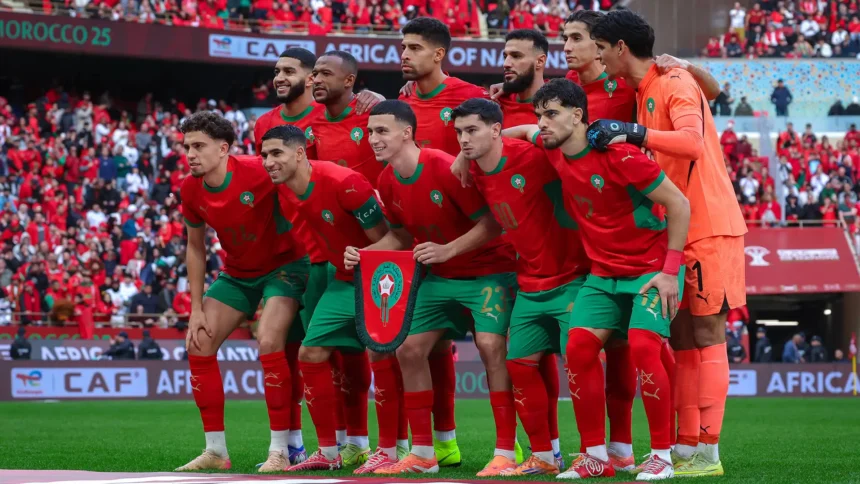
A team’s attacking prowess is defined by decisive moments in the penalty box. For Morocco, the forwards are central to these moments, carrying national expectations. This article examines the vital role of Morocco’s attacking players, highlighting key figures, their individual strengths, and their collective influence on the Atlas Lions’ strategy and achievements.
Morocco’s attacking squad features a blend of experienced goal-scorers and dynamic wingers, combining talent, experience, and youth. Their ability to convert chances and pressure defenses is crucial to team performance. Understanding these players is key to appreciating the squad’s dynamic nature.
The Pillars of Attack: Key Morocco National Team Forwards
Under coach Walid Regragui, Morocco is known for tactical discipline and attacking flair. The forwards are not only goal scorers but also initiate pressing and counterattacks. This section highlights the core players who represent the team’s attacking spirit.
Morocco’s attackers combine power, pace, and precision, enabling tactical flexibility. They adapt to both direct and possession-based styles, posing challenges for any defense. Their contributions are essential to the team’s tournament ambitions.
Central Strikers: The Goal-Getters for the Morocco National Team
Central strikers are key to any successful attack. Morocco has several strong options in this role, each offering unique skills and a proven goal-scoring record.
More Read

Youssef En-Nesyri: The Aerial Threat and Clinical Finisher
Youssef En-Nesyri is the national team’s most consistent central striker. His progression from Malaga and Leganes to Sevilla highlights his dedication and growth. En-Nesyri is known for his aerial strength, frequently scoring important headers.
En-Nesyri’s high work rate and pressing create space for teammates. His composure in crucial moments makes him indispensable. He played a pivotal role in Morocco’s 2022 World Cup run, with club performances matching his national team impact.
His physical presence enables effective hold-up play, involving wingers and midfielders. His intelligent movement positions him well for scoring, making him a strong focal point in attack.

Ayoub El Kaabi: The Poacher with a Golden Touch
Ayoub El Kaabi brings a different dimension to the central striker role. Renowned for his instincts and clinical finishing, he excels as a poacher. El Kaabi has proven his goal-scoring ability in the Moroccan Botola, Chinese Super League, and Greek Super League.
El Kaabi consistently converts half-chances with precise positioning and movement. Though less dominant in the air than En-Nesyri, his finishing makes him a constant threat. He offers tactical flexibility as an alternative or partner in a two-striker system.
His diverse experience has made him resilient and adaptable. El Kaabi is often called upon as a game-changer, whether starting or coming off the bench.
Tarik Tissoudali: The Versatile Attacker
Tarik Tissoudali adds versatility and work ethic to Morocco’s attack. He can play centrally or on either wing, making him a valuable asset. His career in Belgium highlights his goal-scoring, assisting, and defensive contributions.
Known for his powerful left foot and direct play, Tissoudali adds depth and tactical options. His combative style and determination often inspire teammates.
Tissoudali’s perseverance reflects the Atlas Lions’ fighting spirit. He consistently delivers strong performances, making him a valuable squad member.

Wing Forwards: Pace, Skill, and Creativity for the Atlas Lions
Modern football relies on dynamic wingers who stretch anddefences create chances. Morocco has several talented flank players capable of changing a game with individual skill.
Hakim Ziyech: The Wizard of the Right Wing
Hakim Ziyech is one of the squad’s most talented and influential players. Renowned for his left foot, precise crosses, set-piece delivery, and long-range shots, he primarily plays on the right wing. His time at Ajax and Chelsea established him as a world-class attacker.
Ziyech’s vision and passing unlock ,defences and his flair and tactical intelligence often dictate Morocco’s attacking tempo. His leadership, especially during the World Cup, highlights his value as both creator and motivator.
Despite club challenges, Ziyech remains committed to the national team, providing key assists and goals. He is the primary creative force from a wide range of areas.
Sofiane Boufal: The Dribbling Maestro
Sofiane Boufal, primarily a left winger, is known for his dribbling, close control, and ability to beat defenders. His stints at Southampton, Lille, and Al-Rayyan showcase his attacking flair.
Boufal draws defenders to create space or win free kicks. He excels at cutting inside and linking with the striker. His individual skill often provides needed creativity.
His World Cup performances, consistently challenging full-backs, confirmed his importance to the squad. His direct play and skill make him both a fan favourite and a difficult opponent.
Abde Ezzalzouli: The Electrifying Young Winger
Abde Ezzalzouli is a promising young winger for Morocco. Now at Real Betis after time with Barcelona and Osasuna, he is recognized for his pace, direct dribbling, and fearless play. His raw talent and ambition make him an exciting prospect.
He plays on either wing, bringing dynamism and fresh attacking options. His rapid development and ongoing improvement highlight Morocco’s commitment to integrating young talent into the senior squad.
With more experience, Abde is expected to become a key figure, adding energy and unpredictability to Morocco’s flanks.
Amine Adli: The Intelligent and Dynamic Attacker
Amine Adli, developed in France and now at Bayer Leverkusen, is a promising attacker. He is known for his intelligence, movement, and versatility, able to play as a winger, attacking midfielder, or secondary striker.
His technical skill and work rate make him valuable in attack and defence. Adli’s composure and link-up play are improving, as shown in Bundesliga and European matches. His inclusion reflects the positive impact of overseas players on the squad.
He provides coach Regragui with a dynamic option for goals and assists, and his tactical understanding is a key asset. Adli is expected to be a long-term part of Morocco’s attack.
Zakaria Aboukhlal: The Energetic and Direct Winger
Zakaria Aboukhlal adds energy and directness to Morocco’s attack. Primarily a winger, he is known for his pace, relentless running, and goal-scoring ability. His time at Toulouse highlights his contributions in goals and assists.
Aboukhlal contributes defensively by tracking back and maintaining team shape. His runs behind defences and direct style offer a different profile from Ziyech or Boufal, focusing on penetration and pace.
He played a key role during the World Cup, often coming off the bench to add energy and impact. Aboukhlal demonstrates the squad’s depth.
Versatile Attackers and Emerging Talents for the Morocco National Team
In addition to established players, Morocco benefits from versatile attackers and emerging talents. This depth keeps the team competitive and adaptable.
Anass Zaroury: The Explosive Winger
Anass Zaroury, primarily a left winger, adds pace and directness to Morocco’s attack. His performances with Burnley in the English Championship, including goals and assists, highlight his threat when running at defenders and shooting.
Zaroury’s energy and pressing fit Regragui’s tactics. He offers options for quick transitions and counter-attacks, and his recent emergence reflects Morocco’s ongoing talent development.
His inclusion increases versatility, enabling varied attacking combinations and strategies based on the opponent and match situation.
Ilias Akhomach: The Future Prospect
Ilias Akhomach, now at Villarreal after developing at Barcelona’s La Masia, is among Morocco’s top young talents. Primarily a right winger, he is known for his dribbling, close control, and passing vision.
His technical skill and intelligence make him a strong candidate for future senior call-ups. Akhomach embodies Morocco’s long-term vision for a steady pipeline of attacking talent.
As he gains experience in European football, Akhomach is expected to become an increasingly important creative force for Morocco.
Tactical Approaches and Forward Combinations for Morocco
Morocco’s attacking strength comes from both individual talent and integration into Regragui’s tactical system. His approach emphasises collective effort, with attackers contributing defensively and working together to create chances.
Regragui’s Attacking Philosophy
Coach Regragui builds on strong defensive foundations while giving attackers freedom in the final third. He encourages wingers to challenge defenders, strikers to hold up play and make smart runs, and all forwards to press high.
This approach lets Ziyech and Boufal use their creativity, while En-Nesyri benefits from service in the box. Quick transitions and exploiting space suit the strengths of Morocco’s forwards.
His tactics often feature a fluid front line with interchangeable positions, making marking difficult for opponents. This adaptability is key to Morocco’s success.
Formations and Flexibility
The team often uses formations like 4-3-3 or 4-2-3-1 to maximize winger impact and maintain a strong central striker.
In a 4-3-3, wingers provide width and directness, with the striker occupying defenders and midfielders supporting the attack. In a 4-2-3-1, an attacking midfielder supports the striker and links play.
Versatile players like Tissoudali and Adli allow Regragui to switch formations and adapt during matches, offering varied attacking threats. This flexibility is a major advantage.
Impact of Forwards on Team Success
The success of Morocco’s attack is closely tied to team performance. Their goal-scoring, chance creation, and ability to relieve pressure were vital in the 2022 World Cup, with En-Nesyri, Ziyech, and Boufal playing key roles.
Their defensive work, including pressing and tracking back, is crucial to Regragui’s system. As the first line of defence, they disrupt build-up play and force turnovers, strengthening the team’s overall structure.
A strong attack boosts squad confidence, inspiring defensive solidity and midfield creativity. The forwards are the spearhead of the Atlas Lions.
The Future of Morocco’s Attack: Young Forwards to Watch
Morocco’s attacking future is promising, with new talent emerging from European academies and clubs. The Federation emphasizes youth development and integration into the senior squad, ensuringa a steady talent pipeline.
Players such as Ilias Akhomach and Ibrahim Salah are showing strong potential at the cltalent pipelineung talents are known for technical skill, athleticism, and confidence. Their progress is closely monitored as they are introduced to international play.
Competition among forwards is intense, motivating players to perform at their best. This ensures that only the most deserving and in-form players represent Morocco, maintaining high attacking standards.
Challenges and Opportunities for Morocco National Team Forwards
Despite a strong talent pool, Morocco’s attackers face challenges such as maintaining consistency, managing injuries, and adapting to various defensive schemes.
Sustaining high performance amid a demanding schedule is challenging. Injuries can disrupt momentum and require tactical changes. Opponents analyze Morocco’s attack, so forwards must continually adapt and innovate.
These challenges also create growth opportunities. Young players can step up, while experienced forwards refine their skills. Major tournaments offer invaluable experience and a global platform.
The collective strength and camaraderie of Morocco’s attackers help them overcome adversity and pursue greater achievements.
Conclusion
Morocco’s forwards embody the team’s attacking ambition and flair. With En-Nesyri’s finishing, Ziyech and Boufal’s creativity, and the promise of Ezzalzouli and Adli, the squad boasts formidable attacking talent.
Their individual skill, combined with Regragui’s tactical leadership, has made Morocco one of Africa’s top attacking teams and a respected global opponent. These forwards are central to the team’s offensive strategy, consistently delivering memorable performances.
As Morocco progresses, the forwards’ performances will remain central to the team’s ambitions, driving success with each goal, assist, and decisive run. They are the spearhead of the squad.
FAQ: Morocco National Team Forwards
Q1: Who are the main central strikers for the Morocco national team?
A1: The main central strikers for the Morocco national team are typically Youssef En-Nesyri, known for his aerial ability and clinical finishing, and Ayoub El Kaabi, a natural poacher with excellent instincts in the box. Tarik Tissoudali also provides a versatile option in this role.
Q2: Which wingers are key players among the Morocco national team forwards?
A2: Key wingers include Hakim Ziyech, who operates primarily on the right with his creative passing and powerful left foot, and Sofiane Boufal, a dribbling maestro on the left wing. Other important wingers are Abde Ezzalzouli, Amine Adli, and Zakaria Aboukhlal, who all provide pace, skill, and dynamism.
Q3: How does Coach Walid Regragui utilise the Morocco national team forwards in his tactics?
A3: Coach Walid Regragui often employs formations like 4-3-3 or 4-2-3-1, which allow his wingers to provide width and directness, while a central striker leads the line. He emphasises a high work rate, defensive contribution from forwards, and quick transitions, empowering his attackers with freedom in the final third while demanding collective effort.
Q4: Are there any young, emerging talents among the Morocco national team forwards to watch out for?
A4: Yes, the Moroccan national team has several promising young forwards. Ilias Akhomach, a technically gifted winger from Villarreal, and Ibrahim Salah are among the exciting talents who are being integrated into the squad and are expected to play significant roles in the future, representing the Future Stars: Young Talents to Watch in the Morocco National Team Squad.
Q5: What is the overall impact of the Morocco national team forwards on the team’s success?
A5: The forwards are crucial to the Morocco national team’s success. Their ability to score goals, create chances, and contribute to the team’s high press and defensive efforts is fundamental. Their performances directly influence results, provide confidence to the entire squad, and are vital for challenging in major tournaments, as seen in their historic 2022 World Cup run.