Ranking the Coaches: Who Led Morocco to Their Best World Cup Performance?
Morocco’s journey on the global football stage has been a captivating narrative of passion, resilience, and tactical evolution. Over the decades, the Atlas Lions have graced the FIFA World Cup multiple times, each campaign bringing its own set of challenges and triumphs. Central to every Morocco’s FIFA World Cup Campaigns and Performance has been the head coach, whose vision, leadership, and tactical acumen have profoundly influenced the team’s fortunes. When we talk about the pinnacle of Morocco’s World Cup performance evolution, one name stands out prominently, but it’s crucial to acknowledge the groundwork laid by predecessors. This article delves into the coaches who have steered Morocco through their World Cup adventures, culminating in their most historic run to date and defining the benchmark for future success.
The Pinnacle: Walid Regragui (Qatar 2022)
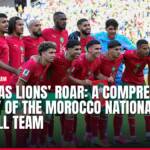
The 2022 FIFA World Cup in Qatar marked an unprecedented chapter in Moroccan football history. Under the astute leadership of head coach Walid Regragui, Morocco achieved what no African or Arab nation had before: reaching the semi-finals of the global tournament. This monumental achievement unequivocally represents the finest moment in the nation’s World Cup history.
A Historic Semi-Final Run
Walid Regragui’s appointment just three months before the tournament was met with both hope and skepticism. A former Moroccan international defender, he had enjoyed a successful club coaching career, notably winning the CAF Champions League with Wydad AC. He quickly instilled a strong sense of belief, discipline, and unity within the squad, famously coining the phrase “Dima Maghrib” (Always Morocco) that became the team’s rallying cry.
His tactical approach was characterized by formidable defensive organization, a disciplined midfield, and swift counter-attacks. He prioritized team cohesion and leveraged the individual brilliance of players like Achraf Hakimi, Hakim Ziyech, Sofyan Amrabat, and Yassine Bounou. The Atlas Lions navigated a challenging group, topping it after drawing with Croatia and securing stunning victories against Belgium and Canada. These performances set the tone for what was to come.
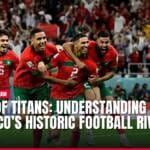
In the knockout stages, Morocco continued their fairy-tale run. They defeated Spain in a dramatic penalty shootout in the Round of 16, followed by a historic 1-0 victory over Portugal in the quarter-finals. Each match showcased their tactical discipline, unwavering spirit, and Regragui’s strategic brilliance. The dream run eventually ended with a narrow 2-0 defeat to defending champions France in the semi-finals, but not before etching their names into the annals of football history. The Atlas Lions’ Historic Run: Morocco’s 2022 World Cup Performance Analysis cemented Regragui’s legacy as the coach who led Morocco to their finest hour.

Building the Foundation: Coaches of Earlier Campaigns
While Regragui’s achievement stands unparalleled, it was built upon the foundations established by coaches who, in their respective eras, also advanced the boundaries of Moroccan football. Each campaign, meticulously detailed in Morocco’s Complete FIFA World Cup History: Every Campaign Explored, contributed to the nation’s footballing identity.
José Faria (Mexico 1986): Breaking New Ground
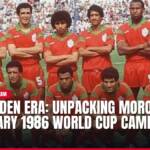
The 1986 FIFA World Cup in Mexico remains a landmark in Moroccan football, largely due to the pioneering efforts of Brazilian coach José Faria. He took charge of the national team in 1983 and immediately set about professionalizing the squad. His tactical philosophy emphasized defensive solidity and quick transitions, often utilizing a robust midfield to stifle opponents.
Under Faria, Morocco made history by becoming the first African nation to advance past the group stage of a World Cup. They topped a formidable group that included England, Poland, and Portugal, drawing with the former two and famously beating Portugal 3-1. Their journey concluded with a narrow 1-0 defeat to eventual finalists West Germany in the Round of 16. Faria’s leadership and innovative approach set a new standard for African representation and inspired a generation.

Henri Michel (France 1998): A Gallant Campaign
French coach Henri Michel led Morocco to the 1998 FIFA World Cup in France, marking their second consecutive appearance. Michel, a former French international and experienced coach, inherited a talented squad featuring players like Mustapha Hadji, Noureddine Naybet, and Salaheddine Bassir, many of whom would become Moroccan World Cup Legends.
Their 1998 performance earned widespread praise despite elimination at the group stage. Morocco drew with Norway and delivered a stunning 3-0 victory over Scotland. However, a controversial 2-2 draw between Norway and Brazil in their final group game meant the Atlas Lions, despite finishing with 4 points and a positive goal difference, narrowly missed out on the knockout rounds. Michel’s team played with flair and determination, leaving a lasting impression and demonstrating a high caliber of football on the global stage.
Hervé Renard (Russia 2018): The Comeback
After a 20-year absence from the World Cup finals, Morocco qualified for the 2018 tournament in Russia under the charismatic French coach Hervé Renard. Known for his successes with Zambia and Ivory Coast in the Africa Cup of Nations, Renard brought a winning mentality and strong tactical discipline to the Atlas Lions. He successfully integrated European-based players into the squad, creating a cohesive unit.
Morocco faced a notoriously difficult group alongside Spain, Portugal, and Iran. Despite losing their opening match to Iran, they put up a valiant fight against Portugal, losing 1-0, and played out an enthralling 2-2 draw with Spain, showcasing their competitive spirit. Although they exited in the group stage, Renard’s leadership proved instrumental in bringing Morocco back to the global stage and building a foundation for future success, with many players from this campaign shining again in 2022. This tournament served as a crucial stepping stone toward greater achievements.
Hassan Amcharrat (Mexico 1970): The Pioneer
Hassan Amcharrat deserves recognition as the coach who led Morocco to their very first FIFA World Cup appearance in Mexico in 1970. As the first Moroccan manager to guide the national team to the finals, Amcharrat oversaw a campaign that, while ending in group stage elimination, was significant for its pioneering spirit. Morocco faced formidable opponents in West Germany, Peru, and Bulgaria. Despite losing all three matches, they scored two goals and gained invaluable experience on football’s biggest stage. Amcharrat’s role was foundational, setting the stage for all future endeavors. Morocco’s Debut and Early World Cup Campaigns marked the beginning of the nation’s World Cup journey.
Comparing Coaching Styles and Their Impact
The coaches who have guided Morocco through their World Cup campaigns each brought distinct philosophies and leadership approaches. Analyzing these styles provides insight into how the team’s performance has evolved over the years.

Tactical Approaches: Four Distinct Philosophies
* Walid Regragui (2022): His strength lay in creating an unbreakable collective spirit and a highly organized defensive block. His emphasis on unity fostered immense team cohesion. Tactically, he employed a compact 4-3-3/4-1-4-1 formation, focusing on absorbing pressure and launching rapid counter-attacks, effectively utilizing winger pace and defensive solidity. His match adaptability proved key to success. This represented a masterclass in modern tournament football.
* José Faria (1986): A visionary who instilled professionalism in the squad. His tactics were pragmatic, focusing on strong defense and opportunistic attacking. He built a physically robust team capable of competing with European powerhouses, prioritizing discipline and structure. He developed a strong core of local players to a high standard.
* Henri Michel (1998): Michel managed a highly skilled and technically gifted generation of Moroccan players. His approach allowed greater attacking freedom, aiming to combine defensive solidity with creative flair. The team under his guidance was known for beautiful football, reflecting individual talents at his disposal.
* Hervé Renard (2018): Renard brought charisma and a strong winning mentality. His tactical setup typically featured a 4-3-3, emphasizing physical conditioning and aggressive pressing. He excelled at motivating his players and building resilient squads capable of competing against top opposition, even in difficult groups.
Each coach adapted to the talent available and prevailing footballing trends of their era, leaving an indelible mark on the national team’s trajectory.
Evolution of Moroccan Football Under Different Leaders
The progression of Morocco’s World Cup campaigns reflects the broader evolution of Moroccan football itself. From the amateur setup of the 1970s to increasingly professionalized and internationally integrated squads today, coaches have played a vital role in this transformation. Faria’s emphasis on professionalism in the 1980s was revolutionary. Michel’s era showcased a burgeoning talent pool. Renard’s tenure highlighted the importance of tactical discipline and collective strength for returning to the world stage.
Regragui’s success in 2022 represents a culmination of these efforts, demonstrating how a coach can harness both local talent and diaspora players, blend tactical pragmatism with spirited play, and create a team that exceeds expectations. The impact of these coaching tenures extends Beyond the Pitch: How World Cup Success Transformed Moroccan Football, inspiring national pride and fostering development at all levels of the game.
The Legacy of Leadership
The coaches discussed here are more than strategists; they are figures who have shaped the national identity of Moroccan football. Their contributions extend far beyond individual victories or defeats, influencing the long-term trajectory of the sport in the country.
Walid Regragui, with his historic 2022 campaign, not only delivered the nation’s best performance but also instilled a new level of confidence and ambition. His success demonstrated that with proper leadership, dedication, and tactical acumen, an African team can genuinely compete at the highest level. This achievement will undoubtedly inspire future generations of Moroccan players and coaches, encouraging them to aim ever higher.
The legacies of Faria, Michel, and Renard are equally significant. Faria laid the foundation for African participation in knockout stages. Michel showcased the aesthetic appeal of Moroccan football. Renard restored belief after a long absence. Together, these coaches have contributed to a rich tapestry of Morocco’s FIFA World Cup Campaigns and Performance, each chapter building toward the glorious narrative witnessed in Qatar. Their leadership has not only honed the skills of Moroccan World Cup Legends but also fostered a deep-seated passion for football that unites the nation.
Conclusion
In the annals of Moroccan football history, the question of who led the Atlas Lions to their finest World Cup performance has a clear answer: Walid Regragui. His remarkable leadership in 2022, guiding Morocco to an unprecedented semi-final finish, stands as the zenith of the nation’s tournament history. However, this achievement was built upon foundations laid by a distinguished lineage of dedicated coaches. From Hassan Amcharrat’s pioneering debut in 1970 to José Faria’s groundbreaking knockout appearance in 1986, Henri Michel’s aesthetically pleasing team in 1998, and Hervé Renard’s return to the global stage in 2018, each coach contributed vital chapters to Morocco’s World Cup narrative. Their diverse tactical approaches and profound impacts have collectively shaped the nation’s tournament evolution, culminating in the unforgettable spectacle of Qatar 2022. The blend of tactical acumen, unwavering spirit, and national pride orchestrated by Regragui has set a new benchmark, inspiring not just Morocco but the entire continent.
FAQ
Who is considered the best coach for Morocco in the World Cup?
Walid Regragui is widely considered the best coach for Morocco in the World Cup. He led the Atlas Lions to their best-ever performance, reaching the semi-finals of the 2022 FIFA World Cup in Qatar, an unprecedented achievement for an African or Arab nation.
Which coach led Morocco to their first World Cup knockout stage?
José Faria, the Brazilian coach, led Morocco to their first World Cup knockout stage appearance in 1986. Under his guidance, Morocco became the first African team to advance past the group stage, topping a group that included England, Poland, and Portugal.
How many World Cups has Morocco participated in, and who were their coaches?
Morocco has participated in six FIFA World Cups: 1970 (Hassan Amcharrat), 1986 (José Faria), 1994 (Abdellah Blinda), 1998 (Henri Michel), 2018 (Hervé Renard), and 2022 (Walid Regragui).
What was Walid Regragui’s strategy for the 2022 World Cup?
Walid Regragui’s strategy for the 2022 World Cup focused on strong defensive organization, tactical discipline, and quick counter-attacks. He prioritized team unity and belief, effectively utilizing a compact 4-3-3/4-1-4-1 formation to absorb pressure and exploit opponents on the break. His approach was highly adaptable and resilient.
How did previous coaches contribute to Morocco’s overall World Cup performance?
Previous coaches laid crucial groundwork for Morocco’s World Cup evolution. Hassan Amcharrat pioneered the nation’s debut, José Faria set the benchmark by reaching the knockout stage, Henri Michel showcased a talented generation in 1998, and Hervé Renard ended a 20-year drought by qualifying in 2018. Each coach contributed to the national team’s development, tactical understanding, and global standing, ultimately paving the way for the success witnessed in 2022.