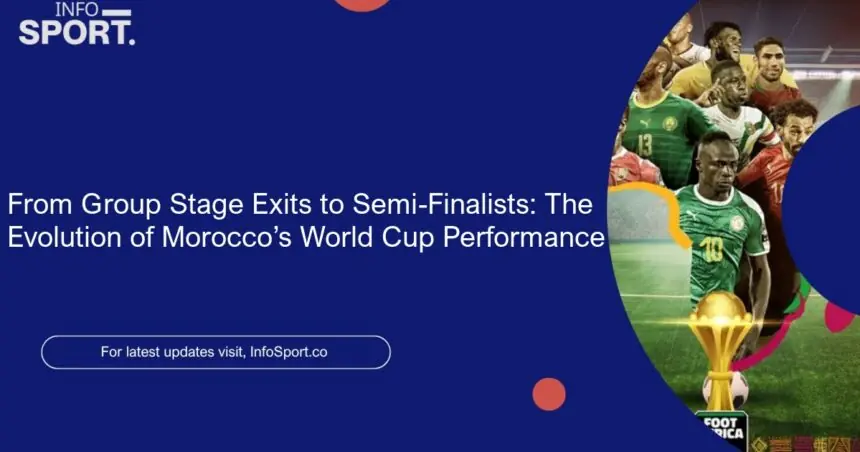
The journey of the Moroccan national football team in the FIFA World Cup is a compelling narrative of perseverance, growth, and ultimately, historic achievement. From their early appearances often ending in the group stage, Morocco has evolved into a genuine global contender, culminating in a groundbreaking semi-final berth that captured hearts worldwide. This article traces the transformative path of the Atlas Lions, from nascent participants to their place on football’s grandest stage. For a comprehensive overview, explore Morocco’s FIFA World Cup Campaigns and Performance.
The Dawn of Participation: Morocco’s Early World Cup Ventures
Morocco’s initial forays into the FIFA World Cup were marked by invaluable learning experiences. Their debut in 1970, followed by subsequent qualifications in 1986, 1994, and 1998, laid crucial groundwork for future generations. Though these campaigns often ended in the group stage, they were instrumental in building international experience and showcasing Moroccan talent on a global platform. To understand the very beginning of their journey, delve into The Dawn of an Era: Morocco’s Debut and Early World Cup Campaigns.
Mexico 1970: A Pioneering Debut
Morocco made history as the first African and Arab nation to qualify for the World Cup through a qualification process (Egypt played in 1934 by invitation). Their appearance in Mexico 1970 was a significant milestone. Placed alongside West Germany, Peru, and Bulgaria, the Atlas Lions faced formidable opposition. Despite losing two matches and drawing one, they demonstrated flashes of brilliance, particularly against West Germany, where they took an early lead. This tournament served as a baptism by fire, offering crucial insights into the demands of elite international football.
Mexico 1986: Breaking Barriers and Making History
The 1986 World Cup stands as a pivotal moment in Morocco’s evolution. Under Brazilian coach José Faria, they achieved an unprecedented feat for an African nation: topping their group. In a pool featuring England, Portugal, and Poland, the Atlas Lions secured draws against England and Poland, then delivered a stunning 3-1 victory over Portugal. This propelled them into the Round of 16, where they faced West Germany. Despite a valiant effort, they narrowly lost 1-0 to a late Lothar Matthäus free-kick. This campaign solidified Morocco’s reputation as a competitive force and remains one of Morocco’s Greatest World Cup Moments.
The 1990s: Moments of Promise (USA 1994, France 1998)
The 1990s saw Morocco qualify for two consecutive World Cups, showcasing a period of consistent competitiveness. Both campaigns, however, ended in the group stage, often due to narrow margins and challenging draws.
USA 1994: A Tough Learning Curve
In 1994, Morocco was drawn into a demanding group with Belgium, Saudi Arabia, and the Netherlands. Despite spirited performances, they suffered three narrow defeats, highlighting the fine line between success and exit at this level. The experience proved vital for squad development and exposure to different footballing styles.
France 1998: The Agony of Near Qualification
The 1998 tournament in France was arguably one of Morocco’s most heartbreaking campaigns. Grouped with Brazil, Norway, and Scotland, they played some exceptional football. They drew with Norway, lost to a strong Brazilian side, and emphatically beat Scotland 3-0. However, a controversial draw between Norway and Brazil in their final match meant Morocco missed the knockout stages by a single point. This tournament showcased a highly talented squad, featuring players who would become Moroccan World Cup Legends: Top Players Who Shined on the Global Stage.
A Long Hiatus and The Return to the Global Stage
Following the 1998 campaign, Morocco endured a two-decade absence from the World Cup, marked by near misses in qualification and fluctuating national team performance. Their return in 2018 was met with immense anticipation and national pride. For a detailed look at every campaign, refer to Morocco’s Complete FIFA World Cup History: Every Campaign Explored.

Russia 2018: A Resilient Return
Morocco’s qualification for the 2018 World Cup was a testament to their resilience and renewed focus. Drawn into a challenging group with Spain, Portugal, and Iran, the Atlas Lions demonstrated impressive tactical discipline and fighting spirit under coach Hervé Renard. They suffered a narrow 1-0 defeat to Iran and a controversial 1-0 loss to Portugal. Against Spain, one of the tournament favorites, they produced a thrilling 2-2 draw, showcasing their ability to compete with the world’s elite. Despite another group stage exit, their performances hinted at a brighter future and growing maturity, as detailed in Morocco’s World Cup Approaches.
The Zenith: Qatar 2022 and the Semi-Final Breakthrough
The 2022 FIFA World Cup in Qatar marked the pinnacle of Morocco’s footballing journey. This campaign transcended all previous achievements as the Atlas Lions not only qualified from their group but embarked on a historic run to the semi-finals, becoming the first African and Arab nation to do so. This extraordinary performance captivated the world and etched Morocco into footballing history.
Building the Foundation: Coaching and Team Spirit
The appointment of Walid Regragui just months before the tournament proved decisive. A former Moroccan international, Regragui instilled a strong sense of unity, tactical discipline, and unwavering belief throughout his squad. His philosophy emphasized defensive solidity, quick transitions, and harnessing individual brilliance from players competing in top European clubs. The team’s cohesion, often described as a family, became a defining characteristic of their success.
Group Stage Dominance: Topping the Group of Death
Morocco was drawn into a challenging Group F alongside 2018 finalists Croatia, second-ranked Belgium, and Canada. Defying expectations, they emerged as group winners:
- Morocco 0-0 Croatia: A resolute defensive display earned them a valuable point against the eventual semi-finalists.
- Belgium 0-2 Morocco: A stunning upset victory, showcasing tactical prowess and clinical finishing.
- Canada 1-2 Morocco: A professional performance secured their place atop the group, confirming progression to the knockout stages.
Knockout Stage Heroics: Defying the Odds
The Atlas Lions continued their fairytale run in the knockout stages, dismantling European giants with disciplined performances and moments of individual brilliance.
- Round of 16: Morocco 0-0 Spain (3-0 on penalties): A monumental victory where Morocco’s defensive organization stifled Spain’s intricate passing game. Goalkeeper Yassine Bounou emerged as the hero, saving two spot-kicks in the penalty shootout.
- Quarter-Final: Morocco 1-0 Portugal: Another historic upset. Youssef En-Nesyri’s towering header secured a famous win against a star-studded Portugal side, propelling them into the semi-finals.
Semi-Final and Third-Place Play-off
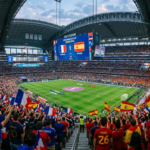
Morocco’s incredible journey eventually met its end in the semi-finals against defending champions France, losing 2-0 after a valiant effort. They then faced Croatia in the third-place play-off, losing 2-1 but departing the tournament with heads held high, having secured fourth place globally. This entire campaign is meticulously analyzed in The Atlas Lions’ Historic Run: Morocco’s 2022 World Cup Performance Analysis.
Factors Contributing to Morocco’s World Cup Evolution
The remarkable ascent of Moroccan football is not accidental but rather the result of several interconnected factors that have matured over decades.
Investment in Youth Development and Infrastructure
A significant catalyst has been strategic investment in youth development. The Mohammed VI Football Academy, inaugurated in 2009, stands as a prime example. This state-of-the-art facility has been instrumental in identifying and nurturing young talent, providing top-tier coaching, education, and exposure. Many key players in the 2022 squad, including Azzedine Ounahi and Nayef Aguerd, are academy products. This long-term vision has created a sustainable pipeline of skilled players.
Harnessing Diaspora Talent
Morocco has successfully integrated players from its vast diaspora, particularly those raised and trained in European leagues. These players bring experience from highly competitive environments, combining European tactical discipline with Moroccan passion. The 2022 squad exemplified this blend, with key figures like Hakim Ziyech, Achraf Hakimi, Noussair Mazraoui, and Sofyan Amrabat all boasting significant European club experience. This combination of domestic and diaspora talent creates a formidable and versatile squad.
Evolving Coaching Strategies and Tactical Acumen
Moroccan coaching approaches have evolved significantly over time. From the defensive solidity of the 1986 team to the more dynamic and adaptable strategies of 2022, there’s been clear progression. Regragui’s pragmatic approach in Qatar, balancing defensive resilience with opportunistic attacking, showcased a mature understanding of tournament football. This adaptability and strategic depth are key components of their improved performance, as explored in Tactical Masterclasses and Coaching Strategies: Morocco’s World Cup Approaches.
Unwavering Team Spirit and National Identity
The “Atlas Lions” moniker is more than a nickname; it embodies fierce national pride and collective spirit. The 2022 team displayed an extraordinary bond, fighting for each other and their nation. The visible support from families in the stands, passionate fan engagement, and deep connection to heritage fueled their performances. This intangible factor of unity and collective belief proved a powerful weapon on the global stage.
Looking Ahead: The Future of Moroccan Football
The historic run in Qatar 2022 has irrevocably altered Moroccan football’s landscape. This achievement has inspired a new generation of players and fans, elevating expectations and setting a new benchmark for success. The impact extends far beyond the pitch—explore Beyond the Pitch: How World Cup Success Transformed Moroccan Football.
Sustaining Momentum and Continued Development
The Royal Moroccan Football Federation (FRMF) now faces the challenge of sustaining this momentum. Continued investment in youth academies, coaching education, and domestic league development will be crucial. The experience gained by the 2022 squad, many of whom remain in their prime, provides a strong foundation for future campaigns. The world now views Morocco not merely as a participant, but as a genuine contender.
Hosting Ambitions and Global Recognition
Morocco’s successful bid to co-host the 2030 FIFA World Cup, alongside Spain and Portugal, is a direct consequence of their rising profile and demonstrated capability. This unprecedented opportunity will enable further infrastructure development, inspire broader national participation, and cement their place as a major force in global football. Statistical analysis underscores this growth; for detailed insights, see Morocco by the Numbers: A Statistical Breakdown of Their World Cup Performances.
Conclusion
Morocco’s World Cup evolution is a testament to resilience, strategic planning, and the power of collective belief. From pioneering efforts in 1970 and the groundbreaking group stage victory in 1986, through periods of near misses and a lengthy absence, to the historic semi-final berth in 2022, their journey reflects continuous growth. The Atlas Lions have rewritten their own history while inspiring an entire continent and region. Their transformation from group stage exits to semi-finalists is a powerful narrative of ambition realized, setting a new standard for future generations and securing their legacy in the annals of World Cup history. For a comprehensive look at their entire journey, explore Morocco’s FIFA World Cup Campaigns and Performance.
Frequently Asked Questions (FAQ)
What is the greatest achievement in Morocco’s World Cup history?
Morocco’s greatest achievement is reaching the semi-finals of the 2022 FIFA World Cup in Qatar, making them the first African and Arab nation to reach this stage.
How many times has Morocco qualified for the FIFA World Cup?
As of the 2022 tournament, Morocco has qualified for the FIFA World Cup six times: 1970, 1986, 1994, 1998, 2018, and 2022.
Who was the coach during Morocco’s historic 2022 World Cup run?
Walid Regragui served as head coach during Morocco’s historic semi-final run at the 2022 FIFA World Cup. He was appointed just months before the tournament.
Which teams did Morocco defeat in the knockout stages of the 2022 World Cup?
In the knockout stages, Morocco defeated Spain in the Round of 16 (on penalties after a 0-0 draw) and Portugal in the quarter-finals (1-0).
What factors contributed to Morocco’s improved performance in recent World Cups?
Several factors drove Morocco’s improved World Cup performance, including significant investment in youth development and infrastructure through the Mohammed VI Football Academy, effective integration of diaspora talent, evolving tactical strategies and coaching expertise, and a strong sense of team spirit and national identity.