


Morocco’s Greatest World Cup Moments: A Journey Through History
Morocco’s FIFA World Cup journey is a tapestry woven with threads of passion, resilience, and groundbreaking achievements. From their debut in 1970 to their historic semi-final run in 2022, the Atlas Lions have consistently defied expectations and delivered unforgettable performances on football’s greatest stage. These instances have not only etched their name into football folklore but have also inspired a continent and united a nation. This article explores the most significant upsets, milestones, and dramatic matches that define Morocco’s rich World Cup legacy.
For a comprehensive overview of their complete participation, explore Morocco’s FIFA World Cup Campaigns and Performance.
Early Triumphs and Trailblazing Efforts
1970: Mexico’s Debut and First Goal
Morocco’s first appearance on the global stage came at the 1970 FIFA World Cup in Mexico, marking only the second time an African nation had qualified for the tournament. Drawn into a formidable group alongside West Germany, Peru, and Bulgaria, the Atlas Lions showcased glimpses of their potential.
In their opening match against West Germany, a footballing powerhouse, Morocco took a surprising lead through Houmane Jarir. This goal was historic, representing Morocco’s first-ever World Cup goal and a significant moment for African football. Though they eventually succumbed to West Germany and exited in the group stage, their debut laid the foundation for future generations. Learn more about their initial steps in The Dawn of an Era: Morocco’s Debut and Early World Cup Campaigns.
1986: The Group Stage Conquerors
The 1986 World Cup, also held in Mexico, delivered what many consider Morocco’s first truly iconic achievement. Under coach Mehdi Faria, the Atlas Lions were placed in a challenging Group F alongside England, Poland, and Portugal.
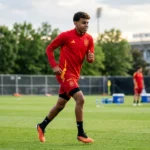
Against all odds, Morocco played goalless draws against both Poland and England, showcasing disciplined defense and tactical prowess. Their final group match against Portugal, a team widely favored to advance, brought a stunning 3-1 victory, with goals from Abderrazak Khairi (twice) and Abdelkrim Merry “Krimau.” This historic win propelled them to the top of Group F, making them the first African nation ever to reach the knockout stages of the FIFA World Cup.
Their journey ended in the Round of 16 with a narrow 1-0 defeat to eventual finalists West Germany, a match where they held their own against one of the world’s best teams. The 1986 squad, featuring legends like Badou Zaki, Mohammed Timoumi, and Aziz Bouderbala, set a new benchmark for African football and established a legacy of courage and skill.
Near Misses and Resilient Performances
1994: A Campaign of What-Ifs
After their 1986 heroics, Morocco returned to the World Cup in the USA in 1994. Despite failing to advance from a tough group that included Belgium, Saudi Arabia, and the Netherlands, their performances were marked by resilience and misfortune. Each match was closely contested, with narrow defeats suggesting a team capable of more. Though results didn’t favor them, the squad demonstrated spirit and determination, laying groundwork for future attempts.
More Read

1998: The Agony of the Last Match
The 1998 World Cup in France brought unforgettable drama to Morocco’s tournament experience, though with a heartbreaking conclusion. The Atlas Lions were drawn into Group A with Brazil, Norway, and Scotland, featuring stars like Mustapha Hadji and Salaheddine Bassir.
They suffered a 3-0 defeat to a star-studded Brazil but bounced back with an impressive 2-2 draw against Norway, a match they largely dominated. Their final group game against Scotland was commanding, resulting in a resounding 3-0 victory, with goals from Bassir (twice) and Hadda. This positioned Morocco strongly for knockout stage qualification.
However, fate delivered a cruel blow. For Morocco to advance, Brazil needed to beat Norway in the simultaneous group match. In a shocking turn of events, Norway secured a late 2-1 victory over Brazil courtesy of a controversial penalty. This result snatched qualification away at the last moment, leaving players and fans devastated. It remains one of football’s most agonizing near-misses, highlighting the fine margins that often define tournament football.
The Resurgence and the Road to Qatar
2018: Return to the Global Stage
After a 20-year absence, Morocco made a triumphant return to the FIFA World Cup in Russia. The excitement was palpable, though they were placed in an incredibly challenging group alongside Portugal, Spain, and Iran. Despite this daunting task, the Atlas Lions, under coach Hervé Renard, showed immense courage and tactical discipline. For insights into their strategic approaches, see Tactical Masterclasses and Coaching Strategies: Morocco’s World Cup Approaches.
Their opening match against Iran resulted in a frustrating 1-0 defeat due to a late own goal. They produced a spirited performance against Portugal, narrowly losing 1-0 to a Cristiano Ronaldo header. The final group stage encounter against Spain, one of the tournament favorites, was thrilling. Morocco twice took the lead through Khalid Boutaïb and Youssef En-Nesyri, only for Spain to equalize late, ending in a 2-2 draw. While they finished bottom of the group, their competitive spirit and ability to challenge top-tier teams offered hope for the future.
The Unforgettable 2022 World Cup Campaign
Group Stage Dominance: Belgium and Canada Upsets
The 2022 FIFA World Cup in Qatar delivered an unprecedented series of moments that captivated the world. Drawn into Group F with 2018 finalists Croatia, FIFA’s then-second-ranked team Belgium, and Canada, expectations for Morocco were modest.
More Read

They started with a resolute 0-0 draw against Croatia, demonstrating defensive solidity. The match against Belgium, however, was where the magic truly began. In a stunning upset, Morocco secured a historic 2-0 victory with goals from Romain Saïss and Zakaria Aboukhlal, sending shockwaves through the tournament. This victory boosted confidence and set the tone for their incredible run.
Topping the group required one more strong performance against Canada. Morocco delivered, winning 2-1 with goals from Hakim Ziyech and Youssef En-Nesyri. This result saw them finish first in Group F, a remarkable achievement that propelled them into the knockout stages as group winners. A detailed analysis of this run can be found in The Atlas Lions’ Historic Run: Morocco’s 2022 World Cup Performance Analysis.
Knockout Stage Heroics: Spain and Portugal
The Round of 16 pitted Morocco against European giants Spain, known for their intricate tiki-taka style. The match was a tense, tactical battle, with Morocco’s disciplined defense frustrating Spain’s relentless attacks. After 120 minutes of goalless football, the contest went to a penalty shootout. Goalkeeper Yassine Bounou emerged as the hero, saving two Spanish penalties, while Achraf Hakimi coolly converted the decisive spot-kick with a Panenka. Morocco won 3-0 on penalties, advancing to the quarter-finals for the first time in their history.
The quarter-finals saw them face Portugal, fresh off a dominant Round of 16 victory. Morocco defied the odds once again. In the 42nd minute, Youssef En-Nesyri rose highest to head home a magnificent goal, sending Moroccan fans into raptures. The Atlas Lions then defended heroically for the remainder of the match, weathering intense pressure from Portugal, including the introduction of Cristiano Ronaldo. They held on for a famous 1-0 victory, becoming the first African and Arab nation in history to reach the FIFA World Cup semi-finals. These legendary performances cemented the status of players like Bounou, Hakimi, Ziyech, and En-Nesyri as Moroccan World Cup Legends: Top Players Who Shined on the Global Stage.
Semi-Finals and Third-Place Playoff
Morocco’s fairy-tale run eventually ended in the semi-finals against defending champions France. Despite a valiant effort and creating several chances, they ultimately fell to a 2-0 defeat. The third-place playoff against Croatia saw them lose 2-1, yet the overall achievement of reaching the semi-finals was unprecedented and celebrated globally. Their journey transcended football, becoming a symbol of hope and pride for millions. The impact of this success on the nation’s footballing landscape is explored in Beyond the Pitch: How World Cup Success Transformed Moroccan Football.
Key Players and Iconic Figures in Morocco’s World Cup History
Behind every great team are the individuals who step up in crucial moments. Over the decades, several players have left an indelible mark on Morocco’s World Cup legacy. In 1986, the leadership of goalkeeper Badou Zaki, the midfield artistry of Mohammed Timoumi, and the goal-scoring prowess of Aziz Bouderbala were instrumental in their historic group success.
The 1990s saw the emergence of talents like Mustapha Hadji, whose flair and creativity captivated audiences. More recently, the 2022 squad boasted a constellation of stars including the impenetrable goalkeeper Yassine Bounou, the dynamic full-back Achraf Hakimi, the creative maestro Hakim Ziyech, and the clinical striker Youssef En-Nesyri. These players, among many others, have become synonymous with Morocco’s World Cup journey, embodying the spirit and skill of Moroccan football. Dive deeper into their contributions in Moroccan World Cup Legends: Top Players Who Shined on the Global Stage.
The Enduring Legacy
Morocco’s World Cup achievements have created an enduring legacy that extends far beyond the football pitch. Their performances have consistently elevated the profile of African football, demonstrating that teams from the continent can compete and succeed at the highest level. The 1986 team broke barriers, and the 2022 squad shattered them completely, inspiring a new generation of footballers and fans across Africa and the Arab world.
Domestically, tournament success has ignited national pride and fostered a deeper connection to the sport. It has spurred investment in youth development and infrastructure, aiming to build on the momentum generated by these historic achievements. The statistical progression of their performances offers fascinating insight into this evolution, as detailed in Morocco by the Numbers: A Statistical Breakdown of Their World Cup Performances. From the iconic green kits to the memorable celebrations, these moments are woven into the cultural fabric of Morocco, celebrated and remembered for generations. Explore the visual history of their iconic attire in A Visual Journey: The Evolution of Morocco’s World Cup Jerseys and Iconic Kits.
Conclusion
Morocco’s World Cup journey is a testament to perseverance, talent, and the power of collective belief. From their pioneering debut in 1970 to the unforgettable semi-final run in 2022, the Atlas Lions have consistently delivered memorable performances that have captivated audiences worldwide. Their upsets against footballing giants, their historic milestones as the first African team to top a group and reach the semi-finals, and their dramatic matches filled with heroism have cemented their place in World Cup history.
These achievements are more than just football results; they are narratives of national pride, continental inspiration, and the enduring spirit of a team that dared to dream. As Morocco looks to the future, these incredible moments will undoubtedly serve as a powerful foundation for continued growth and even greater success on the global stage.
FAQ
What is Morocco’s greatest World Cup achievement?
Morocco’s greatest World Cup achievement is undoubtedly reaching the semi-finals of the 2022 FIFA World Cup in Qatar. This made them the first African and Arab nation in history to reach this stage of the tournament, surpassing all previous records for teams from these regions.
Which Morocco World Cup moments involved major upsets?
Several major upsets stand out in Morocco’s World Cup history. Key achievements include their 3-1 victory over Portugal in 1986 to top their group, their 2-0 victory over Belgium in the 2022 group stage, and their penalty shootout win against Spain in the 2022 Round of 16, followed by a 1-0 quarter-final victory against Portugal.
Who scored Morocco’s first World Cup goal?
Morocco’s first-ever World Cup goal was scored by Houmane Jarir in their debut match against West Germany during the 1970 FIFA World Cup in Mexico.
How many times has Morocco qualified for the World Cup?
As of 2022, Morocco has qualified for the FIFA World Cup six times: in 1970, 1986, 1994, 1998, 2018, and 2022.
Who are some of the most iconic players in Morocco’s World Cup history?
Some of the most iconic players include Badou Zaki and Mohammed Timoumi from the 1986 squad, Mustapha Hadji from the 1990s, and more recently, Yassine Bounou, Achraf Hakimi, Hakim Ziyech, and Youssef En-Nesyri, who were instrumental in the 2022 semi-final run.