
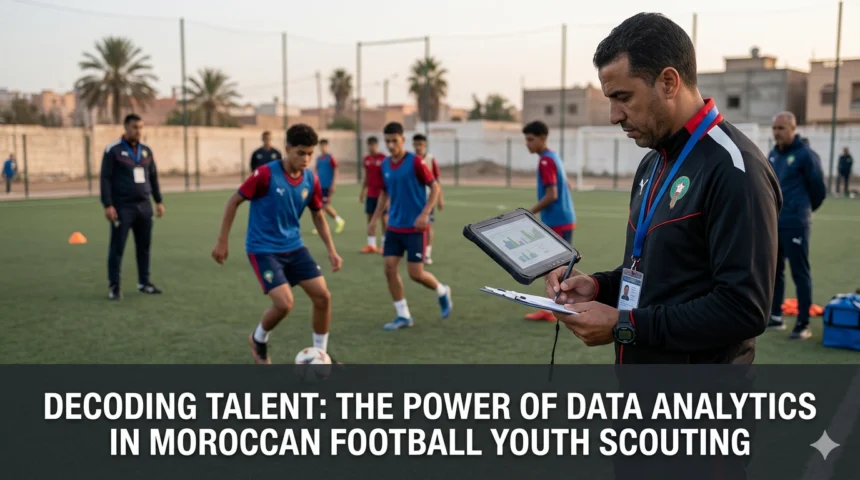
Deciphering the Players: The Significance of Data Analytics in Moroccan Football Youth Scouting
Football’s talent-spotting landscape is undergoing a significant transformation, shifting from traditional scout assessments toward data-driven precision. Morocco, increasingly recognized for its rising footballing prowess, stands to benefit considerably from integrating Youth Development and Future Prospects of Moroccan Football. This article explores how data analytics is revolutionizing the discovery, nurturing, and development of the next generation of football talent on the global stage.
As Moroccan football advances, systematic and objective talent identification has become essential. Data analytics offers a powerful toolkit for uncovering hidden potential, optimizing development pathways, and maximizing returns on youth investment. This strategic shift promises to make scouting more efficient, equitable, and ultimately more successful.
Moroccan Football’s Youth Scouting Evolution
Historically, youth scouting in Moroccan football relied heavily on the subjective judgment of experienced scouts—typically former players or coaches who evaluated talent through observation and intuition. While valuable, this traditional approach had significant limitations.
Scouts’ assessments were often inconsistent, prone to personal bias, and frequently overlooked players with long-term potential who underperformed in individual matches. Additionally, the abundance of young talent in Morocco made comprehensive traditional scouting resource-intensive and impractical. As the country pursued greater international success, the need for a more structured, objective, and scalable methodology became evident.
Understanding Youth Football Data Analytics
Data analytics in youth football involves systematically collecting, processing, and interpreting performance data from young players. This information encompasses physical attributes, technical skills, tactical awareness, and psychological indicators, gathered from academy training sessions, competitive matches, fitness assessments, and specialized evaluations.

Rather than relying solely on observation, this approach provides measurable insights into player capabilities and potential. By examining metrics such as passing completion rates, dribbling success, defensive contributions, physical performance, and decision-making patterns, clubs and national federations gain comprehensive player profiles. Combined with traditional scouting expertise, this scientific method provides objective evidence to support talent identification decisions.
Key Metrics in Youth Scouting
Effective data analytics relies on tracking relevant performance indicators. These metrics fall into several categories:
Physical Measurements
- Speed and Acceleration: Timed sprints across various distances.
- Endurance: Evaluated through shuttle runs, Yo-Yo intermittent recovery tests, or GPS data during matches.
- Agility: Measured via cone drills and directional change assessments.
- Power: Assessed through vertical jumps, standing long jumps, and football-specific strength tests.
- Work Rate: Distance covered, high-intensity efforts, and sprints during matches, typically tracked via GPS devices.
Technical Skills
- Passing Accuracy: Percentage of successful passes by distance and type (short, long, through balls).
- Dribbling Success: Successful take-ons relative to attempts.
- Shot Efficiency: On-target percentage and conversion rate.
- First Touch Quality: Ball control under pressure, measured by subsequent possession or successful actions.
- Ball Control: Ability to maintain possession in congested situations.
Tactical Awareness
- Positional Awareness: Heat maps and movement patterns reflecting tactical compliance, defensive positioning, and attacking runs.
- Decision-Making: Success rate of actions in pressure situations, pass selection, and defensive interventions.
- Defensive Contributions: Tackles won, interceptions, blocks, and clearances.
- Attacking Impact: Key passes, assists, goal contributions, and progressive carries.
- Game Intelligence: Spatial awareness, anticipation, and game reading derived from tactical data analysis.
Psychological Indicators
Direct measurement of psychological traits is challenging, but data provides useful indicators:

- Work Ethic and Resilience: Ability to sustain high intensity, recover quickly, and perform under adversity.
- Adaptability: Performance consistency across different positions and tactical systems.
- Coachability: Improvement in targeted metrics following training interventions.
By synthesizing these data points, scouts and analysts develop comprehensive player profiles offering far greater insight than traditional methods alone. This evidence-based approach is instrumental in identifying Morocco’s Next Top Talents.
Advantages of Data Analytics in Scouting Moroccan Football Youth
Adopting data analytics transforms youth talent development in Morocco through multiple benefits.
Objective Talent Identification
Data analytics significantly reduces subjectivity and bias inherent in traditional scouting. By basing evaluations on measurable performance metrics, talent is recognized on merit rather than personal preference or external influences. This approach effectively uncovers overlooked talent with strong underlying data profiles.
Tailored Player Development
Detailed insights into individual strengths and weaknesses enable coaches to design personalized development programs. Targeted drills can address specific areas—passing accuracy, speed, or tactical awareness—ensuring efficient resource allocation and maximizing player potential. This individualized approach supports Moroccan youth football academies in cultivating future stars.
Evidence-Based Decision Making
Data provides a solid foundation for strategic decisions by coaches, club management, and national selectors. Whether determining squad composition, making transfer decisions, or planning career trajectories, evidence-based choices improve outcomes. This is particularly significant for Moroccan Football Youth Talent Pathways.
Continuous Player Monitoring
Tracking systems enable longitudinal player monitoring over months and years. This historical perspective reveals developmental trends, predicts future performance, and allows early intervention when trajectories deviate from expectations, providing invaluable records of player growth.
More Read

Resource Efficiency
Precise analytics streamlines scouting operations, reducing time and expenses by focusing on qualified prospects rather than evaluating unsuitable candidates. Concentrating efforts on refined prospect pools ensures optimal use of scouting budgets and personnel, positioning Investment in Tomorrow effectively.
Challenges in Implementing Data Analytics
Despite substantial advantages, implementing data analytics in youth football presents several obstacles requiring careful attention.
Data Collection Infrastructure
Building robust infrastructure is fundamental. This requires modern tracking technologies (GPS systems, video analysis software), standardized data protocols, and reliable connectivity across academies and clubs, particularly in remote areas.
Analytical Expertise
Data collection represents only half the challenge; interpretation requires specialized skill. Trained analysts must combine statistical proficiency with deep football knowledge to translate raw data into actionable insights. Developing this expertise is critical for success. Guiding the Champions increasingly demands data literacy.
Cultural Resistance
Traditionalists may resist technology-driven approaches favoring established methods. Overcoming this requires education, demonstrated success, and collaborative environments where data complements rather than replaces human expertise.
Financial Investment
Significant upfront costs for hardware, software, and staff training can challenge smaller and grassroots clubs. Phased implementation supported by national federations or government initiatives is essential for widespread adoption.
Data Privacy and Ethics
Collecting extensive personal and performance data from young athletes raises important privacy and ethical concerns. Robust policies and legal frameworks must protect player information and ensure responsible data stewardship.
Morocco’s Momentum: Advances and Initiatives
Morocco has actively modernized its football infrastructure through institutions like the Mohammed VI Football Academy. While specific public details about comprehensive data integration continue evolving, the academy’s advanced facilities and commitment to holistic development create an ideal environment for pioneering youth data analytics.
The Royal Moroccan Football Federation (FRMF) has outlined a clear strategic vision for youth development emphasizing scientific approaches. Data analytics can enable:
- Standardized Scouting: Establishing consistent data collection and evaluation standards across regional academies and national youth teams, enhancing consistency in identifying future talent.
- Diaspora Talent Integration: Tracking and evaluating Moroccan players in European and international leagues for national team development. This is crucial for Diaspora Dynamos.
- International Benchmarking: Comparing Moroccan youth players against global standards to identify improvement areas and ensure global competitiveness.
- Talent Retention: Using data insights to understand player departures and address youth development challenges and opportunities.
By embracing data-driven approaches, Morocco can identify future stars while improving their development journey from local fields to national achievement. This commitment strengthens Morocco’s position as a leader in African football development.
The Future of Youth Football Analytics in Morocco
Data analytics in Moroccan youth football continues evolving with technological advancement, promising increasingly sophisticated capabilities:
Predictive Analytics
Beyond current performance analysis, predictive models will forecast player potential, injury risk, and professional readiness using historical data. This enables proactive development decisions and career planning.
Machine Learning and Artificial Intelligence
AI and machine learning rapidly process vast datasets, identifying complex patterns humans might miss. These technologies can accelerate scouting, pinpoint exceptional talent, and recommend personalized training approaches.
Wearable Technology and IoT
Advanced wearables and Internet of Things sensors provide real-time physiological and performance data during training and matches. Continuous monitoring reveals insights into player health, fatigue levels, and readiness.
Augmented and Virtual Reality
Beyond immersive training experiences, VR and AR create controlled environments for scouts to assess decision-making and tactical comprehension, enabling data-enriched evaluations in simulated match scenarios.
Forward-thinking investment coupled with strategic implementation will be essential to leverage these technologies for Moroccan football’s advancement.
Analytics as a Bridge to Professionalism
Data analytics provides objective evidence supporting player selection for national youth teams and professional clubs. Coaches can confidently identify readiness for advancement, while clubs base transfer decisions on evidence rather than speculation.
Moreover, analytics enables players to understand their performance metrics, target improvement areas, and track progress toward professional goals. This transparency enhances player agency in their development, making youth talent pathways clearer and increasing success probability in professional football.
Conclusion
Integrating data analytics in youth football is essential for Morocco’s ambitious football aspirations. By combining scouting’s human element with scientific rigor, Morocco can establish a fairer, more effective system for identifying and developing future stars.
From refining training programs to informing selection decisions, analytics empowers Moroccan football to maximize its youth talent. As technology advances, the synergy between human insight and data-driven intelligence will elevate youth development and prospects to unprecedented levels, securing a flourishing future for the sport in the Kingdom.
Frequently Asked Questions
What is Moroccan Football Youth Data Analytics?
Moroccan youth football data analytics involves systematically collecting, analyzing, and interpreting performance data from young players. This encompasses physical attributes, technical skills, tactical understanding, and insights for talent identification, player development, and strategic decision-making.
How does data analytics enhance youth scouting in Morocco?
Analytics improves scouting by eliminating subjectivity, identifying merit-based talent through measurable criteria, and discovering overlooked players. This results in more objective assessments, personalized development plans, comprehensive progress tracking, and better-informed decisions.
What data is collected for youth football analytics?
Data includes physical measurements (speed, endurance, agility), technical assessments (passing accuracy, dribbling success, shooting efficiency), tactical indicators (positional awareness, decision-making, defensive actions), and indirect psychological measures (work rate, resilience).
What are the challenges of implementing data analytics in Moroccan youth football?
Challenges include developing data-collection infrastructure, recruiting skilled analysts with football expertise, overcoming cultural resistance, managing technology costs, and addressing ethical concerns regarding player data privacy.
How will data analytics shape the future of Moroccan youth football development?
Analytics will transform development through more objective talent identification, personalized training programs, strategic investment decisions, and ultimately, producing highly skilled, well-rounded players for national and international competition. It will form a cornerstone of Morocco’s long-term football success strategy.