The Mental Game: Nurturing Psychological Resilience in Moroccan Football Youth
Football demands as much mental fortitude as physical capability. For aspiring young athletes navigating the competitive landscape of Moroccan football, developing robust psychological resilience is essential. This article explores critical aspects of Moroccan football youth psychology, examining how mental toughness, emotional intelligence, and resilience prepare the next generation of stars for both triumphs and setbacks. Mastering these psychological foundations unlocks the full potential of Morocco’s emerging talent pool.
Understanding the Unique Landscape of Moroccan Football Youth Psychology
The journey from local pitches to national recognition is paved with intense pressure, high expectations, and numerous obstacles. Young Moroccan footballers face amplified challenges through cultural dynamics, family aspirations, and the sport’s deep societal significance. Building strong psychological resilience becomes fundamental to their development, influencing on-field performance and personal well-being alike.
The Cultural Context of Mental Fortitude in Moroccan Football
Moroccan culture emphasizes community, family honor, and perseverance—values that inherently shape a young player’s mental framework. Yet these same influences create distinct pressures. The desire to make family proud, represent one’s region, or escape socio-economic constraints through football serves as both powerful motivation and heavy burden. Coaches and sports psychologists must navigate these cultural complexities to support youth development effectively.
Early Pressures and Expectations on Young Moroccan Players
Players identified early for their potential face considerable pressure alongside excitement. Parents, coaches, and communities invest hope and resources into these young talents. Balancing external expectations with internal drive to succeed requires delicate equilibrium—enough encouragement to motivate, yet realistic guidance to prevent burnout and performance anxiety.
Building Blocks of Psychological Resilience in Moroccan Football Youth
Psychological resilience isn’t innate; it’s a learnable skill set. Moroccan academies and training centers increasingly integrate mental conditioning into daily routines, recognizing its equal importance alongside physical and tactical preparation.

Developing Mental Toughness: Key Strategies
Mental toughness encompasses grit, determination, focus, and performing under pressure. Programs for young Moroccan players incorporate exercises simulating game-day scenarios, building decision-making skills in high-stress situations. This includes tactical drills, small-sided games with specific mental challenges, and meditation techniques to enhance concentration.
Coping Mechanisms for Stress and Anxiety
Football inherently generates stress. Missed chances, defensive errors, or poor training sessions trigger anxiety in young players. Teaching healthy coping mechanisms—breath control exercises, visualization techniques, and open communication with coaches and peers—equips them to manage emotions effectively, transforming setbacks into learning opportunities.
Fostering Self-Belief and Confidence
Confidence underpins peak performance. Building self-belief for Moroccan youth involves consistent positive reinforcement, acknowledging small victories, and offering constructive feedback emphasizing growth over outcomes. Leading Moroccan football youth academies create secure environments where players risk-take and learn from mistakes without fear of judgment.

The Role of Coaching and Support Systems in Moroccan Football Youth Psychology
Coaches, parents, and sports psychologists form a vital support network significantly influencing psychological development of young players.
Coaches as Mentors and Psychologists
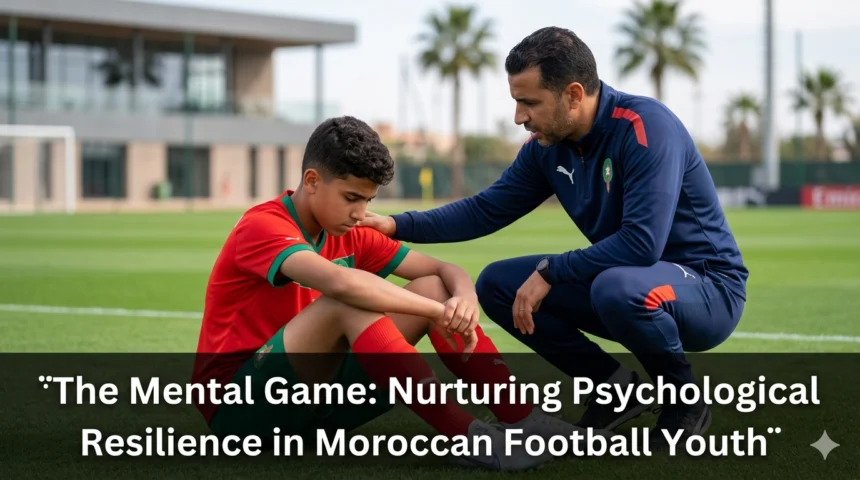
Contemporary coaches serve as tactical instructors, mentors, and motivators—often the primary psychological support. In Morocco, coaches increasingly receive training in both football tactics and sports psychology fundamentals. They learn identifying stress signs, providing emotional support, and tailoring communication to foster resilience, central to coaching champions of tomorrow.
Integrating Sports Psychology into Youth Academies
Leading Moroccan academies now employ dedicated sports psychologists on staff. These professionals offer individual counseling, group workshops, and performance enhancement strategies, addressing performance anxiety, injury rehabilitation, mental health, and goal setting for comprehensive support.
The Impact of Family and Community Support
Family support remains unparalleled in the lives of Moroccan youth. However, families need guidance providing positive encouragement without adding undue pressure. Parent workshops emphasizing balanced perspectives and effort-based thinking are increasingly common in the youth development ecosystem.
Navigating Challenges: Psychological Resilience in Action
The path to professional football presents constant obstacles. How young Moroccan players respond to these challenges demonstrates true psychological resilience.
Dealing with Setbacks and Failures
Every player experiences setbacks—missed penalties, poor performances, or squad omissions. Teaching young athletes to view these as learning opportunities rather than personal failures proves key. Resilience means bouncing back stronger, analyzing shortcomings, and adapting forward. This mindset develops through consistent coaching and psychological support during challenges and triumphs.
More Read

Overcoming Injuries: The Mental Battle
Injuries extend beyond physical pain, causing psychological distress including frustration, isolation, and fear of diminished performance. Psychological support during rehabilitation maintains positive outlook, establishes realistic recovery goals, and manages expectations, keeping players connected to their team and mentally sharp.
Managing Performance Anxiety and Pressure Cooker Moments
Big games, crucial penalties, and high-stakes tournaments can overwhelm even talented players. Performance anxiety manifests as physical symptoms or mental blocks. Through targeted training including mental rehearsal and stress inoculation techniques, young Moroccan players learn thriving under pressure, transforming anxiety into heightened focus and determination—particularly important for those on pathways to national glory.
The Long-Term Vision for Moroccan Football Youth Psychology
Morocco’s youth development commitment transcends physical and technical training. The strategic vision recognizes psychological well-being as fundamental to sustained success and developing well-rounded individuals, not merely skilled athletes.
Integrating Mental Health into Player Development Pathways
Morocco’s youth football blueprint increasingly emphasizes mental health as core. This includes regular psychological assessments, counseling access, and player education on mental well-being, normalizing mental health discussions crucial for identifying Morocco’s next top talents.
Preparing for Transitions: From Youth to Professional Ranks
Advancing to professional football presents significant psychological hurdles—adapting to higher demands, increased competition, and often relocating. Psychological resilience enables players navigating these transitions, managing new pressures, and maintaining identity and purpose amid professional challenges, applying equally to locally developed players and diaspora talent.
The Role of Continuous Research and Development
Moroccan football invests in sports psychology research to remain at development’s forefront. Understanding specific psychological needs of Moroccan youth, training method impacts, and support system effectiveness continuously refines approaches, ensuring evidence-based, culturally sensitive strategies aligned with Morocco’s long-term strategic vision.
The mental dimension proves indispensable in modern football. By prioritizing psychological resilience in young players, Morocco prepares them for on-pitch success while equipping invaluable life skills. This holistic approach to youth development establishes the nation’s footballing future on mental strength, emotional intelligence, and unwavering determination.
FAQ: Moroccan Football Youth Psychology
Q1: Why is psychological resilience so important for Moroccan football youth?
A1: Psychological resilience equips young players to handle immense pressure, high expectations, setbacks, and intense competition. It enables bouncing back from failures, coping with injuries, managing performance anxiety, and maintaining focus—ultimately contributing to sustained performance and overall well-being.
Q2: How do Moroccan football academies integrate psychological training?
A2: Moroccan academies increasingly employ dedicated sports psychologists, conduct mental conditioning sessions, and provide coach education. This encompasses stress management workshops, visualization techniques, goal setting, and self-belief development. Coaches act as mentors, providing emotional support and fostering environments encouraging mental toughness.
Q3: What unique cultural factors influence the psychology of Moroccan youth football players?
A3: Key cultural influences include strong family ties, community expectations, and desires to bring honor to family or region. While powerful motivators, these create added pressure. Support systems must navigate these expectations sensitively, helping players channel them positively while building individual resilience.
Q4: How do young Moroccan players learn to cope with setbacks and failures?
A4: Coaches teach viewing setbacks as learning opportunities rather than personal defeats, emphasizing analysis, adaptation, and growth. Psychological support helps players process emotions, maintain positive perspectives, and develop improvement strategies, reinforcing resilient mindsets.
Q5: What is the long-term vision for psychological support in Moroccan youth football development?
A5: The long-term vision fully integrates mental health and resilience training as core player development components. This involves continuous research, regular psychological assessments, accessible counselling, and ongoing education for players, coaches, and parents, ensuring holistic development from youth through professional ranks.