In international football, a reliable goalkeeper decides matches. For the Atlas Lions, goalkeepers have shown consistent resilience and skill. This article analyses the key goalkeepers in Morocco’s setup, their strengths, and what the future holds for this position.
The Goalkeeping Philosophy of the Atlas Lions
Under coach Walid Regragui, Morocco has built a footballing identity on defensive solidity and tactical discipline. Goalkeepers sit at the centre of this system. Regragui selects goalkeepers who stop shots, stay comfortable on the ball, initiate attacks, and lead the defensive line.
The system requires sweeper-keeper qualities: intercepting passes, supporting a high defensive line, and distributing quickly to trigger transitions. The starting goalkeeper contributes in all phases of play, not only in defence.
The Current Crop: Key Goalkeepers
Morocco’s goalkeeping group combines experience with emerging talent. Competition for the starting position keeps standards high. Below are the key figures in the squad.
Yassine Bounou: The Undisputed Number One
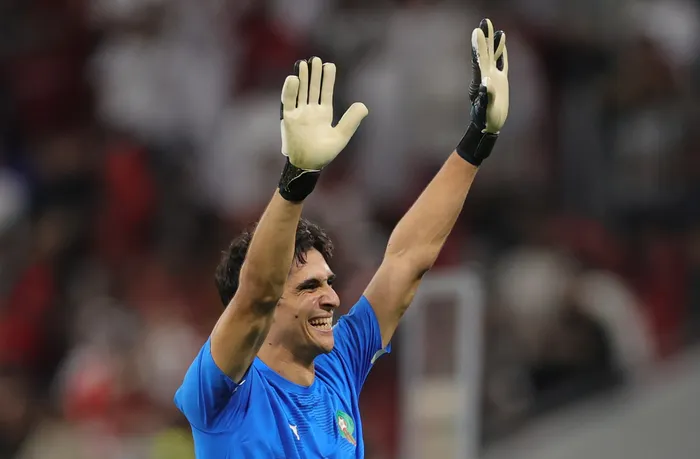
Yassine Bounou, known as Bono, sits at the centre of Morocco’s goalkeeping success. Born in Montreal and representing Morocco internationally, he has established himself among the world’s best. His time at Sevilla and Al-Hilal sharpened his skills at the highest level.

Bono delivers on every front: sharp reflexes, decisive saves, precise distribution, and strong leadership of the back line. His penalty-saving ability proved decisive during Morocco’s 2022 FIFA World Cup run. He stopped penalties against Spain and Portugal on the way to the semi-finals, performances that made him a national hero.
His composure under pressure separates him from most goalkeepers at international level. When Morocco faced their toughest moments in Qatar, Bono steadied the team and delivered.
Munir Mohamedi: The Reliable Veteran
Munir Mohamedi brings consistency and experience to Morocco’s goalkeeping ranks. Currently with RS Berkane, he serves as Bono’s primary understudy. His role extends beyond appearances on the pitch.
More Read

Munir offers calm positioning, reliable shot-stopping, and few errors. His experience across La Liga and Saudi Arabia gives him a deep understanding of the game. He mentors younger goalkeepers and maintains team spirit in the squad. This professionalism keeps standards high across the group.
El Mehdi Benabid: The Rising Star
El Mehdi Benabid represents the next generation of Moroccan goalkeeping. Currently with AS FAR, he has made an impression through strong performances in the Botola Pro and continental competitions.
Benabid works well on the ball, commands his area, and makes sound decisions under pressure. His agility and athleticism give him a strong physical presence. Recent national team call-ups show the coaching staff’s confidence in his development. With continued exposure at a high level, he has the attributes to become Morocco’s future number one.
Other Notable Talents
Ahmed Tagnaouti (Wydad AC) and Anas Zniti (Raja CA) add further depth to the goalkeeping group. Tagnaouti brings a strong physical presence and experience as a reliable alternative. Zniti contributes agility and leadership. Together with emerging talents from Moroccan clubs and European academies, they ensure a competitive pool with genuine quality throughout.
Analysing Strengths of the Goalkeeping Unit
Several attributes define this goalkeeping group:
- Experience and youth balance: Bono and Munir provide immediate reliability. Benabid adds long-term stability.
- Shot-stopping quality: All primary goalkeepers make decisive saves in high-pressure moments.
- Penalty-saving ability: Bounou’s World Cup performances set the standard. The group trains specifically in this area.
- Distribution and build-up: All three are comfortable on the ball, supporting Regragui’s possession-based transitions.
- Leadership and communication: Morocco’s goalkeepers organise the defence and instil confidence in those in front of them.
- Mental composure: The unit performs in high-stakes situations. Bono’s performances in knockout rounds are the clearest example.
Challenges and Future Outlook
Morocco’s goalkeeping position is strong. The priority now is maintaining those standards and building a steady pipeline behind the current generation.

Succession planning matters. Benabid shows promise, but the federation must identify and develop further candidates from domestic leagues and the diaspora. This requires investment in youth academies, quality coaching, and clear professional pathways.
European exposure accelerates development. Goalkeepers who compete in top leagues face higher standards and grow faster. Ensuring young Moroccan goalkeepers get competitive minutes, whether at home or abroad, is key to sustaining quality in this position long-term.
The Importance of a Strong Goalkeeping Core
A reliable goalkeeper changes how the entire defence operates. When defenders trust the goalkeeper behind them, they press higher and engage more aggressively. This effect shows clearly in how Morocco’s back line performs when Bono is in goal.
Fast, accurate distribution converts defensive actions into attacking opportunities in seconds. In knockout tournaments, a goalkeeper who makes the decisive save or wins a penalty shootout is the difference between advancing and going home. Morocco’s 2022 World Cup run shows this clearly.
For the Atlas Lions, the goalkeeper position is not a supporting role. It is the foundation of defensive structure and a direct contributor to offensive transitions.
FAQ
What makes Yassine Bounou such a critical player for the Morocco national team?
Bounou combines elite shot-stopping, penalty-saving ability, strong distribution, and clear leadership. His composure in high-pressure situations, demonstrated throughout the 2022 World Cup, makes him the most important player in Morocco’s goalkeeping setup.
Who is the primary backup goalkeeper for the Morocco national team?
Munir Mohamedi typically fills that role. He brings extensive experience, consistent performances, and a calm presence that gives the squad security whenever he plays.
Are there any young, promising goalkeepers in the Morocco national team setup?
El Mehdi Benabid is the leading young prospect. His agility, reflexes, and ability on the ball give him the attributes to compete for the starting position in the coming years.
How does Coach Regragui’s philosophy influence goalkeeper selection?
Regragui selects goalkeepers who go beyond traditional shot-stopping. He wants sweeper-keepers who start attacks, support a high defensive line, and lead from the back. This demands a full skill set rather than a narrow specialisation.
Why is a strong goalkeeping core important for Morocco’s overall team performance?
A reliable goalkeeper gives defenders confidence, enables fast build-up play, and proves decisive in knockout situations like penalty shootouts. The Atlas Lions’ 2022 World Cup run demonstrated how goalkeeping quality elevates the entire team’s performance.