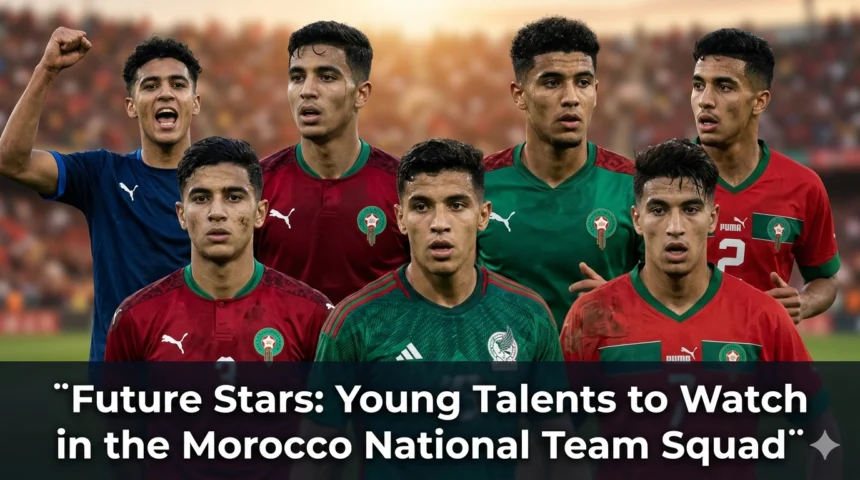
The Moroccan national football team, known as the Atlas Lions, made history by reaching the semi-finals of the 2022 FIFA World Cup. This achievement highlighted the strength of Morocco’s football system and the effective integration of experienced players with emerging talent. As the team prepares for the future, focus turns to the next generation. This article explores Morocco’s promising young players, identifying those positioned to sustain the Atlas Lions’ global competitiveness.
Morocco’s success in Qatar demonstrated the potential of uniting domestic and European-trained talent under a cohesive strategy. With a solid foundation in place, attention now turns to emerging players who will influence the team’s future direction. These individuals embody both the future and the evolving identity of Moroccan football.
The Foundation of Future Success: Why Young Talent Matters
Sustained excellence for any national team depends on a strong pipeline of young talent. Morocco has long benefited from both a talented diaspora in top European leagues and a developing domestic league. This combination ensures a steady influx of energetic, adaptable, and ambitious players.
Young players add vital energy and adaptability to a team. Their enthusiasm and drive foster a dynamic environment and support long-term strategic goals. Integrating emerging talent is not just about filling roles; it is about building a lasting legacy.
Balancing experienced players with emerging talent is essential. Veterans offer leadership and stability, while younger players bring innovation. The Atlas Lions’ recent success reflects this balance, and ongoing youth development remains critical for maintaining a competitive edge.
More Read

Emerging Goalkeeping Prospects: Guardians of the Goal
Yassine Bounou is recognised as one of the world’s top goalkeepers, and Morocco’s future in this position also looks strong. Developing young goalkeepers requires patience, regular match experience, and exposure to high-pressure situations. The next generation is already showing promise.
These young goalkeepers are gaining experience in various leagues and actively competing for positions. Their development is vital for sustaining Morocco’s defensive strength. The key challenge is to provide them with the right opportunities to mature into international-caliber players.
Alaa Bellaarouch: The Rising Shot-Stopper
Alaa Bellaarouch, currently at RC Strasbourg in France, is one of Morocco’s top young goalkeeping prospects. He has advanced through youth systems and is now gaining senior experience. Bellaarouch displays strong reflexes, effective distribution, and solid command of his area. Competing in Ligue 1 offers him an excellent environment for further development.

Bellaarouch is composed when playing from the back and confident leaving his line. With continued playing time and maturity, he is expected to compete for a senior squad position and could become a long-term option or strong competitor among Morocco’s goalkeepers.
Defensive Dynamos: Young Defenders Set to Shine
A strong defence is essential for success, and Morocco’s recent achievements have relied on a solid back line. While veterans like Achraf Hakimi and Nayef Aguerd provide stability, a new generation of defenders is emerging. These young players combine athleticism with tactical awareness, ensuring a promising defensive future.
Developing these defenders is crucial for maintaining Morocco’s defensive standards. Competing in challenging leagues against top attackers, they gain valuable experience. Their adaptability to various systems and partnerships will be key to keeping Morocco’s defense among the world’s best.
Chadi Riad: A Composed Centre-Back
Chadi Riad, currently at Real Betis in La Liga, is a promising defender. Trained at Barcelona’s La Masia academy, the left-footed centre-back is composed on the ball, has a strong passing range, and is effective in the air. His tactical discipline and game reading prepare him for top-level success.
Experience in La Liga has accelerated Riad’s development, and he has already made his senior international debut. His technical skills and defensive reliability make him a strong candidate for a long-term role in Morocco’s central defense.
Benjamin Bouchouari: Versatile and Dynamic
Although often used in midfield, Benjamin Bouchouari’s defensive skills and versatility are valuable assets. At Saint-Étienne, he demonstrates high energy, strong pressing, and effective possession recovery. His work rate and tactical awareness enable him to play multiple roles, including defensive midfield and wide defense.

His ability to cover ground and disrupt attacks makes him a strong candidate for future selection. Continued development in Ligue 2 and potentially Ligue 1 will further refine his defensive positioning and decision-making. His dynamism enhances squad depth.
Midfield Maestros: The Next Generation of Playmakers
Morocco’s midfield combines defensive strength with creativity. Sofyan Amrabat and Azzedine Ounahi have led effectively, and a new group of young midfielders is emerging to take on key roles. These players offer technical skill, tactical awareness, and energy, ensuring continued strength in midfield.
Developing young midfielders is essential, as they are central to the team’s success. Their ability to connect defence and attack, maintain possession, and create chances is vital. Competition among them will raise overall standards and strengthen midfield options.
Bilal El Khannouss: The Creative Spark
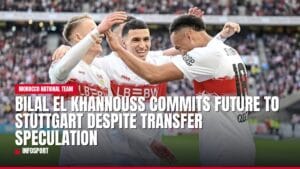
Bilal El Khannouss is widely regarded as Morocco’s top young prospect. As an attacking midfielder for KRC Genk in Belgium, he displays excellent close control, vision, and the ability to break down defenses with incisive passing. He plays with notable maturity and composure under pressure.
He was part of the World Cup squad, gaining valuable experience, and continues to impress as a regular starter at club level. El Khannouss is seen as a potential creative leader for the national team, combining artistry and intelligence in midfield—his progress is closely watched by top European clubs and supporters.
Amir Richardson: The Towering Midfielder
Amir Richardson, at Stade de Reims in Ligue 1, offers a different midfield profile. His physical presence is complemented by refined technical skills. He is effective at breaking up play, winning aerial duels, and advancing the ball.
Richardson’s athleticism and box-to-box ability allow him to protect the defence and support attacks. Continued development in Ligue 1 will further improve his tactical awareness and passing. He adds a physical dimension to Morocco’s midfield.
Ismael Saibari: Dynamic Attacker from Midfield
Ismael Saibari, of PSV Eindhoven, is a versatile talent who can play as a central midfielder or attacking winger. He is known for explosive dribbling, direct runs, and a strong goal-scoring instinct. His agility and balance help him beat defenders and create opportunities.
Playing in the Eredivisie and Champions League with PSV gives Saibari valuable high-level experience. His versatility and attacking skills provide creativity and a goal threat from midfield or wide positions. He exemplifies the impact of European-based Moroccan players.
Attacking Aces: Young Forwards Ready to Lead the Line
Goal scorers are crucial to success, and Morocco recognises the need to develop top attacking talent. While Hakim Ziyech and Youssef En-Nesyri remain key, a new group of young forwards is emerging. These players offer pace, technical skill, and clinical finishing, putting constant pressure on opponents.
Developing young attackers is essential for maintaining Morocco’s offensive strength. Their ability to score, create chances, and provide width will be key for future tournaments. Competition among them will drive improvement and deepen the attacking options.
Abde Ezzalzouli: The Dribbling Wizard
Abde Ezzalzouli, known as Abde, is a winger recognized for his dribbling and direct play. On loan at Real Betis from Barcelona, he regularly challenges defenders, delivering dangerous crosses and shots. His pace and technical ability make him a threat on both flanks.
Abde has already made an impact internationally, contributing important goals and assists. Continued experience in La Liga will further develop his decision-making and attacking output. He represents the creative attacking style Morocco aims to foster and is a key emerging talent to watch.
Ilias Akhomach: The Technical Winger
Ilias Akhomach, trained at Barcelona and now with Villarreal, is a technical winger with excellent close control and vision. He plays effectively on either wing or as an attacking midfielder, able to cut inside to shoot or create opportunities. His movement and passing make him valuable as both a a both a creator and a scorer.
Transitioning to senior La Liga football will challenge and develop Akhomach further. He has significant potential as a creative force for Morocco, combining dribbling and passing skills. He is a key part of Morocco’s attacking future.
Eliesse Ben Seghir: Monaco’s Rising Star
Eliesse Ben Seghir, an attacking midfielder or winger for AS Monaco, is one of Ligue 1’s top young talents. He is known for his dribbling, quick footwork, and impressive goals. Ben Seghir shows confidence and strong spatial awareness, performing well between the lines.
His standout performances have attracted attention from the national team selectors. Ben Seghir’s ability to both create and finish makes him a valuable asset, providing creativity and a direct goal threat. His individual skill ensures he will play a central role in Morocco’s attack.
Impact of European Clubs on Moroccan Youngsters
The strong presence of Moroccan players in top European leagues is key to national team success. Young prospects in these clubs benefit from elite coaching, advanced facilities, and regular high-level competition. This environment sharpens their technical skills and prepares them for international football.
Competing with and against top players accelerates development, building tactical discipline and adaptability. This experience directly improves national team performance and professionalism. The ongoing influx of talent from European clubs provides lasting benefits for Morocco’s squad.
Coach Regragui’s Vision for Youth Integration
Walid Regragui, who led Morocco’s World Cup campaign, emphasizes balancing experience with youth. He is committed to giving young players real opportunities in competitive matches, not just in training. This approach builds confidence and supports smooth transitions to the transitions to the senior team.
Regragui recognizes that integrating youth requires careful development within the team’s tactical structure. He seeks to build a deep, versatile squad where young players can grow and compete for starting roles. His selection process is dynamic, focusing on quality and commitment over age.
This forward-looking strategy enables the Atlas Lions to build sustainably for future success, with emerging talent driving ongoing progress rather than relying solely on past achievements.
Beyond the Starting XI: The Depth of Young Talent
While focus often falls on those close to starting roles, true squad strength comes from overall depth. Morocco has a broad pool of young talent beyond immediate contenders, creating healthy competition and readiness. This depth is crucial for managing injuries, suspensions, and tactical changes during tournaments.
Many promising young players are developing in domestic and European leagues, waiting for their chance. Their presence increases competition and drives performance. This strong foundation ensures the Atlas Lions maintain high standards and regularly refresh the squad with new talent.
The Road Ahead: Nurturing Morocco’s Young Talent
Morocco’s future is promising, thanks to the potential of its emerging players. The next generation includes talented defenders, midfielders, and forwards ready to contribute. Progressing from prospect to established international requires dedication, resilience, and consistent performance.
Ongoing investment in youth development, strategic integration into the senior squad, and exposure to top competition are essential for these players. As they mature, they will become key members of the squad, helping the Atlas Lions build on recent success and achieve greater goals.
Frequently Asked Questions (FAQ)
Who are some of the most promising young Morocco national team players?
Notable prospects include Bilal El Khannouss (midfielder), Chadi Riad (defender), Abde Ezzalzouli (winger), Amir Richardson (midfielder), Ilias Akhomach (winger), Eliesse Ben Seghir (attacking midfielder/winger), and Alaa Bellaarouch (goalkeeper). These players are making significant strides in top European leagues and already feature or are poised to feature for the senior national team.
How does the Morocco national team integrate young players into the squad?
Coach Walid Regragui and his staff employ gradual integration, frequently inviting young talents to training camps and providing opportunities in friendly matches or less high-stakes competitions. This approach enables adaptation to the national team environment, understanding of the tactical philosophy, and the development of team chemistry with experienced players, facilitating seamless senior squad transitions.
What role do European clubs play in the development of Morocco’s national team young players?
European clubs significantly contribute to Moroccan youth development. They provide world-class training, experienced coaching, and consistent exposure to high-level competition. Regular matches against elite talent in Europe refine technical skills, develop tactical understanding, and prepare players for the physical and mental demands of international football, profoundly benefiting the squad’s composition.
Are there any young goalkeepers to watch for the Morocco national team?
Yes, Alaa Bellaarouch at RC Strasbourg represents a notable goalkeeping prospect. He demonstrates excellent reflexes and contemporary goalkeeping attributes, and he gains valuable Ligue 1 experience. His development is monitored closely as he possesses genuine potential to become significant in the goalkeeper contingent’s future.
How important is youth development for the long-term success of the Atlas Lions?
Youth development is essential for sustained Atlas Lions success. It ensures a a continuous supply of fresh talent, maintains squad depth and competitiveness, and facilitates tactical adaptability. Through consistent youth nurturing, Morocco sustains international excellence, builds on its achievements, and remains a formidable global football force for years to come.