From Local Talent to Global Stars: The Evolution of Morocco’s World Cup Squad Selection
The journey of Morocco’s national football team on the global stage is a compelling narrative of growth, adaptation, and strategic evolution in player recruitment. From its early reliance on domestic league stars to becoming a formidable force fueled by diaspora talent scattered across Europe’s top leagues, Morocco’s approach to squad assembly reflects both the nation’s footballing development and the broader globalization of the sport. This transformation has been instrumental in shaping the team’s FIFA World Cup performances, culminating in their historic run in 2022.
Morocco’s participation in the FIFA World Cup has always been a source of national pride. The composition of squads sent to these tournaments offers a unique lens through which to view the strategic decisions, scouting networks, and developmental pathways that have defined Moroccan football over the decades. This article traces how the Atlas Lions have assembled their teams, charting the shift from local heroes to a formidable blend of homegrown and international stars, as detailed in Morocco’s FIFA World Cup Campaigns and Performance.
The Early Days: Nurturing Homegrown Talent (1970s-1980s)
Morocco’s initial World Cup ventures were characterized by squads drawn largely from the flourishing domestic league, Botola. This era demonstrated the strength of local football and the passion it ignited across the nation.
Morocco’s Historic Debut in 1970
When Morocco made its World Cup debut in Mexico in 1970, the squad was almost exclusively composed of players from Moroccan clubs. Names like Driss Bamous, Houmane Jarir, and Ahmed Faras were heroes developed entirely within the domestic system. These players, representing clubs such as FAR Rabat and KAC Kenitra, formed the backbone of a team that, despite exiting at the group stage, left an indelible mark on African football history. They proved that African nations could compete on the world stage with homegrown talent alone. This pivotal moment is explored in The Dawn of an Era: Morocco’s Debut and Early World Cup Campaigns.
The selection philosophy was straightforward: identify top performers in the Botola, build cohesion, and represent the nation with pride. Limited opportunities for Moroccan players abroad meant the national team directly reflected the domestic league’s strength.

The 1986 Campaign: Blending Domestic and European Exposure
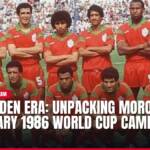
The 1986 World Cup in Mexico marked a significant turning point. While still heavily reliant on domestic talent, this squad began incorporating players with European experience. Players like Aziz Bouderbala, Mohamed Timoumi, and Badou Zaki (the legendary goalkeeper and captain) primarily came from Moroccan clubs. Yet the inclusion of Mustapha El Haddaoui, who played in Switzerland, signaled an emerging trend.
This blend proved remarkably effective. The 1986 team famously topped a group containing England, Poland, and Portugal, becoming the first African nation to reach the World Cup knockout stages. This achievement highlighted the potential of combining strong domestic foundations with European exposure. The tactical sophistication employed by the coaching staff is analyzed in detail in Tactical Masterclasses and Coaching Strategies: Morocco’s World Cup Approaches.
Shifting Tides: The Rise of European-Based Players (1990s-Early 2000s)
The 1990s witnessed a pronounced shift in squad composition. As European leagues became more accessible and financially attractive, talented Moroccan players increasingly pursued opportunities abroad.

The 1994 and 1998 Era: European Integration
Squads for the 1994 and 1998 World Cups showcased a clear trend: a growing proportion of players were now based in European clubs, particularly in France, Belgium, and the Netherlands. This natural progression reflected increased scouting of Moroccan youth academy graduates by European teams. The 1998 squad especially drew praise for its technical skill and attacking prowess, featuring standouts like Mustapha Hadji, Noureddine Naybet, and Salaheddine Bassir, all playing for Deportivo La Coruña.
These players brought higher levels of tactical discipline, physical conditioning, and experience from regular competition against top-tier opponents. While neither team advanced beyond the group stage, their performances demonstrated the quality that European exposure could impart. These achievements are part of Morocco’s Complete FIFA World Cup History: Every Campaign Explored.
The Professionalism Factor
The migration of Moroccan players to European clubs transcended individual career advancement; it fundamentally transformed the national team. Players developed in more professional environments with superior training facilities, coaching, and competitive schedules. This elevation in professionalism enhanced overall team standards.
However, it also introduced challenges, including integrating players from diverse footballing cultures and maintaining squad cohesion. Coaching staffs had to adapt strategies to harness this evolving talent effectively. This period saw the emergence of many Moroccan World Cup Legends: Top Players Who Shined on the Global Stage.
The Wilderness Years: Searching for Direction (2000s-2010s)
Following the promising performances of the late 1990s, Moroccan football entered a challenging period on the World Cup stage, failing to qualify for four consecutive tournaments from 2002 to 2014. These years presented unique obstacles in squad assembly and team identity.
Cohesion and Consistency Challenges
During this era, the national team struggled with consistency and unity. Although talented Moroccan players continued emerging in European leagues, assembling a cohesive and effective squad proved difficult. Frequent coaching changes and perceived disconnects between foreign-based professionals and domestic league players compounded these issues.

Squad selection often required balancing experienced European-based professionals with promising domestic talent. Extended qualification absences limited opportunities for the team to develop a strong collective identity, affecting From Group Stage Exits to Semi-Finalists: The Evolution of Morocco’s World Cup Performance.
Scouting the Diaspora and Dual Nationality
The early 2000s highlighted the increasing importance of scouting the Moroccan diaspora, particularly in the Netherlands, Belgium, and France, where substantial Moroccan communities had established themselves. Many talented young players—born and raised in these nations and products of European youth academies—faced choices about representing their birth country or Morocco.
This phenomenon of dual-nationality players became central to squad evolution. The Moroccan Royal Football Federation intensified efforts to recruit these athletes, recognizing the immense talent pool available beyond Morocco’s borders.
A New Era: Strategic Diaspora Integration (2010s-Present)
The 2010s marked a resurgence, with successful qualifications for 2018 and 2022. This period is defined by highly strategic squad selection, embracing the diaspora and prioritizing tactical integration.
The 2018 World Cup Squad: Forward Thinking
The 2018 squad, under coach Hervé Renard, clearly signaled this new direction. It featured a strong contingent of European-based players, many born and raised in Europe with strong Moroccan heritage. Key figures included Medhi Benatia (Juventus), Hakim Ziyech (Ajax), Achraf Hakimi (Real Madrid), and Nordin Amrabat (Leganés).
This squad embodied a blend of top-tier European experience and technical ability. Though eliminated in the group stage despite strong performances against Portugal and Spain, the squad’s quality and potential were evident. This team laid crucial groundwork for future success, demonstrating the power of a unified diaspora.
Walid Regragui’s Transformative Vision: 2022
The 2022 FIFA World Cup in Qatar represented the apex of Morocco’s squad evolution. Under coach Walid Regragui, the team achieved an unprecedented milestone, becoming the first African and Arab nation to reach the semi-finals. This squad reflected meticulous scouting, strategic recruitment, and exceptional team building.
Regragui’s squad was composed almost entirely of players in Europe’s top five leagues, supplemented by select domestic talents. Stars like Yassine Bounou (Sevilla), Romain Saïss (Besiktas), Sofyan Amrabat (Fiorentina), Azzedine Ounahi (Angers), and Youssef En-Nesyri (Sevilla) were instrumental. What distinguished this squad was not merely individual talent but the collective spirit and tactical discipline Regragui instilled. Their Qatar performance is thoroughly analyzed in The Atlas Lions’ Historic Run: Morocco’s 2022 World Cup Performance Analysis.
Fostering Unity and Team Chemistry
Regragui’s genius lay in cultivating an exceptional sense of unity and family spirit among players from vastly different backgrounds. He prioritized athletes with both talent and strong connections to their Moroccan heritage, alongside genuine commitment to the national cause. This approach transcended geographical origins, forging an unbreakable bond within the squad.
The Impact of European Youth Development
Many 2022 squad members, such as Achraf Hakimi, Noussair Mazraoui, and Sofyan Amrabat, were products of renowned European youth academies. These institutions provided world-class training, tactical instruction, and high-level competition exposure from early ages. The federation strategically identified and integrated these talents, encouraging them to represent Morocco.
Driving Forces Behind Squad Evolution
Several interconnected factors have propelled the transformation of Morocco’s World Cup squads across decades.
Moroccan Football Academy Development
While focus shifted increasingly toward European-based players, domestic academies and clubs remained vital. Institutions like the Mohammed VI Football Academy emerged as crucial, producing talents such as Azzedine Ounahi, who despite relative obscurity before 2022, became a World Cup breakout star. These academies ensure continuous supply of homegrown talent, providing strong foundations.
The European Moroccan Diaspora
The extensive and successful Moroccan presence in Europe created an unparalleled talent pool. Generations of Moroccan families in countries like France, the Netherlands, Belgium, Spain, and Germany gave their children access to excellent footballing infrastructure and coaching from youth levels. The federation’s proactive engagement with these communities, encouraging talented youngsters to represent Morocco, transformed squad composition.
Federation Vision and Coaching Leadership
The Moroccan Royal Football Federation’s strategic vision and successive national team coaches proved instrumental. From prioritizing local talent initially to strategically scouting and integrating diaspora players, the federation continuously adapted its approach. Appointing coaches like Walid Regragui, who understood squad dynamics uniquely, proved crucial for maximizing potential. This strategic approach is part of broader World Cup success impacts, explored in Beyond the Pitch: How World Cup Success Transformed Moroccan Football.
Modern Scouting and Player Identification
Contemporary football relies heavily on extensive scouting networks. Morocco has leveraged this advantage by establishing dedicated scouting teams to identify eligible players worldwide, particularly those with Moroccan heritage in European leagues. This systematic approach ensures comprehensive talent identification for the Atlas Lions.
Impact and Future Direction
Morocco’s dramatic squad evolution has carried far-reaching implications for the nation’s football landscape and future prospects.
Inspiring a Generation
The 2022 squad’s success, composed largely of European-raised players embracing Moroccan identity, has galvanized an entire generation. It demonstrated to young Moroccan players globally that reaching world football’s pinnacle is achievable. This inspiration fuels ambition and encourages broader participation at all levels. Unforgettable moments from these campaigns are celebrated in Morocco’s Greatest World Cup Moments: Upsets, Milestones, and Unforgettable Matches.
Building on Success
Looking forward, Morocco faces the challenge of sustaining this excellence. This requires continued investment in youth development—both domestically and through diaspora connections. Maintaining the strategic approach to squad selection, emphasizing talent, team chemistry, and national identity, remains critical. The team’s evolving identity, from kits to playing philosophy, continues reflecting these changes, documented in A Visual Journey: The Evolution of Morocco’s World Cup Jerseys and Iconic Kits.
The combination of homegrown talent and globally-sourced Moroccan players has proven highly effective. As Moroccan football continues developing, selection philosophy will likely evolve further, adapting to emerging global trends while preserving the distinctive spirit of the Atlas Lions.
Conclusion
Morocco’s squad evolution represents a compelling transformation from a team built on domestic league strength to a formidable global force powered by diaspora networks. Each World Cup campaign has reflected evolving Moroccan football, adapting to opportunities presented by globalization and its extensive overseas talent pool. The journey from local heroes to international stars culminates in 2022’s historic achievements, establishing a new standard for African football. As Morocco pursues future excellence, its strategic player selection philosophy—blending skill, heritage, and unwavering team spirit—will remain fundamental. The Atlas Lions’ story continues unfolding, with evolving squad selection remaining a captivating chapter in their footballing narrative.
FAQ About Morocco’s World Cup Squad Evolution
How has the composition of Morocco’s World Cup squads changed over time?
Initially, Morocco’s World Cup squads (e.g., 1970) were almost entirely composed of players from the domestic league. Over time, there was a gradual shift towards including more European-based players, particularly from the 1990s onwards. The most recent squads, especially the 2022 team, predominantly feature players from top European leagues, many of whom are part of the Moroccan diaspora.
What was the role of homegrown talent in Morocco’s early World Cup campaigns?
In Morocco’s early World Cup campaigns, such as 1970 and 1986, homegrown talent formed the bedrock of the squad. Players from the Moroccan domestic league (Botola) were the primary source of national team players, demonstrating the strength of local football and fostering a strong sense of national identity within the team.
How did the Moroccan diaspora influence squad selection?
The growing Moroccan diaspora in Europe became a crucial talent pool, particularly from the late 1990s onwards. Many talented players born and raised in European countries with Moroccan heritage were scouted and encouraged to represent Morocco. This significantly enriched the squad with players who had received top-tier European football education and experience, culminating in the highly successful 2022 World Cup squad.
What factors contributed to the success of Morocco’s 2022 World Cup squad?
The success of the 2022 squad was due to several factors: a strong contingent of highly skilled European-based players, many from top academies; strategic scouting and recruitment of diaspora talent; the exceptional coaching and team-building by Walid Regragui, who fostered a strong sense of unity and family; and a balanced approach that combined individual talent with collective tactical discipline.
How does Morocco balance domestic and international players in its squad selection today?
While the majority of Morocco’s current squad players are based in top European leagues, the national team still values and includes key domestic talents. The approach is to select the best available players, regardless of their league, prioritizing talent, form, and how well they integrate into the team’s tactical system and chemistry. Domestic academies also continue to play a vital role in developing future talent.