From Debut to Dominance? The Evolution of Morocco’s AFCON Style
Morocco’s journey in the Africa Cup of Nations (AFCON) is a tapestry woven with moments of brilliance, tactical shifts, and enduring passion. Tracing the evolution of Morocco’s AFCON tactics reveals a fascinating narrative of how the Atlas Lions have adapted their playing style over decades, transitioning from ambitious debutants to continental powerhouses. This article delves into the strategic philosophies, key periods, and influential figures that have shaped Morocco’s approach to Africa’s premier football tournament.
From their initial appearances to their recent resurgence on the world stage, the nation’s football identity has been in constant flux, always striving for an elusive second title. Understanding this transformation is crucial to appreciating the full scope of Morocco’s Complete AFCON Record: A Historical Overview.
Early Days: Laying the Foundation (Pre-1970s)
Morocco’s initial forays into the Africa Cup of Nations were characterized by a developing football infrastructure and a style that often reflected the individual talent available rather than a deeply ingrained tactical system. Their debut in 1972 marked the beginning of a long and often challenging journey.
The Inaugural Appearances and Initial Style
When Morocco first qualified for AFCON in 1972, their approach was largely influenced by the burgeoning amateur and semi-professional leagues within the country. The emphasis was on technical skill and individual flair, typical of North African football, but often lacking the tactical discipline seen in more established footballing nations. Players were encouraged to express themselves, leading to unpredictable but sometimes uncoordinated performances.
Developing a National Identity
During this period, Moroccan football was still defining its identity on the international stage. Local coaches aimed to build cohesive units, though tactical sophistication remained limited compared to later eras. The focus was on foundational aspects: strong defense, energetic midfield play, and creating chances through individual dribbling and passing. These formative years were crucial for gaining experience and understanding the demands of elite continental competition.

The Golden Generation and the 1976 Triumph (1970s)
The mid-1970s marked a pivotal moment in Morocco’s football history, culminating in their sole AFCON title in 1976. This period saw a significant shift in approach, largely influenced by a visionary coach and a remarkably talented squad.
The Revolutionary Approach of Gheorghe Mărdărescu
The arrival of Romanian coach Gheorghe Mărdărescu was transformative. He instilled a more structured and disciplined system, blending the country’s technical prowess with European tactical rigor. Moving away from purely individualistic play, Mărdărescu emphasized collective effort, tactical awareness, and strategic positioning. His philosophy focused on robust defense, quick transitions, and exploiting wide areas.
Tactical Flexibility and Key Players
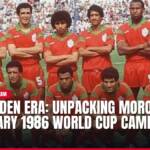
The 1976 team showcased remarkable tactical flexibility. They defended resolutely, absorbed pressure, and launched devastating counter-attacks. Mărdărescu often employed variations of a 4-3-3 or 4-4-2 formation, adapting to different opponents. Key players like Ahmed Faras, who became one of Morocco’s All-Time Leading Goalscorers in AFCON History, thrived under this system, combining their natural talent with newfound tactical understanding. This triumph remains the pinnacle of The Golden Generation: Morocco’s 1976 AFCON Triumph Explained.

Periods of Inconsistency and Adaptation (1980s-1990s)
Following their 1976 victory, Morocco entered a period of fluctuating fortunes, marked by both promising performances and frustrating early exits. These decades reflected attempts to replicate past success while adapting to the changing landscape of African football.
Post-Triumph Challenges and Shifting Styles
The challenge after 1976 was maintaining the high standards set by Mărdărescu’s team. Subsequent coaches often tried to build on those defensive foundations and technical skill, yet consistency proved elusive. There was a noticeable shift towards a more pragmatic approach, sometimes sacrificing flair for results, especially in away matches or against stronger opponents.
Influence of European Football and Individual Brilliance
As more Moroccan players moved to European leagues, their experiences began to influence the national team’s tactics. Players brought back insights and enhanced professionalism. The teams of the late 1980s and 1990s, featuring talents like Badou Zaki and Mustapha Hadji, often relied on individual brilliance to unlock defenses. While collective tactical frameworks were present, moments of individual magic often defined their performances. These were among the Key Players: The Legends Who Shaped Morocco’s AFCON Journey.
The Quest for Modernity and Near Misses (2000s)
The turn of the millennium saw Morocco striving to modernize its footballing approach, often combining European coaching expertise with homegrown talent. This era was characterized by a push for more attacking football and renewed focus on technical excellence, leading to one of their most memorable campaigns.
Henri Michel’s Impact and the 2004 Final Run
The appointment of French coach Henri Michel in the late 1990s and his subsequent return in the early 2000s marked a significant phase. Michel, known for emphasizing disciplined yet expressive football, instilled a strong tactical identity. Under his guidance, Morocco reached the AFCON final in 2004, showcasing a vibrant attacking style that combined solid defense with creative midfield play and potent wingers. This run is often considered among Morocco’s Top 5 AFCON Performances Beyond Their 1976 Victory.
Emphasis on Technical Skill and Wing Play
The 2000s saw a renewed focus on traditional Moroccan strengths: technical ability and ball control. Players like Youssef Hadji and Marouane Chamakh provided both artistry and clinical finishing. Wing play became a prominent feature, with fast and skillful wide players stretching defenses and creating crossing opportunities. The approach during this period sought balance between defensive solidity and entertaining, attacking football.
More Read

Rebuilding and Tactical Resilience (2010s)
The 2010s were a period of rebuilding for Moroccan football, marked by attempts to regain consistency and assert continental influence. This decade saw a focus on tactical resilience, often under experienced European coaches.
The Era of Hervé Renard and Defensive Solidity
The arrival of Hervé Renard, a two-time AFCON-winning coach, in 2016 brought a new chapter to Morocco’s tactical narrative. Renard prioritized defensive organization, physical conditioning, and mental fortitude. His teams were known for their strong defensive lines, disciplined midfield, and ability to absorb pressure before launching quick counter-attacks. This pragmatic approach helped Morocco achieve respectable results, including reaching the quarter-finals in 2017 and the round of 16 in 2019.
Strategic Counter-Attacking and Physicality
Under Renard, the approach leaned heavily towards strategic counter-attacking. They were adept at winning the ball in midfield and quickly transitioning to attack, utilizing players like Hakim Ziyech and Sofiane Boufal. There was also greater emphasis on physicality, ensuring the team could compete robustly against the continent’s most powerful sides. This period laid crucial groundwork for future successes, demonstrating a willingness to adopt resilient, less purely aesthetic styles when necessary.
Walid Regragui and the Era of Pragmatic Dominance (2020s Onwards)
The most recent chapter in Morocco’s AFCON journey has been shaped by the transformative leadership of Walid Regragui, whose pragmatic approach has propelled the Atlas Lions to unprecedented global heights and re-established them as formidable continental contenders. This represents a significant phase in Morocco’s tactical evolution.
The World Cup Blueprint Applied to AFCON
Walid Regragui, among the most impactful of The Coaches Behind the Atlas Lions: Morocco’s AFCON Managerial History, famously guided Morocco to the semi-finals of the 2022 FIFA World Cup, a historic achievement for an African nation. His tactical blueprint, refined on the global stage, has been effectively applied to AFCON. This approach is characterized by an extremely well-organized defensive block, often a compact 4-1-4-1 or 4-3-3 out of possession, designed to deny space and frustrate opponents.
Defensive Organization, Midfield Control, and Clinical Finishing
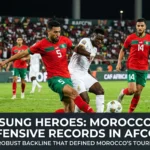
Regragui’s philosophy prioritizes defensive solidity as the foundation. The team defends as a cohesive unit, pressing intelligently and recovering quickly. In midfield, players like Sofyan Amrabat provide a crucial shield, breaking up play and dictating tempo. When possession is regained, Morocco aims for quick transitions, utilizing the pace and creativity of wide players and the clinical finishing of forwards. This blend of defensive resilience and opportunistic attack has proven highly effective.
The Future of Morocco’s AFCON Approach
Under Regragui, Morocco has embraced a style that is both effective and adaptable. While some critics argue it lacks traditional flair, its success cannot be denied. The nation’s future trajectory appears rooted in this pragmatic dominance, focusing on winning football first, with flair emerging from solid tactical structure. This approach aims to finally end the long-standing drought since 1976, addressing the core reasons explored in Why Morocco Hasn’t Won AFCON Since 1976: A Deep Dive into Challenges.
Key Elements of Morocco’s Enduring Style
Despite numerous shifts in coaching philosophy and player generations, certain characteristics have remained central to Morocco’s footballing identity throughout their AFCON history.
Technical Proficiency and Ball Control
From the earliest teams to the current squad, Moroccan players have consistently displayed high-level technical skill. Ball control, intricate passing, and individual dribbling ability are hallmarks of the nation’s football. This inherent quality allows them to retain possession, navigate tight spaces, and create scoring opportunities, even against physically dominant opponents.
Defensive Discipline and Organization
While intensity has varied, commitment to defensive discipline has been a recurring theme. Even in more attacking phases, Moroccan teams have recognized the importance of a solid backline. From the resolute defense of 1976 to Renard’s structured approach and Regragui’s compact block, tactical organization at the back has often been the bedrock of success.
Strategic Adaptability
One of the most impressive aspects of Morocco’s AFCON journey has been their capacity to adapt. Whether facing the physical challenges of West African teams or the tactical nuances of regional rivals, they have shown an ability to adjust strategy. This flexibility, often facilitated by a blend of foreign and local coaching expertise, has been crucial in navigating the tournament’s diverse challenges. The complexities of Morocco’s AFCON Record Against North African Rivals: Who Dominates? often demand such flexibility.
Passion and Resilience
Beyond tactics, the intangible qualities of passion and resilience have always been synonymous with the Atlas Lions. Unwavering fan support, coupled with players’ fighting spirit, has often fueled comebacks and inspired memorable performances, particularly in crucial matches during Morocco’s AFCON Qualifying Journeys: A Look at Their Road to the Finals.
Conclusion
Morocco’s AFCON tactical journey is a rich narrative of growth, adaptation, and the relentless pursuit of excellence. From the individual flair of early days to the structured brilliance of 1976, the pragmatic resilience of the 2010s, and the disciplined dominance of the Regragui era, the nation has continuously refined its approach to football.
While the elusive second AFCON title remains a powerful motivation, the journey itself showcases a commitment to footballing progress. The Atlas Lions have learned, adapted, and consistently represented the vibrant spirit of Moroccan football on the continental stage, setting the stage for future triumphs built on dynamic, ever-evolving tactical foundations.
FAQ
What defines the Morocco AFCON tactical evolution over the years?
The evolution is defined by a shift from early reliance on individual flair and basic structures to more sophisticated, disciplined, and adaptable systems. Key periods include Gheorghe Mărdărescu’s structured approach in 1976, the emphasis on technical skill in the 2000s, and the pragmatic, defensively organized style under Walid Regragui in the 2020s.
Who were the key figures in shaping Morocco’s AFCON tactical evolution?
Several coaches have been instrumental. Gheorghe Mărdărescu revolutionized the team in the 1970s, leading them to their only AFCON title. Henri Michel brought a modern attacking philosophy in the early 2000s, while Hervé Renard instilled defensive solidity and strategic counter-attacking. Most recently, Walid Regragui has implemented a highly effective pragmatic and defensively robust system.
How has Morocco’s playing style changed since their 1976 AFCON victory?
Since 1976, Morocco’s playing style has become more tactically diverse and resilient. While retaining technical prowess, they have increasingly integrated defensive discipline, strategic counter-attacking, and pragmatic approaches, moving away from a purely expressive style to one that prioritizes results and adaptability in complex tournament formats.
What is the current tactical approach of the Moroccan national team in AFCON?
Under Walid Regragui, the current approach is characterized by a highly organized and compact defensive block, often a 4-1-4-1 or 4-3-3 out of possession. They focus on denying space, winning the ball in midfield, and launching quick, incisive transitions using pace and clinical finishing. This pragmatic style prioritizes defensive solidity as the foundation for attack.
How does the Morocco AFCON tactical evolution compare to other North African teams?
Morocco’s tactical evolution shares similarities with other North African teams like Algeria, Egypt, and Tunisia, often emphasizing technical skill, ball retention, and a blend of European and local coaching influences. However, Morocco has recently distinguished itself with particularly strong emphasis on defensive organization and pragmatic efficiency, as seen in their 2022 World Cup performance, which has influenced their AFCON approach.