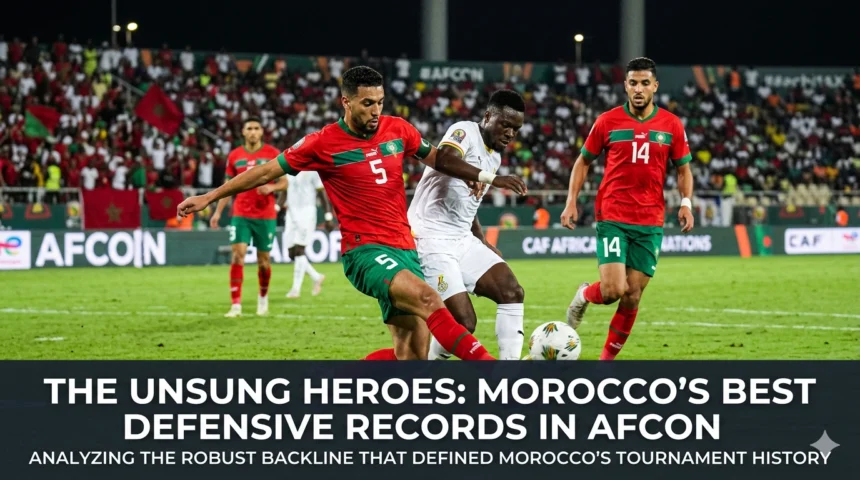
AFCON: The Unsung Heroes – Morocco’s Best Defensive Stats
Crowds love to cheer spectacular goals and dazzling attacking displays, but successful football teams are built on defensive foundations. The Atlas Lions have had a mix of attacking brilliance and defensive solidity in their Africa Cup of Nations (AFCON) adventure that proved decisive. In this piece, we take a look at Morocco’s defensive exploits across AFCON tournaments, focusing on the key matches in which their backline excelled, the goalkeepers who became impenetrable barriers and the tactical approaches that birthed such formidable units. Knowing these achievements is essential to put Morocco’s Africa Cup of Nations (AFCON) Record into perspective, which is often overshadowed by its offensive achievements.
Morocco’s AFCON highs and lows have been well documented, but solid defensive performances have always been a hallmark of their most memorable campaigns. In their historic 1976 triumph and recent deep tournament runs, the ability to control opponents has often proved decisive. This investigation aims to identify the unsung heroes who helped build Morocco’s strong defensive reputation in African football.
The Foundation of Success: Morocco’s Defensive Prowess From the Get-Go
Morocco’s AFCON history, especially their 1976 title win, set the groundwork for their defensive principles. The 1976 team got praise for its attacking creativity, but the defensive resilience was just as important to success.
1976 AFCON: Rock of Champions’ Defence
Morocco’s only AFCON title in 1976, played in Ethiopia, was won by a balanced team, with defence as a key strength. Coached by Gheorghe Mărdărescu and later by his brother Virgile Mărdărescu, the team was known for strong game control and for giving the opponent few chances. Their 1976 AFCON Triumph Explained shows a team that netted the all-important goals but was no easy nut to crack.
Morocco played six games in that tournament, conceding a total of 6 goals throughout the competition, an impressive feat for a round-robin final group stage. The defensive solidity gave the attackers the freedom to express themselves, knowing the backline was sound. Goalkeeper Hamid Hazzaz made some important saves, and defenders like Larbi Aherdane and Mustapha “Pacha” Yaghcha proved to be a formidable wall.

The tournament had a little bit of consistency, except for that one game where they let in a couple. The results they got were:
Group Stage:
- against. Sudan: 2-2 (2 goals conceded)
- vs Zaire: 1–0 (0 goals conceded)
- against. Nigeria: 3–1 (1 goal conceded)
- Group Stage Final:
- against. Egypt: 2-1 (1 goal scored against)
- vs Nigeria: 2-1 (1 goal against)
- vs Guinea: 1-1 (1 goal conceded)
They conceded 6 goals in 6 matches to start their championship. This backline was very consistent and rarely buckled under pressure, even against strong attacking sides.

Defensive Resilience Period: Late 1990s & Early 2000s
After a period of inconsistent performances, Morocco became a defensive juggernaut in the late 1990s and early 2000s. Throughout this time, the team regularly qualified for AFCON and performed well in the tournament, with defence a hallmark.
AFCON 1998: Keeping a Tight Ship
In the 1998 tournament in Burkina Faso, Morocco progressed to the quarter-finals, largely on the back of an extremely disciplined group stage. They won the group without losing and demonstrated tactical discipline.
In the group stage, they were 4-4-2.
- vs Ghana: 1-1 (1 goal let in)
- against Algeria: 1-0 (0 goals conceded)
- vs Tunisia: 0-0 (0 goals conceded)
And Morocco then conceded only 1 goal in 3 group matches, a remarkable achievement. This defensive resilience was built on the back of players such as Noureddine Naybet, arguably one of The Legends Who Shaped Morocco’s AFCON journey, and goalkeeper Driss Benzekri. They set a high standard with their defensive display in the group stages but were knocked out 2-1 by South Africa in the quarter-finals.
AFCON 2004: Road to the final
Morocco’s 2004 AFCON campaign is among the most memorable since 1976, as they reached the final on the back of a particularly solid defensive display across the competition. The team was coached by legendary goalkeeper Badou Zaki himself and displayed tactical discipline and full commitment to the defensive side of the game.
Their 2004 defensive record was exceptional:
More Read

Group Stage:
- against Nigeria: 1-0 (Scored 1, Conceded 0)
- against. Benin 4-0 (0 goals against)
- v. South Africa: 1-1 (1 goal conceded)
Total: 1 goal conceded in 3 group games.
- Knockout Round:
In total, Morocco conceded 4 goals in 5 matches before the final. They conceded 6 goals in 6 matches. This was a tremendous defensive performance in a knockout stage, thanks to the likes of Naybet, Talal El Karkouri and goalkeeper Khalid Fouhami. They also recorded back-to-back clean sheets against strong opposition, including Nigeria and Mali. Despite the loss in the final, their run to the silver medal was a display of a truly dominant defensive unit.
Individual Pillars: Notable Goalies and Defenders
All good defensive records are based on individual brilliance. Morocco has had the fortune of having outstanding goalkeepers and solid defenders who have anchored its defence in different AFCON campaigns, embodying the spirit of its defensive tradition.
Legendary Keepers
A goalkeeper’s role is paramount in strong defence. Morocco has had a few who delivered consistently at AFCON and became key figures in their defensive legacy.
- Hamid Hazzaz (1970s): Hazzaz was the custodian of the 1976 championship side, and his composure, reflexes and shot-stopping proved vital. His commanding presence gave his teammates more confidence to defend, more freedom to play.
- Badou Zaki (1980s): A genuine great, Zaki married superb goalkeeping with inspirational captaincy. In his performances in the 1986 World Cup and various AFCONs, he was a talented leader and defensive organizer. As a coach, he is known for building the defensively resilient 2004 team.
- Driss Benzekri (1990s): A solid and steady presence, Benzekri was instrumental in Morocco’s strong defensive spells during the late 90s, including the 1998 AFCON, where he was able to get two clean sheets in group play.
- Khalid Fouhami (2000s): Fouhami was a regular on the 2004 finalists’ strong defensive unit, making crucial saves throughout the tournament. His performance under pressure was exemplary.”
- Yassine Bounou (2020s): Bounou has established himself as one of Africa’s best goalkeepers in recent years thanks to his world-class shot-stopping, solid distribution, and commanding presence in the Moroccan defence. His performances at the 2022 World Cup and the follow-up AFCONs have sealed Morocco’s defensive name.
Defenders Unbreakable
Morocco’s defensive strength has also been in commanding centre-backs and resolute full-backs whose contributions proved integral to their success:
- Noureddine Naybet: Often viewed as the best African defender ever, Naybet captained Morocco’s backline for over a decade. He was second to none in leadership, tactical intelligence, aerial dominance and eye for the game.” He was a key figure in both the 1998 and 2004 campaigns, putting together a defence that was nearly impossible to crack.
- Abdelkrim El Hadri: As a member of the 1976 side, El Hadri was a key member of the team that brought the defensive strength and nous required for their historic achievements. His defence was instrumental in their title run.
- Larbi Aherdane: Another key defender from 1976, an incisive tackler, disciplined defender and disruptor of opposition attack.
- Talal El Karkouri: Teaming up with Naybet, El Karkouri was a fierce centre-back in the early 2000s and was a big part of the 2004 final run. His physical presence and pinpoint interventions were a complement to Naybet’s leadership.”
Mehdi Benatia: Captain of the Atlas Lions in the late 2010s, Benatia brings solid European club experience, strong aerial ability, and a commanding physical presence. He was the captain in qualifying campaigns and AFCON tournaments, leading the rising defensive talent.
- Achraf Hakimi & Noussair Mazraoui: They’re known for their attacking qualities as modern full-backs, but their defensive work rate, recovery speed and tracking ability are key defensive qualities. Their balanced play maintains attacking width and offers defensive security.
Romain Saïss & Nayef Aguerd: This is the current generation’s central defensive duo, made up of experience, physicality, and technical ability. Their strong partnership has been the backbone of Morocco’s recent defensive efforts, including their historic run in the 2022 World Cup.
AFCON defensive record: Tactical approach to Morocco
The Moroccan defence has been successful because of tactics instilled by various coaches over the years. The Coaches Behind the Atlas Lions: Morocco’s AFCON Managerial History highlights a steadfast focus on organisation and discipline.
Disciplined FormatioOrganizationisation
Historically, Moroccan teams have favoured formations that offer a bit more defensive solidity, such as a compact 4-4-2 or 4-2-3-1, which give good midfield protection and allow for quick counterattacks. They leave enough defensive bodies in these structures to smother attacks from the other side.
The 2004 side under Badou Zaki was the definition of tactical discipline and compact structure. Two holding midfielders offered good protection for the back four, while allowing the full-backs to get forward and still provide defensive cover. This made the defence very difficult to break down.
Counterattack Ability
Effective counterattacking is often a part of a strong defence. Morocco has soaked up pressure and counterattacked ruthlessly, winning the ball back decisively and launching rapid transitions. This way, you create scoring chances and lower the defensive work rate by keeping the pressure on the other team, so you shift the burden of attacking onto the opponent.
Positional Play & High Press
Moroccan teams today, especially under coaches like Hervé Renard and Walid Regragui, have adopted high-press principles that see them apply pressure on their opponents early, to win the ball back quickly and stop the opposition from building attacks, while limiting the amount of defending they have to do in their own half. Equally critical is positional play, in which players maintain their shape, cover teammates, and understand their defensive responsibilities within the team structure. This team defence takes away space and takes away passing lanes.
Latest defensive feats in AFCON
Morocco’s 1976 and 2004 campaigns are still exceptional feats. Still, the North Africans have shown their defensive prowess in recent AFCON editions, though they have not translated this into overall tournament success until their 2022 World Cup breakthrough.
AFCON 2017: Defensive comeback
Hervé Renard led Morocco to the quarter-finals in 2017. Their group stage form was again typified by defensive strength, a testament to Renard’s tactical nous.
- and for DR Congo: 0 – 1 (1 goal against)
- against. Togo: 3-1 (1 goal conceded)
- versus. Ivory Coast: 1-0 (0 goals against)
They underlined their determination and resilience by conceding only 2 group-stage goals, including a vital clean sheet against defending champions Ivory Coast. Although Egypt beat them 1-0 in the quarter-finals, their overall defensive record in the tournament was commendable and marked a notable improvement in their AFCON performances.
AFCON 2019: Consistency in the group stage
Morocco went undefeated again, winning their group and posting one of the best defensive records in the group stage in history.
vs Lost 1-0 (0) Namibia
against. Ivory Coast: 1-0 (0 goals conceded)
vs South Africa: 1-0 (0 goals scored)
Three consecutive clean sheets were a rare and very impressive feat in the group stage. A formidable backline of players such as Mehdi Benatia, Romain Saïss and Achraf Hakimi. But they were stunned by Benin in the Round of 16, missing out on penalties and proving that even the best defence does not guarantee a side will go deep into the tournament.
AFCON 2021 (played in 2022): Defensive strength persists
Morocco showed defensive solidity once again at the 2021 AFCON under coach Vahid Halilhodžić, topping their group without losing a game:
- against Ghana: 1-0 (0 goals admitted)
- versus. Comoros: 2-0 (0 goals conceded)
- against. Gabon: 2-2 (2 goals allowed)
They conceded just 2 goals in the group stage, keeping 2 clean sheets over Ghana and Comoros. They then beat Malawi 2-1 in the Round of 16 (1 goal conceded) before losing to Egypt in the quarter-finals (2 goals conceded). The central defensive partnership of Romain Saïss and Nayef Aguerd was one of the best in the tournament, adding to the country’s reputation for solid defending at major tournaments.
Morocco’s Defensive Records Compared
Exact stats vary depending on the tournament format and the number of matches played, but Morocco has always been among the best defensive teams in AFCON. Their knack of keeping clean sheets, especially in vital group games, has always set them apart. Reasons Why Morocco Has Not Won AFCON Since 1976. This article looks at other reasons Morocco has not succeeded, but its defensive strength remains a key part of its strong-contender status.
Successful campaigns tend to average goals conceded per game between 0.5 and 0.7, a product of tactical discipline, individual quality and consistent defensive principles through coaching eras. That solidity makes for a competitive performance in tight matches.
Their record against North African Rivals is also worth mentioning, with close, low-scoring affairs where defensive solidity is important – the hallmark of fierce regional rivalries.
Legacy of Defense
Moroccan football has become synonymous with a strong defence, and this philosophy has been passed down from generation to generation among players and coaches who know that a solid base is essential for ambitious teams. This defensive heritage has been a big part of both their AFCON campaigns and their historic 2022 FIFA World Cup semi-final appearance, where their defence arguably proved the strongest in the tournament, conceding only two goals (including one own goal) before facing France in the semi-final.
This commitment to defensive excellence is a testament to the understanding in Moroccan football that while offence wins individual games, defence wins championships. The unsung heroes of Morocco’s backline and goalkeeping corps deserve much credit for key contributions to the Atlas Lions’ AFCON journey, building a formidable defensive record that continues to inspire national pride.
Morocco AFCON defensive record – FAQs
During which AFCON did Morocco concede the fewest goals in the group stage?
Morocco conceded no goals in the 2019 AFCON group stage (hosted by Egypt). They recorded three 1-0 wins against Namibia, Ivory Coast and South Africa, with an impenetrable defence throughout that phase.
Who are the most famous goalkeepers in Morocco’s AFCON defensive record?
Morocco has had a strong defensive record, aided by legendary goalkeepers such as Hamid Hazzaz (1976 champions), Badou Zaki (player in the 1980s, coach in 2004), Driss Benzekri (late 1990s), Khalid Fouhami (2004 finalists), and Yassine Bounou in recent years.
What was Morocco’s contribution to the 1976 AFCON win?
The 1976 team was known for attacking flair, but it was built on a solid defensive base. The team conceded only 6 goals in 6 games, and this stability allowed creative players to flourish. This foundation was laid by the goalkeeper Hamid Hazzaz and defenders like Larbi Aherdane.
Who is Morocco’s best defender at the AFCON?
Noureddine Naybet is widely regarded as Morocco’s best AFCON defender. His leadership, tactical intelligence and physical presence were central to Morocco’s defensive strength for more than a decade, notably in the 1998 and 2004 campaigns.
How did Morocco’s defence fare on their way to the 2004 AFCON final?
Morocco allowed just 4 goals in 5 matches on the way to the 2004 final (6 goals in total). Organisationally, under coach Badou Zaki, it was evident in the clean sheets against Nigeria and Mali.